


Why Solar Ahmedabad Is the Smart Energy Choice in 2026
Ahmedabad, Gujarat’s largest city and commercial hub, stands at the forefront of India’s solar energy revolution. With over 300 sunny days annually and some of the highest solar irradiation levels in the country, solar Ahmedabad installations have become increasingly attractive for homeowners, businesses, and industrial facilities looking to reduce electricity costs while embracing sustainable energy solutions.
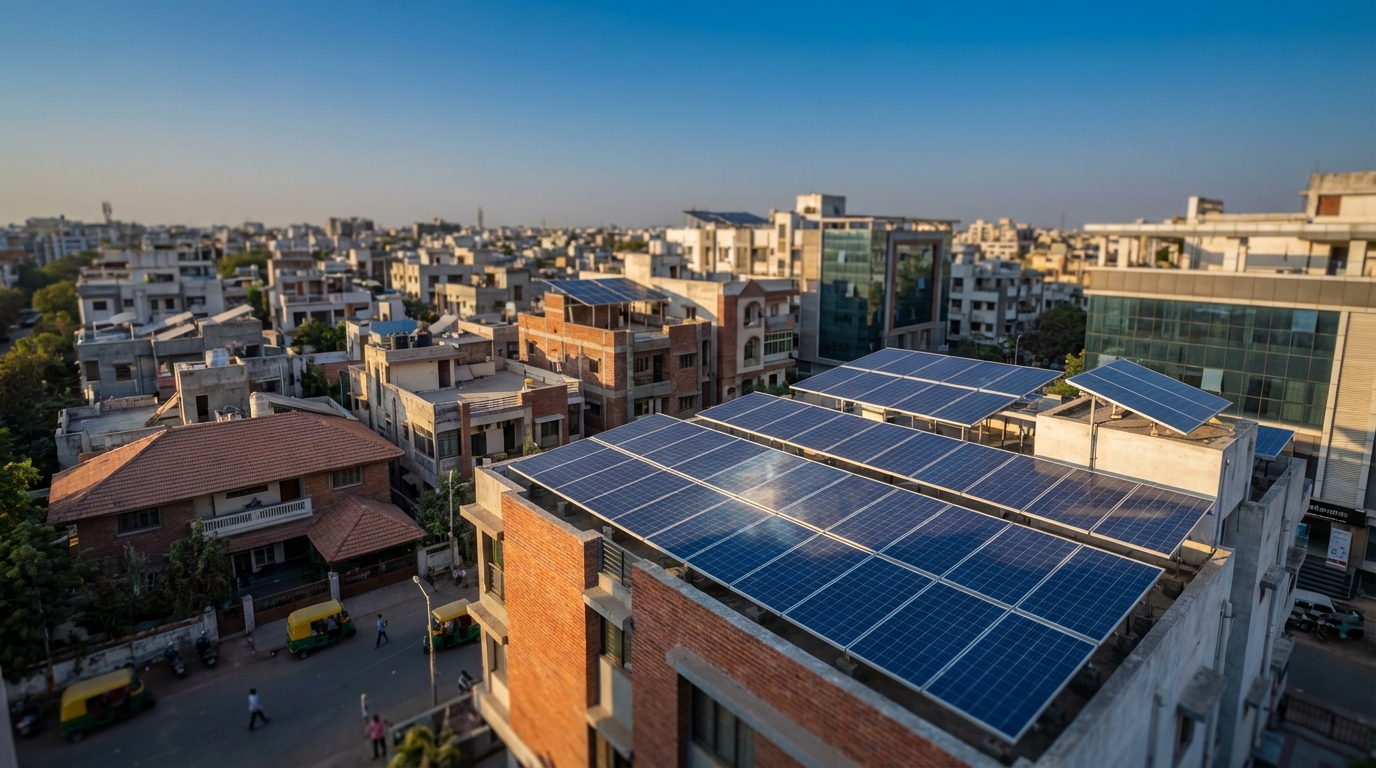
The economics of solar energy in Ahmedabad have never been more compelling. Rising electricity tariffs from Gujarat Urja Vikas Nigam Limited (GUVNL) combined with declining solar panel costs have created an ideal environment for solar adoption. Commercial and industrial consumers facing electricity rates exceeding ₹7-9 per unit can achieve substantial savings, while residential consumers benefit from reduced monthly bills and protection against future tariff increases.
Gujarat’s state government has positioned renewable energy as a priority, with ambitious targets to increase solar capacity across the state. This policy support translates into streamlined approvals, attractive subsidies, and favorable net metering policies that make solar Ahmedabad projects financially viable. The city’s robust infrastructure, availability of skilled solar EPC companies, and growing awareness among property owners have accelerated adoption rates significantly in 2026.
The local climate provides distinct advantages for solar generation. Ahmedabad receives an average solar irradiation of 5.5-6.0 kWh per square meter daily, ensuring optimal energy production throughout the year. Even during monsoon months, the city experiences sufficient sunshine to maintain reasonable generation levels, making solar installations reliable year-round energy sources.
Understanding Solar Installation Costs in Ahmedabad
Solar panel cost in Ahmedabad has become increasingly competitive in 2026, with residential rooftop solar systems typically ranging from ₹45,000 to ₹55,000 per kilowatt for complete turnkey installations. This pricing includes high-quality solar modules, inverters, mounting structures, wiring, installation labor, and commissioning. Commercial and industrial solar Gujarat projects benefit from economies of scale, with per-kilowatt costs dropping to ₹40,000-₹48,000 for larger installations exceeding 50 kW capacity.
Several factors influence the final pricing for solar Ahmedabad installations. The choice of solar panel brand significantly impacts costs, with premium tier-1 manufacturers commanding higher prices but offering superior efficiency and longer warranties. Inverter selection also affects pricing, with string inverters being more economical for straightforward installations while hybrid inverters with battery backup capability increase upfront investment but provide energy independence during grid outages.
Rooftop complexity plays a crucial role in determining installation costs. Properties with easily accessible, unshaded rooftops with simple layouts require less labor and structural work compared to complex rooftops with multiple levels, obstructions, or challenging orientations. The mounting structure requirements vary based on roof type, with RCC (reinforced cement concrete) roofs typically requiring ballasted or penetration-based mounting systems, while tin or sheet metal roofs need specialized clamps and fasteners.
When comparing solar installation Gujarat pricing across cities, Ahmedabad offers competitive rates due to the concentration of solar EPC companies, availability of skilled labor, and efficient supply chains. The city’s proximity to Surat and other manufacturing hubs reduces transportation costs for solar equipment, contributing to overall affordability. However, property owners should prioritize quality and service over the lowest price, as solar systems represent 25-year investments requiring reliable performance and support.
Cost Breakdown for Typical Ahmedabad Solar Systems
- 3 kW Residential System: ₹1,35,000 – ₹1,65,000 (suitable for average homes with 200-300 units monthly consumption)
- 5 kW Residential System: ₹2,25,000 – ₹2,75,000 (ideal for larger homes or properties with higher electricity usage)
- 10 kW Commercial System: ₹4,00,000 – ₹4,80,000 (appropriate for small businesses, shops, and offices)
- 50 kW Industrial System: ₹20,00,000 – ₹24,00,000 (suitable for manufacturing units and larger commercial facilities)
- 100 kW+ Industrial Solar: ₹38,00,000 – ₹45,00,000 (large-scale installations for factories and industrial complexes)
Solar Subsidies and Financial Incentives in Ahmedabad
The financial viability of solar Ahmedabad installations improves significantly with available subsidies and incentives. The central government’s PM-KUSUM (Pradhan Mantri Kisan Urja Suraksha evam Utthan Mahabhiyan) scheme provides substantial support for agricultural and rural solar projects, while residential rooftop solar subsidy programs make home installations more affordable for property owners across the city.
Under the current residential rooftop solar subsidy scheme in 2026, homeowners can receive financial assistance of up to ₹14,588 per kW for systems up to 3 kW capacity, and ₹7,294 per kW for additional capacity between 3-10 kW. This means a typical 3 kW residential system can receive approximately ₹43,764 in direct subsidy, significantly reducing the effective installation cost and improving the solar payback period.
To qualify for solar subsidy benefits in Ahmedabad, installations must be completed through empaneled vendors registered with approved government agencies. The solar panels and inverters must meet Bureau of Indian Standards (BIS) specifications and carry appropriate certifications. Property owners should verify that their chosen solar EPC Gujarat provider is properly empaneled to ensure subsidy eligibility before proceeding with installation.
Beyond direct subsidies, Ahmedabad residents and businesses benefit from net metering policies that allow bidirectional electricity flow. Excess solar generation during daytime hours is exported to the GUVNL grid, earning credits that offset nighttime consumption. This arrangement effectively uses the grid as a virtual battery, maximizing the financial returns from solar investments without requiring expensive battery storage systems.
Commercial and industrial consumers can also explore accelerated depreciation benefits under income tax regulations, allowing businesses to depreciate solar assets at higher rates and reduce taxable income. Additionally, some financial institutions offer preferential interest rates for solar financing, making it easier for businesses to adopt renewable energy without significant upfront capital expenditure.
Top Solar Installers and EPC Companies in Ahmedabad
Selecting the right solar EPC services provider is critical for ensuring quality installation, reliable performance, and long-term support. The solar Ahmedabad market includes numerous installers, but property owners should prioritize companies with proven track records, local presence, technical expertise, and comprehensive after-sales service capabilities.
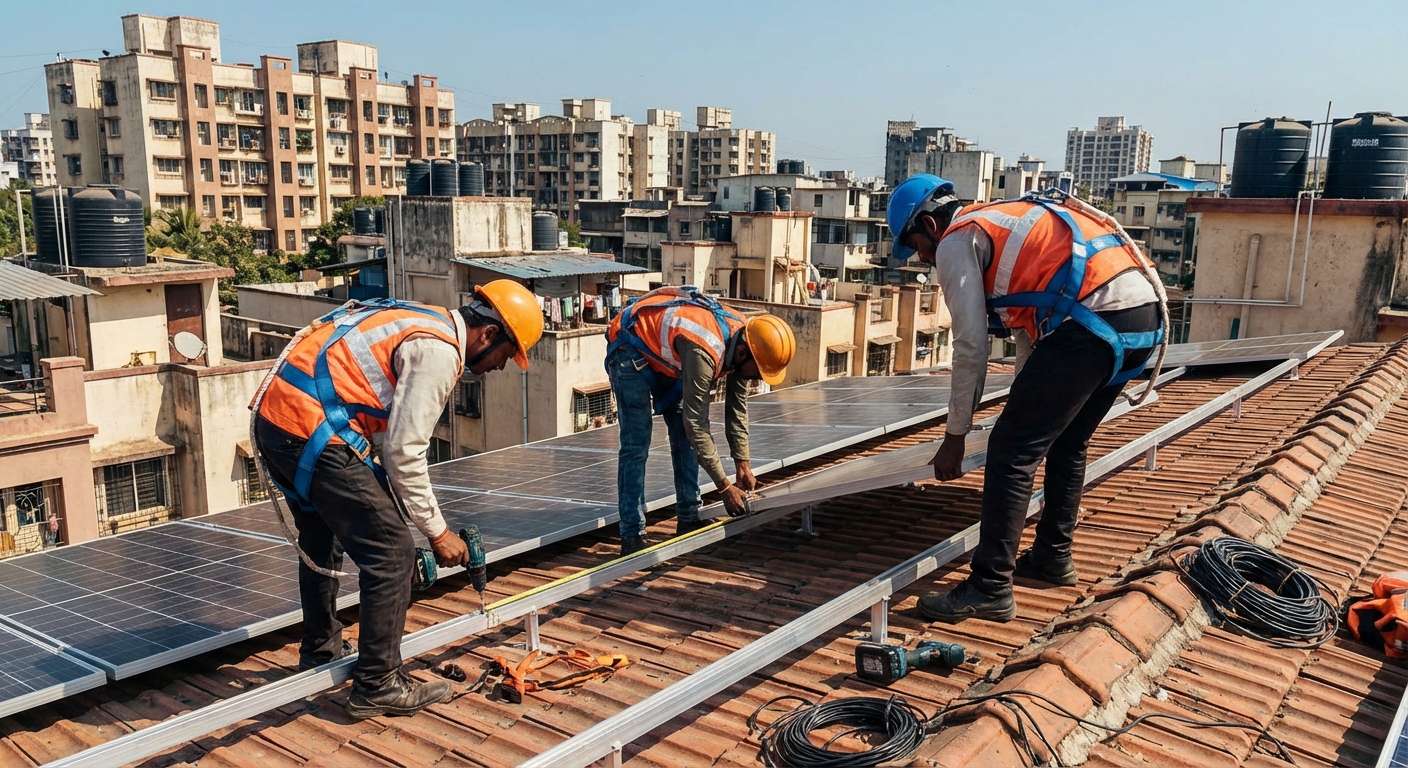
Heaven Green Energy Limited operates a dedicated branch office in Ahmedabad, providing comprehensive solar solutions for residential, commercial, and industrial clients across the city. Established in 2017 and headquartered in Surat, the company has completed over 10,000 installations throughout Gujarat and ranks among the top 3 EPC companies in the state. Their turnkey approach covers everything from initial site assessment and system design through installation, commissioning, and ongoing maintenance support.
When evaluating solar companies Gujarat, property owners should verify several key credentials. Look for companies with appropriate electrical contractor licenses, experience with similar project sizes and types, and a portfolio of completed installations that can be inspected. Certifications from solar module and inverter manufacturers indicate technical training and authorized service capabilities, ensuring warranty coverage remains valid throughout the system’s lifespan.
Local presence matters significantly for solar installations. Companies with established Ahmedabad offices can provide faster response times for maintenance issues, easier coordination during installation, and better understanding of local regulations and approval processes. This proximity translates into smoother project execution and more reliable long-term support compared to vendors operating from distant locations.
Questions to Ask Potential Solar Installers
- How many years of experience do you have with solar EPC Gujarat projects?
- Can you provide references from recent Ahmedabad installations I can visit?
- What solar brands Gujarat do you recommend and why?
- Are you empaneled for government subsidy programs?
- What warranties do you offer on equipment and installation workmanship?
- What is your typical response time for maintenance and service requests?
- Do you provide system monitoring and performance tracking?
- What happens if panels or inverters need replacement during the warranty period?
Understanding what solar EPC services include helps property owners evaluate proposals more effectively and ensure they receive comprehensive solutions rather than just equipment supply.
Solar Ahmedabad: Municipal Approvals and Documentation Process
Navigating the approval process for solar Ahmedabad installations requires understanding both municipal and utility requirements. While the procedures have been streamlined in recent years, proper documentation remains essential for legal compliance, subsidy eligibility, and grid connection approval.
The Ahmedabad Municipal Corporation (AMC) requires building permission for rooftop solar installations, particularly for larger commercial and industrial systems. Residential installations under 10 kW typically face simplified approval processes, but property owners should verify current requirements with their local ward office. The structural stability certificate from a qualified engineer confirms that the rooftop can safely support the additional weight of solar panels and mounting structures.
For grid-connected systems with net metering, property owners must submit applications to GUVNL or the relevant distribution company serving their area. The application includes technical details about the proposed system capacity, equipment specifications, single-line diagrams, and property ownership documents. The utility conducts a feasibility study to ensure the local grid can accommodate the solar installation without technical issues.
The typical approval timeline in Ahmedabad ranges from 4-8 weeks for residential installations and 8-12 weeks for larger commercial and industrial solar Gujarat projects. Working with experienced solar EPC services providers significantly accelerates this process, as they understand documentation requirements, maintain relationships with approval authorities, and can navigate bureaucratic procedures efficiently.
Essential Documentation for Solar Installation Approvals
- Property ownership documents: Title deed, tax receipts, or lease agreement demonstrating legal rights to install solar systems
- Electricity connection details: Recent electricity bills, consumer number, and sanctioned load information
- Technical drawings: Site layout, rooftop plan, single-line electrical diagram, and system design specifications
- Structural stability certificate: Engineer’s certification that rooftop can support solar installation weight
- Equipment specifications: Datasheets for solar panels, inverters, and other major components with BIS certifications
- Identity and address proof: Aadhaar card, PAN card, and other standard identification documents
- Photographs: Current rooftop images showing proposed installation area and surrounding structures
Experienced installers handle most documentation and approval coordination, but property owners should stay informed about the process and maintain copies of all submitted documents for future reference.
Climate and Area-Specific Factors for Solar in Ahmedabad
Ahmedabad’s climate characteristics significantly influence solar system performance and design considerations. The city experiences extreme temperature variations, with summer temperatures exceeding 45°C and winter lows around 10°C. These conditions affect both solar panel efficiency and inverter performance, making equipment selection and installation quality critical for optimal long-term results.
The city’s solar irradiation levels of 5.5-6.0 kWh/m²/day rank among the highest in India, providing excellent generation potential throughout the year. A properly designed 1 kW solar system in Ahmedabad typically generates 4.5-5.0 units of electricity daily on average, translating to approximately 1,600-1,800 units annually. This high generation capacity ensures faster payback periods and better returns on investment compared to locations with lower solar resources.
Monsoon considerations require careful attention during solar Ahmedabad installations. While the city receives moderate rainfall concentrated in July-September, proper waterproofing of roof penetrations and cable entry points prevents water ingress and potential electrical issues. Quality mounting structures with appropriate drainage provisions ensure rainwater doesn’t accumulate around panel frames, which could lead to corrosion or structural problems over time.
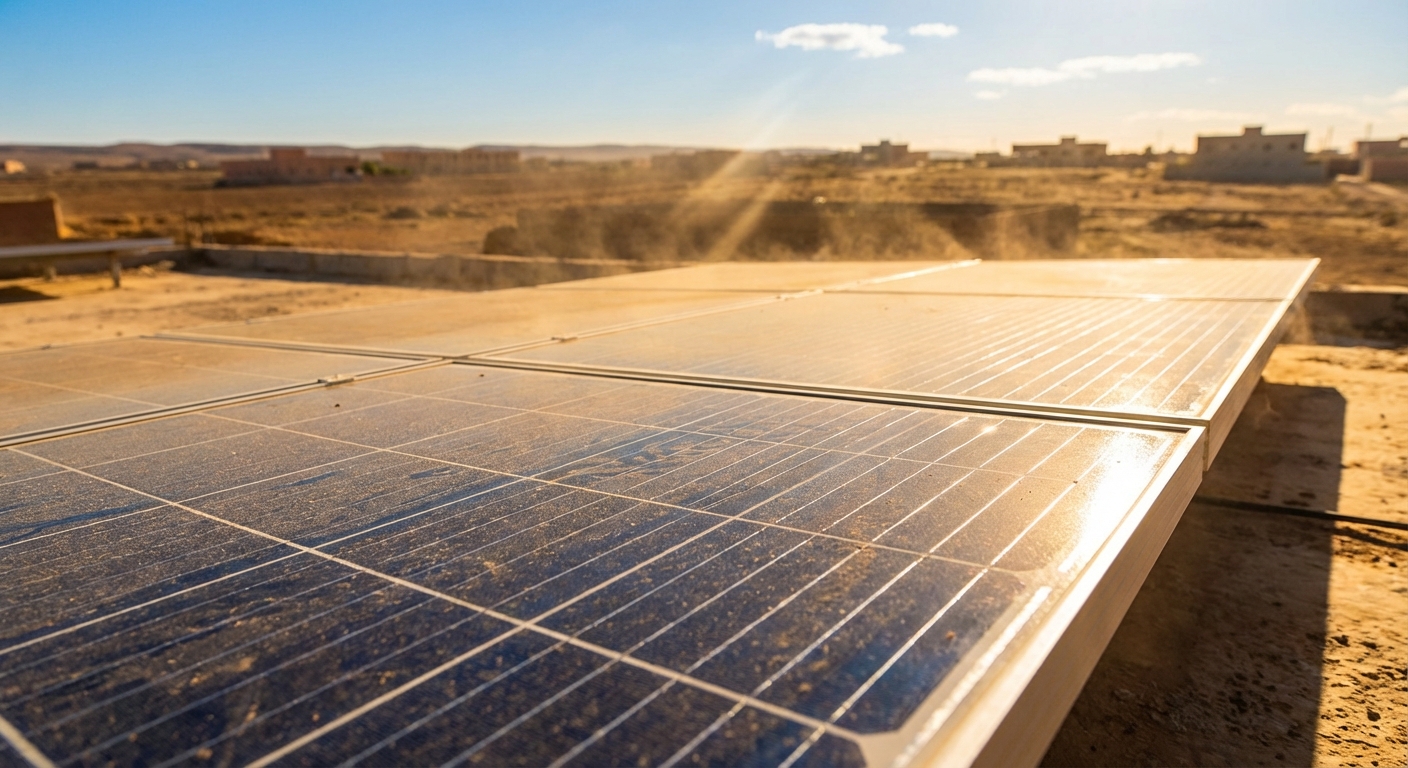
Dust and air pollution present ongoing challenges for solar maintenance Gujarat operations. Ahmedabad’s urban environment generates significant dust accumulation on panel surfaces, particularly during dry months. Studies indicate that dust buildup can reduce solar panel efficiency by 15-25% if left uncleaned for extended periods. Regular cleaning schedules, typically monthly during summer and bi-monthly during other seasons, maintain optimal performance levels.
Neighborhood-Specific Considerations
Different areas of Ahmedabad present unique factors affecting solar installations. Properties in older city areas like Kalupur, Jamalpur, and Dariapur often have closely spaced buildings creating shading challenges that require careful system design to maximize generation. These locations may benefit from optimizers or microinverters that minimize the impact of partial shading on overall system performance.
Newer developments in areas like Bopal, Shela, Thaltej, and South Bopal typically offer better rooftop access, less shading, and more straightforward installations. These properties often have RCC roofs designed with higher load-bearing capacity, simplifying mounting structure installation and reducing structural reinforcement requirements.
Industrial areas including Odhav, Vatva, Naroda, and Narol host numerous large-scale commercial and industrial solar installations. These locations benefit from substantial roof space, high electricity consumption justifying larger systems, and three-phase electrical connections that accommodate higher capacity installations efficiently.
Temperature effects on solar performance require consideration during system design. While solar panels generate maximum power under bright sunlight, their efficiency decreases slightly as temperatures rise. High-quality panels with lower temperature coefficients maintain better performance during Ahmedabad’s intense summer heat, making brand selection important for maximizing generation in local climate conditions.
Solar ROI and Payback Period for Ahmedabad Properties
Understanding the financial returns from solar Ahmedabad installations helps property owners make informed investment decisions. The solar ROI depends on multiple factors including system cost, electricity tariff rates, generation capacity, available subsidies, and maintenance expenses over the system’s operational life.
For residential installations, the average solar payback period in Ahmedabad ranges from 4-6 years after accounting for government subsidies. A typical 3 kW system costing ₹1,50,000 (after subsidy) generating 4,500 units annually saves approximately ₹27,000-₹31,500 per year at current residential electricity rates of ₹6-7 per unit. This translates to complete cost recovery within 5 years, followed by 20+ years of essentially free electricity with minimal maintenance costs.
Commercial and industrial consumers experience even more attractive returns due to higher electricity tariffs and larger system capacities. Businesses paying ₹8-9 per unit for electricity can achieve payback periods of 3-4 years on solar investments. A 50 kW commercial system generating 75,000 units annually saves ₹6,00,000-₹6,75,000 per year, recovering the ₹22,00,000 investment in approximately 3.5 years.
The long-term financial benefits extend well beyond the payback period. Solar panels typically carry 25-year performance warranties guaranteeing at least 80% of original capacity after two decades. Over a 25-year operational life, a 5 kW residential system can generate total savings exceeding ₹15,00,000 when accounting for electricity tariff escalations averaging 5-7% annually. This represents a compelling return on the initial ₹2,50,000 investment.
Several factors enhance solar ROI in Ahmedabad. The city’s high solar irradiation ensures maximum generation capacity, while rising electricity tariffs increase the value of each unit generated. Net metering policies allow property owners to offset 100% of their electricity consumption, maximizing financial benefits. Additionally, solar installations increase property values, with studies indicating that homes with solar systems command premium prices in real estate markets.
For detailed analysis of how quickly your investment pays back, explore our comprehensive guide on solar payback period calculations and break-even timelines.
Calculating Your Solar Savings
Property owners can estimate their potential savings using this simple framework:
- Determine current electricity consumption: Review 12 months of electricity bills to calculate average monthly and annual usage in units (kWh)
- Calculate required system size: Divide annual consumption by 1,650 (average generation per kW in Ahmedabad) to determine appropriate system capacity
- Estimate system cost: Multiply system size by ₹50,000 per kW for residential or ₹45,000 per kW for commercial installations
- Apply subsidies: Subtract applicable government subsidies from total system cost to determine net investment
- Calculate annual savings: Multiply annual generation by current electricity tariff rate
- Determine payback period: Divide net investment by annual savings
Choosing the Right Solar Components for Ahmedabad Climate
Component selection significantly impacts the performance, reliability, and longevity of solar Ahmedabad installations. The city’s harsh climate conditions, including extreme heat, dust exposure, and occasional heavy rainfall, require equipment specifically suited to these environmental challenges.
When evaluating solar panel brands, property owners should prioritize manufacturers with proven performance in Indian conditions. Tier-1 manufacturers like Trina Solar, Jinko Solar, Canadian Solar, and Indian brands like Waaree and Vikram Solar offer panels tested for high-temperature performance and dust resistance. These manufacturers provide comprehensive warranties, typically 25 years for power output and 10-12 years for product defects, ensuring long-term protection for your investment.
Panel efficiency ratings indicate how effectively solar cells convert sunlight into electricity. While higher efficiency panels cost more per watt, they generate more power from limited rooftop space, making them valuable for properties with space constraints. For Ahmedabad installations, monocrystalline panels with efficiencies exceeding 19-20% offer excellent performance, though polycrystalline panels with 16-18% efficiency provide cost-effective alternatives for properties with adequate roof area.
The temperature coefficient specification indicates how panel performance degrades as temperatures rise above 25°C. In Ahmedabad’s summer heat, panels can reach 65-70°C, making low temperature coefficients important. Quality panels with temperature coefficients around -0.35% to -0.40% per degree Celsius maintain better performance during hot months compared to inferior products with higher degradation rates.
For comprehensive comparisons of available options, review our detailed analysis of solar brands in Gujarat and their performance characteristics.
Solar Inverter Selection for Ahmedabad
The solar inverter converts DC electricity from panels into AC power usable by home appliances and the electrical grid. Inverter selection depends on system size, budget, and whether battery backup capability is desired.
String inverters represent the most economical option for straightforward installations without shading issues. A single inverter handles the entire solar array, offering simplicity and lower upfront costs. However, shading or malfunction of any panel affects the entire string’s performance. Brands like Sungrow, Growatt, Delta, and Fronius offer reliable string inverters suitable for Ahmedabad conditions.
Hybrid inverters include battery charging capability, allowing property owners to store excess solar generation for use during evening hours or grid outages. While hybrid systems cost 30-40% more than standard grid-tied installations, they provide energy independence and backup power during the frequent power cuts some Ahmedabad areas experience. This option particularly appeals to commercial establishments where power continuity is critical for business operations.
Inverter sizing should match the solar array capacity, typically ranging from 90-110% of total panel wattage. Oversizing slightly allows for future system expansion, while undersizing can limit generation during peak production hours. Quality inverters carry 5-10 year warranties, with extended warranty options available for additional cost.
Mounting Structures and Balance of System Components
Mounting structures must withstand Ahmedabad’s wind loads, temperature extremes, and corrosive urban environment. Hot-dip galvanized iron or aluminum structures with appropriate anti-corrosion coatings ensure 25-year durability matching panel lifespans. The structure design should allow adequate air circulation beneath panels, helping dissipate heat and maintain optimal operating temperatures.
Cables and wiring must meet appropriate specifications for outdoor solar installations, with UV-resistant insulation and proper current-carrying capacity. DC cables connecting panels to inverters should be sized to minimize voltage drop, while AC cables from inverters to the main electrical panel must comply with electrical safety codes.
Step-by-Step Solar Installation Process in Ahmedabad
Understanding the solar installation process helps property owners know what to expect and ensures smooth project execution. Professional solar EPC Gujarat companies follow systematic approaches that minimize disruption while ensuring quality results.
Phase 1: Site Assessment and Feasibility Study
The process begins with a comprehensive site visit where solar engineers evaluate rooftop conditions, measure available space, assess shading patterns, and review electrical infrastructure. They analyze electricity consumption patterns from recent bills to determine appropriate system sizing. This assessment identifies any structural concerns, shading obstacles, or electrical upgrades required before installation can proceed.
Engineers use specialized tools to measure solar irradiation at the site and create shading analysis reports showing how nearby buildings, trees, or structures might affect generation throughout the year. This data informs system design decisions and helps set realistic performance expectations.
Phase 2: System Design and Proposal
Based on site assessment findings, the solar EPC services provider develops a detailed system design including panel layout, inverter specifications, mounting structure plans, and electrical schematics. The proposal outlines equipment specifications, expected generation capacity, project costs, available subsidies, estimated payback period, and warranty terms.
Property owners should review proposals carefully, comparing equipment quality, warranties, and total costs rather than focusing solely on price. Clarify what services are included, such as documentation support, maintenance provisions, and monitoring systems.
Phase 3: Documentation and Approvals
Once the proposal is accepted, the installer initiates the approval process with AMC and GUVNL. This phase involves preparing technical drawings, submitting applications, coordinating inspections, and obtaining necessary clearances. Experienced installers manage this process efficiently, though property owners must provide required documents and signatures.
The approval timeline varies based on system size and local authority workload, typically requiring 4-8 weeks for residential installations. During this period, installers may order equipment to ensure availability when approvals are received.
Phase 4: Installation and Commissioning
Physical installation typically takes 2-5 days depending on system size and rooftop complexity. The process includes:
- Mounting structure installation: Securing rails and frames to rooftop with appropriate waterproofing
- Panel installation: Mounting solar modules on structures and securing with clamps
- Electrical work: Running DC cables, installing inverters, connecting to main electrical panel
- Safety systems: Installing earthing, lightning protection, and safety disconnects
- Testing and commissioning: Verifying all connections, testing system performance, configuring monitoring
After installation, the utility conducts a final inspection and installs the net meter, enabling bidirectional electricity flow. The system is then activated and begins generating power.
Phase 5: Monitoring and Maintenance
Modern solar installations include monitoring systems that track generation, consumption, and system performance in real-time through smartphone apps or web portals. Property owners can verify that systems are performing as expected and identify issues quickly.
Regular solar maintenance Gujarat includes periodic cleaning, visual inspections, electrical connection checks, and inverter performance monitoring. Most installers offer annual maintenance contracts covering these services, ensuring optimal performance throughout the system’s operational life.
Making Your Solar Decision in Ahmedabad
The decision to install solar Ahmedabad systems represents a significant investment that delivers substantial long-term benefits. Property owners should evaluate several key factors before proceeding to ensure they make informed choices aligned with their energy needs, financial goals, and property characteristics.
Start by analyzing your electricity consumption patterns and costs. Properties with high daytime electricity usage gain maximum benefits from solar installations, as generation coincides with consumption, minimizing grid dependence. Businesses operating during daylight hours particularly benefit from this alignment, achieving higher self-consumption rates and better financial returns.
Assess your rooftop suitability carefully. Ideal installations require unshaded south-facing roof areas with minimal obstructions and adequate structural capacity. However, even properties with less-than-perfect conditions can benefit from solar through careful system design and component selection. Professional site assessments provide accurate evaluations of your property’s solar potential.
Consider your financial situation and available options. While solar installations require upfront investment, multiple financing alternatives make adoption accessible. Options include outright purchase, solar loans from banks and NBFCs, and power purchase agreements where third parties install systems and sell electricity to property owners at predetermined rates. Each approach offers different financial implications and ownership structures.
Evaluate installers thoroughly before making commitments. The quality of installation and ongoing support significantly impacts system performance and satisfaction. Prioritize companies with local presence, proven track records, appropriate certifications, and comprehensive warranty coverage. Request references and visit completed installations to assess workmanship quality firsthand.
Key Questions to Answer Before Installing Solar
- What is my average monthly and annual electricity consumption?
- What are my current electricity tariff rates and how have they changed over recent years?
- Does my rooftop have adequate unshaded space for the required system size?
- What is my budget and preferred financing approach?
- Am I eligible for government subsidies and how do I access them?
- What warranties and after-sales support does the installer provide?
- How will I monitor system performance and address maintenance needs?
- What happens if I sell the property after installing solar?
The solar Ahmedabad market in 2026 offers unprecedented opportunities for property owners to reduce electricity costs, increase energy independence, and contribute to environmental sustainability. With favorable government policies, declining equipment costs, and abundant solar resources, the financial and environmental case for solar adoption has never been stronger.
Heaven Green Energy Limited’s Ahmedabad branch provides comprehensive solar solutions tailored to local conditions and customer needs. With over 10,000 installations across Gujarat and expertise in residential, commercial, and industrial projects, the company offers end-to-end support from initial consultation through long-term maintenance. Their turnkey solar EPC services cover system design, equipment procurement, installation, documentation, approvals, and commissioning, ensuring hassle-free solar adoption.
Whether you’re a homeowner looking to reduce electricity bills, a business seeking to lower operational costs, or an industrial facility planning large-scale solar installations, professional guidance ensures optimal results. The combination of Ahmedabad’s excellent solar resources, available financial incentives, and experienced local installers creates ideal conditions for successful solar projects that deliver value for decades.
Take the first step toward energy independence and substantial electricity savings with solar Ahmedabad installations designed for your specific needs. Have any questions? Call +91 63904 05060 to speak with solar experts who understand local conditions, approval processes, and how to maximize returns on your solar investment. The transition to clean, renewable energy starts with a simple conversation about your property’s solar potential and the financial benefits waiting to be captured.
This blog post was written using thestacc.com