


Gujarat has emerged as India’s solar powerhouse, and in 2026, the state continues to lead the renewable energy revolution. If you’re considering making the switch to solar energy, understanding the complete solar installation Gujarat process is crucial for making informed decisions. This comprehensive guide walks you through every step of the journey—from your first consultation to the moment your system starts generating clean, cost-effective electricity.
Whether you’re a homeowner looking to reduce electricity bills, a business owner seeking to lower operational costs, or an industrial facility planning large-scale solar adoption, this guide provides the detailed roadmap you need. We’ll cover the technical aspects, regulatory requirements, cost considerations, and what you can realistically expect when partnering with experienced solar EPC companies in Gujarat.
Understanding Solar Installation in Gujarat: Why 2026 is the Right Time
Gujarat’s commitment to solar energy is unmatched. The state receives an average of 300 sunny days per year, making it one of the most favorable locations for solar power generation in India. In 2026, Gujarat continues to maintain its position as a leader in installed solar capacity, with thousands of residential, commercial, and industrial installations operating successfully across cities like Surat, Ahmedabad, Vadodara, Rajkot, and Junagadh.
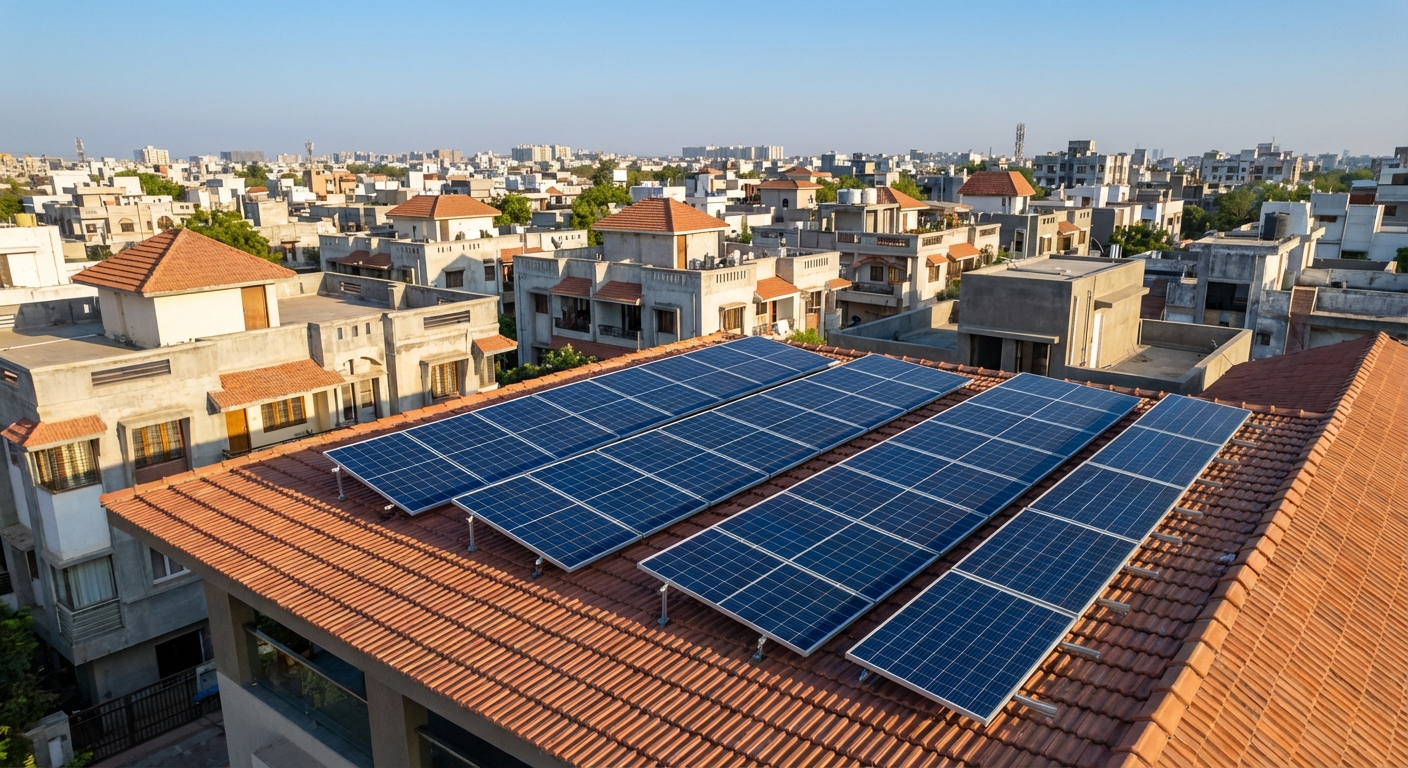
Several factors make 2026 an opportune time for solar installation in Gujarat:
- Rising Electricity Costs: Conventional electricity tariffs continue to increase, while solar technology costs have decreased significantly over the past decade, making the return on investment more attractive than ever.
- Government Support: The Gujarat government, along with central schemes like PM-KUSUM, continues to offer subsidies and incentives for solar adoption, particularly for residential and agricultural applications.
- Net Metering Benefits: Gujarat’s robust net metering policy allows you to export excess solar power to the grid and receive credits on your electricity bill, maximizing your savings.
- Technological Advancements: Modern solar panels offer higher efficiency, better warranties, and improved performance even in challenging weather conditions including Gujarat’s hot summers and monsoon season.
- Environmental Consciousness: Businesses and homeowners increasingly recognize the importance of reducing carbon footprint and contributing to sustainable development.
For businesses, solar installation addresses the critical pain point of high operational energy costs. Industrial facilities with large roof spaces or available land can significantly reduce their electricity expenses, improving profit margins and competitiveness. Homeowners benefit from substantial savings on monthly electricity bills while increasing property value and energy independence.
Step 1: Initial Consultation and Site Assessment
The solar installation journey begins with a thorough consultation and site assessment. This critical first step determines the feasibility, optimal system size, and expected performance of your solar installation.
What Happens During Initial Consultation
When you contact a reputable solar EPC company in Gujarat, the process typically starts with understanding your energy needs and goals. The consultation covers:
- Your current electricity consumption patterns and monthly bills
- Your objectives—whether you want to offset 100% of your consumption or a specific percentage
- Available roof space or land area for installation
- Budget considerations and financing preferences
- Timeline expectations and any specific requirements
This initial discussion can often happen over the phone or through a preliminary site visit. For those interested in exploring options, reaching out to experienced providers is the first step. Have Any Questions? +91 63904 05060
Comprehensive Site Assessment
Following the initial consultation, a technical team conducts a detailed site assessment. This involves:
Roof Condition and Structural Analysis: Engineers evaluate whether your roof can support the weight of solar panels and mounting structures. They check for any structural issues, roof age, and material type. For commercial and industrial installations, load-bearing capacity calculations are performed to ensure safety and compliance.
Orientation and Tilt Analysis: The ideal orientation for solar panels in Gujarat is south-facing, though east-west orientations can also work effectively. The assessment determines the optimal tilt angle based on your latitude to maximize energy generation throughout the year.
Shading Analysis: One of the most critical factors affecting solar performance is shading. The team analyzes potential shading from nearby buildings, trees, water tanks, or other obstructions throughout the day and across seasons. Even partial shading can significantly impact system performance.
Energy Consumption Analysis: Your past 12 months of electricity bills are analyzed to understand consumption patterns, peak demand periods, and seasonal variations. This data is crucial for sizing the system appropriately.
Electrical Infrastructure Review: The existing electrical setup, including the main distribution board, available space for inverter installation, and cable routing possibilities, is assessed.
The site assessment typically takes 2-4 hours for residential installations and may require multiple visits for large commercial or industrial projects. Following this assessment, you’ll receive a detailed feasibility report outlining the recommended system size, expected energy generation, and preliminary cost estimates.
Step 2: System Design and Equipment Selection
Once the site assessment is complete and you decide to proceed, the engineering team creates a customized system design tailored to your specific requirements and site conditions.
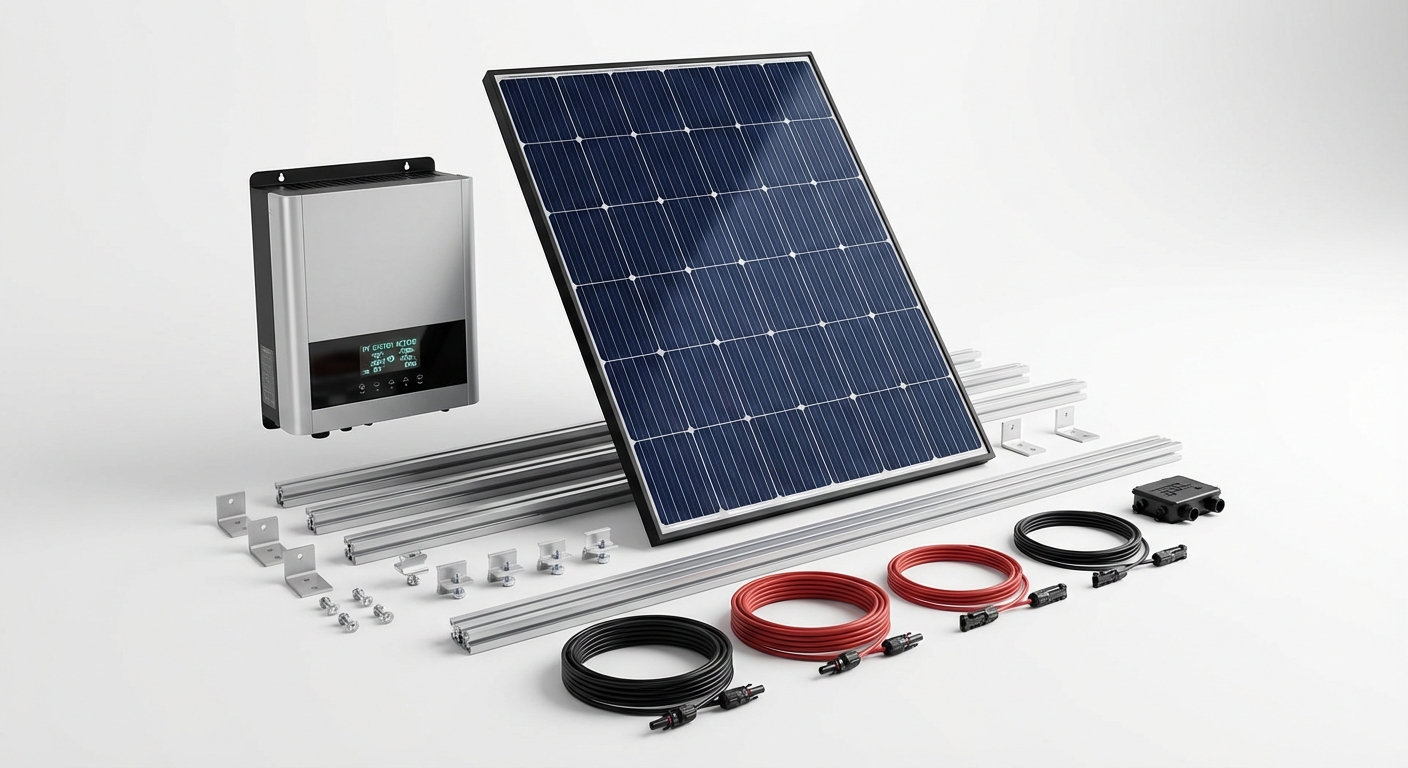
Custom System Design
The system design phase involves detailed engineering work including:
- 3D modeling of your roof or installation area with precise panel layout
- Electrical single-line diagrams showing all system components and connections
- String configuration to optimize performance and minimize losses
- Cable sizing and routing plans
- Earthing and lightning protection design
- Shading analysis using specialized software to predict performance
Professional EPC companies use advanced software tools to simulate system performance and provide accurate energy generation forecasts for your specific location in Gujarat.
Choosing Solar Modules (Panels)
Solar panels are the most visible component of your system and represent a significant portion of the investment. Key considerations include:
Panel Type: Monocrystalline panels offer higher efficiency (18-22%) and better performance in limited space, making them ideal for residential rooftops. Polycrystalline panels are slightly less efficient but can be cost-effective for larger installations where space isn’t constrained.
Wattage: Modern solar panels typically range from 330W to 550W per panel. Higher wattage panels mean fewer panels needed for the same capacity, reducing installation complexity.
Efficiency and Temperature Coefficient: In Gujarat’s hot climate, panels with better temperature coefficients maintain higher performance during summer months when temperatures can exceed 45°C.
Warranty: Reputable manufacturers offer 25-year performance warranties guaranteeing at least 80% output after 25 years, plus 10-12 year product warranties.
Inverter Selection
The inverter converts DC electricity generated by panels into AC electricity used by your appliances. This is often called the “brain” of the solar system.
String Inverters: Most common for residential and commercial installations, string inverters are cost-effective and reliable. They’re installed at a central location and handle the output from multiple panels connected in series.
Micro Inverters: These are installed on each panel individually, offering advantages in partially shaded conditions and easier system expansion. However, they come at a higher cost.
Hybrid Inverters: For those considering battery backup, hybrid inverters can manage both solar panels and battery storage, providing power during grid outages.
Quality inverters from established manufacturers typically carry 5-10 year warranties, with options to extend coverage.
Mounting Structures and Balance of System
The mounting structure must withstand Gujarat’s weather conditions including high winds during monsoon season and extreme heat in summer. Quality structures are made from hot-dip galvanized iron or aluminum, designed to last 25+ years without corrosion.
Other balance of system components include:
- DC and AC cables rated for outdoor solar applications
- MC4 connectors for panel interconnections
- DC isolators and AC distribution boards
- Earthing materials and lightning arrestors
- Monitoring systems for performance tracking
Experienced solar installation companies in Gujarat source quality components that are tested for Indian conditions and comply with relevant standards.
Step 3: Government Approvals and Documentation in Gujarat
Navigating the regulatory landscape is a crucial aspect of solar installation in Gujarat. Professional EPC companies handle this complex process on your behalf, but understanding the requirements helps you prepare necessary documents and set realistic timeline expectations.
Net Metering Application
Net metering is essential for grid-connected solar systems, allowing you to export excess power and receive credits. In Gujarat, the application process involves:
Distribution Company (DISCOM) Application: Depending on your location, you’ll apply to the relevant DISCOM—DGVCL (Dakshin Gujarat Vij Company Limited) for South Gujarat including Surat, MGVCL for Central Gujarat, PGVCL for Paschim Gujarat, or UGVCL for North Gujarat. Ahmedabad falls under Torrent Power in many areas.
The application includes technical details of your proposed system, site plans, and electrical diagrams. The DISCOM reviews the application and provides a feasibility approval, typically within 15-30 days for systems up to 100 kW.
Required Documentation
Standard documents required for net metering application include:
- Electricity bill copy and consumer number
- Property ownership documents or NOC from owner
- Identity proof (Aadhaar card, PAN card)
- System design and technical specifications
- Electrical single-line diagram
- Structural stability certificate (for rooftop installations)
- Photographs of the installation site
For commercial and industrial installations above certain capacities, additional technical clearances may be required.
Subsidy Applications
The Government of India’s PM-KUSUM scheme and other state-level initiatives offer subsidies for solar installations. For residential rooftop systems, subsidies can cover 20-40% of the installation cost for systems up to certain capacities.
Key points about subsidies in Gujarat:
- Subsidies are typically available only for grid-connected systems installed through empaneled vendors
- The subsidy amount is directly adjusted in your final invoice
- Applications are processed through the DISCOM portal
- Processing time can range from 2-6 months depending on scheme availability and documentation
For agricultural applications, PM-KUSUM Component B offers substantial support for farmers installing solar pumps and grid-connected systems.
Timeline for Approvals
In Gujarat, the approval timeline typically follows this pattern:
- Net metering feasibility approval: 15-30 days
- Subsidy application processing: 30-90 days (if applicable)
- Final DISCOM inspection after installation: 7-15 days
- Net meter installation: 7-15 days post-inspection
Experienced EPC companies maintain regular communication with DISCOM offices and understand the process intricacies, helping expedite approvals and avoid common pitfalls that can cause delays.
Step 4: Installation Process and Timeline
With approvals in place and equipment procured, the actual installation phase begins. This is where your solar dream becomes a visible reality.
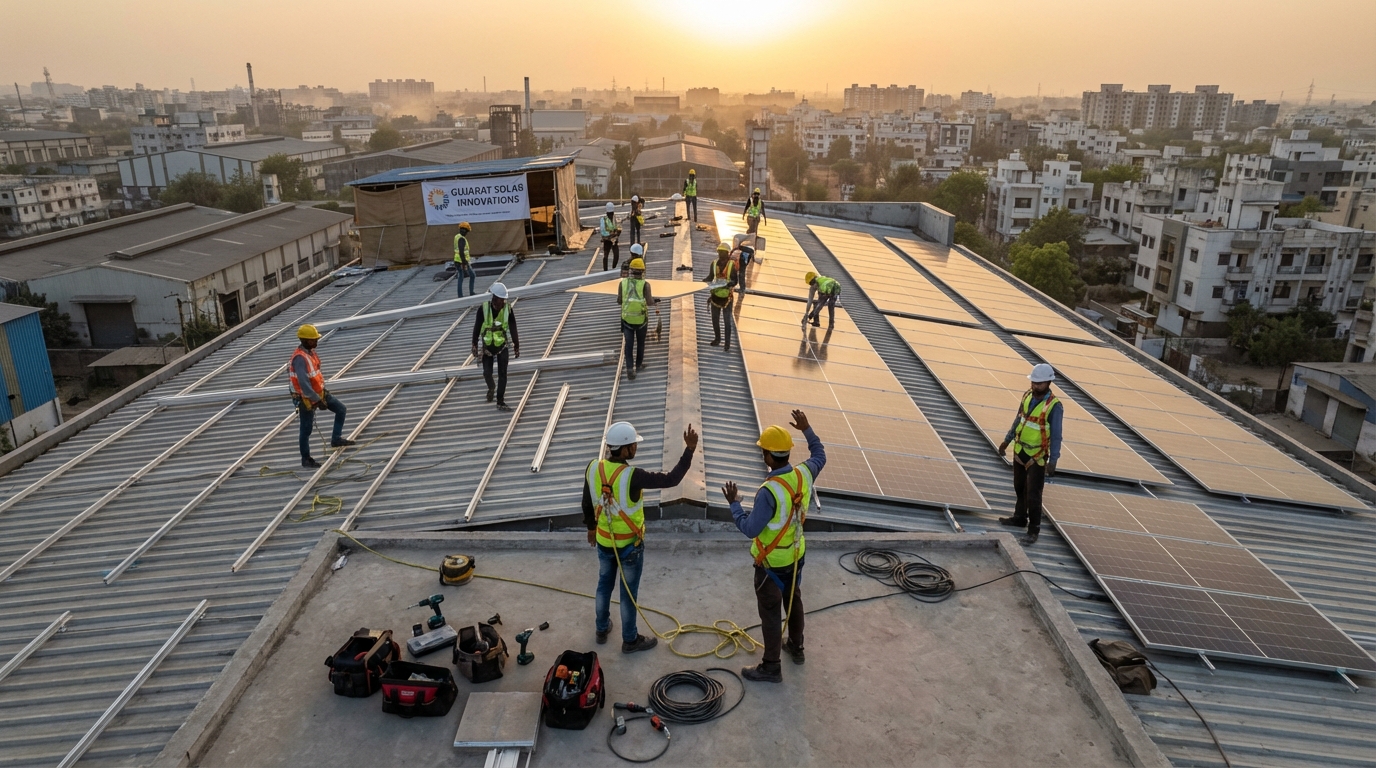
Pre-Installation Preparations
Before the installation team arrives, several preparations ensure a smooth process:
- Equipment delivery and verification at site
- Site clearing and ensuring safe access to the roof or installation area
- Arranging necessary tools, scaffolding, or lifting equipment for multi-story buildings
- Coordinating with building management (for commercial properties)
- Safety briefing and site safety setup
Day-by-Day Installation Process
Day 1-2: Mounting Structure Installation
The installation begins with mounting structure assembly. For rooftop installations, this involves:
- Marking precise locations for module mounting based on the approved design
- Installing base supports using appropriate fasteners (for metal roofs) or concrete blocks with waterproofing (for RCC roofs)
- Assembling the aluminum or GI mounting rails
- Ensuring proper alignment, leveling, and structural integrity
- Waterproofing all roof penetrations to prevent leakage
For ground-mounted systems, this phase includes foundation work, pole installation, and structure assembly, which may take longer depending on system size.
Day 2-3: Solar Panel Installation
Once the structure is ready, solar panels are carefully mounted:
- Panels are lifted to the roof using appropriate safety equipment
- Each panel is secured to the mounting rails using clamps
- Proper spacing is maintained for thermal expansion and maintenance access
- Panels are connected in series to form strings as per the design
- MC4 connectors ensure weatherproof electrical connections
This phase requires precision and care to avoid panel damage and ensure optimal performance.
Day 3-4: Electrical Work and Inverter Installation
The electrical integration phase includes:
- Installing the inverter at a shaded, well-ventilated location (inverters generate heat and perform better in cooler conditions)
- Running DC cables from panel strings to the inverter through proper conduits
- Installing DC isolators, surge protection devices, and earthing
- AC wiring from inverter to the main distribution board
- Installing AC isolators and protection devices
- Setting up the monitoring system (if included)
All electrical work must comply with Indian Electricity Rules and relevant standards. Professional installers ensure proper cable sizing, protection, and safety measures.
Day 4-5: Testing and Quality Checks
Before declaring the system ready, comprehensive testing is performed:
- Insulation resistance testing of all DC and AC circuits
- Polarity checks to ensure correct connections
- String voltage and current measurements
- Inverter configuration and parameter settings
- System startup and initial performance verification
- Safety checks including earthing continuity
Installation Timeline for Different System Sizes
Typical installation timelines in Gujarat:
- Residential (1-10 kW): 2-5 days of actual installation work
- Commercial (10-100 kW): 5-15 days depending on complexity and roof access
- Industrial/Large Commercial (100 kW – 1 MW): 3-8 weeks including civil work and extensive electrical integration
- Ground-mounted Solar Parks (1 MW+): 2-6 months depending on scale and site conditions
Weather conditions, particularly during monsoon season (July-September), can affect installation schedules. Experienced contractors plan accordingly and communicate any delays proactively.
Step 5: Testing, Commissioning and Grid Connection
Installation completion doesn’t mean your system is ready to generate power. The commissioning phase ensures everything works correctly and meets regulatory requirements.
System Testing and Quality Checks
Comprehensive testing goes beyond basic functionality:
Performance Testing: The system is operated under actual sunlight conditions to verify that power generation matches expected values based on irradiance levels. Any underperformance is investigated and corrected.
Safety Testing: All safety features including earthing, surge protection, and isolation devices are tested to ensure they function correctly. This is crucial for long-term safe operation.
Monitoring System Verification: If your system includes monitoring (highly recommended), the installation team verifies that data is being captured correctly and you can access performance information through mobile apps or web portals.
DISCOM Inspection Process
Before your system can be connected to the grid, the DISCOM conducts an inspection:
- You submit a commissioning request with installation completion certificate
- DISCOM schedules an inspection visit (typically within 7-15 days)
- The inspector verifies that installation matches approved design
- Safety measures, earthing, and protection devices are checked
- Compliance with technical standards is verified
If everything is in order, the DISCOM issues a commissioning certificate. Any deficiencies must be corrected before approval.
Net Meter Installation
Following successful inspection, the DISCOM installs a bidirectional net meter that measures both electricity consumed from the grid and excess solar power exported to the grid. This typically happens within 7-15 days of inspection approval.
The net meter is crucial for calculating your electricity bill under the net metering arrangement. In Gujarat, the net metering policy allows you to carry forward excess generation credits for up to 12 months.
Final Commissioning and Handover
Once the net meter is installed, your system is officially commissioned. The EPC company provides:
- Complete system documentation including electrical diagrams and equipment manuals
- Warranty certificates for all major components
- Training on system monitoring and basic troubleshooting
- Maintenance guidelines and schedule
- Emergency contact information for support
This marks the beginning of your solar journey—your system is now generating clean electricity and reducing your energy costs.
Solar Installation Costs in Gujarat (2026)
Understanding the financial aspects of solar installation in Gujarat is essential for making informed decisions. While costs vary based on system size, equipment quality, and installation complexity, here’s what you can expect in 2026.

Residential System Costs
For residential rooftop installations in Gujarat, costs typically range based on system capacity:
Small Systems (1-3 kW): Suitable for small homes with moderate electricity consumption. These systems can offset a significant portion of your electricity bill and are ideal for getting started with solar energy.
Medium Systems (3-5 kW): The most popular size for average Indian households, capable of meeting most daytime electricity needs and providing substantial savings.
Large Residential Systems (5-10 kW): For larger homes with higher consumption, multiple air conditioners, or those wanting to maximize solar adoption.
The per-kW cost generally decreases as system size increases due to economies of scale in equipment procurement and installation.
Commercial and Industrial System Costs
Commercial and industrial installations benefit from larger scale and typically see better per-kW pricing:
- Systems above 10 kW benefit from bulk equipment pricing
- Industrial installations (100 kW+) achieve the most competitive rates
- Ground-mounted systems may have additional civil work costs but can be more cost-effective than complex rooftop installations
For businesses in Gujarat’s industrial hubs like Surat, Vapi, Ankleshwar, and Rajkot, solar installations directly impact the bottom line by reducing operational expenses.
Factors Affecting Installation Costs
Several factors influence the final cost of your solar installation:
Equipment Quality: Premium solar panels and inverters from tier-1 manufacturers cost more but offer better performance, longer warranties, and greater reliability. The choice between cost and quality should align with your long-term goals.
Roof Complexity: Simple, accessible roofs with minimal obstructions cost less to install than complex multi-level roofs or those requiring extensive structural modifications.
System Type: Grid-connected systems are most cost-effective. Adding battery backup significantly increases costs but provides power security during outages.
Installation Location: Accessibility, distance from major cities, and local labor costs can impact pricing. However, established companies with multiple branch offices across Gujarat maintain consistent pricing.
Additional Features: Advanced monitoring systems, premium mounting structures, and aesthetic considerations can add to the base cost.
Available Subsidies and Incentives
Government support can significantly reduce your effective investment:
Central Government Subsidy: Under the rooftop solar program, residential consumers can receive subsidies that reduce upfront costs. The subsidy is typically higher for smaller systems and decreases for larger capacities.
PM-KUSUM Scheme: Agricultural consumers and farmers can benefit from substantial subsidies for solar pump installations and grid-connected systems.
Accelerated Depreciation: Commercial and industrial entities can claim accelerated depreciation benefits, improving the financial returns on solar investments.
Tax Benefits: Various tax incentives may be available for businesses investing in renewable energy.
It’s important to note that subsidy availability and amounts can change based on government policy and budget allocations. Consulting with experienced solar providers helps you understand current incentives applicable to your situation.
Return on Investment and Payback Period
Solar installations in Gujarat typically offer attractive financial returns:
Payback Period: Most residential systems achieve payback within 4-6 years, considering electricity savings and available subsidies. Commercial and industrial systems often see even faster payback due to higher electricity tariffs and larger consumption.
Lifetime Savings: With a 25+ year system lifespan, the total savings over the system’s life can be several times the initial investment, especially considering projected electricity tariff increases.
Return on Investment (ROI): Solar installations typically deliver 15-20% annual returns, making them one of the most attractive investment options available.
For accurate cost estimates and ROI calculations specific to your situation, contact experienced solar EPC companies who can provide detailed financial analysis based on your consumption patterns and site conditions.
Financing Options
Several financing options make solar accessible even without full upfront payment:
- Bank Loans: Many banks offer dedicated solar loans with attractive interest rates and tenures up to 10 years
- NBFC Financing: Non-banking financial companies provide quick approval and flexible repayment options
- Developer Financing: Some solar companies offer in-house financing or partnerships with financial institutions
- CAPEX Model: Traditional ownership where you invest upfront and own the system
- OPEX/PPA Model: For large commercial installations, power purchase agreements where a developer installs the system and you buy power at agreed rates
Post-Installation Support and Maintenance
A solar system is a long-term investment, and proper maintenance ensures optimal performance throughout its 25+ year lifespan.
Monitoring System Performance
Modern solar installations include monitoring systems that provide real-time performance data:
- Daily, monthly, and yearly energy generation statistics
- Real-time power output and system status
- Alerts for any performance issues or system faults
- Historical data for tracking long-term performance
- Mobile app access for convenient monitoring
Regular monitoring helps identify issues early, ensuring maximum energy generation and return on investment.
Regular Maintenance Requirements
Solar systems require minimal maintenance, but regular care optimizes performance:
Panel Cleaning: Gujarat’s dusty conditions, especially in industrial areas and during summer months, can reduce panel efficiency. Cleaning panels 3-4 times per year (or more frequently in dusty locations) maintains optimal performance. Cleaning is best done early morning or evening with water and soft brushes—never use abrasive materials.
Visual Inspections: Periodic visual checks for physical damage, loose connections, or debris accumulation help catch issues early.
Electrical Checks: Annual inspection of electrical connections, cables, and protection devices ensures safety and reliability.
Inverter Maintenance: Inverters require occasional cleaning of ventilation areas and verification of proper operation. Most modern inverters are quite reliable and require minimal intervention.
Vegetation Management: For ground-mounted systems, keeping vegetation trimmed prevents shading and maintains access for maintenance.
Warranty Coverage and Support
Quality solar installations come with comprehensive warranty coverage:
Panel Warranties: Typically 25-year performance warranty (guaranteeing minimum 80% output after 25 years) and 10-12 year product warranty against manufacturing defects.
Inverter Warranties: Usually 5-10 years, with options to purchase extended warranties.
Installation Warranty: Reputable EPC companies provide 5-10 year workmanship warranties covering installation quality, mounting structures, and waterproofing.
Comprehensive Maintenance Contracts: Many companies offer annual maintenance contracts (AMC) that include regular cleaning, inspections, and priority support.
Troubleshooting Common Issues
While solar systems are reliable, occasional issues may arise:
- Reduced Output: Often caused by soiling, shading, or inverter issues. Monitoring systems help identify the cause quickly.
- Inverter Errors: Modern inverters display error codes that help diagnose issues. Many problems can be resolved remotely by support teams.
- Grid Synchronization Issues: Occasionally, inverters may disconnect from the grid due to voltage fluctuations. This is a safety feature and usually resolves automatically.
- Physical Damage: Extreme weather or falling objects can damage panels. Comprehensive insurance can cover such incidents.
Choosing an EPC company with strong after-sales support ensures quick resolution of any issues that arise.
Performance Optimization Tips
Maximize your solar system’s performance with these practices:
- Keep panels clean, especially after dust storms or extended dry periods
- Monitor performance regularly and investigate any significant drops
- Ensure inverter ventilation areas remain clear and clean
- Trim any growing vegetation that might cause shading
- Schedule professional inspections annually
- Keep all system documentation and warranty papers organized
- Maintain good communication with your EPC provider for support
Choosing the Right Solar Installation Partner in Gujarat
The success of your solar installation largely depends on choosing the right EPC partner. Gujarat has numerous solar companies, but not all offer the same level of expertise, quality, and support.
What to Look for in a Solar EPC Company
Experience and Track Record: Companies with extensive experience understand local conditions, regulatory processes, and potential challenges. Look for providers with hundreds or thousands of successful installations across residential, commercial, and industrial segments.
Local Presence: Companies with offices and service teams in Gujarat can provide better support, faster response times, and understanding of local regulations. Branch offices in multiple cities indicate commitment to the region.
Comprehensive Services: The best EPC companies offer end-to-end solutions—from site assessment and design to installation, commissioning, and after-sales support. This single-point responsibility ensures accountability.
Quality Equipment: Verify that the company uses quality components from reputable manufacturers. Tier-1 solar panels and branded inverters may cost slightly more but deliver better long-term value.
Technical Expertise: The company should have qualified engineers and certified installers who understand the technical nuances of solar system design and installation.
Certifications and Credentials
Look for companies with relevant certifications and empanelments:
- Empanelment with state DISCOMs for subsidy-eligible installations
- ISO certifications for quality management
- Membership in industry associations like GSIA (Gujarat Solar Industries Association)
- Certified engineers and installers on the team
- Recognition or awards from government bodies or industry organizations
After-Sales Support Considerations
Solar systems operate for 25+ years, making after-sales support crucial:
- Clear warranty terms and conditions
- Responsive customer support with multiple contact channels
- Local service teams for quick issue resolution
- Availability of spare parts and replacement components
- Annual maintenance contract options
- Performance monitoring and remote diagnostics capabilities
Companies established in Gujarat for several years with proven track records are more likely to be around for the long term to honor warranties and provide support.
Questions to Ask Before Signing Up
Before finalizing your solar installation partner, ask these important questions:
- How many similar installations have you completed in Gujarat?
- Can you provide references from recent customers in my area?
- What brands of panels and inverters do you recommend and why?
- What warranties are included, and what do they cover?
- How do you handle the government approval and subsidy process?
- What is the complete installation timeline from contract to commissioning?
- What after-sales support and maintenance services do you offer?
- Do you provide performance monitoring systems?
- What happens if there’s an issue during the warranty period?
- Can you provide a detailed cost breakdown and ROI analysis?
A professional company will answer all questions transparently and provide detailed documentation to support their claims.
Frequently Asked Questions About Solar Installation in Gujarat
How long does the entire solar installation process take from start to finish?
The complete timeline from initial consultation to commissioned system typically ranges from 2-4 months for residential installations. This includes site assessment (1 week), system design and approvals (4-8 weeks), equipment procurement (2-4 weeks), installation (3-7 days), and DISCOM inspection and net meter installation (2-4 weeks). The approval phase is usually the longest component. Commercial and industrial projects may take longer depending on scale and complexity.
What is the lifespan of a solar system?
Solar panels are designed to last 25-30 years or more, with performance warranties typically guaranteeing at least 80% output after 25 years. Inverters generally last 10-15 years and may need replacement once during the system’s lifetime. Mounting structures, when properly installed with quality materials, last as long as the panels. With proper maintenance, your solar system can generate electricity for three decades or more.
Do solar panels work during Gujarat’s monsoon season?
Yes, solar panels continue to generate electricity during monsoon season, though output is reduced on cloudy and rainy days. Panels can generate 10-25% of their rated capacity even on overcast days, as they use both direct and diffuse sunlight. Gujarat’s monsoon season (July-September) accounts for only 3 months of the year, and the excellent solar irradiance during the remaining 9 months more than compensates. Annual energy generation calculations account for seasonal variations.
Can I expand my solar system later if my electricity needs increase?
Yes, solar systems can typically be expanded, though several factors need consideration. You’ll need available roof space for additional panels, and your inverter must have capacity to handle the increased load (or may need upgrading). You’ll also need to apply for net metering modification with your DISCOM. Planning for potential future expansion during initial design can make later additions easier. Discuss expansion possibilities with your EPC provider during the planning phase.
What happens to my solar system during power cuts?
Standard grid-connected solar systems automatically shut down during power cuts for safety reasons—this prevents electricity from being fed into the grid while utility workers are making repairs. If you want power during outages, you’ll need a hybrid system with battery backup or a special inverter with backup functionality. These systems cost more but provide energy security during grid failures, which can be valuable for critical applications.
How much maintenance does a solar system require?
Solar systems require minimal maintenance compared to other power generation technologies. Primary maintenance involves cleaning panels 3-4 times per year (more in dusty areas), visual inspections for damage or debris, and annual professional checkups of electrical connections and system performance. Most systems operate reliably with this basic maintenance schedule. Many EPC companies offer annual maintenance contracts that handle all required servicing.
Start Your Solar Journey in Gujarat Today
Solar installation in Gujarat represents a smart investment in clean energy, cost savings, and energy independence. With abundant sunshine, supportive government policies, and mature solar infrastructure, Gujarat offers ideal conditions for solar adoption in 2026.
Whether you’re a homeowner looking to reduce electricity bills, a business seeking to lower operational costs, or an industrial facility planning large-scale solar implementation, understanding the complete installation process helps you make informed decisions and set realistic expectations.
The journey from initial consultation to a fully commissioned solar system involves multiple steps—site assessment, system design, equipment selection, government approvals, professional installation, and commissioning. Each phase is crucial for ensuring optimal system performance and long-term reliability.
Choosing the right solar EPC partner makes all the difference. Look for experienced companies with proven track records in Gujarat, comprehensive service offerings, quality equipment, and strong after-sales support. Companies like Heaven Green Energy Limited, with established presence across Gujarat including Surat, Ahmedabad, and Junagadh, bring the expertise and local knowledge necessary for successful solar installations.
The financial benefits of solar are compelling—with payback periods of 4-6 years, 25+ year system lifespans, and substantial electricity savings, solar installations deliver excellent returns on investment. Available subsidies and financing options make solar accessible to a wide range of consumers.
Don’t let high electricity costs continue to drain your finances. Take the first step toward energy independence and sustainability. Reach out to experienced solar professionals who can assess your specific needs, design an optimal system, and guide you through every step of the installation process.
Ready to explore solar energy for your home or business? Have Any Questions? +91 63904 05060. The expert team can provide detailed consultations, site assessments, and customized solar solutions tailored to your requirements and budget.
The sun shines bright over Gujarat—it’s time to harness that abundant energy for a cleaner, more cost-effective future. Your solar journey begins with a single step. Make that step today.