


Choosing the right solar contractor is one of the most critical decisions you’ll make when transitioning to solar energy. A qualified contractor ensures your system performs optimally for decades, while a poor choice can lead to underperforming installations, safety hazards, and financial losses. With Gujarat emerging as a solar powerhouse and thousands of installations happening across the state, selecting a reliable solar contractor requires careful evaluation and due diligence.
This comprehensive guide walks you through everything you need to know about choosing a solar contractor in 2026, from verifying certifications to identifying red flags and asking the right questions during consultations.
Why Choosing the Right Solar Contractor Matters
The quality of your solar installation directly impacts your return on investment, system lifespan, and energy savings. A professional solar contractor brings technical expertise, proper equipment, and adherence to safety standards that protect your property and investment.
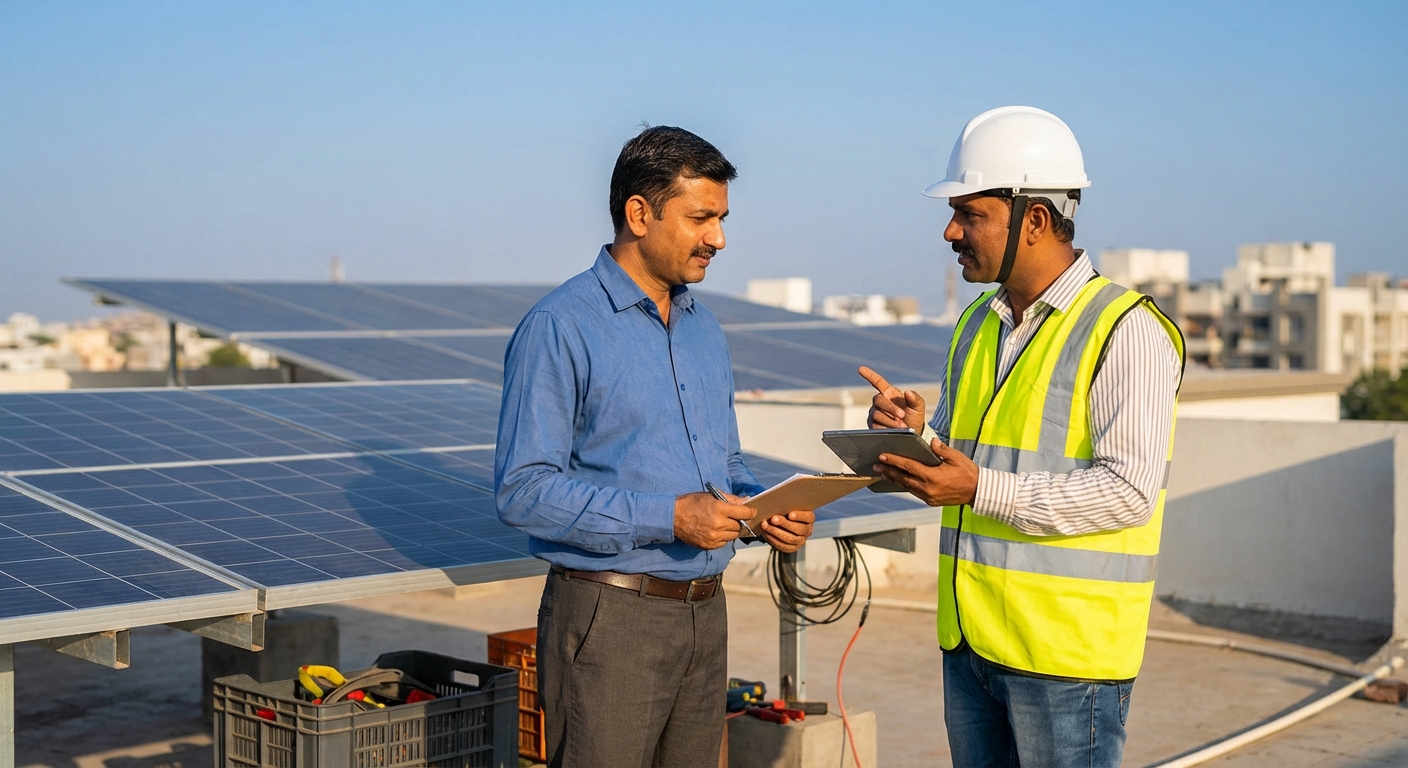
In Gujarat’s rapidly growing solar market, where residential and commercial installations are increasing year over year, the difference between a skilled contractor and an inexperienced one becomes evident within months of installation. Poor workmanship can result in water leakage through roof penetrations, electrical hazards, voided warranties, and systems that generate far less power than promised.
Consider these impacts of contractor selection:
- System Performance: Proper installation ensures your panels operate at peak efficiency, maximizing energy production and reducing your electricity bills
- Safety and Compliance: Licensed contractors follow electrical codes and building regulations, preventing fire hazards and structural issues
- Warranty Protection: Manufacturer warranties often require professional installation by certified contractors
- Long-term Support: Reliable contractors provide ongoing maintenance and troubleshooting throughout your system’s 25-year lifespan
- Financial Security: Proper documentation and permits protect your investment and property value
For businesses and homeowners in Gujarat investing anywhere from ₹50,000 to several crores in solar installations, taking time to select the right solar contractor is essential for protecting that investment.
1. Verify Essential Certifications and Licenses
Before engaging any solar contractor, verify their credentials and certifications. Legitimate solar contractors in India should possess specific licenses and empanelments that demonstrate their qualifications and compliance with industry standards.
Key Certifications to Look For
MNRE Empanelment: The Ministry of New and Renewable Energy maintains a list of empaneled vendors and channel partners. Contractors empaneled with MNRE have met specific technical and financial criteria, making them eligible to execute government-subsidized solar projects. You can verify empanelment status on the official MNRE website.
State Electricity Board Approvals: In Gujarat, contractors should be registered with the Gujarat Energy Development Agency (GEDA) and approved by local electricity distribution companies (DISCOMs) like UGVCL, DGVCL, MGVCL, and PGVCL. This approval is essential for grid-connected systems and net metering applications.
ISO Certifications: Look for ISO 9001 (quality management) and ISO 14001 (environmental management) certifications. These international standards indicate the contractor follows systematic processes and maintains quality control.
Electrical Contractor License: Solar installations involve complex electrical work. Your contractor should hold a valid electrical contractor license issued by the state electrical inspectorate.
Insurance Coverage: Reputable contractors carry comprehensive general liability insurance and workers’ compensation coverage. This protects you from liability if accidents occur during installation.
How to Verify Credentials
Don’t simply take a contractor’s word about their certifications. Request copies of license documents and verify them through official channels. Check the MNRE website for empanelment status, contact GEDA to confirm registration, and ask for insurance certificates with current dates. A trustworthy solar contractor will readily provide this documentation.
2. Evaluate Experience and Track Record
Experience matters significantly in solar installations. A seasoned solar contractor has encountered and solved various installation challenges, understands local conditions, and has refined their processes over hundreds of projects.
When evaluating experience, consider these factors:
Years in Business: While newer companies can be competent, contractors with five or more years in the solar industry have weathered market changes and built substantial expertise. Heaven Green Energy, established in 2017, has completed over 10,000 installations across Gujarat, demonstrating sustained growth and customer satisfaction.
Project Portfolio Diversity: Look for contractors experienced with your specific project type. Residential rooftop installations differ significantly from commercial or industrial ground-mounted systems. A contractor specializing in solar EPC services should demonstrate experience across multiple project scales.
Installation Capacity: Ask about the contractor’s annual installation capacity measured in kilowatts or megawatts. Higher capacity indicates established operations, trained workforce, and reliable supply chains.
Local Market Knowledge: Contractors familiar with Gujarat’s climate, monsoon patterns, dust conditions, and regulatory environment can design systems optimized for local conditions. They understand which equipment performs best in Gujarat’s hot, dusty climate and how to navigate state-specific subsidy programs.
What to Look for in a Solar Contractor’s Portfolio
Request to see completed projects similar to yours. A comprehensive portfolio should include:
- Before and after installation photos showing quality workmanship
- Project specifications including system size, equipment used, and installation timeline
- Performance data from existing installations demonstrating actual energy generation
- Customer testimonials with verifiable contact information
Don’t hesitate to ask for references and actually contact previous customers. Ask about their experience with the contractor, system performance, and post-installation support. Visiting a completed installation site can provide valuable insights into workmanship quality.
3. Assess Technical Expertise and Product Knowledge
Technical competence separates exceptional solar contractors from mediocre ones. Your contractor should demonstrate deep knowledge of solar technology, system design, and equipment selection.
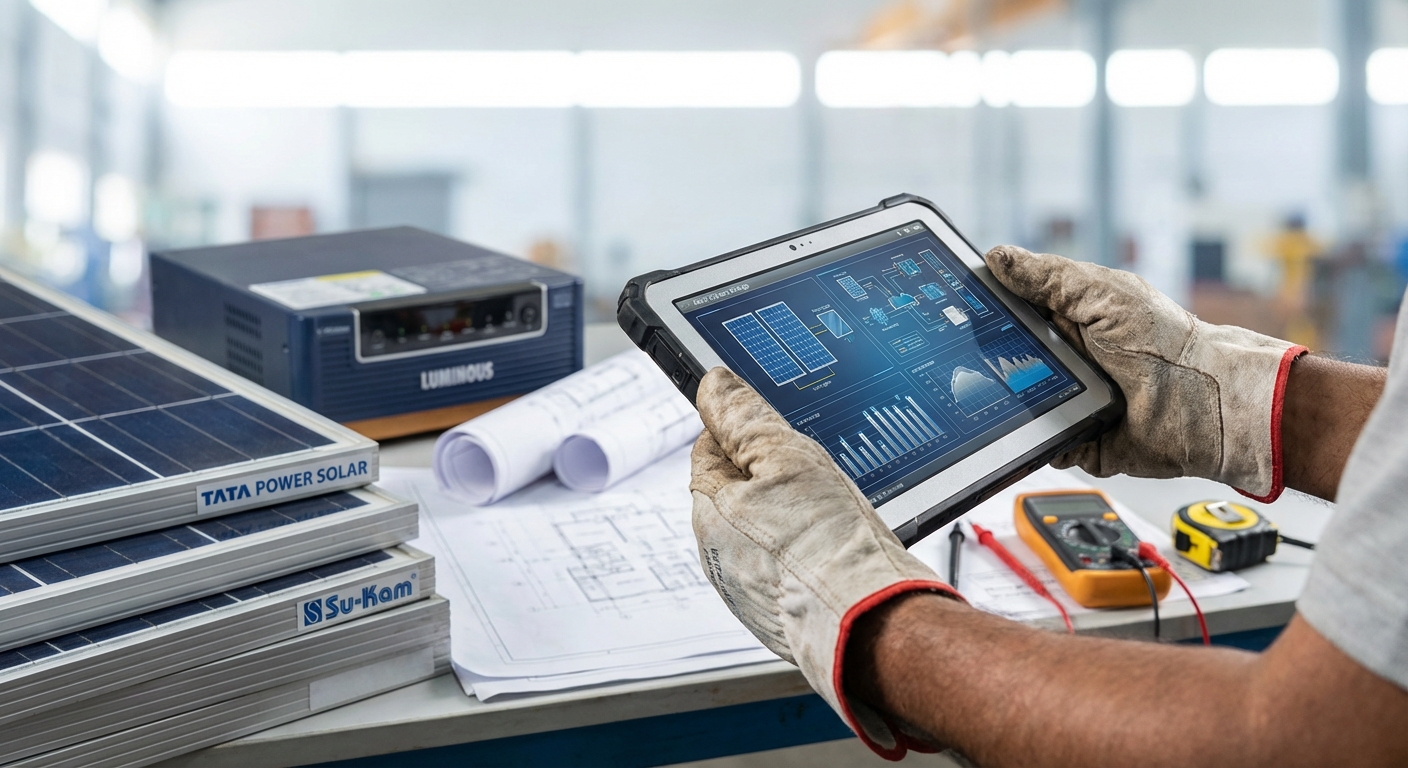
Understanding of Solar EPC Services: For larger projects, comprehensive EPC (Engineering, Procurement, and Construction) capabilities are essential. The contractor should handle everything from initial site assessment and system design through equipment procurement, installation, commissioning, and grid connection. This turnkey approach ensures accountability and streamlined project execution.
Equipment Knowledge: A knowledgeable solar contractor stays current with the latest solar panel technologies, inverter options, and mounting systems. They should explain the differences between monocrystalline and polycrystalline panels, string inverters versus microinverters, and recommend equipment suited to your specific needs and budget.
When discussing solar brands in Gujarat, your contractor should be familiar with reputable manufacturers and explain why they recommend specific brands. They should discuss panel efficiency ratings, temperature coefficients, degradation rates, and warranty terms in clear language.
System Design Capabilities: Professional contractors conduct thorough site assessments before proposing solutions. They should evaluate your roof structure, orientation, shading patterns, electrical panel capacity, and energy consumption patterns. The resulting system design should be customized to your property, not a one-size-fits-all template.
Inverter Expertise: The inverter is the heart of your solar system, converting DC power from panels to AC power for your home or business. Your contractor should recommend inverters appropriate for your system size and explain features like monitoring capabilities, efficiency ratings, and warranty coverage.
Local Climate Considerations: Gujarat experiences intense heat, seasonal dust storms, and monsoon rains. Your solar contractor should design systems accounting for these conditions, including proper panel tilt for dust shedding, adequate ventilation for inverters, and waterproofing for all electrical connections.
Questions to Test Technical Knowledge
During consultations, ask technical questions to gauge expertise:
- How do you determine optimal panel tilt angle for my location?
- What string configuration will you use for my system and why?
- How will you handle shading from nearby structures or trees?
- What monitoring system will be installed to track performance?
- How do you size the inverter relative to panel capacity?
A competent contractor will answer these questions confidently with specific technical details, not vague generalizations.
4. Review Contract Terms and Warranties
A comprehensive contract protects both you and your solar contractor by clearly defining expectations, timelines, and responsibilities. Never proceed with installation based on verbal agreements alone.
Essential Contract Elements:
Your solar installation contract should include detailed specifications of all equipment (panel make and model, inverter specifications, mounting hardware), complete system size in kilowatts, expected annual energy production, total project cost with itemized breakdown, payment schedule tied to project milestones, installation timeline with start and completion dates, and warranty information for all components.
Warranty Coverage: Solar installations involve multiple warranty types. Panel manufacturers typically provide 25-year performance warranties guaranteeing minimum power output and 10-12 year product warranties covering defects. Inverters usually carry 5-10 year warranties, with extended warranties available. Critically, your contractor should provide a workmanship warranty covering installation quality for at least 5 years.
Ensure warranties are clearly documented with contact information for making claims. Some contractors offer comprehensive warranties covering all system components and labor, simplifying the claims process.
Performance Guarantees: Reputable contractors may guarantee minimum system performance, typically 90-95% of estimated annual production. This guarantee protects you if the system underperforms due to design or installation issues.
Payment Terms: Avoid contractors demanding full payment upfront. Standard practice involves milestone-based payments such as 20-30% advance, 40-50% upon material delivery, and 20-30% after installation and commissioning. This structure protects you by ensuring the contractor completes work before receiving full payment.
Maintenance and Support: Clarify what post-installation support is included. Will the contractor provide annual maintenance? How quickly will they respond to service calls? What monitoring and troubleshooting services are available? Some contractors offer annual maintenance contracts covering cleaning, inspection, and performance optimization.
Understanding the solar payback period helps you evaluate whether the contract terms align with your financial goals and expected return on investment.
5. Identify Red Flags When Choosing a Solar Contractor
Recognizing warning signs helps you avoid unreliable contractors who may deliver substandard work or disappear after installation. Be alert for these red flags:
High-Pressure Sales Tactics: Legitimate solar contractors don’t use aggressive sales pressure or create artificial urgency. Be wary of claims like “this price expires today” or “limited slots available.” Quality contractors are confident in their value and give you time to make informed decisions.
Too-Good-to-Be-True Promises: Exaggerated claims about energy savings, unrealistic payback periods, or promises of “free solar” should raise concerns. While solar offers excellent returns, honest contractors provide realistic projections based on your actual energy consumption and local conditions.
Lack of Documentation: Contractors unable or unwilling to provide licenses, insurance certificates, references, or detailed proposals are likely unqualified or operating illegally. Professional contractors maintain comprehensive documentation and share it readily.
No Physical Presence: Contractors without a physical office, showroom, or established local presence may be fly-by-night operations. Local contractors with offices in Gujarat cities like Surat, Ahmedabad, or Junagadh are more accessible for ongoing support and warranty service.
Vague Proposals: Proposals lacking specific equipment details, system specifications, or itemized costs make comparison difficult and may hide inferior components. Detailed proposals demonstrate professionalism and transparency.
Unwillingness to Provide References: Contractors with satisfied customers are eager to provide references. Reluctance to share customer contacts or completed project information suggests problems with previous installations.
Upfront Payment Demands: Requiring full or majority payment before starting work is a major red flag. This practice leaves you vulnerable if the contractor abandons the project or delivers poor quality work.
Limited Warranty Periods: Solar equipment comes with substantial manufacturer warranties. Contractors offering only 1-2 year workmanship warranties may lack confidence in their installation quality. Look for minimum 5-year workmanship warranties.
Subcontracting Without Disclosure: Some companies act as sales fronts, subcontracting actual installation to unknown third parties. This arrangement complicates accountability and warranty service. Ensure the company you contract with performs the installation with their own trained crews.
6. Ask These Critical Questions During Consultation
Asking the right questions during initial consultations helps you evaluate contractor competence and compatibility. Prepare these questions before meeting potential solar contractors:
About Certifications and Experience
- Are you empaneled with MNRE and registered with GEDA?
- Can you provide copies of your electrical contractor license and insurance certificates?
- How many years have you been installing solar systems?
- How many installations have you completed in Gujarat?
- Can you provide references for projects similar to mine?
- Do you have experience with my specific project type (residential, commercial, or industrial)?
About Equipment and Installation
- Which solar panel brands do you recommend and why?
- What inverter options are available for my system size?
- Will you conduct a detailed site assessment before designing my system?
- How do you account for Gujarat’s climate conditions in your designs?
- What mounting system will you use and how will you ensure roof integrity?
- Do you handle all electrical work in-house or subcontract it?
- What monitoring system will be installed to track performance?
About Project Timeline and Process
- What is the expected timeline from contract signing to system commissioning?
- Will you handle all permits and approvals with local authorities?
- How do you manage the net metering application process?
- What happens if there are delays due to weather or material availability?
- Will the same crew handle the entire installation or will different teams be involved?
About Financing and Subsidies
- Can you assist with solar subsidy applications under government schemes?
- Do you offer financing options or work with lending partners?
- What is your payment schedule and what does each milestone include?
- Are there any additional costs not included in the quoted price?
- How do you calculate the expected payback period for my system?
About Warranties and Support
- What workmanship warranty do you provide?
- How do I make warranty claims if issues arise?
- Do you offer annual maintenance contracts?
- What is your typical response time for service calls?
- Will you provide training on system operation and monitoring?
- What happens if your company closes or is sold?
Questions Specific to Gujarat Installations
- How do you design systems to handle Gujarat’s dust accumulation?
- What waterproofing measures do you take for monsoon season?
- Are you familiar with the specific requirements of my local DISCOM?
- Have you worked with PM-KUSUM or other Gujarat-specific solar schemes?
- Do you have local service technicians available in my area?
Pay attention not just to the answers but to how the solar contractor responds. Professional contractors answer questions patiently, provide detailed explanations, and demonstrate genuine interest in understanding your needs.
7. Compare Multiple Solar Contractor Proposals
Never accept the first proposal you receive. Comparing multiple quotes helps you understand market rates, identify the best value, and negotiate better terms.

Request at Least Three Proposals: Contact three to five solar contractors to request detailed proposals. This sample size gives you a good sense of pricing ranges and different approaches to your project.
Ensure Apples-to-Apples Comparisons: Provide each contractor with identical information about your energy consumption, property details, and project goals. Request proposals with the same system size so you can compare fairly.
How to Evaluate Proposals
Look Beyond Price: The lowest bid isn’t always the best value. Consider equipment quality, warranty terms, contractor experience, and included services. A slightly higher price may deliver significantly better long-term value through superior equipment or more comprehensive support.
Analyze Equipment Specifications: Compare the specific panel models, inverter brands, and mounting systems proposed. Research the equipment specifications independently to understand efficiency ratings, warranty terms, and manufacturer reputations.
Review Cost Breakdowns: Detailed proposals should itemize costs for equipment, labor, permits, and other expenses. This transparency helps you understand where your money goes and identify any unusual charges.
Evaluate Energy Production Estimates: Contractors should provide estimated annual energy production based on your location, roof orientation, and system size. Compare these estimates across proposals. Wildly optimistic projections may indicate unrealistic promises.
Consider Value-Added Services: Some contractors include services like annual maintenance, extended monitoring, or performance guarantees. These additions provide value beyond the basic installation.
Create a Comparison Matrix
Organize proposal information in a spreadsheet comparing key factors:
- Total system cost and cost per watt
- Panel brand, model, efficiency, and warranty
- Inverter brand, model, and warranty
- Workmanship warranty duration
- Estimated annual energy production
- Payback period calculation
- Payment schedule and terms
- Installation timeline
- Included services (monitoring, maintenance, etc.)
- Contractor experience and credentials
This structured comparison makes it easier to evaluate proposals objectively and identify the best overall value.
Solar Contractor Selection Checklist
Use this comprehensive checklist to evaluate each solar contractor you consider:

Credentials and Qualifications
- ☐ MNRE empanelment verified
- ☐ GEDA registration confirmed
- ☐ Valid electrical contractor license
- ☐ ISO certifications (9001, 14001)
- ☐ Current insurance certificates provided
- ☐ Local DISCOM approval for net metering
Experience and Reputation
- ☐ Minimum 3-5 years in solar industry
- ☐ Portfolio of completed projects reviewed
- ☐ Experience with similar project type
- ☐ References contacted and verified
- ☐ Physical office location visited
- ☐ Online reviews and ratings checked
Technical Competence
- ☐ Detailed site assessment conducted
- ☐ Customized system design provided
- ☐ Equipment recommendations explained clearly
- ☐ Technical questions answered satisfactorily
- ☐ Understanding of local climate considerations demonstrated
- ☐ Monitoring and performance tracking included
Proposal Quality
- ☐ Detailed equipment specifications provided
- ☐ Itemized cost breakdown included
- ☐ Realistic energy production estimates
- ☐ Clear timeline with milestones
- ☐ Warranty terms clearly documented
- ☐ Payment schedule reasonable and milestone-based
Contract Terms
- ☐ Comprehensive written contract provided
- ☐ All equipment specifications in writing
- ☐ Minimum 5-year workmanship warranty
- ☐ Performance guarantee included
- ☐ Maintenance and support terms defined
- ☐ Warranty claim process explained
Red Flag Assessment
- ☐ No high-pressure sales tactics
- ☐ Realistic promises and projections
- ☐ Willing to provide all documentation
- ☐ Established local presence
- ☐ Transparent about subcontracting
- ☐ Reasonable payment terms (no full upfront payment)
Communication and Service
- ☐ Responsive to inquiries and questions
- ☐ Clear and patient explanations
- ☐ Professional and courteous interactions
- ☐ Willing to customize solutions
- ☐ Post-installation support clearly defined
- ☐ Local service availability confirmed
A contractor should check most or all boxes in each category. Any significant gaps warrant further investigation or consideration of alternative contractors.
Understanding Solar EPC Services in Gujarat
For commercial, industrial, and large-scale residential projects, comprehensive solar EPC services offer significant advantages. EPC stands for Engineering, Procurement, and Construction, representing a turnkey approach where a single contractor handles every aspect of your solar project.
Engineering: This phase includes site assessment, system design, structural analysis, electrical planning, and obtaining necessary approvals. Professional engineering ensures your system is optimized for your specific location and energy needs.
Procurement: The EPC contractor sources all required materials including solar panels, inverters, mounting structures, cables, and accessories. Established contractors have relationships with quality manufacturers and can procure equipment at competitive prices.
Construction: This encompasses the physical installation, electrical work, grid connection, testing, and commissioning. A single team manages the entire construction process, ensuring quality control and accountability.
Benefits of EPC Approach: Working with a comprehensive EPC contractor simplifies project management by providing a single point of contact for all aspects. It ensures accountability since one company is responsible for the entire system performance. It often results in faster project completion through streamlined coordination. It typically includes post-installation support and maintenance services.
For businesses and property owners in Gujarat planning significant solar investments, partnering with an experienced EPC contractor reduces complexity and risk while ensuring professional execution from concept to commissioning.
Making Your Final Solar Contractor Decision
After conducting thorough research, comparing proposals, and evaluating contractors against your checklist, you’re ready to make your final decision. This choice will impact your solar experience for the next 25 years, so take time to weigh all factors carefully.
Trust Your Instincts: Beyond credentials and proposals, consider your comfort level with each contractor. Do they listen to your concerns? Do they communicate clearly? Do you feel confident in their expertise? Trust and communication are essential for a successful long-term relationship.
Prioritize Value Over Price: While budget matters, the cheapest option rarely delivers the best long-term value. Consider the total cost of ownership including equipment quality, warranty coverage, and ongoing support. A slightly higher upfront investment in quality equipment and professional installation pays dividends through better performance and fewer problems.
Verify Everything in Writing: Before signing any contract, ensure all promises, specifications, and terms are documented in writing. Verbal assurances mean nothing if problems arise later. Review the contract carefully and don’t hesitate to request clarifications or modifications.
Consider Local Expertise: Contractors with established presence in Gujarat understand local regulations, climate challenges, and utility requirements. They’re also more accessible for ongoing service and support. Companies with multiple offices across Gujarat can provide faster response times and better local knowledge.
Plan for the Long Term: Your relationship with your solar contractor extends far beyond installation day. Consider their capacity to provide maintenance, troubleshooting, and support throughout your system’s lifespan. Contractors committed to long-term customer relationships demonstrate this through comprehensive warranties and responsive service.
Choosing a solar contractor is a significant decision that requires careful evaluation of credentials, experience, technical expertise, and contract terms. By following the guidance in this comprehensive guide, you can confidently select a contractor who will deliver a high-quality solar installation that meets your energy goals and provides excellent returns for decades to come.
Heaven Green Energy Limited has been serving Gujarat since 2017 with over 10,000 successful installations across residential, commercial, and industrial sectors. As one of the top EPC companies in Gujarat with offices in Surat, Ahmedabad, and Junagadh, we provide comprehensive turnkey solar solutions backed by professional engineering, quality equipment, and dedicated customer support. Our team of certified professionals handles everything from initial consultation and system design through installation, commissioning, and ongoing maintenance.
Ready to start your solar journey with a trusted solar contractor in Gujarat? Contact Heaven Green Energy at +91 63904 05060 to schedule a free consultation and site assessment. Our experienced team will evaluate your property, answer your questions, and provide a detailed proposal customized to your energy needs and budget. Take the first step toward energy independence and substantial electricity savings today.
This blog post was written using thestacc.com