


Selecting the right solar partner for your large-scale solar project is one of the most critical decisions you’ll make as a project developer, business owner, or investor. With multi-megawatt installations requiring significant capital investment and spanning decades of operation, the consequences of choosing the wrong solar EPC partner can be devastating—from cost overruns and timeline delays to poor system performance and compromised returns on investment.
In Gujarat’s rapidly expanding solar market, where ground-mounted solar parks and industrial installations are becoming increasingly common, the stakes have never been higher. The right solar partner brings not just technical expertise and execution capabilities, but also financial stability, quality assurance, and long-term support that ensures your solar investment delivers optimal performance for 25 years or more.
This comprehensive guide walks you through the essential evaluation criteria, critical red flags to watch for, and proven strategies for selecting a solar partner who will transform your large-scale solar vision into a profitable, sustainable reality in 2026.

Why Choosing the Right Solar Partner Matters in 2026
The solar energy landscape in India has evolved dramatically over the past few years. As of 2026, India’s installed solar capacity continues to grow exponentially, with Gujarat leading as one of the top solar-producing states. Large-scale solar projects now represent billions of rupees in investment, making partner selection a strategic business decision rather than a simple procurement exercise.
When you choose a solar partner for a multi-megawatt project, you’re not just hiring a contractor—you’re entering into a long-term relationship that will impact your project’s financial performance for decades. The right solar EPC partner ensures:
- Optimal system design that maximizes energy generation and return on investment
- Quality construction that withstands Gujarat’s climate conditions including monsoons, heat, and dust
- Timely project completion that meets your financial projections and grid connection deadlines
- Reliable performance that delivers the promised energy output year after year
- Responsive support that addresses issues quickly and minimizes downtime
The wrong choice, conversely, can lead to project failures, legal disputes, financial losses, and damaged business relationships. In Gujarat’s competitive solar market, where numerous companies claim EPC expertise, distinguishing truly capable solar partners from those who overpromise and underdeliver requires a systematic evaluation approach.
Understanding what solar EPC services entail is the first step in knowing what to expect from your solar partner and how to evaluate their capabilities effectively.
1. Evaluate Technical Expertise and Engineering Capabilities
Technical competence forms the foundation of any successful solar EPC partnership. Your solar partner must demonstrate deep engineering knowledge and proven design capabilities specific to large-scale installations.
Design and Engineering Qualifications
Look for solar partners with qualified electrical and civil engineers on staff who hold relevant degrees and professional certifications. The engineering team should have specific experience designing ground-mounted solar systems, understanding soil conditions, structural requirements, and electrical configurations for multi-megawatt installations.
Ask potential partners about their design process. A competent solar partner will conduct thorough site assessments including:
- Geotechnical surveys to determine foundation requirements
- Solar irradiation analysis using historical weather data
- Shading analysis to optimize panel placement
- Electrical load calculations and grid integration studies
- Environmental impact assessments
Technology and Software Capabilities
Professional solar EPC companies use advanced design software such as PVsyst, AutoCAD, and ETAP for system modeling and simulation. These tools enable accurate energy yield predictions, optimal system sizing, and detailed electrical designs that comply with Indian standards.
Your solar partner should be able to provide detailed engineering drawings, single-line diagrams, equipment specifications, and performance simulations that demonstrate their technical rigor. Vague or generic proposals without detailed technical documentation are a warning sign of limited engineering capabilities.
Experience with Different System Types
While this guide focuses on large-scale projects, a well-rounded solar partner should have experience across different installation types—rooftop commercial systems, industrial installations, and ground-mounted solar parks. This diverse experience demonstrates adaptability and comprehensive understanding of solar technology applications.
2. Assess Financial Stability and Business Track Record
Financial stability is often overlooked but critically important when selecting a solar partner for large-scale projects. A solar EPC company that faces financial difficulties mid-project can abandon your installation, leaving you with incomplete work, unpaid suppliers, and legal complications.
Verifying Financial Health
Request financial statements, annual reports, or credit ratings from potential solar partners. Established companies should be transparent about their financial position. Look for:
- Consistent revenue growth over the past 3-5 years
- Positive cash flow and healthy working capital
- Low debt-to-equity ratios indicating financial prudence
- Strong banking relationships and credit facilities
For large projects, verify that your solar partner has adequate bonding capacity and performance guarantees. This protects your investment if the contractor fails to complete the project as agreed.
Business Longevity and Growth Trajectory
While newer companies can certainly deliver quality work, a solar partner with 5-10 years of operational history demonstrates staying power in a competitive market. Companies established since 2017 or earlier have weathered market fluctuations, policy changes, and economic challenges, proving their business resilience.
Examine the company’s growth pattern. Steady, sustainable growth indicates good management and customer satisfaction, while erratic expansion or contraction may signal operational issues or market reputation problems.
Insurance and Risk Management
Professional solar EPC partners maintain comprehensive insurance coverage including general liability, workers’ compensation, and professional indemnity insurance. This protects both parties from unforeseen accidents, damages, or errors during project execution.
3. Review Project Portfolio and Past Performance
Past performance is the most reliable predictor of future results. A thorough review of your potential solar partner’s project portfolio reveals their true capabilities, experience level, and execution quality.
Similar-Scale Project Experience
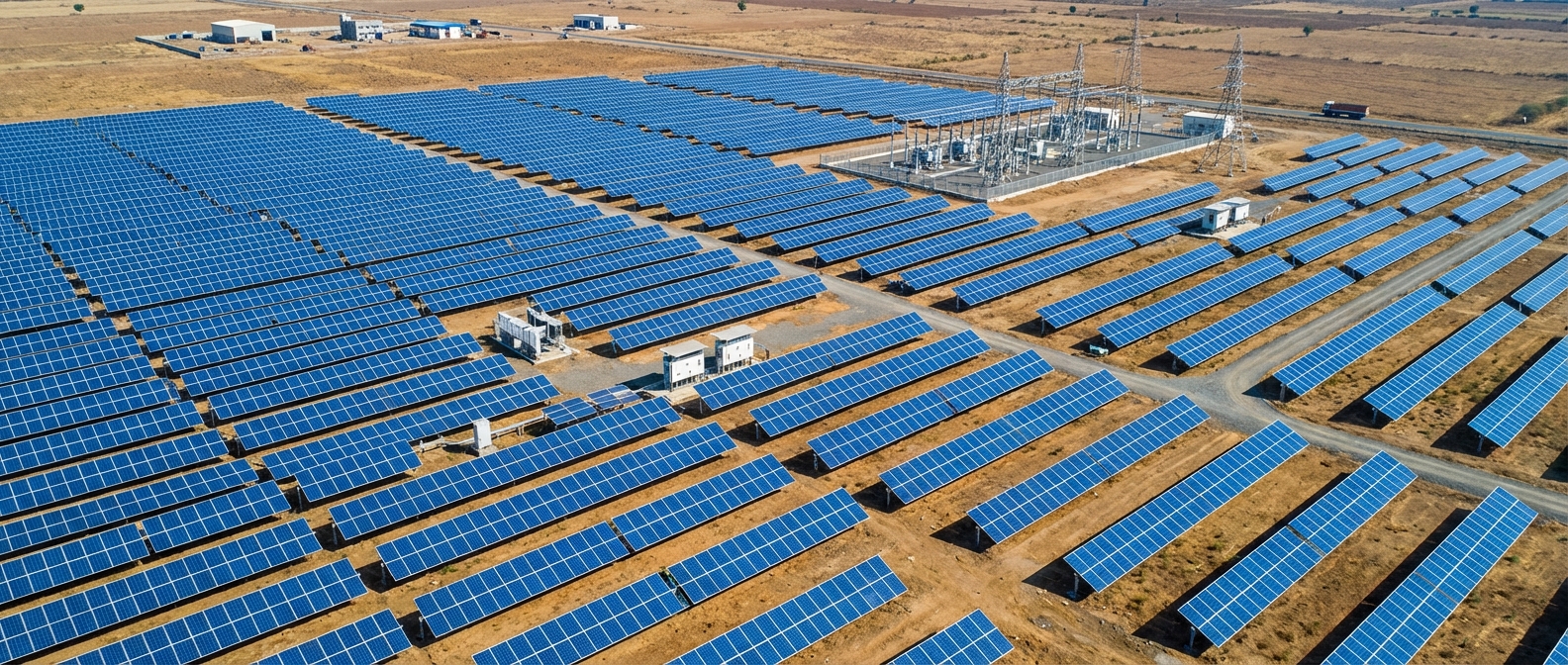
Ensure your solar partner has successfully completed projects of similar or larger scale to yours. A company that primarily installs residential rooftop systems may struggle with the complexities of a 5 MW ground-mounted solar park. Ask for specific examples of:
- Multi-megawatt ground-mounted installations
- Projects with similar grid connection requirements
- Installations in similar geographic and climatic conditions
- Projects completed within the past 2-3 years using current technology
Client References and Site Visits
Request contact information for at least 3-5 recent clients with projects comparable to yours. Speak directly with these references about their experience, asking specific questions about:
- Project timeline adherence and any delays encountered
- Quality of workmanship and materials used
- Communication and responsiveness during construction
- System performance compared to projections
- Post-installation support and issue resolution
- Overall satisfaction and whether they would hire the solar partner again
If possible, arrange site visits to completed projects. This allows you to inspect installation quality firsthand, observe system performance, and speak with facility managers about their long-term experience with the solar installation and the EPC partner.
Project Completion Metrics
Ask potential solar partners about their project completion statistics. What percentage of projects are completed on time and within budget? How do they handle unexpected challenges or scope changes? Companies with strong project management track records will have data to support their claims of reliable execution.
In Gujarat’s solar market, where seasonal weather patterns affect construction schedules, experienced solar partners understand how to plan around monsoon seasons and manage timeline expectations realistically.
4. Verify Execution Capabilities and Resource Availability
Even the best-designed solar project will fail if your solar partner lacks the resources and organizational capacity to execute it properly. Execution capabilities encompass workforce, equipment, supply chain relationships, and project management systems.
Workforce and Skilled Labor
Large-scale solar installations require teams of skilled electricians, civil workers, and specialized solar technicians. Ask potential partners about:
- Size of their permanent workforce versus reliance on subcontractors
- Training programs and certifications for installation teams
- Safety protocols and accident history
- Ability to mobilize adequate workforce for your project timeline
Solar partners who maintain trained, permanent installation teams typically deliver more consistent quality than those who rely heavily on temporary subcontractors with varying skill levels.
Equipment and Machinery
Ground-mounted solar park construction requires specialized equipment including pile drivers, cranes, trenching machines, and testing equipment. Verify whether your solar partner owns this equipment or must rent it, as ownership generally indicates more experience and better cost control.
Supply Chain Relationships
Strong relationships with reputable solar module manufacturers, inverter suppliers, and balance-of-system component vendors are essential. Your solar partner should have established procurement channels that ensure:
- Access to quality components from recognized brands
- Competitive pricing through volume relationships
- Reliable delivery timelines that won’t delay your project
- Warranty support and genuine replacement parts
Understanding which solar brands and manufacturers your potential partner works with helps you assess the quality level of components that will be used in your installation.
Project Management Systems
Professional solar EPC companies use formal project management methodologies and software to track progress, manage budgets, coordinate teams, and communicate with clients. Ask about their project management approach, reporting frequency, and how they handle issues that arise during construction.
5. Examine Quality Standards and Component Selection
The quality of components used in your solar installation directly impacts system performance, longevity, and maintenance requirements over the 25-year operational life. Your solar partner should demonstrate a commitment to quality at every level.
Solar Module and Inverter Selection
Reputable solar partners work with established, bankable solar module manufacturers and inverter brands that offer proven reliability and strong warranty support. Be wary of partners who push unknown brands or cannot explain their component selection rationale.
For large-scale projects in Gujarat, modules should be selected based on:
- High efficiency to maximize energy generation per square meter
- Proven performance in hot, dusty climates
- Strong manufacturer warranties (typically 25 years for modules, 5-10 years for inverters)
- Positive long-term degradation characteristics
- Availability of local service and support
Balance of System Quality
While solar modules and inverters receive the most attention, balance-of-system components, mounting structures, cables, connectors, combiner boxes, and monitoring systems, are equally important for long-term reliability. Your solar partner should specify quality components throughout the system, not just for the high-visibility items.
Quality Assurance Processes
Ask potential solar partners about their quality control procedures during installation. Professional companies implement:
- Incoming inspection of all components before installation
- Stage-wise quality checks during construction
- Electrical testing and commissioning protocols
- Documentation of all quality inspections
- Third-party quality audits for large projects
Warranty Offerings
Beyond manufacturer warranties on equipment, your solar partner should provide workmanship warranties covering installation quality. Typical workmanship warranties range from 2-5 years, with longer warranties indicating greater confidence in installation quality.
Ensure all warranty terms are clearly documented in your contract, including what is covered, exclusions, response times, and the process for making warranty claims.
6. Understand Post-Installation Support and Maintenance
Your relationship with your solar partner doesn’t end when the system is commissioned. Long-term support and maintenance services are crucial for ensuring your solar investment delivers expected returns throughout its operational life.
Operations and Maintenance Services
Professional solar EPC partners offer comprehensive O&M (Operations and Maintenance) services including:
- Regular preventive maintenance visits
- Panel cleaning schedules appropriate for Gujarat’s dusty conditions
- Electrical system inspections and testing
- Inverter maintenance and firmware updates
- Vegetation management around ground-mounted installations
- Performance optimization and troubleshooting
Ask about O&M service packages, pricing structures, and whether maintenance contracts are available for the full system lifetime. Some solar partners include initial maintenance periods in their EPC contracts, while others offer it as a separate service.
Monitoring and Performance Tracking
Modern solar installations should include comprehensive monitoring systems that track energy generation, system performance, and equipment health in real-time. Your solar partner should provide:
- Web-based or mobile monitoring platforms
- Automated alerts for system faults or underperformance
- Regular performance reports comparing actual vs. expected generation
- Data analytics to identify optimization opportunities
Response Times and Support Infrastructure
When issues occur, rapid response minimizes energy production losses and revenue impact. Evaluate potential solar partners based on:
- Guaranteed response times for different issue severity levels
- Local service presence in Gujarat for quick site access
- Availability of spare parts inventory
- Technical support hotline or helpdesk
- Emergency response capabilities for critical failures
Solar partners with branch offices or service centers in your region can typically provide faster, more responsive support than those operating from distant locations.
7. Check Government Scheme Expertise and Compliance
For projects in Gujarat and across India, government schemes and regulatory compliance add layers of complexity that require specialized knowledge. Your solar partner should demonstrate expertise in navigating these requirements.
PM-KUSUM and State Scheme Experience
If your project involves government schemes like PM-KUSUM (for agricultural solar installations) or Gujarat’s DREBP (Distributed Renewable Energy Generation Program), your solar partner must have proven experience with these programs. This includes:
- Understanding eligibility criteria and application processes
- Preparing technical and financial documentation
- Coordinating with government agencies and utilities
- Meeting scheme-specific technical requirements
- Managing subsidy disbursement procedures
Regulatory Compliance and Permitting
Large-scale solar projects require numerous approvals, permits, and regulatory compliance steps. Experienced solar partners handle:
- Environmental clearances and impact assessments
- Land use permissions and conversion approvals
- Electrical safety certifications
- Building permits and structural approvals
- Fire safety and other local authority requirements
Grid Connection and Net Metering
Connecting your solar installation to the grid involves technical studies, utility coordination, and compliance with grid codes. Your solar partner should manage:
- Grid interconnection applications and approvals
- Net metering or power purchase agreement facilitation
- Technical specifications for grid-compliant inverters and protection systems
- Coordination with distribution companies (DISCOMs)
- Commissioning and final connection procedures
In Gujarat, where grid infrastructure and utility procedures vary by region, local expertise is particularly valuable for navigating these processes efficiently.
8. Identify Critical Red Flags When Selecting a Solar Partner
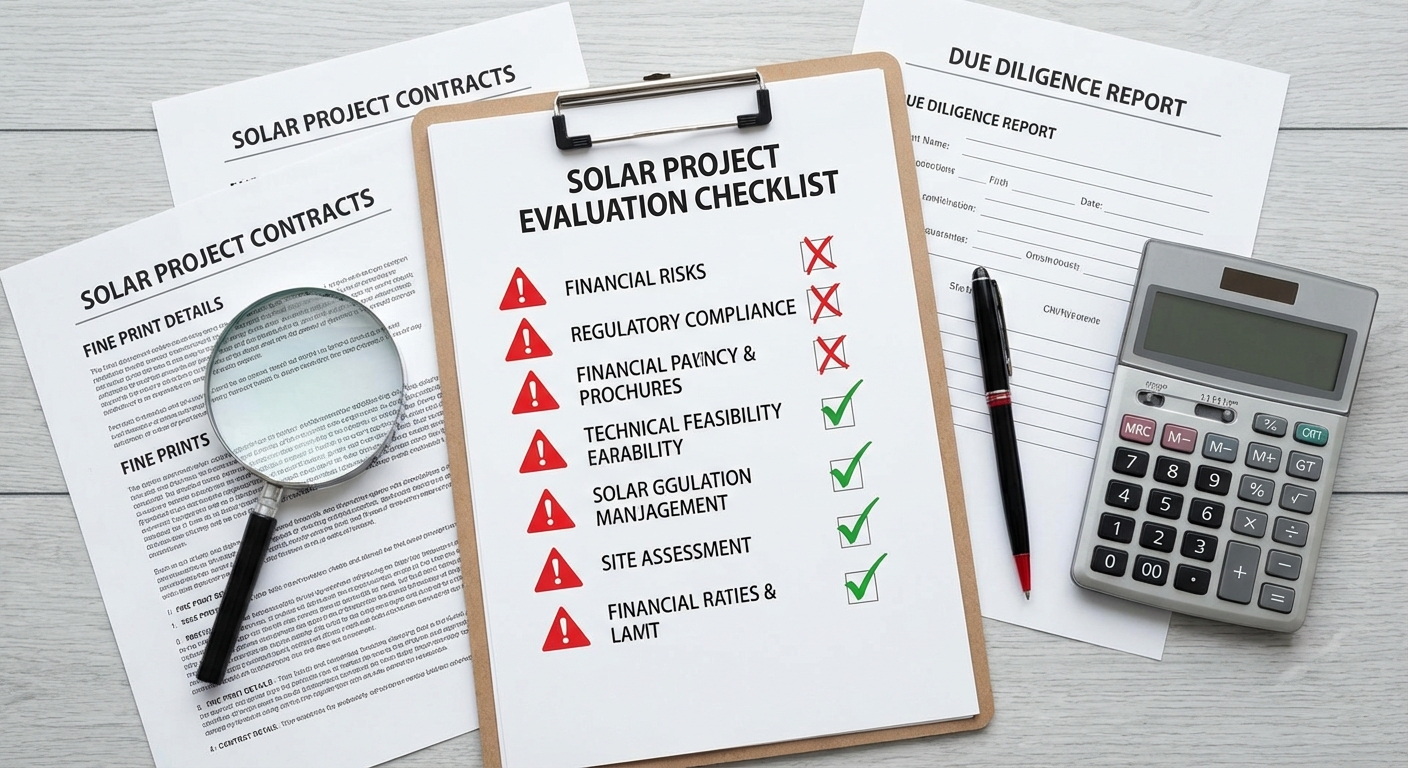
Knowing what to avoid is as important as knowing what to look for. Watch for these critical warning signs that indicate a solar partner may not be suitable for your large-scale project.
Unrealistic Promises and Projections
Be extremely cautious of solar partners who promise unrealistically high energy generation figures, impossibly short payback periods, or guaranteed returns that seem too good to be true. Professional solar companies provide conservative, data-backed projections with clear assumptions and risk factors disclosed.
Understanding realistic solar payback periods and ROI timelines helps you identify when promises are unrealistic and potentially misleading.
Lack of Transparency
Red flags include:
- Reluctance to provide detailed technical specifications or equipment lists
- Vague or incomplete pricing with hidden costs revealed later
- Unwillingness to share client references or completed project details
- Contracts with ambiguous terms or one-sided clauses
- Evasive answers to direct questions about experience or capabilities
Trustworthy solar partners operate with complete transparency, providing detailed documentation and welcoming thorough due diligence.
No Verifiable Track Record
Be wary of solar partners who cannot provide verifiable evidence of completed projects, especially those of similar scale to yours. Claims of extensive experience should be backed by:
- Specific project addresses and client names (with permission)
- Photographs and documentation of completed installations
- Contactable references willing to discuss their experience
- Industry certifications or awards recognizing their work
Pressure Tactics and Rushed Decisions
Professional solar partners understand that large-scale projects require careful evaluation and decision-making. High-pressure sales tactics, artificial urgency (“this price is only available today”), or discouragement of competitive bidding are warning signs of unprofessional operations.
Take the time you need to evaluate multiple solar partners thoroughly. Rushing into a partnership for a multi-crore project to save a few percentage points on price can lead to far greater losses later.
Poor Communication and Responsiveness
If a potential solar partner is difficult to reach, slow to respond to inquiries, or provides inconsistent information during the sales process, these communication problems will likely worsen during project execution. Responsive, clear communication is essential for successful project partnerships.
Unknown or Low-Quality Component Brands
Solar partners who push unknown module brands, off-brand inverters, or cannot provide manufacturer warranties and technical specifications may be prioritizing their profit margins over your project quality. Insist on recognized, bankable brands with proven track records and local support infrastructure.
Vague Warranty and Maintenance Terms
Warranties and post-installation support should be clearly defined in writing before contract signing. Red flags include:
- Verbal promises not included in written contracts
- Warranty terms with numerous exclusions or conditions
- No clear process for warranty claims or issue resolution
- Maintenance services not clearly specified or priced
Making Your Final Solar Partner Selection Decision
After evaluating multiple potential solar partners against the criteria outlined above, you need a systematic approach to make your final selection decision.
Create a Weighted Evaluation Scorecard
Develop a scorecard that assigns weights to different evaluation criteria based on your project priorities. For example:
- Technical expertise and engineering capabilities: 20%
- Financial stability and track record: 15%
- Project portfolio and references: 20%
- Execution capabilities and resources: 15%
- Component quality and warranties: 15%
- Post-installation support: 10%
- Pricing and value: 5%
Score each potential solar partner objectively against these criteria, then calculate weighted totals to identify the strongest candidate.
Compare Proposals Systematically
When comparing proposals from different solar partners, ensure you’re making apples-to-apples comparisons. Normalize proposals by:
- Verifying identical system sizes and specifications
- Comparing component brands and quality levels
- Understanding what is included vs. excluded in pricing
- Evaluating warranty terms and durations
- Assessing payment terms and milestone structures
The lowest price rarely represents the best value for large-scale solar projects. Focus on total cost of ownership over the system lifetime, including maintenance costs, expected performance, and reliability.
Conduct Site Visits and Due Diligence
Before making your final decision, visit the offices and completed projects of your top solar partner candidates. This due diligence reveals important insights about:
- Company professionalism and organizational capabilities
- Quality of completed installations
- Client satisfaction levels
- Local presence and support infrastructure
Negotiate Contract Terms Carefully
Once you’ve selected your preferred solar partner, invest time in negotiating a comprehensive contract that protects both parties. Key contract elements include:
- Detailed scope of work with technical specifications
- Project timeline with milestones and completion dates
- Payment schedule tied to verified milestones
- Performance guarantees and energy yield commitments
- Warranty terms for equipment and workmanship
- Liquidated damages for delays or underperformance
- Change order procedures and pricing
- Dispute resolution mechanisms
Consider having legal counsel review the contract before signing, especially for large-value projects.
Build a Long-Term Partnership Mindset
The most successful solar projects result from collaborative partnerships rather than adversarial contractor relationships. Once you’ve selected your solar partner, work together to:
- Establish clear communication channels and regular update schedules
- Address issues promptly and constructively
- Make decisions collaboratively when challenges arise
- Recognize good performance and maintain positive working relationships
A solar installation represents a 25-year investment. The solar partner you choose today may support your system throughout its operational life, making the quality of your partnership as important as the quality of the installation itself.
Frequently Asked Questions About Choosing a Solar Partner
What is the difference between a solar EPC partner and a solar installer?
A solar EPC (Engineering, Procurement, and Construction) partner provides comprehensive turnkey services including system design, equipment procurement, installation, commissioning, and often post-installation support. A solar installer typically focuses only on the physical installation work. For large-scale projects, you need a full EPC partner who manages all aspects of the project from concept to commissioning.
How long should a solar partner have been in business?
While there’s no absolute minimum, solar partners with at least 5-7 years of operational history have demonstrated business stability and weathered market changes. For large-scale projects, prefer partners established since 2017 or earlier who have completed multiple similar installations. However, also evaluate the experience of key personnel, as seasoned professionals may lead newer companies.
What certifications should I look for in a solar partner?
Look for solar partners with ISO 9001 (quality management), ISO 14001 (environmental management), and ISO 45001 (occupational health and safety) certifications. Engineers should hold relevant professional qualifications. For government projects, empanelment with MNRE (Ministry of New and Renewable Energy) or state nodal agencies is important. Certifications from solar industry associations also indicate professional standing.
How important is local presence when choosing a solar partner?
Local presence is very important, especially for post-installation support and maintenance. Solar partners with offices or service centers in Gujarat can respond faster to issues, understand local regulations and utility procedures better, and provide more accessible ongoing support. For large projects, local presence also facilitates better project supervision and quality control during construction.
What should be included in a solar EPC contract?
A comprehensive solar EPC contract should include detailed technical specifications, equipment lists with brands and models, project timeline with milestones, payment schedule, performance guarantees, warranty terms (equipment and workmanship), maintenance provisions, liquidated damages clauses, change order procedures, insurance requirements, safety protocols, and dispute resolution mechanisms. All verbal promises should be documented in the written contract.
Partner with Heaven Green Energy for Your Large-Scale Solar Project
Choosing the right solar partner requires careful evaluation, thorough due diligence, and a systematic selection process. The criteria outlined in this guide, technical expertise, financial stability, proven track record, execution capabilities, quality standards, post-installation support, and regulatory compliance, provide a comprehensive framework for making this critical decision.
Heaven Green Energy Limited brings over seven years of solar EPC experience to large-scale projects across Gujarat. As one of the top solar companies in the region, we’ve successfully designed, installed, and commissioned ground-mounted solar parks, industrial installations, and commercial projects totaling thousands of kilowatts of clean energy capacity. Our in-house engineering team, established supply chain relationships with leading solar brands, and comprehensive post-installation support ensure your solar investment delivers optimal performance throughout its operational life.
With branch offices in Surat, Ahmedabad, and Junagadh, we provide local presence and responsive support across Gujarat. Our expertise with government schemes including PM-KUSUM and DREBP, combined with our proven track record of on-time, on-budget project delivery, makes us a trusted solar partner for developers, businesses, and investors seeking reliable solar EPC services.
Whether you’re planning a multi-megawatt ground-mounted solar park or an industrial rooftop installation, selecting the right solar partner is the foundation of project success. Take the time to evaluate your options thoroughly, ask the right questions, watch for red flags, and choose a partner committed to your long-term success.
Ready to discuss your large-scale solar project with an experienced solar partner in Gujarat? Our team is here to answer your questions, provide detailed technical and financial proposals, and help you make an informed decision. Have any questions? Call us at +91 63904 05060 to speak with our solar experts and discover how Heaven Green Energy can transform your solar vision into a profitable, sustainable reality in 2026.
This blog post was written using thestacc.com