


Choosing the right solar modules is one of the most critical decisions you’ll make when investing in solar energy. Whether you’re a homeowner in Gujarat looking to reduce electricity bills, a business owner seeking to lower operational costs, or a developer planning a large-scale solar project, the quality and specifications of your solar modules will directly impact your system’s performance, longevity, and return on investment for the next 25-30 years.
With the solar industry evolving rapidly and numerous manufacturers offering modules at varying price points, making an informed decision can feel overwhelming. In 2026, the Indian solar market continues to expand, with Gujarat leading the way in rooftop solar installations and commercial solar projects. However, not all solar modules are created equal, and selecting the wrong ones can result in poor performance, frequent maintenance issues, and disappointing financial returns.
This comprehensive guide will walk you through every essential factor you need to consider when choosing solar modules. From understanding different technology types to evaluating warranties, certifications, and manufacturer reputation, you’ll gain the knowledge needed to make a confident, informed decision. By the end of this guide, you’ll have a practical quality checklist to evaluate any solar module and ensure you’re investing in a system that delivers optimal performance for decades to come.
Understanding Solar Modules: The Foundation of Your Solar Investment
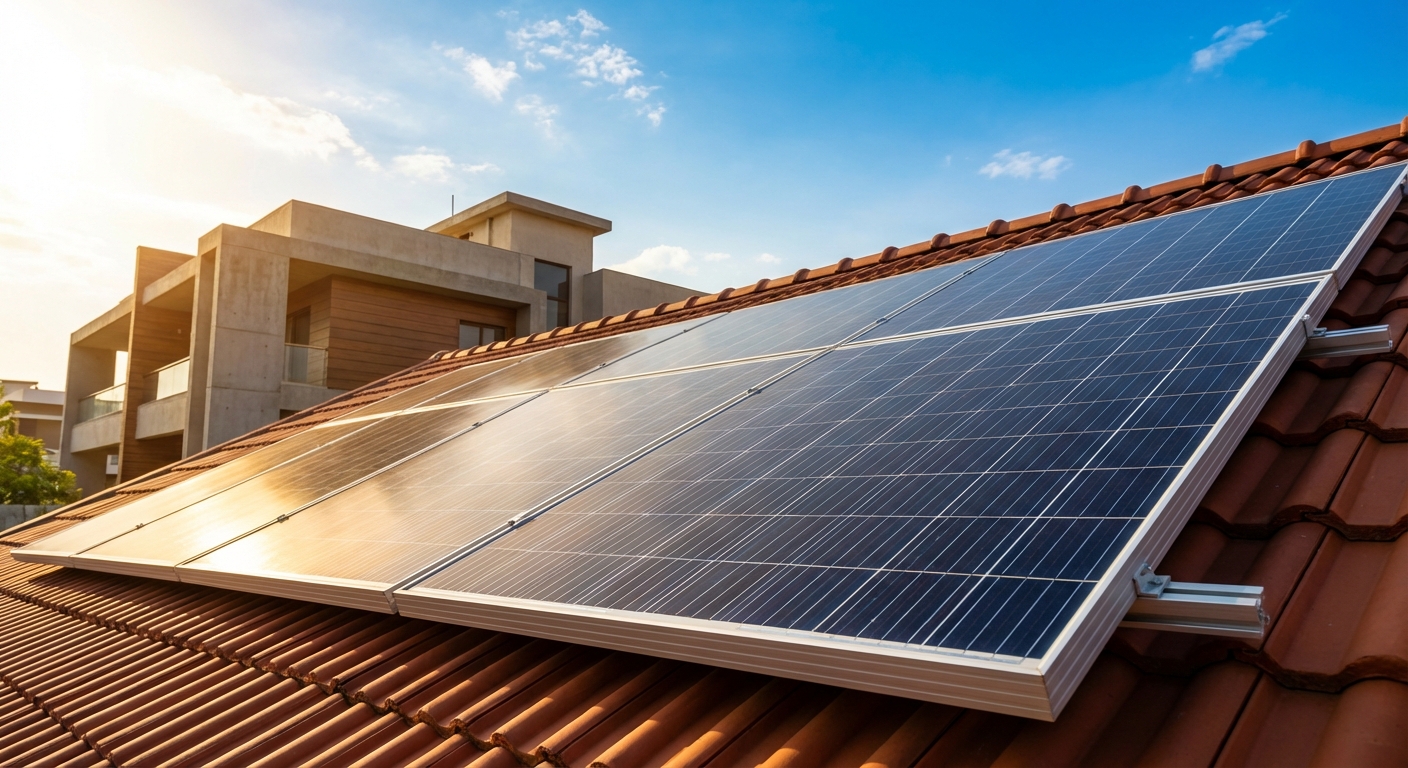
Solar modules, commonly referred to as solar panels, are the heart of any photovoltaic system. These devices convert sunlight into electricity through the photovoltaic effect, where semiconductor materials generate electrical current when exposed to solar radiation. Each module consists of multiple solar cells connected together, typically ranging from 60 to 144 cells depending on the module size and application.
The importance of selecting quality solar modules cannot be overstated. Your modules will be exposed to harsh environmental conditions—intense heat, monsoon rains, dust storms, and UV radiation—for 25 years or more. In Gujarat’s climate, where summer temperatures regularly exceed 40°C and dust accumulation is common, module quality becomes even more critical. High-quality solar modules maintain their performance over time, resist environmental degradation, and deliver the energy output you’re counting on to achieve your financial goals.
The solar module market in Gujarat and across India has matured significantly by 2026. Government initiatives like the PM-KUSUM scheme and rooftop solar subsidies have accelerated adoption, while the Approved List of Models and Manufacturers (ALMM) has helped standardize quality requirements. However, this growth has also attracted manufacturers of varying quality levels, making informed selection more important than ever.
When you choose solar modules, you’re not just buying a product—you’re making a long-term investment in your energy independence and financial future. The difference between premium and substandard modules can mean thousands of rupees in lost energy production, higher maintenance costs, and premature system replacement. This guide will equip you with the knowledge to identify truly high-quality modules and avoid costly mistakes.
1. Evaluate Solar Module Technology Types
The first step in choosing solar modules is understanding the different technology types available in the market. Each technology has distinct characteristics, advantages, and ideal applications. Your choice should align with your specific project requirements, available space, budget, and performance expectations.
Monocrystalline Solar Modules
Monocrystalline modules are currently the most popular choice for residential and commercial installations, and for good reason. These modules feature cells made from single-crystal silicon, giving them their characteristic uniform dark appearance and rounded cell edges. In 2026, monocrystalline technology has reached impressive efficiency levels, with premium modules achieving 21-23% efficiency and some advanced models exceeding 24%.
The key advantages of monocrystalline modules include superior efficiency, better performance in high temperatures, longer lifespan (typically 25-30 years with minimal degradation), and excellent space efficiency—critical for rooftop solar installations where space is limited. These modules perform particularly well in Gujarat’s climate, as their lower temperature coefficient means they lose less efficiency during hot summer months compared to other technologies.
While monocrystalline modules typically command a higher upfront cost, their superior performance and longevity often result in better solar ROI over the system’s lifetime. For most residential and commercial projects in Gujarat, monocrystalline technology represents the optimal balance of performance, reliability, and value.
Polycrystalline Solar Modules
Polycrystalline modules, made from multiple silicon crystals melted together, were once the budget-friendly alternative to monocrystalline technology. These modules have a distinctive blue color with visible grain boundaries. However, by 2026, the price gap between polycrystalline and monocrystalline has narrowed significantly, and many manufacturers have shifted focus to monocrystalline production.
Polycrystalline modules typically offer 17-19% efficiency—lower than monocrystalline but still adequate for many applications. They may be suitable for large ground-mounted installations where space is abundant and cost per watt is the primary concern. However, for most rooftop solar projects in Gujarat, the space efficiency and performance advantages of monocrystalline modules make them the better choice.
Thin-Film and Emerging Technologies
Thin-film solar modules use different semiconductor materials like cadmium telluride (CdTe) or amorphous silicon. While these modules offer advantages like flexibility, lighter weight, and better performance in low-light conditions, their lower efficiency (typically 10-13%) makes them less suitable for space-constrained installations. Thin-film technology is primarily used in specialized applications or large-scale utility projects.
Advanced technologies like bifacial modules (which capture sunlight from both sides) and PERC (Passivated Emitter and Rear Cell) technology have become mainstream by 2026. Bifacial modules can increase energy yield by 5-20% depending on installation conditions, making them attractive for ground-mounted solar parks and elevated structures. PERC technology, now standard in most premium monocrystalline modules, improves efficiency by reducing electron recombination.
Best Technology for Gujarat’s Climate
For installations across Gujarat—whether in Surat, Ahmedabad, Junagadh, or other regions—monocrystalline modules with PERC technology represent the optimal choice for most applications. Their superior temperature coefficient, high efficiency, and proven durability in hot climates ensure maximum energy production and long-term reliability. When working with experienced solar EPC companies, they can help you select the specific technology configuration that best matches your project requirements and site conditions.
2. Check Efficiency Ratings and Performance Metrics
Understanding efficiency ratings and performance metrics is essential for comparing solar modules and predicting their real-world performance. However, these numbers can be confusing, and manufacturers sometimes emphasize certain metrics while downplaying others. Here’s what you need to know to make accurate comparisons.
Module Efficiency Explained
Module efficiency represents the percentage of sunlight that hits the module’s surface and gets converted into usable electricity. For example, a module with 20% efficiency converts one-fifth of the solar energy it receives into electrical power. In 2026, typical efficiency ranges are:
- Premium monocrystalline: 21-24% efficiency
- Standard monocrystalline: 19-21% efficiency
- Polycrystalline: 17-19% efficiency
- Thin-film: 10-13% efficiency
Higher efficiency means more power generation from the same surface area, which is particularly valuable for rooftop installations where space is limited. However, efficiency isn’t everything—you must also consider cost, durability, and real-world performance factors.
Temperature Coefficient: Critical for Hot Climates
The temperature coefficient is one of the most important yet often overlooked specifications, especially in Gujarat’s hot climate. This metric indicates how much a module’s power output decreases as temperature rises above 25°C (the standard testing temperature). It’s expressed as a percentage per degree Celsius.
Premium modules typically have temperature coefficients between -0.30% to -0.35% per °C, while lower-quality modules may have coefficients of -0.40% to -0.45% per °C. This difference might seem small, but it significantly impacts performance. When rooftop temperatures in Gujarat reach 65-70°C during summer, a module with a better temperature coefficient will produce substantially more power.
For example, at 65°C (40°C above standard test conditions), a module with -0.35%/°C loses 14% of its rated power, while one with -0.45%/°C loses 18%—a meaningful difference over 25 years of operation.
Power Output Ratings and Tolerance
Solar modules are rated by their peak power output in watts (Wp), measured under Standard Test Conditions (STC). In 2026, common residential module ratings range from 400W to 550W, while commercial and industrial modules may reach 600W or higher.
Pay attention to the power tolerance specification. Quality modules have positive tolerance (e.g., 0 to +5W), meaning they’ll produce at least their rated power and possibly more. Avoid modules with negative tolerance (e.g., -3% to +3%), as you might receive modules producing less than their rated capacity.
Degradation Rates and Long-Term Performance
All solar modules degrade over time, but the rate varies significantly by quality. Premium modules typically guarantee:
- First-year degradation: Maximum 2-3%
- Annual degradation: 0.40-0.55% per year thereafter
- 25-year performance: Minimum 84-87% of original capacity
- 30-year performance: Some premium modules now guarantee 82-84%
Lower-quality modules may degrade at 0.70-1.0% annually, resulting in significantly lower energy production over the system’s lifetime. This directly impacts your solar ROI and payback period, making degradation rates a critical selection factor.
Performance Ratio: Real-World vs. Laboratory
While efficiency and power ratings are measured in laboratory conditions, real-world performance depends on many factors including temperature, shading, soiling, and system losses. The performance ratio (PR) indicates how much of the theoretical energy production you actually receive. Quality modules combined with professional solar installation typically achieve performance ratios of 75-85% in Gujarat’s conditions.
3. Verify Manufacturer Reputation and Track Record
The manufacturer behind your solar modules is just as important as the technical specifications. A module with impressive specs is worthless if the manufacturer goes out of business before your warranty expires or lacks the quality control to deliver consistent performance. Here’s how to evaluate manufacturer reputation and ensure you’re partnering with a reliable company.

Understanding the Tier System
The solar industry uses an informal tier system to classify manufacturers, though it’s important to understand what these tiers actually represent. Tier 1 manufacturers are typically defined as companies that are vertically integrated (produce their own ingots, wafers, and cells), have automated production lines, invest significantly in research and development, and have a track record of bankability for large projects.
Tier 1 status doesn’t automatically guarantee the best quality, but it does indicate financial stability and manufacturing capability. These manufacturers are more likely to honor warranties decades into the future. Examples of established Tier 1 manufacturers with strong presence in India include companies like Longi, JinkoSolar, Trina Solar, and Indian manufacturers like Waaree and Adani Solar.
Tier 2 and Tier 3 manufacturers may offer lower prices, but they often lack the financial stability, quality control, and long-term support that characterize top-tier companies. While some Tier 2 manufacturers produce quality products, thorough due diligence is essential.
Researching Financial Stability
A manufacturer’s financial health determines whether they’ll be around to honor warranties 15, 20, or 25 years from now. Research the company’s:
- Years in business: Companies with 10+ years of solar manufacturing experience have proven their staying power
- Production capacity: Large-scale manufacturers (1+ GW annual capacity) typically have better economies of scale and quality control
- Financial backing: Publicly traded companies or those with strong corporate backing offer more security
- Market presence: Global market share and project portfolio indicate industry confidence
Don’t hesitate to ask your solar EPC provider about the financial stability of module manufacturers they recommend. Reputable companies like Heaven Green Energy work with established manufacturers and can provide insights into their reliability and track record.
Quality Control and Manufacturing Standards
Manufacturing quality directly impacts module performance and longevity. Look for manufacturers with:
- ISO 9001 certification: Indicates robust quality management systems
- Automated production: Reduces human error and ensures consistency
- In-house testing facilities: Demonstrates commitment to quality verification
- Traceability systems: Ability to track individual modules through production
Premium manufacturers conduct extensive testing beyond minimum certification requirements, including accelerated aging tests, thermal cycling, humidity-freeze testing, and mechanical load testing. Ask about the manufacturer’s testing protocols and quality assurance processes.
Local Presence and Support in India
For installations in Gujarat and across India, manufacturer presence and support infrastructure matter significantly. International manufacturers with Indian offices, service centers, and spare parts availability can address issues more quickly than those requiring international coordination. Similarly, strong Indian manufacturers offer the advantage of local support and faster warranty claim resolution.
When evaluating manufacturers, consider their track record specifically in Indian conditions. Modules that perform well in European or American climates may face different challenges in Gujarat’s hot, dusty environment. Manufacturers with extensive Indian installations demonstrate proven performance in local conditions.
Case Studies and References
Request case studies of installations using the modules you’re considering, particularly projects in Gujarat or similar climates. Long-term performance data from existing installations provides valuable insights into real-world reliability. If possible, visit operational installations or speak with other customers about their experience with specific module brands.
Experienced solar companies in Gujarat like Heaven Green Energy have installed thousands of systems and can share insights about which manufacturers consistently deliver reliable performance and honor their commitments.
4. Understand Warranty Types and Coverage
Solar module warranties are your protection against defects and performance issues, but not all warranties are created equal. Understanding what’s actually covered—and what isn’t—is essential for making an informed decision and avoiding unpleasant surprises down the road.
Product Warranty vs. Performance Warranty
Solar modules typically come with two distinct warranties that cover different aspects:
Product Warranty (Materials and Workmanship): This warranty covers manufacturing defects, material failures, and workmanship issues. In 2026, standard product warranties range from 10-15 years for most modules, with premium manufacturers offering 15-25 years. This warranty covers issues like:
- Frame corrosion or structural defects
- Junction box failures
- Glass breakage due to manufacturing defects
- Delamination or cell degradation beyond normal rates
- Bypass diode failures
Performance Warranty (Power Output Guarantee): This warranty guarantees minimum power output over time, typically 25-30 years. Standard performance warranties in 2026 guarantee approximately:
- 97-98% of rated power after year 1
- 84-87% of rated power after 25 years
- Some premium modules now offer 30-year warranties guaranteeing 82-84% output
The performance warranty protects you if modules degrade faster than specified, but it doesn’t cover damage from external factors like hail, fire, or improper installation.
What Warranties Actually Cover
Read warranty terms carefully, as coverage limitations and exclusions can significantly impact your protection. Common exclusions include:
- Installation damage: Damage during transportation, handling, or installation typically isn’t covered
- Environmental damage: Extreme weather events, lightning strikes, or natural disasters may be excluded
- Improper maintenance: Lack of regular cleaning or maintenance can void warranties
- Unauthorized modifications: Drilling holes, cutting frames, or other alterations void coverage
- Electrical issues: Problems caused by inverter failures or grid issues aren’t covered
Additionally, warranties typically don’t cover labor costs for module removal and reinstallation, shipping costs for replacement modules, or consequential damages like lost energy production. Understanding these limitations helps you budget for potential issues and consider additional insurance coverage.
Manufacturer’s Ability to Honor Warranties
A 25-year warranty is only valuable if the manufacturer exists and has the financial capacity to honor it two decades from now. This is why manufacturer financial stability (discussed in the previous section) is so critical. Some manufacturers offer warranty insurance through third-party providers, adding an extra layer of protection if the company goes out of business.
When evaluating warranties, consider:
- Is the warranty backed by a financially stable company?
- Does the manufacturer have a track record of honoring warranty claims?
- Is there warranty insurance from a reputable third party?
- What is the warranty claim process and typical resolution time?
- Are there local service centers or must claims be processed internationally?
Warranty Claim Process and Local Support
The ease of filing and resolving warranty claims varies dramatically between manufacturers. Premium manufacturers with Indian presence typically offer streamlined claim processes with local support teams. Ask your solar EPC provider about their experience with warranty claims for different manufacturers—this real-world insight is invaluable.
For installations in Gujarat, working with established solar companies ensures you have professional support if warranty issues arise. Companies like Heaven Green Energy maintain relationships with manufacturers and can facilitate warranty claims, providing an important buffer between you and the manufacturer.
5. Look for Essential Certifications and Standards
Certifications and standards compliance aren’t just bureaucratic checkboxes—they’re essential indicators of module quality, safety, and eligibility for subsidies and incentives. Understanding which certifications matter and why they’re important helps you identify truly quality modules and avoid substandard products.
IEC International Standards
The International Electrotechnical Commission (IEC) sets global standards for solar module testing and performance. Two certifications are fundamental:
IEC 61215 (Design Qualification and Type Approval) tests modules for:
- Thermal cycling and humidity-freeze resistance
- UV exposure and thermal stress
- Mechanical load testing (wind and snow loads)
- Hail impact resistance
- Hot spot endurance
IEC 61730 (Safety Qualification) verifies electrical and mechanical safety, including:
- Fire safety and flammability
- Electrical insulation and grounding
- Protection against electric shock
- Mechanical stability and structural integrity
These certifications are mandatory minimums—any module without IEC 61215 and IEC 61730 certification should be immediately disqualified from consideration. However, remember that these represent minimum standards; premium modules undergo additional testing beyond IEC requirements.
BIS Certification (Bureau of Indian Standards)
For installations in India, BIS certification (IS 14286 for crystalline silicon modules) is mandatory. This certification ensures modules meet Indian standards and is required for:
- Eligibility for government subsidies and incentives
- Participation in government solar schemes like PM-KUSUM
- Compliance with Indian electrical safety regulations
- Insurance coverage for solar installations
Always verify that modules carry valid BIS certification with proper marking. Counterfeit certifications exist, so purchase from reputable suppliers who can provide verification.
ALMM (Approved List of Models and Manufacturers)
The ALMM list, maintained by the Ministry of New and Renewable Energy (MNRE), specifies approved solar modules for government-supported projects and subsidy programs. As of 2026, ALMM compliance is mandatory for:
- Rooftop solar projects receiving government subsidies
- Projects under PM-KUSUM and other government schemes
- Many state-level solar programs
If you’re planning to utilize solar subsidy programs, verify that your chosen modules appear on the current ALMM list. The list is updated periodically, so check the latest version during your planning phase.
Additional International Certifications
While not mandatory in India, additional international certifications indicate higher quality standards:
- UL certification (UL 1703): North American safety standard, indicates rigorous testing
- TUV certification: German testing and certification, highly respected globally
- CE marking: European conformity, required for European markets
- CEC listing: California Energy Commission approval, indicates high performance standards
Modules with multiple international certifications demonstrate the manufacturer’s commitment to meeting diverse quality standards and accessing global markets—a positive indicator of quality and reliability.
Why Certifications Matter Beyond Compliance
Certifications serve multiple purposes beyond regulatory compliance. They ensure your modules can withstand Gujarat’s environmental conditions, qualify for insurance coverage at reasonable rates, maintain eligibility for current and future incentive programs, and provide recourse if performance issues arise. When working with professional solar EPC companies in Gujarat, they ensure all modules meet necessary certification requirements for your specific project type and subsidy eligibility.
6. Assess Build Quality and Physical Characteristics
While certifications and specifications tell part of the story, physical build quality determines how well modules withstand real-world conditions over decades of operation. Understanding what to look for in module construction helps you identify quality differences that aren’t apparent from datasheets alone.
Frame Quality and Corrosion Resistance
The aluminum frame protects module edges, provides structural rigidity, and serves as the mounting interface. Frame quality significantly impacts long-term durability, especially in coastal areas of Gujarat where salt air accelerates corrosion.
Quality indicators include:
- Aluminum grade: Premium modules use anodized aluminum (6000 series) with superior corrosion resistance
- Frame thickness: Thicker frames (35-50mm) provide better structural support
- Corner construction: Look for reinforced corners with proper sealing
- Drainage holes: Properly positioned holes prevent water accumulation
- Surface finish: Smooth, uniform anodization indicates quality manufacturing
Inspect frame corners and edges for sharp burrs or rough finishing, which indicate poor manufacturing quality and can cause installation difficulties or safety issues.
Glass Type and Thickness
The front glass protects solar cells while allowing maximum light transmission. Quality modules use tempered low-iron glass with high transparency and impact resistance. Key specifications include:
- Thickness: Standard is 3.2mm; premium modules may use 4.0mm for enhanced durability
- Iron content: Low-iron glass (less than 0.02% iron) maximizes light transmission
- Anti-reflective coating: Reduces reflection losses and increases energy capture
- Self-cleaning properties: Some premium modules feature coatings that reduce dust adhesion
The glass should be uniformly clear without visible defects, bubbles, or discoloration. In Gujarat’s dusty environment, anti-reflective and self-cleaning coatings can improve performance between cleaning cycles.
Junction Box Quality and IP Rating
The junction box houses electrical connections and bypass diodes. This component is critical for safety and reliability but often overlooked. Quality junction boxes feature:
- IP67 or IP68 rating: Complete protection against dust and water ingress
- Quality bypass diodes: Prevent hot spots and power loss from partial shading
- Secure cable connections: Properly sealed cable glands prevent moisture entry
- UV-resistant housing: Prevents degradation from sun exposure
- Adequate ventilation: Prevents overheating while maintaining water resistance
Inspect the junction box for secure attachment to the module back, proper cable strain relief, and quality connectors (MC4 or equivalent). Loose or poorly sealed junction boxes are common failure points in lower-quality modules.
Cell Quality and Visual Inspection
While you can’t fully assess cell quality without specialized equipment, visual inspection reveals important quality indicators:
- Cell color uniformity: Consistent color across all cells indicates quality manufacturing
- Busbar alignment: Straight, evenly spaced busbars show precision manufacturing
- No visible defects: Check for chips, cracks, discoloration, or contamination
- Proper cell spacing: Uniform gaps between cells indicate quality assembly
- Clean lamination: No bubbles, wrinkles, or delamination visible
Premium modules undergo rigorous quality control with electroluminescence (EL) testing to identify micro-cracks and defects invisible to the naked eye. Ask if the manufacturer performs EL testing on all modules or just sample batches.
Weight and Size Considerations
For rooftop solar installations, module weight and dimensions affect structural requirements and installation complexity. Standard 60-cell modules typically weigh 18-22 kg, while larger 72-cell or 144 half-cell modules may weigh 25-30 kg. Ensure your roof structure can support the total system weight, including mounting hardware.
Module dimensions also affect layout efficiency and aesthetics. Work with experienced installers who can optimize module placement for maximum energy production while maintaining structural integrity and visual appeal.
7. Consider Cost vs. Value and Total ROI
While technical specifications and quality indicators are crucial, your solar investment must also make financial sense. Understanding the relationship between module cost, system performance, and long-term returns helps you make decisions that balance quality with budget constraints.

Understanding Solar Panel Cost Structure
In 2026, solar panel cost in Gujarat varies significantly based on technology, manufacturer, and quality level. While specific pricing fluctuates with market conditions, understanding the cost structure helps you evaluate value:
- Premium monocrystalline modules: Higher upfront cost but superior efficiency and longevity
- Standard monocrystalline modules: Balanced cost and performance for most applications
- Budget options: Lower initial cost but potentially higher long-term expenses
Remember that module cost represents only 30-40% of total system cost. Other components include inverters, mounting structures, wiring, installation labor, and permits. Focusing solely on module price while ignoring quality can compromise your entire investment.
Cost Per Watt vs. Total System Cost
When comparing modules, calculate the cost per watt (total module cost divided by rated power output) for apples-to-apples comparison. However, don’t let cost per watt be your only decision factor. A cheaper module with lower efficiency may require more roof space, additional mounting hardware, and longer installation time—increasing total system cost.
Consider the complete picture:
- How many modules do you need to achieve your target capacity?
- What are the mounting and installation costs for different module sizes?
- How does efficiency affect your usable roof space?
- What are the long-term maintenance and replacement costs?
Professional solar EPC services provide detailed proposals comparing total system costs across different module options, helping you understand the true cost implications of each choice.
Impact on Solar ROI and Payback Period
Your solar ROI depends on multiple factors beyond initial cost. Premium modules with higher efficiency, better temperature coefficients, and lower degradation rates produce more energy over their lifetime, directly improving your return on investment.
Consider this example: Two systems with identical 10 kW capacity but different module quality:
System A (Premium Modules): Higher upfront cost, 21% efficiency, -0.35%/°C temperature coefficient, 0.45% annual degradation
System B (Budget Modules): Lower upfront cost, 18% efficiency, -0.45%/°C temperature coefficient, 0.70% annual degradation
Over 25 years in Gujarat’s climate, System A will produce significantly more energy—potentially 15-20% more total output. This additional production can reduce your payback period by 1-2 years and increase lifetime savings by lakhs of rupees, far exceeding the initial cost difference.
Solar Subsidy Eligibility and Approved Modules
Government subsidies can significantly reduce your effective system cost, but they require using approved modules from the ALMM list. When evaluating module costs, factor in available subsidies:
- Residential rooftop solar: Central government subsidies available for systems up to 10 kW
- PM-KUSUM scheme: Subsidies for agricultural and rural solar installations
- State-level incentives: Additional programs may be available in Gujarat
A slightly more expensive ALMM-approved module that qualifies for subsidies may be more cost-effective than a cheaper non-approved option. Consult with experienced providers about solar subsidy eligibility and how it affects your module selection.
Solar Financing and Payment Flexibility
If upfront cost is a concern, solar financing options can make premium modules more accessible. Many banks and financial institutions offer solar loans with attractive interest rates, allowing you to invest in higher-quality modules while spreading payments over time. The additional energy production from premium modules often covers the financing costs while still delivering positive cash flow.
When evaluating financing options, compare:
- Interest rates and loan terms
- Down payment requirements
- Processing fees and other charges
- Prepayment flexibility
- How monthly payments compare to current electricity bills
Reputable solar companies can connect you with financing partners and help structure payment plans that align with your budget and cash flow requirements.
Balancing Quality and Budget
The goal isn’t necessarily to buy the most expensive modules, but to find the optimal balance of quality, performance, and cost for your specific situation. For most residential and commercial installations in Gujarat, mid-to-premium monocrystalline modules from established Tier 1 manufacturers offer the best value proposition—delivering reliable performance, strong warranties, and attractive returns without unnecessary premium pricing.
Work with your solar EPC provider to model different scenarios and understand how module selection affects your total investment, energy production, and financial returns over 25 years. This comprehensive analysis ensures you make an informed decision aligned with your financial goals.
8. Identify Red Flags and What to Avoid
Understanding what to look for in quality solar modules is important, but recognizing warning signs of substandard products is equally crucial. The solar market includes manufacturers and sellers who cut corners, make misleading claims, or offer products that won’t deliver promised performance. Here are the red flags that should make you think twice before purchasing.
Unrealistic Efficiency or Performance Claims
Be skeptical of modules claiming efficiency levels significantly above industry standards. In 2026, even the most advanced commercially available modules rarely exceed 24% efficiency. If a manufacturer claims 26-28% efficiency at budget prices, it’s likely false advertising or measured under non-standard conditions.
Similarly, watch for unrealistic performance warranties. While 25-30 year warranties are standard, claims of “zero degradation” or “100% performance guarantee for 30 years” defy physics and industry experience. All solar modules degrade over time—the question is how much and how fast.
Missing or Questionable Certifications
Modules without proper IEC 61215, IEC 61730, and BIS certifications should be immediately disqualified. Some warning signs include:
- Vague certification claims: “International standards” without specific certification numbers
- Expired certifications: Certificates that are several years old and not renewed
- Unverifiable certifications: Claims that can’t be verified through official databases
- Missing ALMM listing: For subsidy-eligible projects, non-ALMM modules are non-starters
Always request copies of certification documents and verify them through official channels. Reputable manufacturers and suppliers readily provide this documentation.
Lack of Manufacturer Information or Local Presence
Be cautious of modules from manufacturers with:
- No verifiable company information or website
- No physical presence or service centers in India
- Recently established companies with no track record
- Unclear ownership or frequent company name changes
- No references or case studies of existing installations
A 25-year warranty from a company with no established presence or track record offers little real protection. Stick with manufacturers who have demonstrated longevity and maintain support infrastructure in India.
Extremely Low Prices
While everyone wants a good deal, prices significantly below market rates are a major red flag. Quality solar modules have inherent material and manufacturing costs—if a price seems too good to be true, it probably is. Extremely low prices may indicate:
- Substandard materials or manufacturing shortcuts
- Modules that failed quality control being sold as “Grade A”
- Counterfeit products or misrepresented specifications
- Modules near end-of-life or with storage damage
- Companies dumping inventory before going out of business
Remember that your solar investment must perform for 25+ years. Saving 10-15% upfront by choosing questionable modules can cost you multiples of that in lost production, premature failures, and replacement costs.
Vague or Missing Technical Specifications
Quality manufacturers provide detailed datasheets with complete technical specifications including efficiency, temperature coefficient, degradation rates, mechanical specifications, and electrical characteristics. Red flags include:
- Incomplete datasheets missing key specifications
- Vague language like “high efficiency” without specific numbers
- No information about temperature coefficient or degradation
- Missing mechanical specifications or certifications
- Specifications that change between quotes or documentation
If a manufacturer or supplier can’t provide complete, detailed technical documentation, look elsewhere.
Pressure Tactics and Limited-Time Offers
Reputable solar companies focus on education and helping you make informed decisions. Be wary of:
- High-pressure sales tactics demanding immediate decisions
- “Today only” pricing or artificial urgency
- Reluctance to provide references or allow site visits
- Unwillingness to answer technical questions
- Discouraging you from getting multiple quotes
Solar is a significant investment that deserves careful consideration. Take time to research, compare options, and consult with multiple providers before making your decision.
Poor Communication or Unprofessional Behavior
How a company treats you during the sales process often predicts how they’ll support you after installation. Warning signs include:
- Difficulty reaching the company or getting responses
- Inconsistent information from different representatives
- Unprofessional documentation or proposals
- Unwillingness to provide written agreements
- Negative reviews or complaints about customer service
Choose companies with proven track records of professionalism and customer support. Established solar companies in Gujarat with thousands of installations demonstrate their commitment to customer satisfaction and long-term support.
Solar Module Quality Checklist: Your Decision-Making Tool
Now that you understand the key factors in selecting solar modules, use this comprehensive checklist to evaluate your options. This practical tool helps you systematically assess modules and make confident, informed decisions.

Technical Specifications Checklist
Efficiency and Performance:
- ☐ Module efficiency: 19% or higher for monocrystalline
- ☐ Temperature coefficient: -0.40%/°C or better
- ☐ Power output: Appropriate for your space constraints
- ☐ Power tolerance: Positive tolerance (0 to +5W)
- ☐ First-year degradation: 3% or less
- ☐ Annual degradation: 0.55% or less
- ☐ 25-year performance guarantee: 84% or higher
Build Quality:
- ☐ Anodized aluminum frame with proper thickness
- ☐ Tempered low-iron glass, 3.2mm or thicker
- ☐ Junction box with IP67 or IP68 rating
- ☐ Quality bypass diodes and connectors
- ☐ No visible defects in cells or lamination
- ☐ Uniform cell color and busbar alignment
- ☐ Proper drainage holes and corner construction
Certifications and Compliance Checklist
- ☐ IEC 61215 certification (design qualification)
- ☐ IEC 61730 certification (safety qualification)
- ☐ BIS certification (IS 14286) for Indian market
- ☐ ALMM listing (if applying for subsidies)
- ☐ Additional certifications (UL, TUV, CE) as applicable
- ☐ All certifications current and verifiable
- ☐ Certification documents provided in writing
Manufacturer Evaluation Checklist
- ☐ Tier 1 manufacturer or equivalent quality
- ☐ 10+ years in solar manufacturing
- ☐ Significant production capacity (1+ GW annually)
- ☐ Financially stable with strong backing
- ☐ Presence and support infrastructure in India
- ☐ Positive reputation and customer reviews
- ☐ Track record of honoring warranties
- ☐ References and case studies available
Warranty and Support Checklist
- ☐ Product warranty: 12+ years minimum
- ☐ Performance warranty: 25+ years
- ☐ Clear warranty terms and conditions
- ☐ Warranty backed by stable manufacturer
- ☐ Local service centers or support available
- ☐ Clear warranty claim process
- ☐ Warranty insurance (if available)
- ☐ Written warranty documentation provided
Financial and Value Checklist
- ☐ Competitive cost per watt for quality level
- ☐ Total system cost analyzed, not just module price
- ☐ ROI and payback period calculated
- ☐ Subsidy eligibility verified (if applicable)
- ☐ Financing options explored (if needed)
- ☐ Long-term value vs. upfront cost considered
- ☐ Multiple quotes obtained for comparison
Supplier and Installer Checklist
- ☐ Reputable supplier with established track record
- ☐ Professional communication and documentation
- ☐ Detailed written proposal provided
- ☐ References and past projects available
- ☐ Professional installation services included
- ☐ Post-installation support and maintenance offered
- ☐ Clear contract terms and conditions
- ☐ No pressure tactics or unrealistic promises
How to Use This Checklist
When evaluating solar modules, work through this checklist systematically for each option you’re considering. Modules that check most or all boxes represent quality choices worthy of your investment. Those with multiple gaps or missing items should be approached with caution or eliminated from consideration.
Share this checklist with your solar EPC provider and ask them to help you evaluate how different module options perform against these criteria. Transparent providers will welcome this structured approach and provide detailed information to address each point.
Working with Professional Solar EPC Companies in Gujarat
While this guide equips you with knowledge to evaluate solar modules independently, partnering with experienced solar EPC companies provides significant advantages. Professional providers bring expertise, industry relationships, and comprehensive support that enhance your solar investment.
Benefits of Professional Solar EPC Services
Established solar EPC companies offer end-to-end solutions that go far beyond simply selling modules:
Expert Module Selection: EPC providers have installed thousands of systems and understand which modules perform best in Gujarat’s specific climate conditions. They can recommend options that balance quality, performance, and budget for your unique requirements.
Procurement Advantages: Professional companies maintain relationships with multiple manufacturers, often securing better pricing and priority support compared to individual buyers. They also verify module authenticity and quality before installation.
System Design Optimization: Module selection is just one part of system design. EPC companies optimize the entire system—modules, inverters, mounting structures, and electrical design—to maximize performance and reliability.
Professional Installation: Even the best modules underperform if improperly installed. Professional solar installation ensures modules are correctly oriented, securely mounted, properly wired, and commissioned for optimal performance.
Warranty and Support: EPC companies facilitate warranty claims, provide ongoing solar maintenance, and offer technical support throughout your system’s lifetime. This ongoing relationship provides peace of mind and protects your investment.
Questions to Ask Your Solar EPC Provider
When selecting a solar EPC company, ask these questions about their module recommendations:
- Which module manufacturers do you typically work with and why?
- Can you provide performance data from existing installations using these modules?
- How do you verify module quality and authenticity?
- What is your experience with warranty claims for these manufacturers?
- Are these modules ALMM-approved for subsidy eligibility?
- How do you handle module failures or performance issues?
- What maintenance and monitoring services do you provide?
- Can I visit existing installations using these modules?
Reputable providers welcome these questions and provide transparent, detailed answers. They understand that informed customers make better decisions and become satisfied long-term clients.
Heaven Green Energy’s Approach to Module Selection
At Heaven Green Energy, we’ve completed over 10,000 solar installations across Gujarat since 2017. Our experience has taught us that module quality directly impacts customer satisfaction and system performance. We work exclusively with established Tier 1 manufacturers whose modules have proven reliable in Gujarat’s demanding climate.
Our team helps customers navigate module selection by:
- Providing detailed comparisons of module options with transparent technical specifications
- Explaining trade-offs between cost, performance, and quality in clear terms
- Ensuring all modules meet necessary certifications and subsidy requirements
- Offering site-specific recommendations based on your roof conditions and energy goals
- Standing behind our installations with comprehensive warranties and ongoing support
Whether you’re planning a residential rooftop system, commercial installation, or large-scale industrial project, our team brings the expertise to help you select modules that deliver optimal performance and value for your specific needs.
The Value of Local Expertise
Gujarat’s solar market has unique characteristics—intense summer heat, monsoon humidity, coastal salt air in some regions, and dust accumulation. Solar companies with extensive local experience understand these challenges and recommend modules proven to perform well in these conditions.
Local expertise also means faster response times for maintenance, easier warranty claim facilitation, and ongoing support from teams who understand regional regulations, subsidy programs, and utility interconnection requirements.
Frequently Asked Questions About Solar Modules
What is the typical lifespan of solar modules?
Quality solar modules typically last 25-30 years or longer. Most manufacturers provide 25-year performance warranties guaranteeing at least 84-87% of original output after 25 years. However, modules often continue producing electricity beyond their warranty period, though at gradually decreasing efficiency. With proper maintenance, it’s not uncommon for modules to operate for 35-40 years, though at reduced output levels.
How much do solar modules cost in Gujarat in 2026?
Solar module costs vary based on technology, manufacturer, and quality level. Rather than focusing solely on module price, consider total system cost including installation, which provides a more accurate picture of your investment. For current pricing and detailed quotations tailored to your specific project, contact our team at +91 63904 05060. We provide transparent pricing and help you understand the cost-benefit analysis of different module options.
Which solar module brand is best for rooftop solar in Gujarat?
There isn’t a single “best” brand—the optimal choice depends on your specific requirements, budget, and project characteristics. However, established Tier 1 manufacturers with proven track records in Indian conditions generally offer the best combination of performance, reliability, and warranty support. Look for brands with local presence, strong warranties, and positive performance data from existing Gujarat installations. Our team can recommend specific brands based on your project requirements.
Do I need different modules for industrial vs. residential projects?
While the fundamental technology is similar, industrial and residential projects often use different module configurations. Industrial solar installations typically use larger, higher-wattage modules (500W+) to reduce installation time and balance-of-system costs for large-scale projects. Residential installations often use smaller modules (400-450W) that are easier to handle and better suited to typical roof dimensions. However, the quality criteria—efficiency, warranties, certifications—remain equally important regardless of project scale.
How do I know if modules qualify for solar subsidy programs?
For modules to qualify for government subsidy programs, they must appear on the ALMM (Approved List of Models and Manufacturers) maintained by MNRE. This list is updated periodically and specifies approved modules for subsidy-eligible projects. Always verify current ALMM status before finalizing module selection if you plan to utilize subsidies. Professional EPC companies stay current with ALMM requirements and ensure your module selection maintains subsidy eligibility.
What maintenance do solar modules require?
Solar modules require relatively minimal maintenance, but regular care optimizes performance. Key maintenance activities include periodic cleaning to remove dust and debris (especially important in Gujarat’s dusty environment), visual inspections for damage or defects, monitoring system performance to identify issues early, and ensuring proper drainage and ventilation around modules. Professional solar maintenance services provide systematic care that maximizes your system’s performance and longevity.
Can I mix different module brands or models in one system?
While technically possible, mixing different module brands or models in a single system is generally not recommended. Different modules have varying electrical characteristics (voltage, current, power output) that can create mismatches, reducing overall system performance. Additionally, mixing modules complicates warranty claims and system troubleshooting. For optimal performance and simplicity, use identical modules throughout your installation.
How important is the module’s temperature coefficient in Gujarat’s climate?
The temperature coefficient is extremely important in Gujarat’s hot climate. With rooftop temperatures often reaching 65-70°C during summer, modules with better temperature coefficients (-0.35%/°C or better) maintain significantly higher output compared to those with poorer coefficients (-0.45%/°C or worse). Over 25 years, this difference translates to substantial energy production and financial returns. Always prioritize modules with superior temperature coefficients for Gujarat installations.
Conclusion: Making Your Solar Module Decision with Confidence
Choosing the right solar modules is a critical decision that impacts your energy production, financial returns, and satisfaction for decades to come. By understanding the key selection criteria—technology types, efficiency ratings, manufacturer reputation, warranties, certifications, build quality, and cost-value relationships—you’re now equipped to evaluate modules with confidence and avoid common pitfalls.
Remember these essential takeaways:
- Prioritize quality over price: The cheapest modules rarely deliver the best long-term value
- Verify certifications: IEC, BIS, and ALMM compliance are non-negotiable
- Choose established manufacturers: Financial stability and track record matter for 25-year warranties
- Consider Gujarat’s climate: Temperature coefficient and durability are critical in hot, dusty conditions
- Calculate total ROI: Look beyond upfront cost to lifetime energy production and savings
- Work with professionals: Experienced EPC companies provide expertise and ongoing support
Your solar investment represents a commitment to energy independence, cost savings, and environmental sustainability. Taking time to select quality modules ensures this investment delivers the performance and returns you expect.
At Heaven Green Energy, we’ve helped thousands of homeowners and businesses across Gujarat make informed solar decisions since 2017. Our team understands the unique challenges and opportunities of solar installations in our region, and we’re committed to providing transparent guidance, quality products, and professional service throughout your solar journey.
Whether you’re planning a residential rooftop system, commercial installation, or large-scale industrial project, we’re here to help you navigate module selection and create a solar solution tailored to your specific needs and goals.
Ready to start your solar journey with confidence? Our solar experts are available to answer your questions, provide detailed module comparisons, and develop a customized proposal for your project. Call us at +91 63904 05060 to schedule a consultation and take the first step toward energy independence with quality solar modules that deliver lasting performance and value.
Don’t leave your solar investment to chance. Partner with Gujarat’s trusted solar EPC provider and ensure your system is built with modules that stand the test of time.