


Choosing the right solar EPC partner is one of the most critical decisions you’ll make when investing in solar energy. In Gujarat, where solar adoption is accelerating rapidly and government incentives make renewable energy more accessible than ever, the market is flooded with options—from established local players to large national corporations. But not all solar EPC Gujarat providers are created equal, and the partner you choose will directly impact your project’s success, system performance, and long-term returns.
This comprehensive guide walks you through everything you need to know about evaluating and comparing solar EPC companies in Gujarat. Whether you’re a homeowner looking to install rooftop solar, a business owner seeking to reduce operational costs, or an industrial facility planning a large-scale ground-mounted system, understanding how to assess EPC providers will help you make an informed decision that pays dividends for decades to come.
Understanding Solar EPC Services in Gujarat’s Growing Market
Before diving into comparison criteria, it’s essential to understand what solar EPC services actually encompass. EPC stands for Engineering, Procurement, and Construction—a turnkey approach where a single provider handles every aspect of your solar project from initial design to final commissioning.
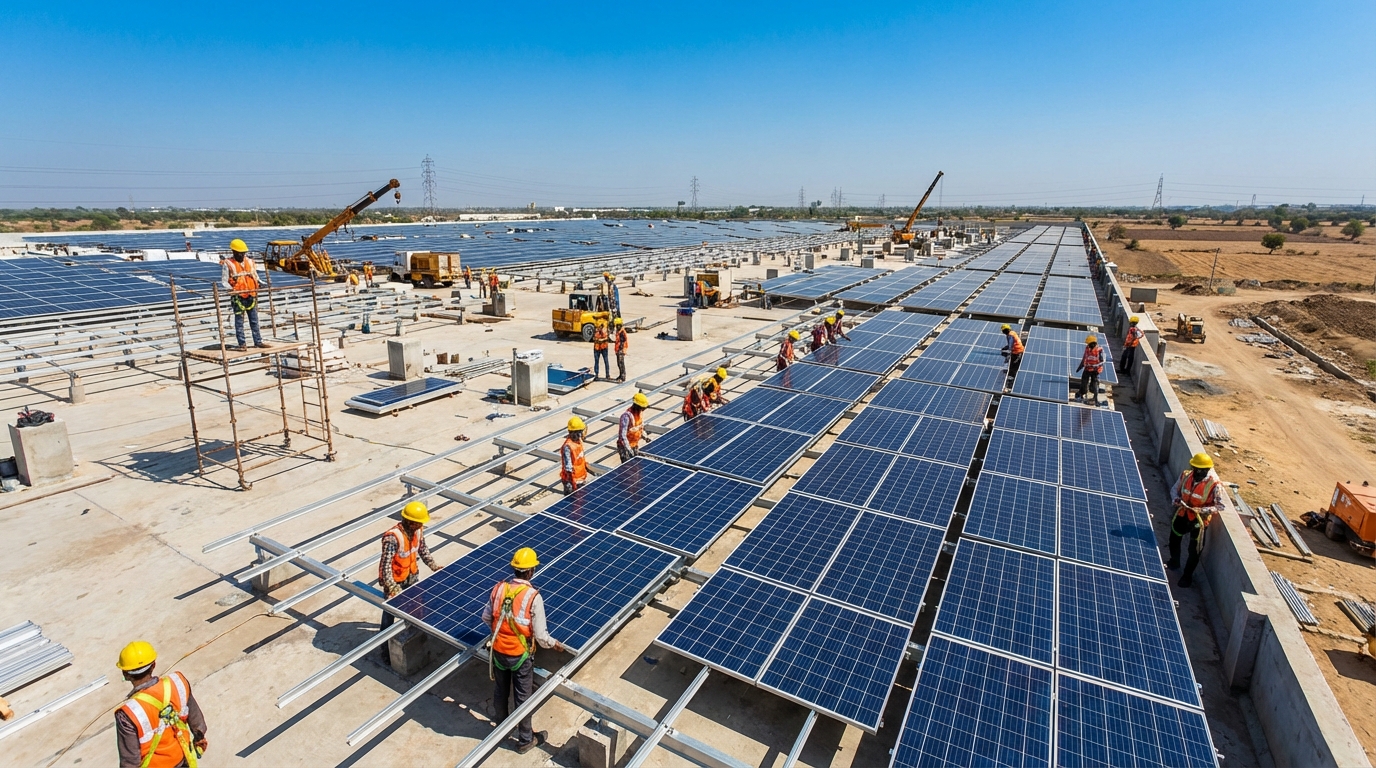
The engineering phase involves site assessment, system design, load analysis, and technical planning tailored to your specific energy needs. Procurement covers sourcing quality solar modules, inverters, mounting structures, cables, and all balance-of-system components. Construction includes installation, electrical work, grid connectivity, and system commissioning. A competent EPC partner manages all these phases seamlessly, serving as your single point of contact throughout the project lifecycle.
Gujarat has emerged as a solar powerhouse in India, ranking among the top states for installed solar capacity. The state’s favorable solar policies, robust grid infrastructure, and progressive government schemes like the Gujarat Solar Power Policy have created an environment where both residential and commercial solar projects thrive. In 2026, Gujarat continues to lead with ambitious renewable energy targets and streamlined approval processes that make solar adoption increasingly attractive.
This thriving market means more choices for consumers, but it also means greater responsibility in selecting the right partner. A qualified solar EPC company doesn’t just install panels—they engineer a system optimized for your location’s solar irradiation patterns, ensure compliance with Gujarat Electricity Regulatory Commission (GERC) regulations, navigate utility interconnection requirements, and provide ongoing support that protects your investment for 25+ years.
Key Factors to Compare When Evaluating Solar EPC Companies
When comparing solar EPC Gujarat providers, you need a structured approach that goes beyond simply comparing prices per watt. The cheapest option often becomes the most expensive in the long run when you factor in system underperformance, maintenance issues, and lack of support. Here are the critical factors that should form the foundation of your evaluation framework.
Experience and Project Portfolio
Experience matters significantly in solar EPC work. A company’s track record tells you whether they can handle projects of your scale and complexity. When evaluating experience, look beyond just years in business—examine the breadth and depth of their project portfolio.
Ask potential EPC partners about their completed installations in Gujarat. How many residential rooftop systems have they commissioned? What’s their largest commercial or industrial project? Have they executed ground-mounted solar parks? Companies with diverse portfolios demonstrate versatility and problem-solving capabilities across different project types.
Request specific case studies or reference projects similar to yours. A provider experienced in 3 kW residential installations may not have the expertise for a 500 kW industrial project. Similarly, rooftop solar expertise doesn’t automatically translate to ground-mount capabilities. Look for companies that have successfully completed projects matching your requirements in terms of system size, mounting type, and application.
Verifiable references are invaluable. Reputable EPC companies willingly provide contact information for past clients. Speaking directly with previous customers gives you unfiltered insights into project execution quality, timeline adherence, communication effectiveness, and after-sales support. If a company hesitates to provide references, consider it a warning sign.
Certifications and Technical Expertise
Technical certifications validate that an EPC company meets industry standards and possesses the necessary expertise. In India’s solar sector, several certifications indicate professional competence and commitment to quality.
Look for companies with ISO certifications (particularly ISO 9001 for quality management). Membership in industry associations like the National Solar Energy Federation of India (NSEFI) or Gujarat Energy Development Agency (GEDA) empanelment demonstrates credibility and adherence to industry best practices.
The engineering team’s qualifications matter enormously. Does the company employ qualified electrical engineers with solar-specific training? Are their installation teams certified in solar PV installation and safety protocols? Technical expertise ensures proper system design, safe installation practices, and compliance with electrical codes.
Equipment partnerships also reflect technical credibility. Authorized partnerships with reputable solar module and inverter manufacturers indicate that the EPC company meets manufacturer standards and can provide genuine warranty support. These partnerships often come with technical training and support that benefits your project.
Comparing Pricing Models and Cost Structures
Understanding how different EPC companies structure their pricing is crucial for making accurate comparisons. Solar panel cost and overall project pricing can be presented in various formats, and knowing what’s included—or excluded—makes all the difference.
The most common pricing model is cost per watt, where the total system price is divided by the system capacity. For example, a 10 kW system priced at ₹500,000 would be ₹50 per watt. This standardized metric allows easy comparison between providers, but it’s essential to verify what’s included in that per-watt price.
A comprehensive EPC quotation should include solar modules, inverters, mounting structures, cables and wiring, earthing and lightning protection, AC/DC distribution boxes, installation labor, civil work (if required), grid connectivity charges, and commissioning. Some companies quote attractive per-watt rates but exclude critical components or services, inflating the final cost.
Watch for hidden costs that can surprise you later. These might include structural assessment fees, additional charges for complex roof types, transportation costs for remote locations, meter installation charges, or documentation fees for government subsidy applications. A transparent EPC partner provides detailed breakdowns that account for all project expenses upfront.
Remember that the lowest price doesn’t always represent the best value. A company offering significantly lower rates than competitors may be cutting corners on equipment quality, using inexperienced installation teams, or planning to charge premium rates for after-sales service. Focus on value comparison—what you’re getting for your investment in terms of equipment quality, workmanship, warranties, and support.
Financing options can also differentiate EPC providers. Some companies have partnerships with banks and NBFCs that offer solar financing with competitive interest rates. Others may provide flexible payment terms aligned with project milestones. If you’re planning to finance your solar investment, compare the financing solutions each EPC partner can facilitate.
Equipment Quality and Brand Partnerships
The equipment your EPC partner installs will determine your system’s performance, reliability, and longevity. This is where quality absolutely cannot be compromised, as your solar ROI depends directly on how well your system performs over its 25+ year lifespan.
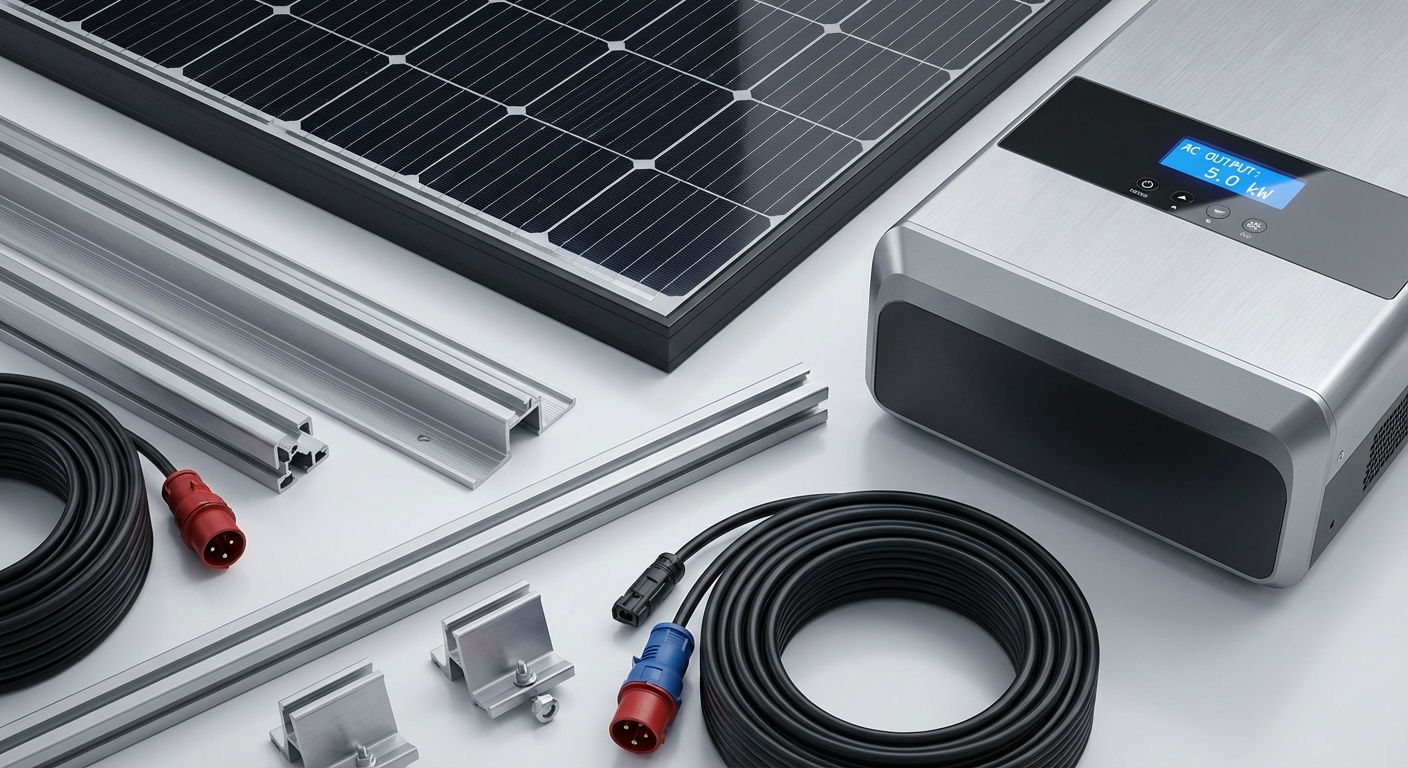
Solar modules should be Tier 1 panels from manufacturers with proven track records and strong financial stability. Tier 1 classification indicates manufacturers that are bankable, vertically integrated, and have been producing panels for at least five years with significant automation in their production. These panels typically offer better efficiency, superior temperature coefficients, and more reliable long-term performance.
Leading solar module brands available in Gujarat include manufacturers with established service networks and proven performance in Indian conditions. Ask your EPC partner which brands they work with and why. Be cautious of companies pushing unknown or unbranded panels simply because they’re cheaper—the savings aren’t worth the risk of premature failure or unavailable warranty support.
Inverter quality is equally critical. The solar inverter is the heart of your system, converting DC power from panels into usable AC power. Premium inverters offer higher efficiency (98%+), better monitoring capabilities, superior heat management, and longer lifespans. Look for established inverter brands with local service centers in Gujarat, ensuring quick support if issues arise.
Balance-of-system components—mounting structures, cables, connectors, and junction boxes—also impact system reliability. Quality mounting structures use corrosion-resistant materials suitable for Gujarat’s climate, including coastal areas where salt corrosion is a concern. Cables should be solar-grade with UV resistance and appropriate current-carrying capacity.
Equipment warranties provide insight into quality. Tier 1 solar modules typically come with 25-year performance warranties (guaranteeing at least 80% output after 25 years) and 10-12 year product warranties. Inverters usually carry 5-10 year warranties, with options to extend. Your EPC partner should clearly explain all equipment warranties and their role in facilitating warranty claims if needed.
Some EPC companies offer flexibility in equipment selection, allowing you to choose from multiple brands based on your budget and preferences. Others work exclusively with specific manufacturers. While brand partnerships can indicate expertise with particular equipment, ensure you’re not locked into inferior products simply because of exclusive arrangements.
Warranty Offerings and After-Sales Support
A solar system is a 25+ year investment, making after-sales support and warranty coverage absolutely critical. This is where many EPC companies differentiate themselves—and where cutting corners can cost you significantly over time.
Understanding the different types of warranties is essential. Equipment warranties come from manufacturers and cover defects in solar panels, inverters, and other components. Your EPC partner should facilitate these warranties but isn’t directly responsible for them. However, their relationship with manufacturers affects how smoothly warranty claims are processed.
Workmanship warranties come from the EPC company itself and cover installation quality, structural work, electrical connections, and system integration. A reputable provider offers at least 5-10 years of workmanship warranty, standing behind their installation quality. This warranty covers issues like roof leaks from improper mounting, electrical faults from poor connections, or structural failures from inadequate engineering.
Performance guarantees are sometimes offered by premium EPC providers, assuring that your system will generate a minimum amount of energy. These guarantees demonstrate confidence in system design and installation quality. If your system underperforms due to design or installation issues, the EPC company commits to corrective action.
After-sales service and solar maintenance Gujarat support separate excellent EPC partners from mediocre ones. Ask potential providers about their service infrastructure: Do they have local service teams in Gujarat? What’s their typical response time for service calls? Do they offer annual maintenance contracts? Is remote monitoring included?
Proactive monitoring and maintenance prevent small issues from becoming major problems. Modern solar systems can be monitored remotely, with the EPC company receiving alerts about performance issues, inverter faults, or grid problems. Quick response to these alerts minimizes downtime and energy loss.
Clarify what after-sales support includes and what costs extra. Some companies include the first year of monitoring and maintenance, then offer paid annual maintenance contracts. Others charge for every service visit. Understanding these terms upfront prevents surprises and helps you budget for long-term system care.
Government Scheme Expertise: DREBP and PM-KUSUM
Gujarat offers attractive government subsidies and schemes that can significantly reduce your solar investment cost. However, navigating these programs requires expertise, and your EPC partner’s experience with solar subsidy schemes can make the difference between smooth approval and frustrating delays.
The PM-KUSUM scheme (Pradhan Mantri Kisan Urja Suraksha evam Utthaan Mahabhiyan) supports farmers and rural communities with solar installations. Component A covers large-scale ground-mounted solar projects, Component B provides subsidies for standalone solar pumps, and Component C supports grid-connected solar pumps. If you’re eligible for PM-KUSUM benefits, your EPC partner should have proven experience with scheme applications and compliance.
The DREBP (Distributed Renewable Energy Generation Programme) and other state-level schemes in Gujarat provide capital subsidies for rooftop solar installations. These programs have specific technical requirements, documentation procedures, and approval processes. An experienced EPC company knows these requirements intimately and can guide you through applications efficiently.
Ask potential EPC partners about their subsidy scheme experience: How many subsidy-based projects have they completed? What’s their success rate with approvals? How long does the subsidy disbursement typically take? Can they handle all documentation and liaison with GEDA and distribution companies?
Scheme expertise also means understanding technical compliance requirements. Subsidy programs often mandate specific equipment standards, installation practices, and documentation. Non-compliance can result in subsidy rejection, leaving you to cover the full cost. An experienced EPC partner ensures your project meets all scheme requirements from the outset.
The subsidy claim process can be complex and time-consuming. Your EPC partner should manage this process, including submitting applications, coordinating inspections, providing required documentation, and following up on disbursements. This service is invaluable, as navigating government procedures independently can be frustrating and error-prone.
Gujarat-Based vs National EPC Providers: What’s the Difference?
When evaluating solar companies Gujarat, you’ll encounter both regional providers with deep local roots and national players with pan-India operations. Each approach has distinct advantages, and understanding these differences helps you choose the right fit for your project.

Gujarat-based EPC companies offer several compelling advantages. Local presence means faster response times for site visits, installations, and service calls. When you need support, technicians can reach you quickly rather than coordinating from distant locations. This accessibility is particularly valuable during emergencies or when quick troubleshooting is needed.
Regional providers typically have deeper understanding of Gujarat-specific regulations, utility procedures, and local conditions. They’re familiar with GEDA processes, know the interconnection requirements of different distribution companies (DGVCL, MGVCL, PGVCL, UGVCL), and understand local building codes. This expertise streamlines approvals and reduces project delays.
Personalized service is another hallmark of local EPC companies. You’re more likely to work directly with decision-makers and technical experts rather than through layers of sales representatives and call centers. This direct communication often results in more customized solutions and better responsiveness to your specific needs.
Local companies also have stronger community accountability. Their reputation depends on satisfied customers in Gujarat, creating powerful incentives to deliver quality work and maintain long-term relationships. Word-of-mouth referrals are crucial for regional businesses, motivating them to exceed expectations.
National EPC providers bring different strengths to the table. Larger companies often have more extensive resources, including bigger engineering teams, advanced design software, and greater purchasing power that can translate to competitive pricing on equipment. Their scale allows them to handle very large projects that might exceed regional providers’ capacity.
Brand recognition and established processes are advantages of national players. They typically have standardized procedures, comprehensive documentation, and proven project management systems refined across hundreds or thousands of installations. This systematization can provide confidence, particularly for large commercial or industrial projects.
However, national providers may lack the local touch. Service calls might take longer, as technicians travel from other regions. Communication might flow through centralized call centers rather than direct contact with local teams. Customization can be limited, with standardized solutions that don’t account for Gujarat-specific considerations.
Cost differences exist but aren’t always predictable. National companies might offer lower equipment costs due to bulk purchasing, but regional providers often have lower overhead and can be more flexible on pricing. The key is comparing total value—equipment quality, service, warranties, and support—rather than just upfront cost.
For most residential and commercial projects in Gujarat, local EPC providers offer the optimal balance of expertise, accessibility, and personalized service. For very large industrial or utility-scale projects, national players with extensive resources might be more appropriate. Consider your project size, complexity, and how much you value local presence and responsiveness.
Red Flags to Avoid When Selecting a Solar EPC Partner
Knowing what to avoid is as important as knowing what to look for. The solar industry, like any growing sector, has its share of unscrupulous operators who make unrealistic promises or deliver substandard work. Watch for these warning signs when evaluating potential EPC partners.
Unrealistic ROI promises are a major red flag. If a company guarantees solar payback periods that seem too good to be true—like 2-3 years for a residential system—they’re likely inflating energy generation estimates or understating costs. Realistic payback periods in Gujarat typically range from 4-7 years for commercial systems and 5-8 years for residential, depending on electricity tariffs and system size.
Pressure tactics and aggressive sales approaches should raise concerns. Reputable EPC companies give you time to evaluate proposals, ask questions, and compare options. High-pressure tactics like “limited-time offers” or demands for immediate deposits suggest a company more interested in closing sales than ensuring customer satisfaction.
Lack of verifiable credentials is another warning sign. If a company can’t provide certifications, refuses to share their project portfolio, or won’t give you customer references, proceed with extreme caution. Legitimate businesses are proud of their credentials and happy to demonstrate their track record.
Vague or incomplete quotations indicate potential problems. Professional EPC companies provide detailed proposals that itemize all equipment, services, and costs. If a quotation lacks detail or includes ambiguous line items, you’re likely to face surprise charges later. Insist on comprehensive, transparent pricing before proceeding.
Using unbranded or unknown equipment should concern you. While established brands cost more, they provide reliability, warranty support, and proven performance. If an EPC company pushes no-name panels or inverters, they’re prioritizing their margins over your long-term interests. Ask specifically about solar brands Gujarat and verify equipment authenticity.
Poor communication during the sales process predicts worse communication during installation and after-sales service. If a company is slow to respond, provides inconsistent information, or seems disorganized before you’ve signed a contract, these issues will only intensify once they have your money.
No clear warranty or after-sales support structure is a critical red flag. If a company is vague about workmanship warranties, doesn’t explain how equipment warranties work, or has no defined service process, you’ll be on your own when issues arise. Ensure solar warranty terms are clearly documented in your contract.
Extremely low pricing compared to competitors deserves scrutiny. While competitive pricing is normal, quotes significantly below market rates suggest corner-cutting on equipment quality, installation standards, or after-sales support. The cheapest option often becomes the most expensive when you factor in poor performance and lack of support.
Creating Your Solar EPC Comparison Framework
With all these factors in mind, you need a systematic approach to evaluate and compare potential EPC partners. Here’s a practical framework for making your decision with confidence.

Step 1: Create a shortlist of 3-5 EPC companies based on initial research. Look for providers with strong online presence, positive reviews, verifiable project portfolios, and appropriate experience for your project type. Include a mix of local Gujarat-based companies and perhaps one national player for comparison.
Step 2: Request detailed proposals from each shortlisted company. Provide identical information to all providers—your electricity consumption, roof/land details, budget range, and timeline. This ensures you receive comparable proposals. Ask each company to include equipment specifications, detailed pricing, warranty terms, project timeline, and payment schedule.
Step 3: Conduct site visits with each provider. A thorough site assessment is essential for accurate system design. Evaluate how each company approaches this assessment: Do they measure carefully? Ask detailed questions about your energy usage? Discuss shading issues? Assess structural capacity? The site visit quality indicates their engineering thoroughness.
Step 4: Verify credentials and references. Check certifications, industry memberships, and company registration. Contact at least 2-3 references from each provider, asking about installation quality, timeline adherence, communication, problem resolution, and after-sales support. If possible, visit completed projects to see work quality firsthand.
Step 5: Compare proposals systematically. Create a comparison spreadsheet with key factors: total cost, cost per watt, equipment brands and specifications, warranty terms, project timeline, payment terms, and included services. Don’t just compare numbers—evaluate the overall value proposition.
Step 6: Ask clarifying questions. Schedule follow-up discussions with top candidates to address any uncertainties. Key questions include:
- What exactly is included in your quoted price, and what costs extra?
- Which specific equipment models will you install, and why did you select them?
- What is your workmanship warranty, and what does it cover?
- How do you handle equipment warranty claims?
- What is your typical project timeline, and what could cause delays?
- What after-sales support do you provide, and what are the costs?
- How will you handle government subsidy applications if applicable?
- What happens if I’m not satisfied with system performance?
- Can you provide a detailed contract for review before I commit?
Step 7: Review contracts carefully. Before signing, ensure the contract includes all agreed-upon terms: detailed equipment specifications, total cost breakdown, payment schedule tied to milestones, project timeline with completion date, warranty terms for both workmanship and equipment, after-sales support provisions, and cancellation or dispute resolution terms. Consider having a lawyer review contracts for large projects.
Step 8: Trust your instincts. Beyond numbers and specifications, consider which company you feel most comfortable working with. Solar installation is a significant investment and a long-term relationship. Choose a partner who communicates clearly, demonstrates expertise, shows genuine interest in your needs, and inspires confidence in their ability to deliver.
Why Heaven Green Energy Stands Out in Gujarat’s Solar EPC Market
When applying this comparison framework to solar EPC Gujarat providers, Heaven Green Energy Limited exemplifies many of the qualities that define an excellent EPC partner. Established in 2017 and headquartered in Surat, the company has built a strong reputation across Gujarat through comprehensive turnkey solutions and customer-focused service.
Heaven Green Energy’s experience spans the full spectrum of solar applications—from residential rooftop installations to large-scale commercial and industrial projects to ground-mounted solar parks. This diverse portfolio demonstrates versatility and technical capability across different project complexities and scales. With branch offices in Ahmedabad and Junagadh, they maintain strong local presence throughout Gujarat, ensuring accessible service and quick response times.
The company’s expertise with government schemes sets them apart. Their experience implementing DREBP and PM-KUSUM projects means they can guide customers through subsidy applications, ensure technical compliance, and manage the documentation process efficiently. This expertise is particularly valuable for customers seeking to maximize their solar investment through available incentives.
Heaven Green Energy’s integrated business model—offering both EPC services and solar product sales—provides unique advantages. They supply quality solar modules, inverters, structures, wires, cables, and accessories, giving them direct control over equipment quality and availability. This integration often translates to better pricing, faster project execution, and more reliable warranty support.
Their focus on turnkey solutions means customers work with a single point of contact for all project aspects, from initial design through commissioning and beyond. This comprehensive approach simplifies the solar journey, particularly for customers new to solar energy who value guided support throughout the process.
For businesses and homeowners across Gujarat seeking a reliable, experienced, and locally accessible solar EPC partner, Heaven Green Energy represents the kind of provider that checks the critical boxes: proven track record, comprehensive services, government scheme expertise, quality equipment, and strong local presence.
Making the Right Choice for Your Solar Project in Gujarat
Choosing the right solar EPC partner is ultimately about finding the best fit for your specific needs, priorities, and circumstances. While this guide provides a comprehensive framework for evaluation, remember that the “best” provider varies depending on your project type, budget, location, and what you value most—whether that’s lowest cost, premium equipment, maximum local support, or proven experience with projects like yours.
The most important factors to prioritize are experience with similar projects, equipment quality and warranties, transparent pricing with no hidden costs, clear after-sales support structure, and strong communication and responsiveness. A provider who excels in these areas will serve you well throughout your solar journey.
Don’t rush your decision. Take time to thoroughly evaluate multiple providers, check references, review contracts carefully, and ask all your questions before committing. A solar system is a 25+ year investment—spending a few extra weeks on due diligence is time well spent when it ensures you partner with the right company.
Remember that price, while important, shouldn’t be your only consideration. The cheapest option often proves most expensive over time when you factor in poor performance, maintenance issues, and lack of support. Focus on value—what you’re getting for your investment in terms of quality, service, and long-term partnership.
Gujarat’s solar market offers excellent opportunities for both residential and commercial customers to reduce energy costs, increase energy independence, and contribute to environmental sustainability. With the right EPC partner guiding your project, you can confidently invest in solar energy knowing your system will deliver reliable performance and strong returns for decades.
If you’re ready to explore solar options for your home, business, or industrial facility in Gujarat, start by reaching out to experienced local providers who can assess your specific situation and provide customized proposals. Have Any Questions? +91 63904 05060—connect with solar experts who understand Gujarat’s market and can guide you toward the right solution for your energy needs.
The transition to solar energy is one of the smartest investments you can make in 2026, and with the right EPC partner by your side, your solar journey will be smooth, successful, and rewarding. Take the first step today toward energy independence and long-term savings with a solar solution designed specifically for your needs.