


Understanding the true solar cost for your home or business is the first step toward making an informed investment in renewable energy. In 2026, solar panel installation has become more accessible than ever, but the pricing landscape can still feel complex for homeowners in Gujarat and across India. Whether you’re considering a small residential rooftop system or a larger commercial installation, knowing exactly what you’re paying for—and why—helps you budget effectively and avoid surprises.
This comprehensive guide breaks down every component of solar panel installation costs, from equipment and labor to hidden expenses and financing options. By the end, you’ll have a clear picture of what to expect when planning your solar project and how to maximize your investment.
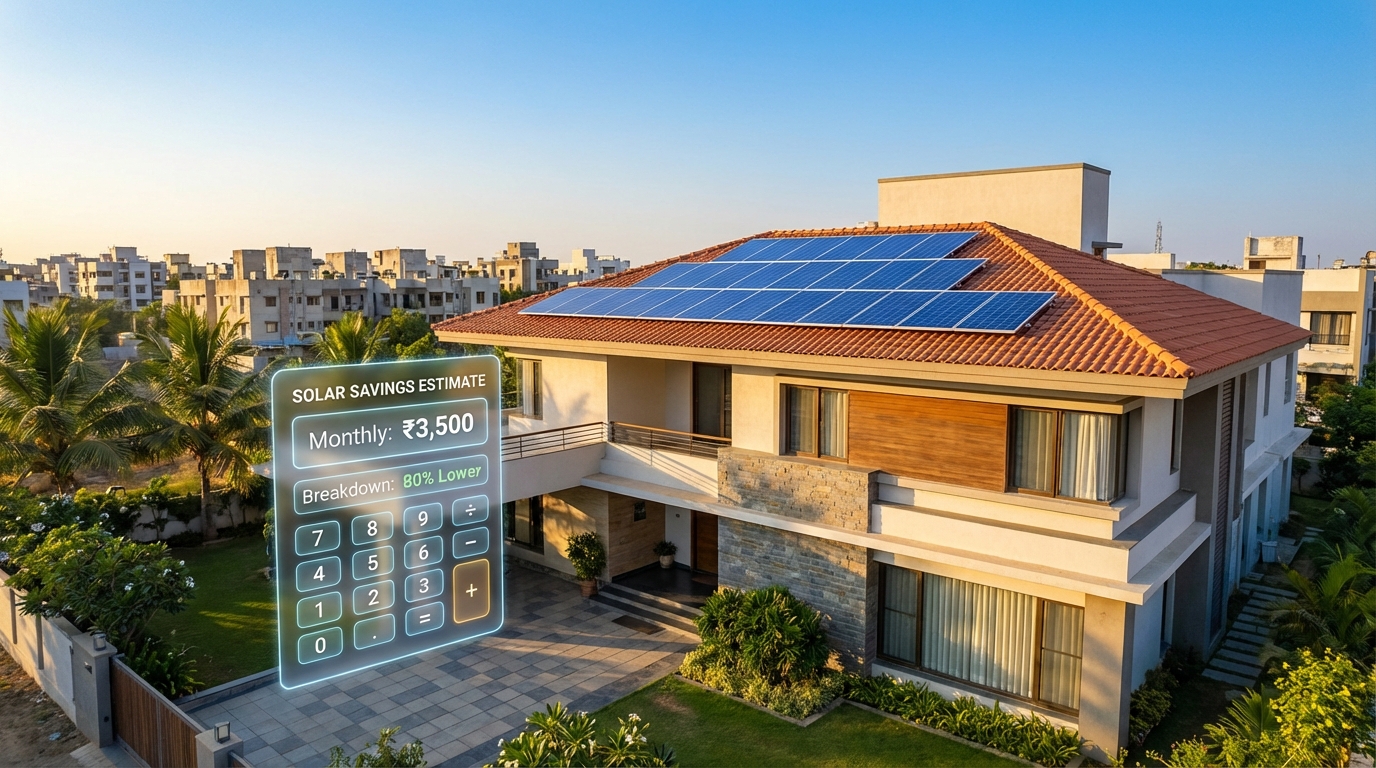
Understanding Solar Cost in 2026: What Homeowners Need to Know
The solar cost landscape has evolved significantly over the past few years. In 2026, solar panel prices have reached their most competitive levels, driven by improved manufacturing efficiency, increased market competition, and supportive government policies. For homeowners in Gujarat, this means better value for money and faster payback periods on solar investments.
Currently, the average solar panel cost in India ranges between ₹40,000 to ₹60,000 per kilowatt (kW) for residential installations, depending on equipment quality and installation complexity. This translates to approximately ₹40 to ₹60 per watt for complete turnkey systems. In Gujarat specifically, competitive market conditions and the presence of established solar EPC providers have helped keep costs on the lower end of this spectrum.
For a typical Indian household consuming 300-500 units of electricity monthly, a 3kW to 5kW solar system is usually sufficient. This system size can meet most daily energy needs while keeping the initial investment manageable. Larger homes or those with higher consumption may require 7kW to 10kW systems.
The affordability of solar energy in 2026 is further enhanced by government subsidies, net metering benefits, and flexible financing options. These factors combined make solar installations more accessible to middle-class homeowners who previously found the upfront costs prohibitive.
1. Solar Equipment Costs: Breaking Down the Hardware
Equipment typically accounts for 60-70% of your total solar cost, making it the largest expense category. Understanding what you’re buying helps you evaluate quotes and make informed decisions about quality versus budget.
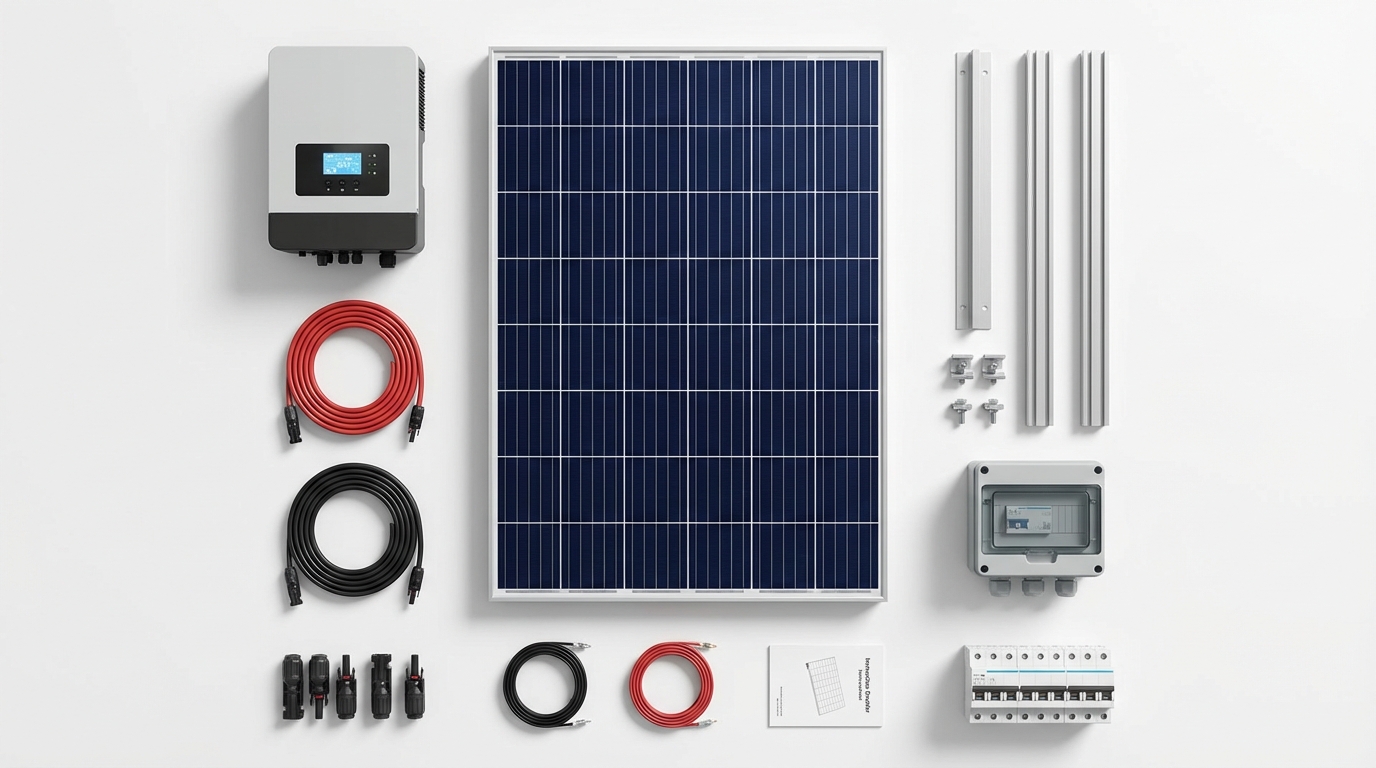
Solar Modules: The Largest Cost Component
Solar panels themselves represent 40-50% of total system costs. In 2026, you’ll encounter several panel types with varying price points:
- Monocrystalline panels: ₹25-35 per watt. These premium panels offer 19-22% efficiency and perform better in limited space and low-light conditions. They’re the most popular choice for residential installations.
- Polycrystalline panels: ₹20-28 per watt. Slightly lower efficiency (15-17%) but more budget-friendly. Suitable when roof space isn’t a constraint.
- Bifacial panels: ₹30-40 per watt. Advanced technology capturing sunlight from both sides, offering 10-20% more energy generation. Ideal for ground-mounted systems or white reflective roofs.
The quality and brand of solar modules significantly impact both upfront solar panel cost and long-term performance. Tier-1 manufacturers like Tata Solar, Waaree, and international brands offer 25-year performance warranties, while budget options may provide only 10-15 years. When evaluating solar brands in Gujarat, consider the total value proposition rather than just the initial price.
Inverter Pricing and Selection
The solar inverter converts DC electricity from panels into AC electricity for your home, accounting for 10-15% of system costs:
- String inverters: ₹8,000-15,000 per kW. Most common for residential systems, these centralized units are cost-effective and reliable. Suitable when your roof has minimal shading.
- Microinverters: ₹12,000-20,000 per kW. Individual inverters for each panel, offering better performance in partially shaded conditions and panel-level monitoring. Higher upfront cost but improved system optimization.
- Hybrid inverters: ₹15,000-25,000 per kW. Battery-ready systems that allow future energy storage integration. Ideal if you’re planning to add batteries later or want backup power capability.
Quality inverters from established brands typically last 10-15 years, while premium models may include 20-year warranties. This component is critical to system reliability, so cutting costs here can lead to higher maintenance expenses down the line.
Mounting Structures and Balance of System
The remaining equipment costs include:
- Mounting structures: ₹5-10 per watt. Aluminum or galvanized iron frames that secure panels to your roof. Quality matters for wind resistance and longevity.
- Cables and wiring: ₹2-4 per watt. UV-resistant solar cables rated for outdoor use, typically 4mm² or 6mm² gauge.
- Protection devices: ₹3,000-8,000 per system. AC/DC surge protection, circuit breakers, earthing equipment, and junction boxes.
- Monitoring systems: ₹3,000-10,000. Wi-Fi or cellular-based monitoring to track system performance in real-time.
These components may seem minor, but using substandard materials here can compromise system safety and performance. Reputable solar EPC Gujarat providers include quality balance-of-system components in their turnkey packages.
2. Labor and Installation Costs in Gujarat
Professional installation typically adds ₹8,000 to ₹15,000 per kW to your total solar cost, representing about 15-20% of the project budget. This covers the skilled labor, project management, and expertise needed to ensure your system operates safely and efficiently.
In Gujarat, solar installation labor rates are competitive compared to metros like Mumbai or Delhi, thanks to the state’s mature solar market and availability of trained technicians. Cities like Surat, Ahmedabad, and Rajkot have particularly competitive rates due to high installer density.
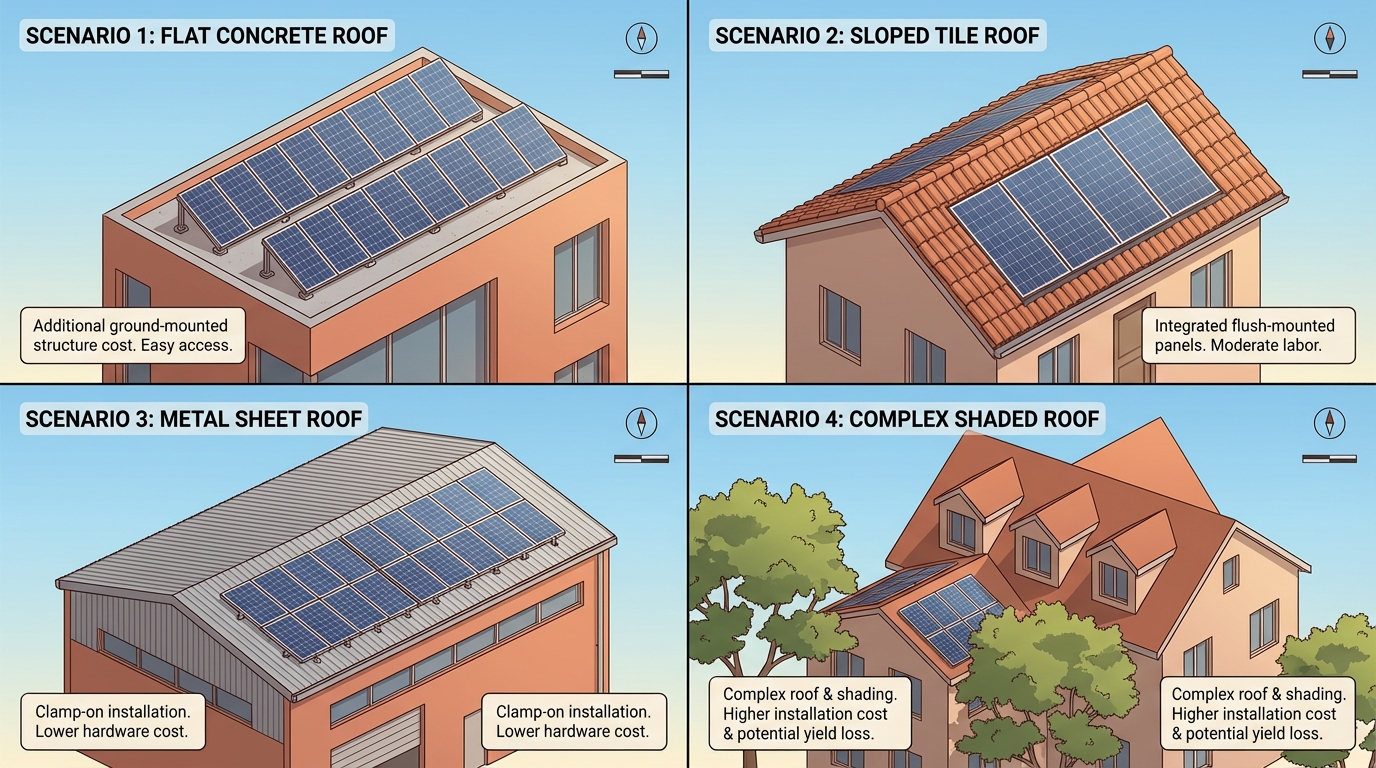
Installation complexity significantly affects labor costs. A straightforward installation on a flat concrete roof with easy access might cost ₹8,000-10,000 per kW, while complex scenarios increase expenses:
- Sloped tile roofs: Require careful tile removal and waterproofing, adding ₹2,000-4,000 per kW
- Multi-story buildings: Need scaffolding or specialized equipment, increasing costs by ₹3,000-5,000 per kW
- Metal sheet roofs: Require specialized mounting hardware and leak prevention, adding ₹1,500-3,000 per kW
- Ground-mounted systems: Involve foundation work and civil construction, potentially doubling installation costs
Professional installation from experienced providers includes site assessment, system design, structural evaluation, electrical work, grid interconnection, and post-installation testing. This comprehensive service ensures your system meets safety standards and performs optimally from day one.
3. Hidden Costs and Additional Expenses
Beyond equipment and labor, several additional expenses can impact your total solar cost. Being aware of these helps you budget accurately and avoid surprises:
Permits and approvals: Most residential installations require approval from your electricity distribution company (DISCOM) for net metering. Application fees typically range from ₹500 to ₹3,000 depending on system size. Some municipalities also require building permits, adding another ₹1,000-5,000.
Net metering setup: Installing a bidirectional meter costs ₹3,000-8,000, though some DISCOMs provide this at subsidized rates or free under government schemes. This meter tracks both electricity consumed from the grid and surplus power exported back.
Electrical upgrades: Older homes may need electrical panel upgrades to safely accommodate solar integration. This can cost ₹5,000-20,000 depending on the extent of work required. Modern circuit breakers, proper earthing, and adequate cable sizing are essential for safety.
Structural reinforcement: If your roof structure cannot support the additional weight of solar panels (typically 15-20 kg per square meter), reinforcement work may be necessary. This is rare for newer buildings but can add ₹10,000-50,000 for older structures.
Warranty extensions and insurance: While basic warranties are included, extended coverage or comprehensive insurance against theft, fire, or natural disasters costs ₹2,000-5,000 annually. This is optional but provides peace of mind.
Monitoring and maintenance contracts: Some homeowners opt for annual maintenance contracts covering cleaning, inspection, and minor repairs. These typically cost ₹3,000-8,000 per year for residential systems.
Reputable installers provide transparent quotes that itemize these costs upfront. If a quote seems unusually low, it may exclude some of these necessary expenses.
4. Factors That Affect Your Total Solar Cost
Several variables influence the final solar cost for your specific project. Understanding these factors helps you anticipate expenses and make strategic decisions:
System Size and Capacity Requirements
Larger systems benefit from economies of scale, reducing the per-watt cost. A 10kW system typically costs 10-15% less per watt than a 3kW system due to fixed costs being spread across more capacity. However, you should size your system based on actual energy needs rather than just seeking the best per-watt price.
Roof Characteristics
Your roof’s physical attributes significantly impact installation costs:
- Orientation and tilt: South-facing roofs with optimal tilt (15-25 degrees in Gujarat) require minimal additional structure. East or west-facing roofs may need tilt adjustments, adding costs.
- Shading: Roofs with significant shading from trees, buildings, or water tanks may require microinverters or optimizers, increasing equipment costs by 15-25%.
- Material: Concrete roofs are easiest and cheapest to work with. Tile, metal, or asbestos roofs require specialized mounting solutions.
- Age and condition: Older roofs nearing replacement should be renovated before solar installation to avoid removing panels later.
Location and Accessibility
Urban installations in Gujarat cities like Surat, Ahmedabad, or Vadodara typically cost less due to better installer availability and competition. Rural or remote locations may incur additional travel and logistics costs of ₹5,000-15,000.
Site accessibility also matters. Ground-floor access, adequate parking for equipment, and clear pathways reduce installation time and costs. Difficult-to-reach locations increase labor expenses.
Equipment Quality and Brand Selection
Premium equipment from Tier-1 manufacturers costs 20-30% more than budget alternatives but offers better efficiency, longer warranties, and superior performance. This higher upfront solar panel cost often delivers better long-term value through increased energy production and reliability.
Government Subsidies and Incentives
Central government subsidies can reduce your net solar cost by ₹14,588 per kW for systems up to 3kW, and ₹7,294 per kW for additional capacity up to 10kW. This means a 3kW system receives ₹43,764 subsidy, while a 5kW system gets ₹58,352. These subsidies are applied directly by approved installers, reducing your upfront payment.
Gujarat also offers additional state-level incentives and accelerated net metering approvals, making rooftop solar Gujarat installations particularly attractive.
5. Solar Cost Per Watt: How to Calculate Your Investment
The cost per watt metric provides a standardized way to compare solar quotes across different installers and system sizes. It’s calculated by dividing the total system cost by the rated capacity in watts.
For example, if a 5kW (5,000 watt) system costs ₹2,50,000, the cost per watt is ₹50 (₹2,50,000 ÷ 5,000 watts).
In Gujarat’s current market, competitive solar cost per watt ranges are:
- Budget systems: ₹40-45 per watt (basic components, shorter warranties)
- Mid-range systems: ₹45-55 per watt (quality Tier-1 equipment, standard warranties)
- Premium systems: ₹55-65 per watt (top-tier brands, extended warranties, advanced features)
Let’s look at example calculations for common residential system sizes:
3kW System: At ₹50 per watt = ₹1,50,000 total cost. After ₹43,764 subsidy = ₹1,06,236 net cost. Generates approximately 12-15 units daily, saving ₹3,600-4,500 monthly at ₹10 per unit.
5kW System: At ₹48 per watt = ₹2,40,000 total cost. After ₹58,352 subsidy = ₹1,81,648 net cost. Generates approximately 20-25 units daily, saving ₹6,000-7,500 monthly.
10kW System: At ₹45 per watt = ₹4,50,000 total cost. After ₹94,822 subsidy = ₹3,55,178 net cost. Generates approximately 40-50 units daily, saving ₹12,000-15,000 monthly.
When comparing quotes, ensure you’re comparing equivalent systems. A lower per-watt price using inferior components may cost more in the long run through reduced performance and higher maintenance needs.
6. Solar Subsidy and Financing Options in Gujarat
Government support significantly reduces the effective solar cost for homeowners, making renewable energy adoption more accessible.
The solar subsidy under the PM Surya Ghar Muft Bijli Yojana provides direct financial assistance for residential rooftop installations. As of 2026, the subsidy structure is:
- Up to 3kW: ₹14,588 per kW (₹43,764 total for 3kW)
- Above 3kW up to 10kW: ₹7,294 per kW for additional capacity
- Maximum subsidy: ₹94,822 for 10kW systems
To qualify, you must use approved installers registered under the scheme and install systems meeting technical specifications. The subsidy is credited directly to your bank account after installation verification, though many installers adjust the amount upfront.
Gujarat’s state government also supports solar adoption through:
- Streamlined net metering approvals within 15-30 days
- Exemption from electricity duty on solar generation
- Accelerated depreciation benefits for commercial installations
- Support for PM-KUSUM scheme implementation for agricultural solar pumps
Solar financing options have expanded significantly, making it easier to go solar without large upfront payments:
Bank loans: Most major banks offer dedicated solar loans at 8-11% interest rates with tenures up to 10 years. Some banks provide preferential rates for green energy loans. Monthly EMIs often equal or are less than current electricity bills, making the transition cash-flow positive from day one.
NBFC financing: Non-banking financial companies offer quick approval solar loans, sometimes with minimal documentation. Interest rates range from 10-14%.
Installer financing: Some solar companies provide in-house financing or partner with lenders for seamless loan processing. This convenience may come with slightly higher rates but simplified paperwork.
Net metering further improves solar ROI by allowing you to export excess generation back to the grid, earning credits that offset nighttime consumption. This effectively turns your electricity meter into a battery, maximizing the value of every unit generated.
Understanding the solar payback period helps you evaluate financing options and make informed decisions about system sizing and equipment quality.
7. System Size Recommendations and Budget Planning
Choosing the right system size balances upfront solar cost with long-term savings potential. Oversizing wastes money on unused capacity, while undersizing leaves savings on the table.
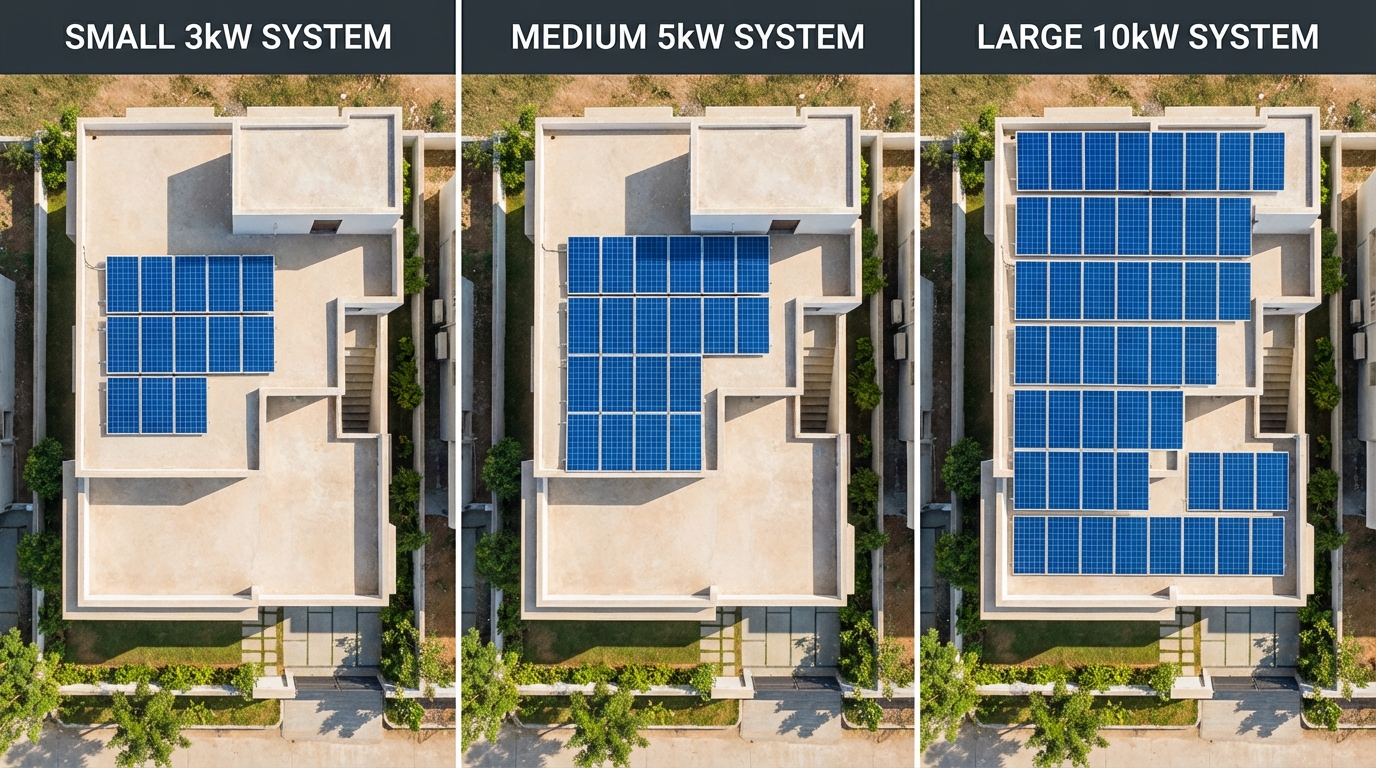
Determining Your Ideal System Size
Start by analyzing your electricity consumption patterns:
- Review 12 months of electricity bills to identify average monthly consumption
- Note seasonal variations (summer AC usage, winter heating)
- Consider future changes (electric vehicles, additional appliances, family growth)
- Decide whether you want to offset 80-100% of consumption or a smaller percentage
As a general rule, 1kW of solar capacity generates 4-5 units daily in Gujarat’s favorable climate. So if you consume 300 units monthly (10 units daily), a 2-3kW system would meet most needs. For 500 units monthly (17 units daily), consider a 4-5kW system.
Budget Allocation Strategy
When planning your solar investment, allocate your budget strategically:
- Equipment (65-70%): Prioritize quality panels and inverters that will perform reliably for 25+ years
- Installation (15-20%): Professional installation ensures safety and optimal performance
- Permits and approvals (2-5%): Budget for necessary regulatory compliance
- Contingency (5-10%): Reserve funds for unexpected structural work or electrical upgrades
When to Consider Battery Storage
Battery systems add ₹80,000-1,50,000 for 5-10kWh capacity, significantly increasing upfront solar cost. Consider batteries if:
- You experience frequent power outages and need backup
- Your utility offers time-of-use rates where you can store cheap daytime solar power for expensive evening use
- Net metering isn’t available or has unfavorable terms
- You want complete energy independence
For most Gujarat homeowners with reliable grid access and favorable net metering, batteries aren’t necessary initially. You can always add them later if needs change.
Long-Term Value Perspective
While upfront solar cost is important, focus on lifetime value. A quality 5kW system costing ₹2,40,000 that generates 7,500 kWh annually at ₹10 per unit saves ₹75,000 yearly. Over 25 years, that’s ₹18,75,000 in savings (accounting for electricity rate inflation), delivering nearly 8x return on investment.
This perspective helps justify spending slightly more for quality equipment that maximizes long-term generation and minimizes maintenance costs.
8. How to Get Accurate Solar Cost Estimates
Getting reliable quotes is essential for making informed decisions about your solar investment. Here’s how to ensure you receive accurate, comparable estimates:
Questions to Ask Solar Installers
When requesting quotes, ask these critical questions:
- What specific panel brand, model, and wattage are included?
- Which inverter brand and model, with what warranty period?
- Are mounting structures aluminum or galvanized iron?
- Does the quote include all balance-of-system components?
- What’s included in installation (permits, net metering application, commissioning)?
- What warranties cover equipment and workmanship?
- Is the subsidy amount already deducted or will it be applied later?
- What post-installation support and maintenance is provided?
Red Flags in Pricing Proposals
Be cautious of quotes that:
- Are significantly lower than market rates without clear explanation
- Don’t specify equipment brands and models
- Promise unrealistic energy generation figures
- Require large upfront deposits before site assessment
- Include vague terms like “premium panels” without specifics
- Don’t provide written warranties
- Pressure you to decide immediately with limited-time offers
Comparing Quotes Effectively
Create a comparison spreadsheet with these columns:
- Total system cost and cost per watt
- Panel brand, model, efficiency, and warranty
- Inverter brand, model, and warranty
- Installation scope and timeline
- Warranty coverage (equipment and workmanship)
- Post-installation support
- Company credentials and experience
The lowest solar cost isn’t always the best value. Balance price with quality, warranty coverage, and installer reputation.
Working with Experienced EPC Providers
Established solar companies Gujarat with proven track records offer several advantages:
- Accurate site assessments and system design
- Access to quality equipment at competitive prices
- Experienced installation teams
- Streamlined permit and approval processes
- Reliable warranty service and support
- Financial stability to honor long-term commitments
Companies like Heaven Green Energy Limited, with over 10,000 installations across Gujarat, bring valuable expertise in navigating local regulations, optimizing system design for regional conditions, and ensuring smooth project execution from start to finish.
Frequently Asked Questions About Solar Cost
What is the average solar cost for a home in Gujarat?
The average solar cost for residential installations in Gujarat ranges from ₹40-60 per watt for complete turnkey systems. A typical 5kW system costs ₹2,00,000-3,00,000 before subsidies, or ₹1,40,000-2,40,000 after applying the central government subsidy. Actual costs depend on equipment quality, roof complexity, and installation requirements.
How much does a 5kW solar system cost in 2026?
A 5kW solar system typically costs ₹2,25,000-2,75,000 for a complete installation with quality Tier-1 equipment. After the ₹58,352 government subsidy, your net cost would be ₹1,66,648-2,16,648. This system generates approximately 20-25 units daily, sufficient for most medium-sized homes in Gujarat.
Are there any hidden costs in solar installation?
Reputable installers provide transparent quotes, but be aware of potential additional expenses: net metering application fees (₹500-3,000), electrical panel upgrades if needed (₹5,000-20,000), structural reinforcement for older roofs (₹10,000-50,000), and optional extended warranties or insurance (₹2,000-5,000 annually). Always ask for itemized quotes that specify what’s included.
How long does it take to recover solar installation costs?
In Gujarat’s favorable conditions, most residential solar systems achieve payback in 4-6 years through electricity savings. With current subsidies, net metering benefits, and rising electricity rates, some homeowners recover costs even faster. Over a 25-year system lifespan, you can expect 4-6x return on investment. Learn more about calculating your specific solar payback timeline based on your consumption patterns.
Does solar cost include maintenance expenses?
Initial installation quotes typically don’t include ongoing maintenance, though solar systems require minimal upkeep. Annual solar maintenance Gujarat costs are modest—approximately ₹2,000-5,000 for cleaning, inspection, and minor repairs. Many installers offer optional annual maintenance contracts. Most maintenance involves periodic panel cleaning to maintain efficiency, especially during dusty seasons.
Making Your Solar Investment Decision
Understanding the complete solar cost picture empowers you to make confident decisions about your renewable energy investment. While the upfront expense may seem significant, the combination of government subsidies, financing options, and long-term electricity savings makes solar increasingly accessible for Gujarat homeowners.
The key is working with experienced, transparent installers who provide detailed quotes, use quality equipment, and stand behind their work with solid warranties. Don’t let the lowest price be your only consideration, focus on value, reliability, and long-term performance.
As electricity rates continue rising and solar technology becomes more efficient, the financial case for solar strengthens each year. Homeowners who invest in quality solar installations today position themselves for decades of clean, affordable energy and protection against utility rate increases.
Whether you’re ready to move forward or still gathering information, taking the time to understand solar panel cost components, financing options, and system sizing ensures you’ll make the right choice for your home and budget. The transition to solar energy represents not just an environmental commitment, but a smart financial decision that pays dividends for years to come.
Ready to get accurate pricing for your specific situation? Heaven Green Energy Limited has helped thousands of Gujarat homeowners navigate their solar journey with transparent pricing, quality installations, and ongoing support. Our experienced team can assess your property, design an optimized system, and provide a detailed cost breakdown tailored to your energy needs and budget. Have any questions? Call us at +91 63904 05060 to discuss your solar cost options and take the first step toward energy independence today.
This blog post was written using thestacc.com