


When you invest in solar energy, you’re making a decision that will impact your property and finances for decades. Understanding solar lifespan is crucial for homeowners and businesses in Gujarat who want to maximize their return on investment. With electricity costs rising and solar technology becoming more accessible, knowing exactly how long your solar panels will perform—and at what efficiency—helps you make informed decisions about your renewable energy future.
Heaven Green Energy Limited has installed over 10,000 solar systems across Gujarat since 2017, giving us firsthand insight into how solar panels perform in our region’s unique climate conditions. This comprehensive guide answers the 18 most critical questions about solar panel lifespan, degradation rates, warranty coverage, and long-term performance expectations. Whether you’re considering your first solar installation in Surat, Ahmedabad, or Junagadh, or evaluating the performance of an existing system, this expert roundup provides the answers you need.
Understanding Solar Panel Lifespan: What Gujarat Homeowners and Businesses Need to Know
The concept of solar lifespan encompasses more than just how long panels remain physically intact on your roof. It includes the entire performance curve of your solar energy system—from peak efficiency in the early years through gradual degradation over decades. For property owners in Gujarat, understanding this timeline is essential for accurate financial planning and realistic performance expectations.
Solar panels don’t simply stop working after a certain number of years. Instead, they experience a slow, predictable decline in efficiency while continuing to generate electricity well beyond their warranty periods. This gradual performance reduction, combined with Gujarat’s intense sunlight and high temperatures, creates a unique longevity profile that differs from installations in cooler climates.
In 2026, modern solar technology has advanced significantly compared to panels installed even a decade ago. Today’s tier-1 solar modules feature improved materials, better encapsulation techniques, and enhanced resistance to environmental stressors. These improvements directly translate to longer operational lifespans and slower degradation rates, making current solar investments more valuable than ever before.
The financial implications of solar lifespan extend throughout your ownership period. A system that maintains higher efficiency for longer periods delivers greater cumulative energy production, faster payback periods, and more substantial long-term savings. For commercial and industrial facilities in Gujarat with high energy consumption, even small differences in degradation rates can translate to lakhs of rupees over the system’s lifetime.
How Long Do Solar Panels Actually Last?
Modern solar panels typically last 25 to 30 years as their standard operational lifespan, though many continue producing electricity well beyond this timeframe. The 25-year mark represents the point at which most manufacturers guarantee their panels will still operate at 80-85% of their original capacity, not the point at which they stop functioning entirely.
Real-world data from solar installations worldwide shows that well-maintained panels often continue operating for 35 to 40 years, albeit at reduced efficiency levels. Some of the earliest solar installations from the 1970s and 1980s remain operational today, demonstrating the remarkable durability of photovoltaic technology. However, these older systems use different materials and manufacturing processes than contemporary panels, making direct comparisons challenging.
The distinction between warranty period and actual operational life is crucial for understanding solar lifespan. When manufacturers offer 25-year performance warranties, they’re providing a conservative guarantee backed by extensive testing and statistical modeling. The actual lifespan typically exceeds this warranty period by 5 to 15 years, depending on installation quality, maintenance practices, and environmental conditions.
Several factors determine how long your specific solar panels will last:
- Manufacturing quality: Tier-1 manufacturers with rigorous quality control produce panels with longer lifespans and slower degradation rates
- Installation expertise: Proper mounting, electrical connections, and system design prevent premature failures and stress-related damage
- Environmental exposure: Climate conditions, including temperature extremes, humidity, dust, and severe weather events, impact panel longevity
- Maintenance frequency: Regular cleaning and inspections help identify and address issues before they cause permanent damage
- Component quality: The durability of mounting structures, wiring, and connectors affects overall system lifespan
For installations in Gujarat’s climate, the intense solar irradiation that makes the region ideal for solar energy also creates thermal stress that can accelerate degradation. However, this effect is relatively minor when balanced against the increased energy production from abundant sunshine. Working with experienced solar EPC providers who understand local conditions ensures your system is designed for maximum longevity in Gujarat’s environment.
What Is Solar Panel Degradation and How Fast Does It Happen?
Solar panel degradation refers to the gradual decline in a panel’s ability to convert sunlight into electricity over time. This natural process occurs in all photovoltaic systems due to prolonged exposure to ultraviolet radiation, thermal cycling, humidity, and other environmental factors. Understanding degradation rates is essential for projecting long-term energy production and calculating accurate return on investment.
The industry standard degradation rate for quality solar panels in 2026 is approximately 0.5% to 0.8% per year. This means that after one year of operation, a panel might produce 99.5% to 99.2% of its original output. After ten years, the same panel would operate at roughly 95% to 92% of its initial capacity. These rates represent significant improvements over older solar technology, which often degraded at 1% or more annually.
Premium tier-1 solar modules from leading manufacturers typically achieve degradation rates at the lower end of this spectrum—around 0.4% to 0.6% annually. Budget or tier-3 panels may degrade faster, sometimes exceeding 1% per year, which substantially reduces their long-term value despite lower upfront costs. This difference becomes increasingly significant over the 25-year solar lifespan, with premium panels potentially producing 10-15% more cumulative energy than budget alternatives.
Here’s what you can expect from your solar panels at different milestones:
- After 5 years: 97-98% of original capacity (minimal noticeable performance change)
- After 10 years: 94-96% of original capacity (slight reduction in energy production)
- After 20 years: 88-92% of original capacity (more noticeable but still strong performance)
- After 25 years: 84-88% of original capacity (warranty threshold typically around 80-85%)
- After 30 years: 80-85% of original capacity (continued viable operation beyond warranty)
Several mechanisms contribute to solar panel degradation. Light-induced degradation (LID) occurs primarily during the first few hours of sun exposure, causing an initial 1-3% efficiency drop that stabilizes quickly. Potential-induced degradation (PID) results from voltage differences between the solar cells and the grounding frame, though modern panels incorporate design features to minimize this effect. Thermal cycling—the repeated expansion and contraction from daily temperature fluctuations—gradually stresses cell connections and encapsulation materials.
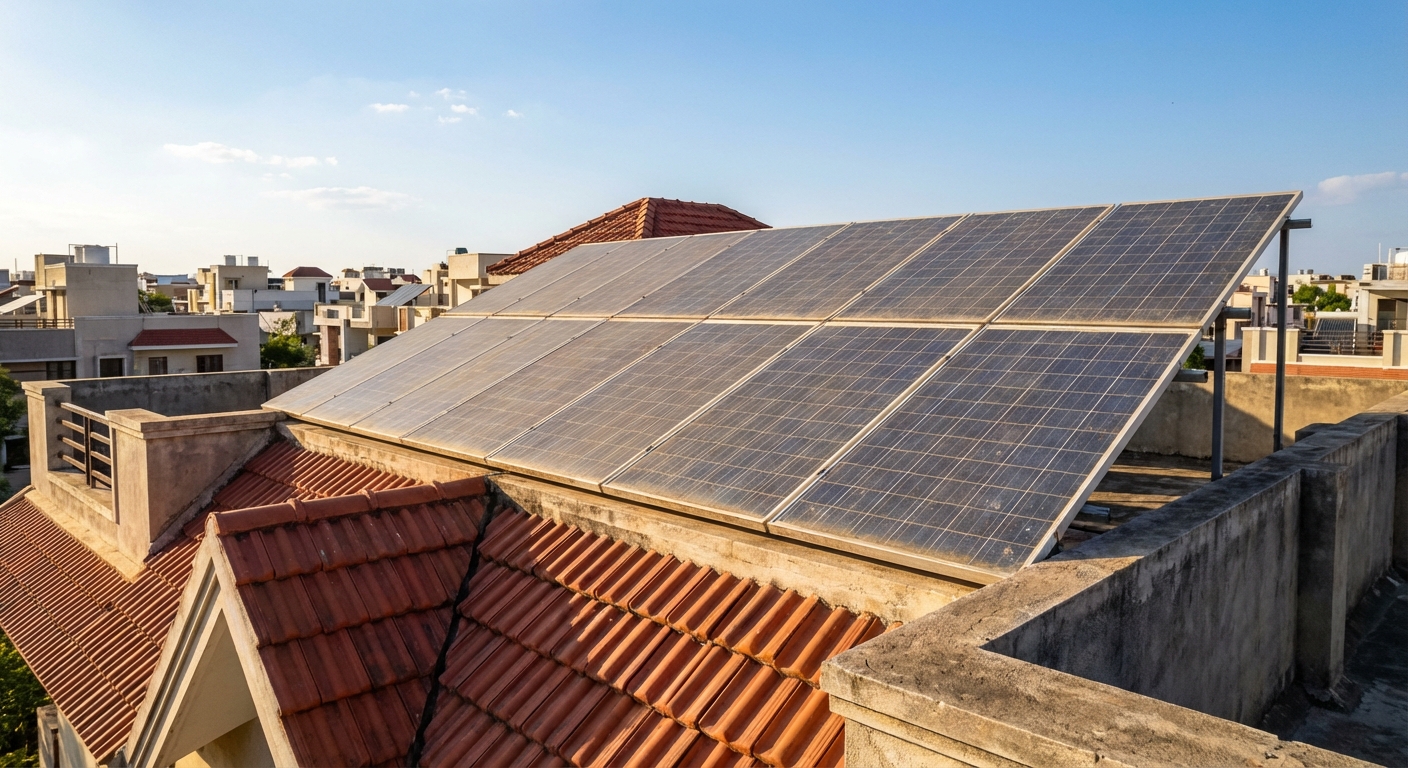
In Gujarat’s climate, thermal stress represents a more significant factor than in cooler regions. Summer temperatures regularly exceed 40°C, and panel surface temperatures can reach 65-75°C during peak sun hours. However, quality panels are specifically engineered to withstand these conditions, and the abundant solar resource more than compensates for slightly accelerated degradation. Choosing appropriate solar brands for Gujarat conditions ensures your system maintains optimal performance throughout its lifespan.
Do All Solar Components Have the Same Lifespan?
A common misconception about solar lifespan is that all system components last equally long. In reality, different parts of your solar energy system have varying operational lifespans, and understanding these differences is crucial for long-term maintenance planning and budgeting.
Solar panels themselves are the most durable component, with the 25-30 year lifespan discussed earlier. Their solid-state construction with no moving parts contributes to exceptional longevity. The tempered glass, aluminum frame, and encapsulated silicon cells are engineered to withstand decades of environmental exposure with minimal degradation.
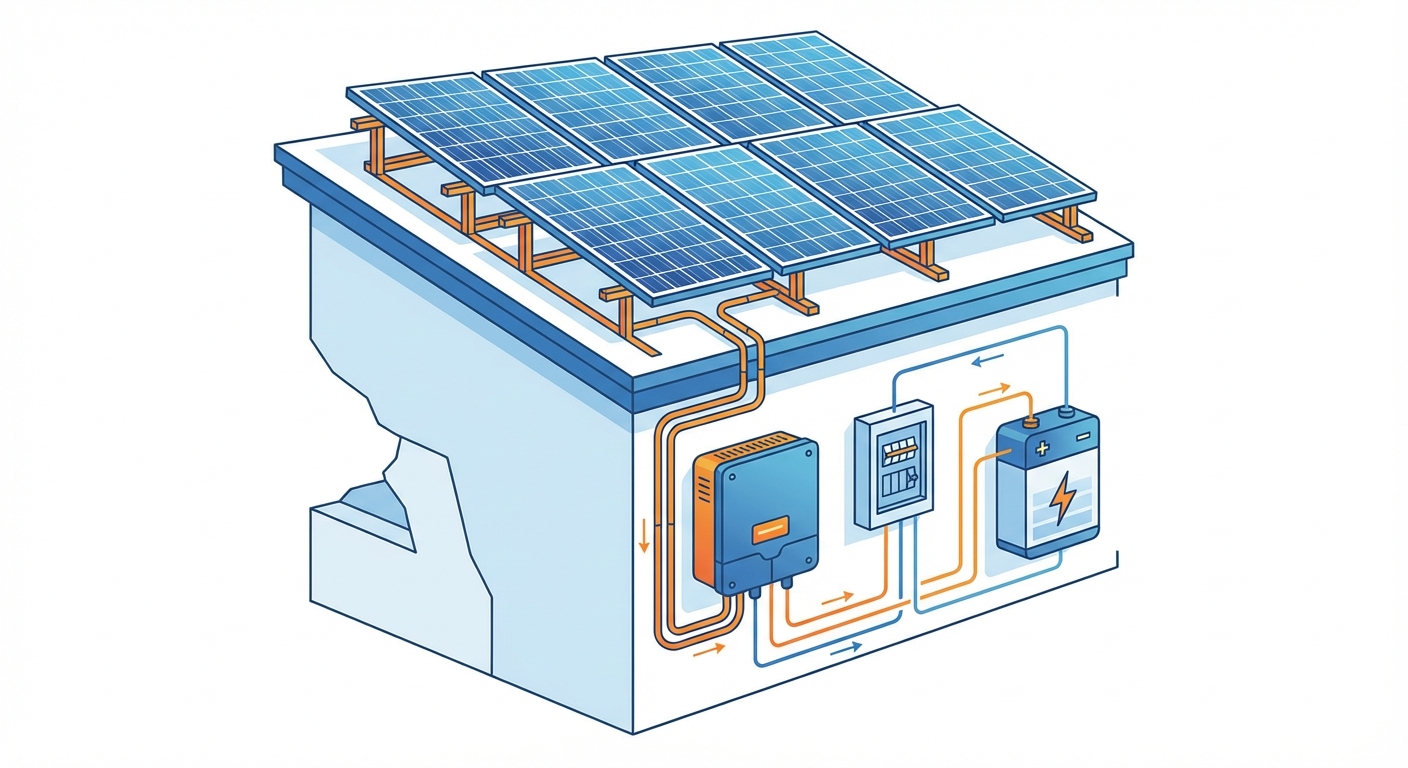
Solar inverters, which convert the DC electricity generated by panels into AC electricity usable in your home or business, typically last 10 to 15 years. This shorter lifespan results from their electronic components, which are more susceptible to heat stress and wear than the panels themselves. Most solar system owners should plan for at least one inverter replacement during their system’s operational life. String inverters generally need replacement around the 10-12 year mark, while microinverters often last slightly longer, around 12-15 years, though they may be more expensive to replace individually.
The mounting structures and racking systems that secure panels to your roof typically last as long as the panels themselves, 25 to 30 years or more. Quality aluminum or galvanized steel mounting systems resist corrosion and maintain structural integrity throughout the solar lifespan. However, the roof penetrations and waterproofing seals may require inspection and maintenance every 5-10 years to prevent leaks, particularly in Gujarat’s monsoon season.
Electrical components including wiring, junction boxes, disconnects, and breakers generally last 20-25 years when properly installed and protected from environmental exposure. These components rarely fail catastrophically but may require occasional maintenance or replacement if damaged by rodents, moisture, or physical stress.
For systems incorporating battery storage, the batteries represent another component with a distinct lifespan. Lithium-ion batteries, the most common type in modern solar installations, typically last 10-15 years or 3,000-5,000 charge cycles. Lead-acid batteries, while less expensive upfront, usually require replacement every 5-7 years. Battery degradation differs from solar panel degradation, batteries lose capacity more noticeably over time and eventually require complete replacement rather than continuing to operate at reduced capacity.
This variation in component lifespans has important financial implications. When calculating your solar return on investment, factor in the cost of inverter replacement around year 10-12. For a typical residential system, inverter replacement might cost ₹50,000 to ₹1,50,000 depending on system size. For commercial and industrial installations, this cost scales proportionally but remains a small fraction of the total energy savings over the system’s lifetime.
What Warranties Cover Solar Panel Lifespan?
Understanding solar warranties is essential for protecting your investment and setting realistic expectations about solar lifespan. Most solar panel manufacturers provide two distinct types of warranties: product warranties and performance warranties, each covering different aspects of panel longevity.
The product warranty (also called materials or workmanship warranty) typically covers manufacturing defects, physical issues, and premature failures for 10 to 12 years on standard panels, with premium manufacturers offering 15 to 25 years. This warranty protects against problems like frame corrosion, glass breakage under normal conditions, junction box failures, and delamination of the encapsulation materials. If a panel fails due to manufacturing defects during this period, the manufacturer will repair or replace it at no cost.
The performance warranty (also called power output warranty) guarantees that panels will maintain a minimum efficiency level over a much longer period, typically 25 years. Standard performance warranties guarantee that panels will produce at least 80-85% of their original rated capacity at the 25-year mark. Premium manufacturers often offer tiered performance guarantees, such as 90% capacity at 10 years and 85% at 25 years, or even 30-year warranties with 85% capacity guarantees.
Here’s what these warranties typically cover and exclude:
Covered under product warranty:
- Manufacturing defects in materials or workmanship
- Frame corrosion or structural failures
- Junction box or connector failures
- Delamination or encapsulation breakdown
- Glass breakage under normal operating conditions
Covered under performance warranty:
- Power output falling below guaranteed thresholds
- Excessive degradation beyond specified rates
- Cell efficiency losses exceeding warranty terms
Typically NOT covered by warranties:
- Damage from improper installation or modifications
- Physical damage from external forces (falling objects, vandalism)
- Damage from severe weather events (hail, lightning, extreme winds)
- Normal wear and degradation within specified rates
- Damage from inadequate maintenance or cleaning
- Labor costs for removal, reinstallation, or shipping
- Consequential damages or lost energy production
An important consideration for Gujarat installations is that warranties may have specific exclusions for extreme environmental conditions. Review warranty terms carefully to understand coverage limitations related to high temperatures, dust accumulation, or coastal salt exposure if applicable to your location.
Beyond panel warranties, inverter warranties typically range from 5 to 12 years, with many manufacturers offering extended warranty options for additional cost. Installation workmanship warranties from your EPC provider should cover labor and installation quality for at least 2-5 years. Heaven Green Energy provides comprehensive installation warranties backed by our experience with over 10,000 installations across Gujarat, ensuring your system is properly designed and installed for maximum longevity.
When evaluating warranties, consider the financial stability of the manufacturer. A 25-year warranty is only valuable if the company remains in business to honor it. Tier-1 manufacturers with established track records and strong financial positions are more likely to be around decades from now to fulfill warranty obligations. This represents another advantage of choosing quality components over budget alternatives, the warranty backing is more reliable.
How Does Gujarat’s Climate Affect Solar Lifespan?
Gujarat’s climate presents both advantages and challenges for solar panel longevity. Understanding these regional factors helps set realistic expectations for solar lifespan and informs decisions about system design, component selection, and maintenance practices.

High temperatures represent the most significant climate factor affecting solar lifespan in Gujarat. Summer temperatures regularly exceed 40°C, and solar panel surface temperatures can reach 65-75°C during peak sun hours. While solar panels are engineered to withstand these conditions, elevated temperatures do accelerate certain degradation mechanisms. For every degree Celsius above 25°C, panel efficiency temporarily decreases by approximately 0.3-0.5%, and prolonged thermal stress can slightly accelerate long-term degradation.
However, this thermal impact is often overstated. Quality tier-1 panels are specifically tested and rated for operation in high-temperature environments. The temperature coefficient, a specification indicating how much efficiency decreases with heat, varies by panel type, with premium panels featuring lower temperature coefficients (better heat tolerance). More importantly, Gujarat’s abundant solar irradiation more than compensates for temperature-related efficiency losses, resulting in higher overall energy production than cooler regions with less sunshine.
Dust accumulation is another significant factor in Gujarat, particularly in inland areas away from the coast. Dust particles settle on panel surfaces, blocking sunlight and reducing energy production. While dust doesn’t directly damage panels or reduce their lifespan, accumulated dust can decrease output by 15-30% if left uncleaned. Regular cleaning is essential for maintaining optimal performance throughout the solar lifespan. During Gujarat’s dry season, monthly cleaning may be necessary, while monsoon rains provide natural cleaning that reduces maintenance frequency.
Humidity and monsoon conditions affect solar installations differently across Gujarat. Coastal areas like Surat experience higher humidity levels, which can accelerate corrosion of mounting hardware and electrical connections if not properly protected. The monsoon season brings heavy rainfall that naturally cleans panels but also tests the waterproofing integrity of junction boxes, connectors, and roof penetrations. Quality installation practices with proper sealing and drainage are essential for preventing moisture-related issues that could shorten system lifespan.
Coastal salt exposure in areas near the Arabian Sea requires special consideration. Salt-laden air can corrode aluminum frames, mounting structures, and electrical components over time. For coastal installations, choosing panels and mounting systems with enhanced corrosion resistance, such as marine-grade aluminum or stainless steel hardware, extends solar lifespan significantly. Regular washing to remove salt deposits also helps prevent corrosion damage.
Gujarat experiences relatively few severe weather events compared to cyclone-prone coastal regions or hail-prone areas. However, occasional dust storms, high winds, and intense thunderstorms do occur. Quality mounting systems engineered for wind loads appropriate to Gujarat’s conditions ensure panels remain securely attached throughout their operational life. Proper grounding and surge protection safeguard against lightning-related damage.
The intense solar irradiation that makes Gujarat one of India’s premier solar energy regions also means panels experience more cumulative UV exposure over their lifetime. UV radiation contributes to gradual degradation of encapsulation materials and anti-reflective coatings. However, modern panels use UV-resistant materials specifically designed to withstand decades of intense sunlight exposure, making this a minor factor in overall solar lifespan.
Despite these climate considerations, solar panels perform exceptionally well in Gujarat. The region’s abundant sunshine, relatively stable weather patterns, and lack of extreme cold or snow make it ideal for solar energy. With proper component selection, professional installation, and regular maintenance, solar systems in Gujarat achieve their full 25-30 year lifespan while delivering excellent energy production throughout their operational life.
Does Regular Maintenance Extend Solar Panel Lifespan?
Regular maintenance plays a crucial role in maximizing solar lifespan and ensuring your system delivers optimal performance throughout its operational life. While solar panels are remarkably low-maintenance compared to other energy systems, they’re not entirely maintenance-free. Strategic maintenance practices can prevent premature failures, identify issues before they cause permanent damage, and maintain peak efficiency for decades.
Cleaning represents the most important and frequent maintenance task for Gujarat installations. Dust, bird droppings, leaves, and other debris accumulate on panel surfaces, blocking sunlight and reducing energy production. While this soiling doesn’t directly damage panels, prolonged accumulation can create hot spots where shaded cells overheat, potentially causing permanent damage to bypass diodes or cell connections. Regular cleaning prevents these issues and maintains optimal energy production.
For Gujarat conditions, recommended cleaning frequency varies by location and season:
- Dry season (October-May): Monthly cleaning for inland areas, bi-monthly for coastal areas with more humidity
- Monsoon season (June-September): Quarterly cleaning, as rainfall provides natural washing
- High-dust areas: More frequent cleaning may be necessary near construction sites, agricultural areas, or industrial zones
- Coastal installations: Monthly washing to remove salt deposits and prevent corrosion
Professional cleaning services use deionized water and soft brushes to avoid scratching panel surfaces or leaving mineral deposits. While homeowners can clean panels themselves, professional services ensure thorough cleaning without risking damage or personal injury from working on rooftops.
Regular inspections help identify potential issues before they cause permanent damage or system failures. Annual professional inspections should include:
- Visual examination of panels for cracks, delamination, or discoloration
- Inspection of mounting hardware for corrosion, looseness, or structural issues
- Electrical connection checks for signs of overheating, corrosion, or loose connections
- Inverter performance verification and error code review
- Roof penetration and waterproofing seal inspection
- Vegetation management to prevent shading or physical contact with panels
- Performance monitoring data review to identify underperforming panels or strings
Performance monitoring enables early detection of degradation or failures. Modern solar systems include monitoring capabilities that track energy production in real-time. Comparing actual production against expected output (adjusted for weather conditions) helps identify issues like failing panels, inverter problems, or excessive soiling. Addressing these issues promptly prevents minor problems from becoming major failures that could shorten solar lifespan.
The cost-benefit analysis of professional maintenance strongly favors regular service for most installations. Annual professional maintenance for a residential system typically costs ₹3,000 to ₹8,000, while commercial systems might cost ₹10,000 to ₹30,000 depending on size. This modest investment protects a system worth several lakhs and ensures maximum energy production. Over a 25-year solar lifespan, proper maintenance can increase cumulative energy production by 10-20% compared to neglected systems, easily justifying the maintenance costs.
For commercial and industrial installations with significant energy production, professional solar maintenance services in Gujarat often include comprehensive service contracts with scheduled cleaning, inspections, and priority repair services. These agreements provide peace of mind and ensure systems maintain peak performance throughout their operational life.
What Factors Can Shorten Solar Panel Lifespan?
While quality solar panels are engineered for 25-30 years of operation, certain factors can significantly shorten solar lifespan if not properly addressed. Understanding these risks helps you avoid premature system failures and protect your solar investment.
Poor installation quality represents the single most common cause of premature solar system failures. Improper mounting that allows panels to flex or vibrate creates stress on cells and connections, leading to micro-cracks that reduce efficiency and eventually cause failures. Inadequate electrical connections can create resistance hot spots that damage junction boxes or connectors. Insufficient waterproofing of roof penetrations leads to leaks that damage both your roof and electrical components. Working with experienced, certified installers like Heaven Green Energy ensures your system is properly designed and installed for maximum longevity.
Environmental stressors beyond normal operating conditions can damage panels and shorten their lifespan:
- Extreme heat: While panels tolerate high temperatures, prolonged exposure to temperatures exceeding their rated limits can accelerate degradation
- Hail damage: Large hailstones can crack tempered glass, though quality panels are tested to withstand 25mm hail at 23 m/s
- High winds: Inadequate mounting systems may allow panels to lift or vibrate in strong winds, causing physical damage
- Lightning strikes: Direct or nearby lightning strikes can damage panels, inverters, and electrical components without proper surge protection
- Falling debris: Tree branches, construction materials, or other falling objects can crack panels
Electrical issues can cause permanent damage to solar panels if not addressed promptly. Hot spots occur when individual cells become shaded or damaged, causing them to heat up significantly while other cells continue producing power. This localized heating can permanently damage cells and bypass diodes. Arc faults from loose connections or damaged wiring can cause fires or equipment damage. Ground faults from moisture intrusion or insulation breakdown can damage panels and create safety hazards.
Micro-cracks in solar cells represent a common but often invisible threat to solar lifespan. These hairline fractures in the silicon cells can result from manufacturing defects, installation stress, thermal cycling, or physical impacts. Micro-cracks may not immediately affect performance but can propagate over time, eventually causing cell failures and reduced output. Quality manufacturing processes and careful handling during installation minimize micro-crack risks.
Inadequate maintenance allows minor issues to become major problems. Accumulated dirt and debris reduce energy production and can create hot spots. Undetected electrical issues can cause progressive damage. Vegetation growth can shade panels or physically contact them, causing damage. Corrosion of mounting hardware or electrical connections can lead to structural failures or electrical problems. Regular maintenance catches these issues early when they’re easily and inexpensively addressed.
Incompatible system design can stress components and shorten their lifespan. Oversized inverters may operate inefficiently, while undersized inverters can be overloaded. Improper string configurations can create voltage mismatches that stress panels. Inadequate ventilation around inverters causes overheating that shortens their operational life. Professional system design ensures all components are properly sized and configured for optimal performance and longevity.
Using low-quality components to reduce upfront costs often results in shorter solar lifespan and higher long-term costs. Budget panels from tier-3 manufacturers may use inferior materials, less rigorous quality control, and weaker warranties. These panels often degrade faster, fail more frequently, and may not be backed by financially stable companies that will honor warranty claims. The modest savings on initial purchase price rarely justify the reduced performance and reliability over the system’s lifetime.
Can Solar Panels Be Repaired or Must They Be Replaced?
Understanding when solar panels can be repaired versus when replacement is necessary helps you make cost-effective decisions about system maintenance and extends overall solar lifespan. The answer depends on the type and extent of damage, the age of the panels, and the cost-effectiveness of repair versus replacement.
Repairable issues typically involve components external to the panel itself:
- Junction box problems: Failed junction boxes or damaged bypass diodes can often be replaced without replacing the entire panel
- Frame damage: Minor frame corrosion or damage can sometimes be repaired, though severe frame damage usually requires panel replacement
- Connector issues: Damaged or corroded connectors can be replaced relatively easily
- Wiring problems: Damaged wiring between panels can be repaired or replaced
- Mounting system issues: Loose, corroded, or damaged mounting hardware can be repaired or replaced without affecting panels
Issues requiring panel replacement involve damage to the panel’s core components:
- Cracked glass: Broken or cracked tempered glass compromises the panel’s weatherproofing and typically requires replacement
- Cell damage: Broken, burned, or severely degraded solar cells cannot be economically repaired
- Delamination: Separation of the encapsulation layers allows moisture intrusion and cannot be effectively repaired
- Severe hot spots: Panels with extensive hot spot damage have permanently damaged cells requiring replacement
- Manufacturing defects: Panels with inherent manufacturing defects should be replaced under warranty
The cost considerations for repair versus replacement depend on several factors. Individual panel replacement typically costs ₹8,000 to ₹20,000 for residential-sized panels, including labor. If the damaged panel is under warranty, the manufacturer covers the panel cost, though you may need to pay for labor and shipping. For older systems beyond warranty, replacement costs must be weighed against the panel’s remaining useful life and the impact on overall system performance.
In some cases, partial system upgrades make sense when replacing failed panels. If your original panels are no longer manufactured, you may need to install different panels as replacements. Compatibility considerations include matching voltage and current characteristics to avoid string mismatches. Sometimes it’s more cost-effective to replace an entire string of panels with newer, more efficient models rather than trying to match older panel specifications exactly.
For systems approaching the end of their expected solar lifespan (20+ years), extensive repairs or multiple panel replacements may not be cost-effective. In these cases, consider whether a complete system upgrade or replacement makes more financial sense. Newer panels offer significantly higher efficiency, better warranties, and improved performance, potentially justifying a full system replacement rather than continuing to repair aging equipment.
Inverter repairs and replacements follow different economics than panel repairs. Inverters contain electronic components that can sometimes be repaired, but labor costs often make replacement more economical than repair. When your inverter reaches 10-12 years of age, replacement is typically recommended even if it’s still functioning, as failure becomes increasingly likely and newer inverters offer improved efficiency and monitoring capabilities.
How Does Solar Lifespan Impact Your Return on Investment?
Understanding the relationship between solar lifespan and return on investment is crucial for evaluating the true financial value of your solar energy system. The extended operational life of solar panels, far beyond the payback period, is where the most significant financial benefits accumulate.
For most residential and commercial installations in Gujarat, the payback period, the time required to recover your initial investment through energy savings, typically ranges from 4 to 7 years depending on system size, electricity rates, and available subsidies. However, with a solar lifespan of 25-30 years, you continue benefiting from free electricity for 18-26 years beyond the payback point. This extended benefit period is where solar energy delivers its most compelling financial returns.
Consider a typical residential solar installation in Gujarat:
- System cost: ₹3,00,000 for a 5kW system (after subsidies)
- Annual energy savings: ₹60,000 (assuming ₹6/kWh electricity rate)
- Payback period: 5 years
- Years 6-25: ₹12,00,000 in additional savings (20 years × ₹60,000)
- Inverter replacement (year 12): -₹80,000
- Maintenance costs (25 years): -₹1,25,000 (₹5,000/year average)
- Net 25-year benefit: ₹13,95,000 profit beyond initial investment
This calculation demonstrates how solar lifespan directly impacts ROI. Even accounting for inverter replacement and maintenance costs, the system delivers nearly 14 lakhs in net profit over its operational life, a return of more than 4.5 times the initial investment.
For commercial and industrial installations, the financial impact is even more dramatic due to higher energy consumption and commercial electricity rates. A 100kW commercial system might cost ₹50,00,000 but generate ₹15,00,000 in annual savings, achieving payback in just 3-4 years and delivering over ₹3 crores in cumulative savings over 25 years.
The degradation rate affects long-term ROI calculations. A panel degrading at 0.5% annually produces significantly more cumulative energy over 25 years than one degrading at 1% annually. For a 5kW system, this difference might amount to 5,000-8,000 additional kWh over the system’s lifetime, worth ₹30,000 to ₹50,000 at current electricity rates. This demonstrates why choosing quality panels with slower degradation rates delivers better long-term value despite higher upfront costs.
Electricity rate escalation further enhances solar ROI over the system’s lifespan. If electricity rates increase by 5% annually (a conservative estimate based on historical trends), your solar savings grow proportionally. Energy that saves you ₹6/kWh today might save ₹20/kWh in year 25, dramatically increasing the value of your solar production in later years. This escalation effect means the majority of your cumulative solar savings often occur in the second half of the system’s operational life.
Understanding solar payback periods and ROI calculations helps you make informed decisions about system sizing, component quality, and financing options. While budget components reduce upfront costs, they often deliver lower long-term ROI due to faster degradation, shorter lifespans, and higher maintenance costs.
Factoring in inverter replacement is essential for accurate ROI calculations. Plan for inverter replacement around year 10-12, costing approximately 15-20% of your original system cost. While this represents a significant expense, it’s a one-time cost that enables your system to continue operating efficiently for another 15+ years. The energy savings during those additional years far exceed the inverter replacement cost.
What Happens to Solar Panel Performance After 25 Years?
The 25-year mark represents a significant milestone in solar lifespan, the point at which most performance warranties expire and panels are guaranteed to operate at 80-85% of their original capacity. However, this doesn’t mean your solar panels stop working or become worthless after 25 years. Understanding post-warranty performance helps you plan for the full lifecycle of your solar investment.
Expected efficiency at 25 years typically ranges from 80-88% of original capacity for quality panels, depending on their degradation rate. A panel that originally produced 400 watts would generate 320-352 watts at the 25-year mark. While this represents a noticeable decline from peak performance, it still provides substantial energy production. For context, a 25-year-old premium panel often produces more electricity than a brand-new budget panel, demonstrating the long-term value of quality components.
After the warranty period expires, panels continue operating with gradually declining efficiency. Real-world data from decades-old installations shows that well-maintained panels often continue producing electricity for 35-40 years or more. The degradation rate may accelerate slightly in later years as encapsulation materials and anti-reflective coatings age, but catastrophic failures remain relatively rare in quality panels.
Options for extending system life beyond 25 years include:
- Continue operating as-is: If panels still produce adequate energy for your needs, simply continue using them with regular maintenance
- Partial system upgrades: Replace the lowest-performing panels while retaining those still operating efficiently
- Inverter upgrades: Install a new, more efficient inverter to maximize energy harvest from aging panels
- System expansion: Add new panels to supplement aging panels and increase total production
- Complete system replacement: Remove old panels and install a new system with current technology
When to consider system replacement or upgrade depends on several factors. If your panels are producing less than 70% of their original capacity, replacement may be economically justified. If you’re already planning a roof replacement, coordinating solar system replacement makes logistical sense. If newer technology offers significantly higher efficiency (50%+ improvement), upgrading might be worthwhile even if old panels still function adequately.
The financial calculation for replacement versus continued operation should consider:
- Current energy production versus your consumption needs
- Cost of new system versus value of additional energy production
- Efficiency improvements in current technology versus your existing panels
- Condition of mounting structures and electrical infrastructure
- Available incentives or subsidies for new installations
- Your expected remaining time in the property
Recycling and disposal considerations become relevant when panels reach end-of-life. Solar panels contain valuable materials including silicon, glass, aluminum, and small amounts of silver and copper. Specialized recycling facilities can recover 85-95% of these materials for reuse. As the solar industry matures, recycling infrastructure is expanding, making responsible disposal increasingly accessible. Never dispose of solar panels in regular waste streams, work with certified recyclers or your installation company to ensure proper recycling.
In Gujarat, the growing solar industry is developing recycling capabilities to handle the eventual decommissioning of thousands of installations. Planning for end-of-life disposal as part of your initial solar investment demonstrates environmental responsibility and ensures your renewable energy system remains sustainable throughout its entire lifecycle.
Do Premium Solar Brands Last Longer Than Budget Options?
The relationship between solar panel quality and lifespan is one of the most important factors in long-term solar investment value. While budget panels may seem attractive due to lower upfront costs, premium tier-1 manufacturers typically deliver significantly longer operational lives, slower degradation rates, and more reliable warranty backing.
Quality differences between tier-1 and tier-3 manufacturers extend throughout the manufacturing process. Tier-1 manufacturers invest heavily in research and development, use higher-purity silicon, implement rigorous quality control testing, and employ advanced manufacturing techniques. These companies test panels extensively for durability, including accelerated aging tests, thermal cycling, humidity exposure, and mechanical stress testing that exceeds industry standards.
Budget tier-3 manufacturers often cut costs by using lower-grade materials, less stringent quality control, and simplified manufacturing processes. While these panels may meet basic certification requirements, they typically lack the durability enhancements and quality consistency of premium products. The result is higher failure rates, faster degradation, and shorter operational lifespans.
Degradation rate comparisons reveal significant differences:
- Premium tier-1 panels: 0.4-0.6% annual degradation, often maintaining 88-90% capacity at 25 years
- Standard tier-2 panels: 0.6-0.8% annual degradation, typically maintaining 84-87% capacity at 25 years
- Budget tier-3 panels: 0.8-1.2% annual degradation, often declining to 75-82% capacity at 25 years
Over a 25-year solar lifespan, these differences compound significantly. A 5kW system with premium panels might produce 1,50,000 kWh over 25 years, while the same system with budget panels might produce only 1,35,000 kWh, a difference of 15,000 kWh worth ₹90,000 to ₹1,20,000 at current electricity rates. This difference alone often exceeds the initial cost savings from choosing budget panels.
Warranty strength and manufacturer stability represent crucial considerations. Premium manufacturers typically offer stronger warranties, 25-30 year performance warranties with higher capacity guarantees, and 12-25 year product warranties. More importantly, these companies have the financial stability and established track records to honor warranty claims decades into the future. Budget manufacturers may offer similar warranty terms on paper, but many lack the financial resources or longevity to fulfill these obligations if they go out of business.
The long-term value proposition of premium panels becomes clear when considering total cost of ownership over the solar lifespan:
- Higher energy production due to better efficiency and slower degradation
- Lower failure rates reducing replacement costs and system downtime
- Stronger warranties backed by financially stable companies
- Better performance in challenging conditions like high temperatures
- Higher resale value if you sell your property
- Greater peace of mind and reduced maintenance concerns
For Gujarat installations, choosing appropriate solar brands that perform well in high-temperature, high-dust environments is particularly important. Premium manufacturers design panels specifically for these conditions, with better heat tolerance, more durable encapsulation, and enhanced corrosion resistance. These features directly translate to longer solar lifespan and better performance in Gujarat’s climate.
When evaluating panel options, consider the total 25-year cost of ownership rather than just the upfront price. A premium panel costing 20% more but producing 15% more cumulative energy and lasting 5 years longer delivers far better value than a budget alternative. This is why Heaven Green Energy partners with leading tier-1 manufacturers to ensure our customers receive systems that deliver maximum value over their entire operational life.
How Can You Maximize Your Solar Panel Lifespan in Gujarat?
Maximizing solar lifespan requires a combination of smart initial decisions and consistent long-term practices. By following these strategies, Gujarat homeowners and businesses can ensure their solar investments deliver optimal performance for 25-30 years or longer.
Choose quality components and certified installers: The foundation of long solar lifespan begins with your initial purchasing decisions. Select tier-1 solar panels from established manufacturers with proven track records and strong warranties. Choose inverters from reputable brands known for reliability. Work with experienced, certified EPC providers who understand Gujarat’s specific climate challenges and follow best practices for installation quality. The modest additional cost of premium components and professional installation pays dividends throughout the system’s operational life.
Implement proper maintenance schedules: Develop a maintenance routine appropriate for your location and conditions. For most Gujarat installations, this includes monthly cleaning during dry seasons, quarterly inspections of mounting hardware and electrical connections, and annual professional system evaluations. Keep detailed maintenance records to track system performance and identify trends that might indicate developing issues.
Monitor system performance regularly: Take advantage of monitoring systems that track energy production in real-time. Compare actual production against expected output to identify underperformance quickly. Many issues that could shorten solar lifespan, such as failing panels, inverter problems, or excessive soiling, become apparent through performance monitoring before they cause permanent damage. Address performance issues promptly rather than waiting for complete failures.
Protect against environmental damage: While you can’t control Gujarat’s climate, you can take steps to minimize environmental stress on your system. Ensure proper drainage around ground-mounted systems to prevent water accumulation. Trim nearby vegetation to prevent shading and physical contact with panels. In coastal areas, wash panels regularly to remove salt deposits. Verify that mounting systems are properly secured and inspect them after severe weather events.
Address issues promptly: When monitoring or inspections reveal problems, address them quickly. A loose mounting bolt is easily tightened but could cause panel damage if ignored. A corroded connection is inexpensive to replace but could cause a fire if left unattended. Early intervention prevents minor issues from becoming major problems that shorten solar lifespan or require expensive repairs.
Plan for component replacements: Budget for inverter replacement around year 10-12 rather than being surprised by this expense. Consider extended warranties or service contracts that cover inverter replacement. For battery systems, plan for battery replacement every 10-15 years. Setting aside a small amount annually for these predictable expenses ensures you’re financially prepared when replacements become necessary.
Work with experienced local providers: Partner with solar companies that have extensive experience in Gujarat’s specific conditions. Local expertise ensures your system is designed for regional climate challenges, maintenance schedules are appropriate for local conditions, and service is readily available when needed. Heaven Green Energy’s decade of experience with over 10,000 installations across Gujarat means we understand exactly what it takes to maximize solar lifespan in our region’s unique environment.
Keep documentation organized: Maintain complete records of your system specifications, warranty documents, maintenance history, and performance data. This documentation proves invaluable for warranty claims, troubleshooting performance issues, and demonstrating system value if you sell your property. Digital copies stored in cloud services ensure you never lose critical information.
Stay informed about technology advances: While your current system should last 25-30 years, staying informed about solar technology developments helps you make smart decisions about upgrades, expansions, or eventual replacement. New inverter technologies, monitoring systems, or maintenance techniques might offer opportunities to enhance your existing system’s performance and longevity.
Ensuring Long-Term Solar Performance: Your Next Steps
Understanding solar lifespan empowers you to make informed decisions about your renewable energy investment. Quality solar panels from tier-1 manufacturers typically last 25-30 years while maintaining 80-88% of their original capacity, with many systems continuing to operate effectively for 35-40 years. The key factors determining your system’s longevity include component quality, installation expertise, maintenance practices, and environmental conditions specific to Gujarat’s climate.
The financial implications of solar lifespan are substantial. With payback periods of just 4-7 years and operational lives of 25-30 years, solar energy delivers decades of free electricity after recovering your initial investment. Even accounting for inverter replacement and maintenance costs, most systems generate returns of 4-5 times the initial investment over their lifetime. This makes solar energy one of the most financially attractive investments available to Gujarat homeowners and businesses.
For Gujarat installations, working with experienced local providers who understand regional climate challenges ensures your system is properly designed, professionally installed, and appropriately maintained for maximum solar lifespan. The combination of abundant sunshine, supportive government policies, and mature solar industry infrastructure makes Gujarat an ideal location for solar energy adoption.
Whether you’re considering your first solar installation or evaluating the performance of an existing system, the principles outlined in this guide will help you maximize the value of your solar investment. Quality components, professional installation, regular maintenance, and performance monitoring are the cornerstones of long solar lifespan and optimal return on investment.
Heaven Green Energy Limited has been helping Gujarat homeowners and businesses harness solar energy since 2017, with over 10,000 successful installations across Surat, Ahmedabad, Junagadh, and throughout the state. Our expertise in designing, installing, and maintaining solar systems ensures your investment delivers maximum performance throughout its 25-30 year solar lifespan. From residential rooftop installations to large-scale commercial and industrial projects, we provide turnkey EPC solutions backed by our commitment to quality, reliability, and customer satisfaction.
Ready to start your solar journey or optimize your existing system’s performance? Our team of solar experts can evaluate your specific needs, recommend appropriate system designs, and provide detailed projections of long-term performance and savings. Have any questions about solar lifespan, system design, or how solar energy can benefit your property? Call us at +91 63904 05060 to speak with a solar specialist who can provide personalized guidance based on your unique situation and help you make the most of Gujarat’s abundant solar resource for decades to come.
This blog post was written using thestacc.com