


When you invest in a solar energy system for your home or business in Gujarat, you’re making a significant financial commitment that should deliver clean energy and cost savings for decades. But what happens if something goes wrong? Understanding solar warranty coverage is essential to protecting your investment and ensuring long-term peace of mind. This comprehensive guide answers all your critical questions about solar panel warranties, performance guarantees, inverter coverage, and how to navigate warranty claims in 2026.
Whether you’re a homeowner considering rooftop solar or a business owner planning a commercial installation, knowing the ins and outs of solar warranty protection helps you make informed decisions and avoid costly surprises down the road.
Understanding Solar Panel Warranties: What Every Buyer Should Know
A solar warranty is your safety net against defects, performance issues, and equipment failures. Unlike traditional appliances, solar systems are designed to operate outdoors for 25-30 years, exposed to harsh weather conditions including intense Gujarat summers, monsoon rains, and occasional dust storms. This makes comprehensive warranty coverage absolutely critical.
Most solar installations actually come with multiple warranties covering different components and aspects of your system. Understanding each type helps you evaluate the true value and protection level of any solar proposal you receive. In Gujarat’s competitive solar market, warranty terms can vary significantly between providers, making this knowledge a powerful tool for comparison shopping.
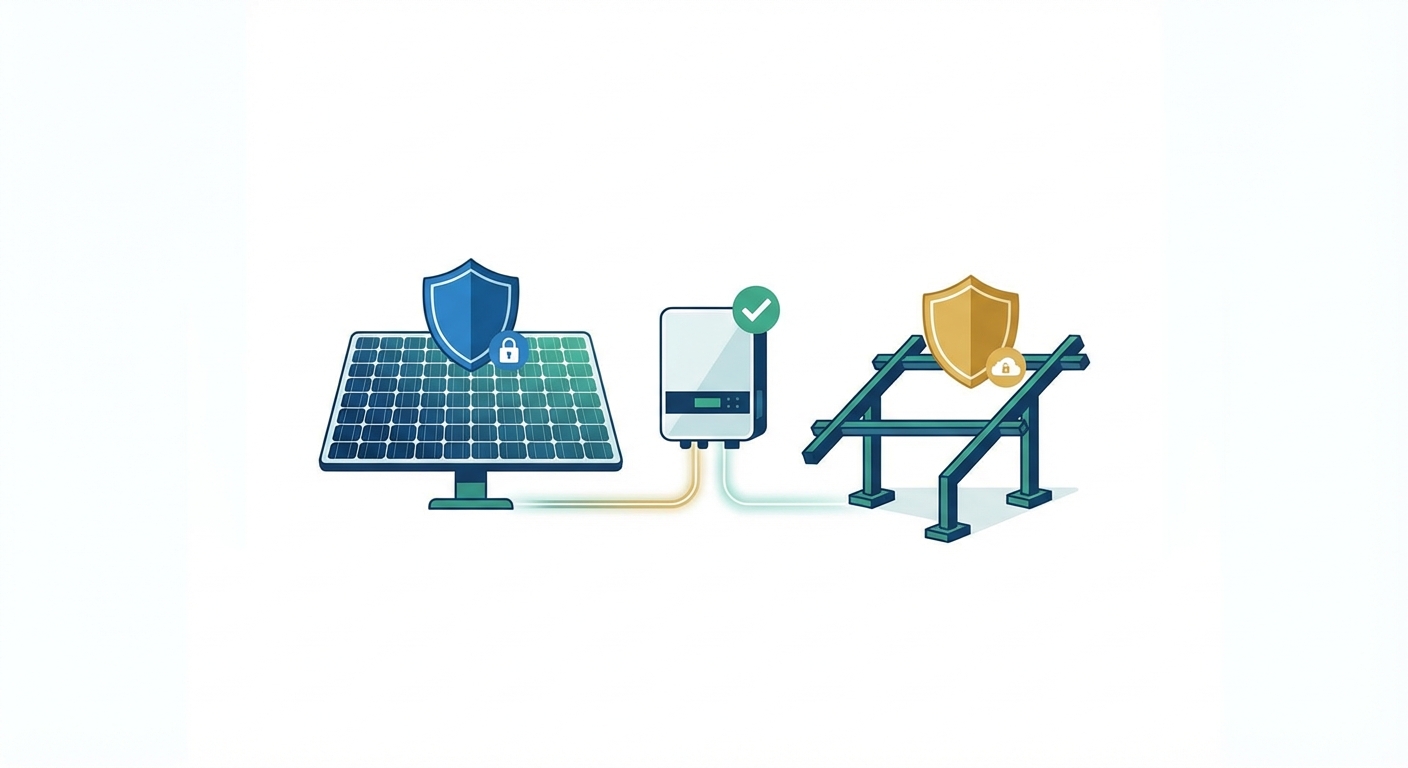
The four main types of solar warranties you should know about are:
- Product warranty – covers manufacturing defects and material failures in solar panels
- Performance warranty – guarantees minimum power output over time
- Inverter warranty – protects the critical component that converts DC to AC power
- Installation warranty – covers workmanship and installation-related issues
For residential and commercial customers across Gujarat, working with established solar EPC companies ensures you receive proper warranty documentation and support throughout your system’s lifetime. Reputable providers like Heaven Green Energy stand behind their installations with comprehensive warranty packages that protect your investment from day one.
What Are the Different Types of Solar Warranties?
Let’s break down each solar warranty type in detail so you understand exactly what protection you’re getting.
Product Warranty (Materials and Workmanship)
The product warranty, also called the materials warranty or equipment warranty, covers defects in the solar panels themselves. This includes manufacturing flaws, material degradation, and physical defects that affect panel performance. If your solar modules develop cracks, delamination, or junction box failures due to manufacturing issues, the product warranty ensures replacement at no cost to you.
Most tier-1 solar panel manufacturers in Gujarat offer product warranties ranging from 10 to 12 years, with some premium brands extending coverage to 15 years. This warranty typically covers the cost of replacement panels but may not include labor costs for removal and reinstallation.
Performance Warranty (Power Output Guarantee)
The performance warranty is perhaps the most important for your long-term solar ROI. This guarantee ensures your panels will produce a minimum percentage of their rated power output over a specified period. Since solar panels naturally degrade slightly each year, the performance warranty sets acceptable degradation thresholds.
A typical performance warranty guarantees that panels will maintain at least 90% of their rated output after 10 years and 80% after 25 years. Some premium manufacturers offer even better guarantees, such as 92% at 10 years and 84% at 25 years.
Inverter Warranty Coverage
Your solar inverter is the hardest-working component in your system, converting DC electricity from panels into usable AC power for your home or business. Because inverters contain electronic components that work continuously, they typically have shorter warranty periods than solar panels.
Standard string inverter warranties range from 5 to 12 years, while microinverters often come with 15 to 25-year warranties due to their distributed design and lower individual stress. Many manufacturers offer extended warranty options for additional cost, which can be worthwhile given the critical role inverters play in system performance.
Installation Workmanship Warranty
The installation warranty covers issues related to how your solar system was installed. This includes roof penetrations, mounting structure integrity, electrical connections, and proper system commissioning. Installation warranties are provided by your solar EPC contractor, not the equipment manufacturer.
Quality installers in Gujarat typically offer installation warranties ranging from 1 to 10 years. This coverage is crucial because improper installation can lead to roof leaks, electrical issues, or system underperformance that wouldn’t be covered under manufacturer warranties. When evaluating solar proposals, pay close attention to the installation warranty terms and the installer’s track record.
How Long Do Solar Panel Warranties Last?
Understanding warranty duration helps you assess the true long-term value of different solar options. Here’s what you can typically expect in 2026:
Standard Product Warranty Duration
Most solar panels sold in Gujarat come with 10 to 12-year product warranties as standard. Premium tier-1 manufacturers may offer 12 to 15 years, while some budget brands provide only 10 years. This warranty period has gradually increased over the past decade as manufacturing quality has improved.
When comparing solar panel options, a longer product warranty often indicates higher manufacturing quality and greater confidence from the manufacturer. However, the warranty is only as good as the company backing it, which is why choosing established brands with strong financial stability matters.
Performance Warranty Timeline
Performance warranties typically extend for 25 to 30 years, matching the expected lifespan of solar panels. These warranties are structured with degradation thresholds at specific intervals. A common structure looks like this:
- Year 1: 97-98% of rated power output
- Year 10: 90% of rated power output
- Year 25: 80-84% of rated power output
Some newer panels come with 30-year performance warranties, guaranteeing 80% output even after three decades. This extended coverage provides additional security for your solar investment and payback calculations.
Inverter Warranty Periods
Inverter warranties vary significantly based on technology type:
- String inverters: 5-12 years standard, with extended warranties available up to 20 years
- Microinverters: 15-25 years standard
- Power optimizers: 25 years (when paired with compatible inverters)
Because inverters typically need replacement at least once during a solar system’s lifetime, factor potential replacement costs into your financial planning. Some solar financing packages include inverter replacement coverage, which can provide valuable peace of mind.
Installation Warranty Coverage
Installation warranties from reputable Gujarat solar EPC companies typically range from 5 to 10 years. This coverage should include:
- Roof waterproofing and penetration sealing
- Mounting structure integrity
- Electrical connections and conduit installation
- System commissioning and performance verification
Heaven Green Energy provides comprehensive installation warranties backed by over 10,000 successful installations across Gujarat, ensuring your system is built to last with proper workmanship protection.
What Does a Solar Warranty Actually Cover?
Understanding what’s included and excluded from your solar warranty prevents unpleasant surprises when you need to make a claim.
Defects in Materials and Manufacturing
Product warranties cover manufacturing defects that affect panel functionality, including:
- Cell cracks or breakage not caused by external impact
- Delamination of panel layers
- Junction box failures
- Frame corrosion or separation
- Glass breakage due to manufacturing defects
- Bypass diode failures
These defects must be proven to result from manufacturing issues rather than improper installation, maintenance, or external damage. Proper documentation and professional assessment are essential for successful claims.
Power Output Degradation Thresholds
Performance warranties guarantee minimum power output levels. If your panels fall below the guaranteed threshold, the manufacturer must remedy the situation, typically by providing additional panels to make up the power deficit or replacing underperforming panels entirely.
For example, if you have a 10 kW system with a warranty guaranteeing 90% output after 10 years, but testing shows only 85% output, the manufacturer would be obligated to address the 5% shortfall. This protection ensures your system delivers the energy production and savings you planned for.
Component Failures and Replacements
Inverter warranties cover component failures including:
- Electronic component failures
- Display or monitoring system malfunctions
- Cooling fan failures
- Internal wiring or connection issues
- Software or firmware defects
Warranty coverage typically includes replacement units or repair services. Some manufacturers provide advance replacement, shipping a new unit before you return the failed one to minimize system downtime.
What’s NOT Covered by Solar Warranties
Understanding exclusions is just as important as knowing what’s covered. Most solar warranty agreements exclude:
- Physical damage from external causes: hail, falling objects, vandalism, or accidents
- Improper installation: damage resulting from incorrect mounting, wiring, or system design
- Unauthorized modifications: changes made by non-certified technicians
- Lack of maintenance: damage from neglect or failure to perform recommended cleaning
- Force majeure events: earthquakes, floods, wars, or other extraordinary circumstances
- Normal wear and tear: gradual degradation within warranty thresholds
- Cosmetic issues: discoloration or appearance changes that don’t affect performance
Additionally, warranties typically don’t cover labor costs for panel removal and reinstallation, shipping costs, or consequential damages like lost energy production. Some premium warranties do include these costs, so review terms carefully.
Exclusions and Limitations to Be Aware Of
Most warranties contain specific conditions that must be met to maintain coverage:
- Installation must be performed by certified professionals
- System must be used according to manufacturer specifications
- Regular maintenance may be required and documented
- Warranty claims must be filed within specified timeframes
- Original proof of purchase must be available
Working with established solar EPC providers ensures proper installation and documentation that protects your warranty rights from the start.
Solar Inverter Warranty: What You Need to Know
Since inverters are the most likely component to require replacement during your solar system’s lifetime, understanding inverter warranty coverage deserves special attention.
Standard Inverter Warranty Periods
In 2026, typical inverter warranty coverage includes:
- Entry-level string inverters: 5 years standard
- Mid-range string inverters: 10 years standard
- Premium string inverters: 12 years standard, extendable to 20 years
- Microinverters: 15-25 years standard
Many manufacturers offer extended warranty options for additional cost. For a 10 kW residential system, extending a string inverter warranty from 10 to 20 years might cost ₹15,000-25,000 but could save you ₹80,000-120,000 in replacement costs later.
String Inverter vs Microinverter Warranty Differences
The warranty difference between string inverters and microinverters reflects their different designs and failure modes:
String inverters handle the entire system’s power conversion in one unit, working harder and generating more heat. This intensive operation typically results in shorter warranty periods. However, when a string inverter fails, your entire system stops producing power until it’s replaced.
Microinverters distribute the conversion work across many small units, with each solar panel having its own inverter. This reduces stress on individual units and allows manufacturers to offer longer warranties. If one microinverter fails, only that single panel is affected while the rest of your system continues operating.
Extended Warranty Options
Most inverter manufacturers offer extended warranty programs that can be purchased at installation or within the first few years of operation. These extensions typically cost 5-10% of the inverter’s original price and can double the warranty period.
When deciding whether to purchase extended inverter warranty coverage, consider:
- The standard warranty period already included
- Expected inverter replacement cost in 10-15 years
- Your system’s importance (critical for business operations vs supplemental home power)
- The manufacturer’s reputation and financial stability
Common Inverter Warranty Claims
The most frequent inverter warranty claims involve:
- Complete inverter failure (no power conversion)
- Reduced efficiency or power output
- Display or monitoring system failures
- Communication errors preventing system monitoring
- Cooling system failures causing thermal shutdowns
Most manufacturers provide remote diagnostics capabilities, allowing them to verify issues and approve warranty claims without requiring on-site inspection. This speeds up the claim process and minimizes your system downtime.
How Do Solar Performance Warranties Work?
Performance warranties protect your solar investment by guaranteeing minimum energy production over time. Here’s how they function in practice.
Understanding Power Output Guarantees
Solar panels naturally degrade slightly each year due to exposure to UV radiation, temperature cycling, and environmental factors. Performance warranties account for this expected degradation while protecting you against excessive power loss.
A solar warranty for performance typically guarantees that your panels will produce at least a specified percentage of their nameplate rating after certain periods. For example, a 400-watt panel with a standard performance warranty might guarantee:
- At least 388 watts (97%) after year 1
- At least 360 watts (90%) after year 10
- At least 320 watts (80%) after year 25
Typical Degradation Rates
Modern tier-1 solar panels degrade at approximately 0.5% to 0.7% per year. This means a panel producing 100% of its rated power in year one might produce 98.5% in year three, 95% in year ten, and 87% in year twenty-five.
Premium panels with advanced cell technology and better encapsulation materials may degrade even more slowly, at rates of 0.3% to 0.5% annually. This slower degradation translates to more energy production and greater savings over your system’s lifetime.
Performance Warranty Thresholds
Most performance warranties use a two-tier structure:
- First tier: Higher guarantee for the first 10-12 years (typically 90-92% of rated power)
- Second tier: Lower guarantee for years 11-25 or 11-30 (typically 80-84% of rated power)
Some manufacturers now offer linear performance warranties that guarantee a specific maximum degradation rate per year rather than stepped thresholds. For example, a linear warranty might guarantee no more than 0.55% degradation annually, ensuring at least 86% output after 25 years.
How Performance Is Measured and Verified
If you suspect your panels are underperforming, the warranty claim process typically involves:
- Initial assessment: Review your monitoring data to identify potential underperformance
- Professional testing: Certified technician performs on-site testing using calibrated equipment
- Comparison to warranty terms: Measured output is compared to guaranteed thresholds
- Claim submission: Documentation is submitted to the manufacturer
- Manufacturer verification: Company reviews data and may conduct independent testing
Testing must account for actual irradiance conditions, temperature, and other factors that affect output. Panels are typically tested under standard test conditions or adjusted to account for real-world conditions.
What Happens If Panels Underperform
If testing confirms your panels are producing below warranty thresholds, manufacturers typically offer one of these remedies:
- Panel replacement: Defective panels are replaced with new or refurbished units
- Additional panels: Extra panels are added to your system to make up the power deficit
- Financial compensation: You receive payment for the lost production value
- Pro-rated refund: Partial refund based on the panel’s age and underperformance level
The specific remedy depends on your warranty terms and the manufacturer’s policies. Panel replacement is most common for significant underperformance, while financial compensation may be offered for minor shortfalls.

How to Make a Solar Warranty Claim
Knowing how to properly file a solar warranty claim ensures you get the coverage you’re entitled to when issues arise.
Step-by-Step Warranty Claim Process
Follow these steps for a successful warranty claim:
- Identify the issue: Document the problem with photos, monitoring data, or performance records
- Review warranty terms: Confirm the issue is covered and you’re within the warranty period
- Contact your installer first: For installation-related issues, start with your EPC provider
- Gather documentation: Collect purchase receipts, warranty certificates, installation records, and evidence of the problem
- Submit claim: Contact the manufacturer or installer with complete documentation
- Allow inspection: Permit authorized technicians to assess the issue if required
- Follow up: Stay in communication and provide any additional information requested
- Receive remedy: Accept replacement equipment, repairs, or other resolution
Most warranty claims are resolved within 2-8 weeks, depending on the complexity of the issue and the manufacturer’s processes.
Required Documentation and Proof
To support your warranty claim, you’ll typically need:
- Original purchase invoice or receipt showing date of purchase and equipment details
- Warranty certificate or documentation provided at installation
- Installation records including commissioning reports and system specifications
- Maintenance logs showing proper system care
- Photos or videos documenting the defect or issue
- Monitoring data showing performance trends or failures
- Professional assessment from a certified solar technician if required
Keep all solar-related documentation organized in both physical and digital formats. This preparation makes the claim process much smoother when issues arise.
Contacting Manufacturer vs Installer
Determining who to contact depends on the type of issue:
Contact your installer for:
- Installation workmanship issues (roof leaks, mounting problems)
- Electrical connection problems
- System design or performance issues
- Initial troubleshooting and diagnosis
Contact the manufacturer for:
- Panel defects or failures
- Inverter malfunctions
- Performance warranty claims
- Product warranty issues after installer has assessed
Many installers will coordinate manufacturer warranty claims on your behalf, which can simplify the process. Reputable EPC companies in Gujarat maintain relationships with manufacturers to facilitate smooth warranty service for their customers.
Typical Claim Response Times
Warranty claim timelines vary by manufacturer and issue complexity:
- Claim acknowledgment: 1-5 business days
- Initial assessment: 5-10 business days
- Approval decision: 2-4 weeks for straightforward claims
- Replacement shipping: 1-4 weeks depending on product availability
- Installation of replacement: 1-2 weeks after receiving parts
Total resolution time typically ranges from 4-12 weeks. Inverter claims are often faster than panel claims because inverters are easier to test and replace.
What to Do If Your Claim Is Denied
If your warranty claim is rejected, take these steps:
- Request detailed explanation: Ask for specific reasons why the claim was denied
- Review warranty terms: Verify whether the denial is justified based on your warranty agreement
- Gather additional evidence: Obtain independent testing or expert assessment if needed
- Appeal the decision: Most manufacturers have formal appeal processes
- Escalate if necessary: Contact senior customer service or regional managers
- Seek third-party help: Consumer protection agencies or industry associations may assist
- Consider legal options: For significant disputes, legal consultation may be warranted
Working with established solar companies that stand behind their installations can help navigate denied claims and advocate on your behalf.
How to Protect Your Solar Warranty Coverage
Maintaining valid warranty coverage requires following proper procedures and avoiding actions that could void your protection.
Importance of Proper Installation by Certified Professionals
Using certified, experienced installers is the foundation of warranty protection. Manufacturers require professional installation to validate warranties, and improper installation is the most common reason for warranty denial.
Certified installers ensure:
- Panels are mounted according to manufacturer specifications
- Electrical connections meet code requirements and best practices
- System design matches equipment ratings and capabilities
- Proper grounding and safety measures are implemented
- Commissioning tests verify correct operation
Heaven Green Energy’s team of certified professionals has completed over 10,000 installations across Gujarat, ensuring every system meets manufacturer requirements and maintains full warranty protection.
Regular Maintenance Requirements
While solar systems require minimal maintenance, some basic care is necessary to maintain warranty coverage:
- Panel cleaning: Remove dust, bird droppings, and debris 2-4 times per year in Gujarat’s dusty climate
- Visual inspections: Check for physical damage, loose connections, or unusual conditions quarterly
- Performance monitoring: Review system output regularly to identify issues early
- Professional servicing: Annual inspection by qualified technicians to verify proper operation
- Vegetation management: Keep trees and plants trimmed to prevent shading and physical contact
Some manufacturers require documented maintenance to maintain warranty coverage, especially for commercial systems. Keep records of all cleaning, inspections, and service visits.
Documentation to Keep on File
Maintain organized records including:
- Original purchase invoices and payment records
- Warranty certificates for all components
- Installation completion certificate and commissioning report
- System design drawings and specifications
- Maintenance logs and service records
- Monitoring system data exports
- Photos of the installation at completion
- Contact information for installer and manufacturers
Store both physical copies and digital backups in secure locations. This documentation proves your system was properly installed and maintained if warranty claims become necessary.
Avoiding Warranty-Voiding Actions
Protect your solar warranty by avoiding these common mistakes:
- DIY modifications: Never modify your system without manufacturer approval
- Unauthorized repairs: Only use certified technicians for service work
- Improper cleaning: Avoid abrasive materials or high-pressure washing that could damage panels
- Neglecting issues: Address problems promptly rather than letting them worsen
- Exceeding specifications: Don’t overload inverters or operate outside rated parameters
- Removing equipment: Don’t relocate panels or components without professional assistance
When in doubt, consult your installer or the manufacturer before taking any action that might affect your system.
Working with Reputable EPC Companies in Gujarat
Choosing an established solar EPC provider offers warranty protection advantages:
- Proper installation that meets all manufacturer requirements
- Complete documentation and warranty registration
- Ongoing support for warranty claims and issues
- Relationships with manufacturers for faster claim resolution
- Long-term presence to honor installation warranties
As one of Gujarat’s top solar EPC companies, Heaven Green Energy provides comprehensive warranty support throughout your system’s lifetime, ensuring you receive the full protection you’ve paid for.
Common Solar Warranty Questions Answered
Here are answers to frequently asked questions about solar warranty coverage:
Are Warranties Transferable to New Homeowners?
Most solar panel and inverter warranties are transferable to subsequent property owners, which can increase your home’s resale value. However, transfer procedures vary by manufacturer:
- Some warranties transfer automatically with property ownership
- Others require formal notification to the manufacturer
- A few manufacturers charge a small transfer fee
- Installation warranties may or may not transfer depending on the installer’s policy
When selling a property with solar, provide buyers with all warranty documentation and facilitate any required transfer procedures. This transparency protects both parties and maximizes the value of your solar investment.
What Happens If the Manufacturer Goes Out of Business?
This is a legitimate concern, especially with newer or smaller manufacturers. If a solar company goes bankrupt:
- Tier-1 manufacturers often have insurance or financial backing that continues warranty coverage
- Some warranties are backed by third-party insurance companies that honor claims even after bankruptcy
- Industry associations sometimes provide limited coverage for failed manufacturers
- Installation warranties from your EPC provider remain valid regardless of manufacturer status
This risk is why choosing established, financially stable manufacturers matters. Tier-1 solar brands with decades of history and strong balance sheets are much more likely to honor warranties throughout your system’s lifetime.
Do Warranties Cover Weather Damage?
Weather damage coverage depends on the cause and your warranty terms:
Typically covered:
- Damage from normal weather conditions the panels are rated for
- Failures due to inadequate weather resistance (manufacturing defect)
- Corrosion or degradation from normal environmental exposure
Typically NOT covered:
- Hail damage (unless panels are specifically rated and warranted for hail)
- Damage from extreme weather events like cyclones or tornadoes
- Lightning strikes (though some manufacturers offer lightning damage coverage)
- Flood damage
For weather-related risks, homeowner’s insurance or commercial property insurance typically provides coverage. Verify that your insurance policy includes solar equipment, as some policies require specific riders or endorsements.
How Do Government Subsidies Affect Warranties?
Government solar subsidies and incentive programs in Gujarat don’t affect manufacturer warranties. Whether you install solar through the PM-KUSUM scheme, state subsidy programs, or without any incentives, your equipment warranties remain the same.
However, subsidy programs may have their own performance requirements or monitoring obligations. Ensure your system meets both subsidy program requirements and manufacturer specifications to maintain all benefits and protections.
Can I Extend My Solar Warranty?
Extended warranty options are available for most solar components:
- Inverters: Most manufacturers offer extended warranties up to 20 years
- Solar panels: Some manufacturers offer extended product warranties beyond standard terms
- Installation: Some EPC companies offer extended workmanship warranties
- Third-party warranties: Independent companies offer comprehensive coverage packages
Extended warranties typically must be purchased at installation or within the first few years of operation. Evaluate the cost versus potential savings, considering the component’s expected lifespan and replacement cost.
Choosing Solar Systems with Strong Warranty Protection
When evaluating solar proposals, warranty terms should be a key decision factor alongside price and performance.
Evaluating Warranty Terms Before Purchase
Compare these warranty aspects across different proposals:
- Product warranty length: 12-15 years is better than 10 years
- Performance warranty terms: Look for 90% at 10 years and 84%+ at 25 years
- Inverter coverage: Longer warranties reduce replacement costs
- Installation warranty: Minimum 5 years, preferably 10 years
- Labor coverage: Some warranties include labor for replacements
- Shipping costs: Premium warranties cover shipping of replacement parts
Don’t choose solar systems based solely on the lowest price. A slightly more expensive system with superior warranty coverage often provides better long-term value and peace of mind.
Importance of Tier-1 Solar Brands
Tier-1 solar manufacturers offer significant warranty advantages:
- Financial stability to honor warranties for 25+ years
- Established service networks for faster claim resolution
- Better quality control reducing the likelihood of defects
- Insurance backing for warranty obligations
- Proven track records with millions of installations worldwide
While tier-1 panels may cost 10-15% more than lesser-known brands, the warranty security and performance reliability justify the investment for most residential and commercial applications.
Working with Established EPC Providers
Your solar installer’s reputation and longevity directly affect your warranty experience. Established EPC companies provide:
- Proper installation that maintains manufacturer warranty validity
- Long-term presence to honor installation warranties
- Expertise in navigating warranty claims and manufacturer relationships
- Quality workmanship that reduces warranty claims in the first place
- Comprehensive documentation and warranty registration
Heaven Green Energy has served Gujarat since 2017 with over 10,000 successful installations. This established presence ensures we’ll be here to support your warranty needs throughout your system’s lifetime.
Questions to Ask Your Solar Installer About Warranties
Before signing a solar contract, ask these important warranty questions:
- What are the exact warranty terms for panels, inverters, and installation?
- Are warranties transferable if I sell my property?
- What process do I follow if I need to make a warranty claim?
- Will you assist with manufacturer warranty claims?
- What costs are covered under warranty (parts, labor, shipping)?
- How long have you been in business, and will you honor installation warranties?
- What brands do you use, and why did you choose them?
- Are extended warranty options available?
- What maintenance is required to keep warranties valid?
- Can you provide references from customers who’ve made warranty claims?
A reputable installer will answer these questions clearly and provide written warranty documentation before you commit to the purchase.
How Heaven Green Energy Supports Warranty Claims
At Heaven Green Energy, we stand behind every installation with comprehensive warranty support:
- We use only tier-1 solar brands with proven warranty track records
- Our certified installation teams ensure proper setup that maintains warranty validity
- We provide complete warranty documentation and registration at commissioning
- Our team assists with warranty claims, coordinating with manufacturers on your behalf
- We offer ongoing maintenance services to keep your system performing optimally
- Our 10+ year presence in Gujarat ensures we’re here when you need support
With branch offices in Surat, Ahmedabad, and Junagadh, we provide local support across Gujarat for all your solar warranty and service needs.
Protect Your Solar Investment with Proper Warranty Coverage
Understanding solar warranty protection is essential for making informed decisions about your solar investment. From product warranties covering manufacturing defects to performance guarantees ensuring long-term energy production, comprehensive warranty coverage protects your financial investment and provides peace of mind for decades.
Key takeaways for Gujarat homeowners and businesses include:
- Solar systems come with multiple warranties covering different components and aspects
- Typical coverage includes 10-12 year product warranties and 25-30 year performance guarantees
- Proper installation by certified professionals is essential to maintain warranty validity
- Documentation and regular maintenance protect your warranty rights
- Working with established EPC providers and tier-1 brands ensures reliable warranty support
Whether you’re planning a residential rooftop installation or a large commercial solar project, choosing the right equipment and installer makes all the difference in your long-term warranty protection and system performance.
Ready to invest in solar with confidence? Heaven Green Energy provides complete turnkey solar solutions across Gujarat with comprehensive warranty support and expert installation. Our team helps you understand all warranty terms and ensures your system is properly documented and maintained for maximum protection. Have any questions about solar warranty coverage for your project? Call us at +91 63904 05060 to speak with our solar experts and get personalized guidance on protecting your solar investment.