


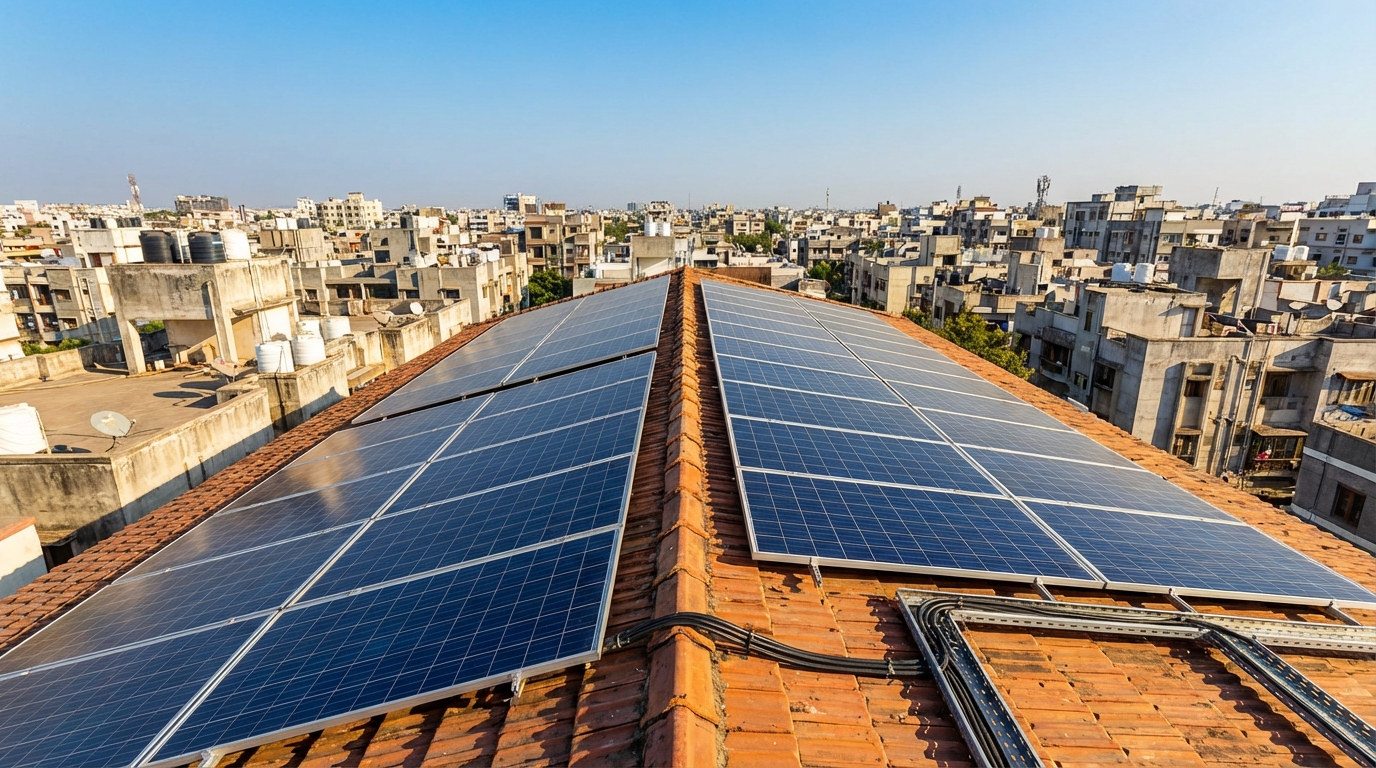
Surat, Gujarat’s diamond city and one of India’s fastest-growing urban centers, is experiencing a solar energy revolution in 2026. With electricity costs climbing steadily and the city’s abundant sunshine, homeowners and businesses across Surat are turning to solar energy as a smart, sustainable solution. Whether you’re a residential property owner looking to slash your monthly electricity bills or an industrial facility seeking to reduce operational costs, understanding the local landscape for solar Surat installations is essential for making informed decisions.
This comprehensive guide covers everything you need to know about solar installation in Surat—from local DGVCL regulations and climate considerations to subsidies, costs, and return on investment. By the end of this guide, you’ll have a clear roadmap for transitioning to clean, renewable solar energy tailored specifically to Surat’s unique conditions.
Why Surat is Ideal for Solar Energy in 2026
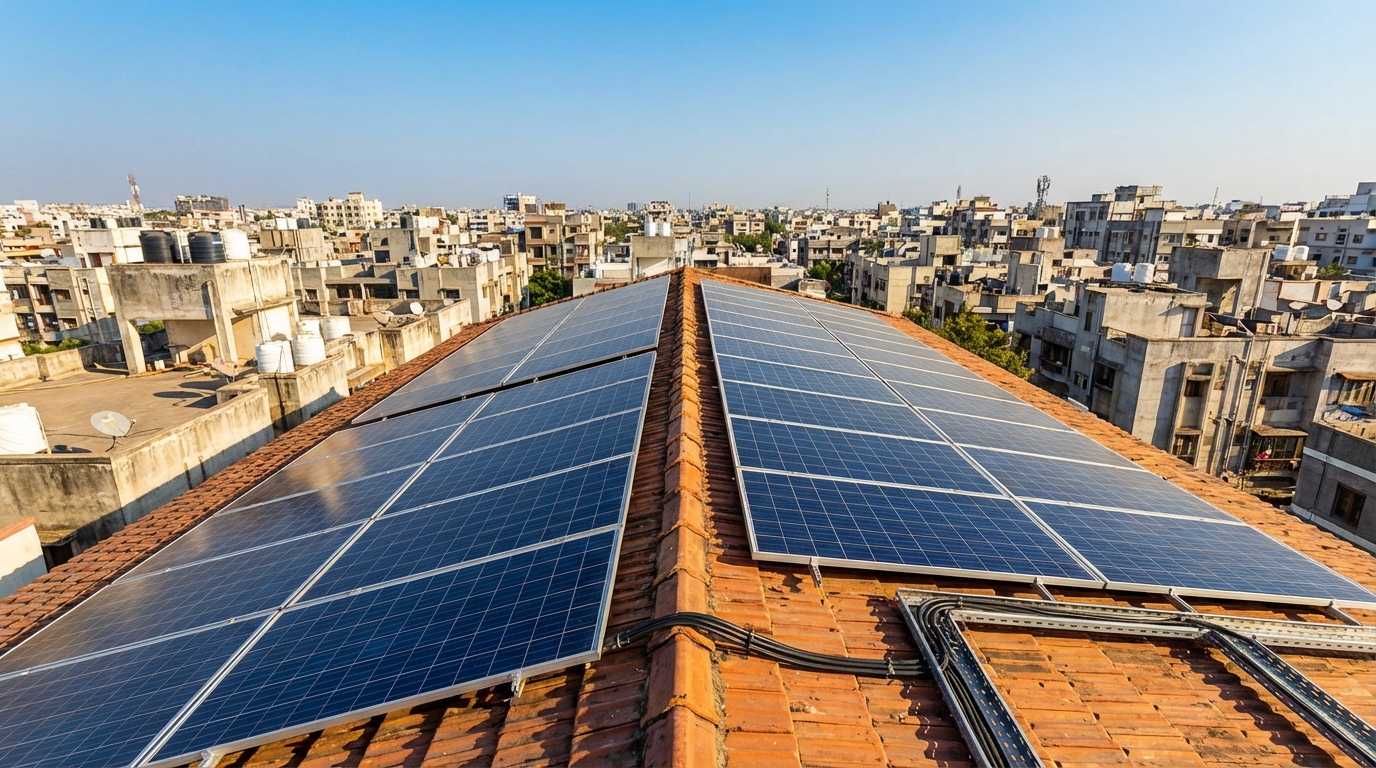
Surat’s geographical location and climate make it exceptionally well-suited for solar energy generation. The city receives approximately 5.5 to 6.0 kWh per square meter per day of solar irradiation, placing it among Gujarat’s top locations for solar potential. With over 300 sunny days annually, solar panels in Surat can generate consistent electricity throughout most of the year.
The city’s subtropical climate, characterized by hot summers and moderate winters, creates ideal conditions for photovoltaic energy production. Even during the monsoon season from June to September, Surat receives enough diffused sunlight to maintain reasonable solar generation levels. Modern solar panels are designed to capture both direct and indirect sunlight, ensuring your investment continues working even on cloudy days.
Rising electricity demand in Surat has led to consistent tariff increases from Dakshin Gujarat Vij Company Limited (DGVCL), the local electricity distribution company. Residential consumers now pay between ₹4 to ₹7 per unit depending on consumption slabs, while commercial and industrial rates can exceed ₹8 to ₹10 per unit during peak hours. These escalating costs make solar energy increasingly attractive as a hedge against future rate hikes.
The Gujarat government has positioned the state as a renewable energy leader, with ambitious targets for solar capacity addition. Surat, as a major industrial and commercial hub, plays a crucial role in achieving these goals. The city has already seen thousands of successful rooftop solar installations across residential societies, textile mills, diamond processing units, and commercial establishments, demonstrating proven viability for solar Surat projects.
Understanding Solar Surat: Local Electricity Context
To appreciate the value proposition of solar energy in Surat, you need to understand the local electricity landscape. DGVCL serves Surat and surrounding districts, managing power distribution and implementing net metering policies that allow solar system owners to export excess electricity back to the grid.
Current DGVCL tariff structures for 2026 show significant variation across consumer categories. Residential consumers face a slab-based system where the first 50 units cost around ₹3.50 per unit, but consumption above 300 units can reach ₹6.50 per unit or higher. This progressive pricing means high-consumption households benefit most from solar installations, as they offset the most expensive electricity units first.
Commercial establishments in Surat pay flat rates typically ranging from ₹7 to ₹9 per unit, with additional demand charges based on sanctioned load. Industrial consumers face even higher costs, with rates between ₹8 and ₹11 per unit plus substantial demand charges that can add 20-30% to monthly bills. For businesses operating during peak hours, these costs become a significant operational expense that solar energy can dramatically reduce.
DGVCL’s net metering policy allows solar system owners to receive credits for excess electricity exported to the grid. Under the gross metering arrangement, you can offset your consumption on a monthly basis, with any surplus carried forward for up to 12 months. This policy is particularly valuable during summer months when solar generation peaks, allowing you to build credits that offset consumption during lower-generation monsoon periods.
Historical data shows DGVCL tariffs have increased by approximately 5-8% annually over the past decade. This trend is expected to continue as power generation costs rise and infrastructure investments increase. By installing solar panels now, Surat residents and businesses can lock in their electricity costs and protect themselves from future rate escalations.
Solar Panel Cost and System Sizing for Surat Properties
Understanding solar panel cost structures is crucial for planning your investment in solar Surat installations. In 2026, residential rooftop solar systems in Surat typically cost between ₹45,000 to ₹60,000 per kilowatt for complete turnkey installations, depending on component quality and system complexity.
For a typical Surat household consuming 300-400 units monthly, a 3 kW to 5 kW system is usually sufficient. A 3 kW system costs approximately ₹1.35 to ₹1.80 lakhs before subsidies, while a 5 kW system ranges from ₹2.25 to ₹3.00 lakhs. These prices include solar modules, inverters, mounting structures, cables, installation labor, and DGVCL net metering application support.
Commercial solar installations benefit from economies of scale, with costs dropping to ₹40,000 to ₹50,000 per kW for systems above 10 kW capacity. Industrial solar projects for factories and manufacturing units can achieve even better pricing, with large-scale installations of 100 kW or more costing ₹35,000 to ₹45,000 per kW for complete EPC solutions.
System sizing for Surat properties depends on several factors including available roof space, electricity consumption patterns, and budget. A general rule of thumb is that 1 kW of solar capacity requires approximately 100 square feet of shadow-free roof area and generates around 4 to 4.5 units of electricity daily in Surat’s climate. This means a 5 kW system needs about 500 square feet of roof space and produces roughly 20-22 units per day or 600-660 units monthly.
When evaluating solar panel cost, it’s essential to understand what’s included in turnkey EPC pricing. Reputable solar companies in Gujarat provide comprehensive packages covering engineering design, high-quality components from established solar brands, professional installation, system testing and commissioning, DGVCL documentation, and warranty registration. Hidden costs to watch for include structural reinforcement if your roof needs strengthening, electrical panel upgrades, and annual maintenance contracts.
Component quality significantly impacts both upfront costs and long-term performance. Tier-1 solar modules from manufacturers like Tata Solar, Waaree, or international brands offer 25-year performance warranties and proven reliability in Gujarat’s climate. Mid-tier options reduce initial costs but may have shorter warranties and slightly lower efficiency. For detailed comparisons of available options, refer to our guide on solar brands in Gujarat.
Solar Subsidy and Financing Options in Surat
Government subsidies and financing options make solar energy more accessible for Surat residents and businesses. The central government’s rooftop solar program offers substantial subsidies for residential installations, significantly reducing the effective solar panel cost.
Under the current subsidy structure for 2026, residential consumers can receive up to ₹14,588 per kW for systems up to 3 kW capacity, and ₹7,294 per kW for additional capacity between 3 kW and 10 kW. This means a 3 kW system receives approximately ₹43,764 in subsidy, while a 5 kW system gets around ₹58,352 total subsidy. These amounts are directly deducted from your installation cost, making solar significantly more affordable.
To qualify for residential solar subsidy in Surat, you must install the system through a DGVCL-empaneled vendor, use domestically manufactured components meeting Bureau of Indian Standards specifications, and apply through the official national portal. The subsidy is processed after installation and net metering approval, typically taking 2-4 months to receive the funds in your bank account.
The PM-KUSUM scheme offers benefits for agricultural consumers and farmers in Surat’s surrounding areas. Component A supports large-scale ground-mounted solar projects, Component B provides subsidies for standalone solar agricultural pumps, and Component C offers support for grid-connected solar pumps. These programs can cover up to 60% of project costs through a combination of central and state subsidies.
Commercial and industrial consumers don’t qualify for direct subsidies but can access attractive financing options. Several banks and non-banking financial companies offer solar-specific loans with interest rates between 9-12% annually and repayment terms up to 10 years. Some lenders provide collateral-free loans for smaller systems, while larger industrial solar Gujarat projects may require property mortgages or corporate guarantees.
The accelerated depreciation benefit allows commercial and industrial entities to claim 40% depreciation on solar assets in the first year, providing significant tax advantages. When combined with the generation-based incentives and reduced electricity costs, these financial benefits dramatically improve solar ROI for businesses.
Several solar financing models have emerged in Surat, including zero-down payment options where you pay monthly installments lower than your current electricity bills, essentially making solar cash-flow positive from day one. Power purchase agreements and solar leasing arrangements are also available for commercial consumers who prefer not to make capital investments.
Solar Installation Process: Surat-Specific Considerations
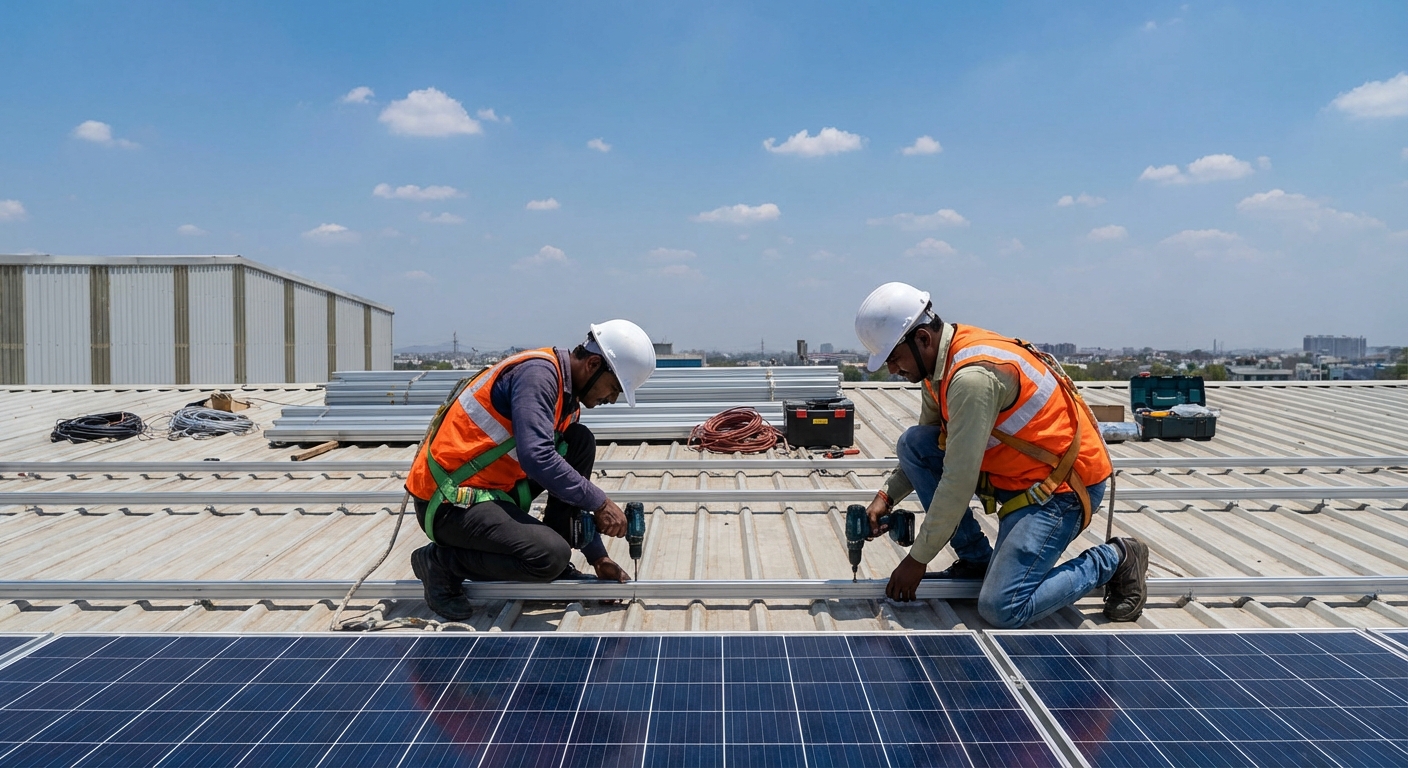
The solar installation process in Surat involves several steps, each with local considerations that affect timeline and requirements. Understanding these stages helps you plan effectively and avoid delays.
The process begins with a comprehensive site assessment where solar EPC companies evaluate your property’s solar potential. For Surat installations, this assessment considers roof orientation and tilt, shading from nearby buildings or trees, structural load-bearing capacity, and proximity to your electrical panel. Surat’s high humidity and monsoon winds require careful evaluation of mounting structure requirements to ensure 25-year system durability.
Once you approve the design and quotation, the next critical step is obtaining DGVCL permissions for net metering. This involves submitting an application through DGVCL’s online portal with property documents, electricity bill copies, roof ownership proof, and technical specifications of your proposed system. DGVCL typically processes applications within 15-30 days, issuing a feasibility approval and technical requirements for your installation.
For rooftop solar installations in Surat, you may need building permissions from Surat Municipal Corporation, particularly for commercial properties or residential buildings in certain zones. Most residential rooftop installations under 10 kW don’t require separate building permits if they don’t alter the structure, but it’s advisable to confirm with your solar installer who should be familiar with local regulations.
The physical installation phase typically takes 3-7 days for residential systems and 2-4 weeks for larger commercial or industrial projects. Timing is crucial in Surat—most installers prefer scheduling major installations during the October to May period to avoid monsoon complications. While installation can occur during monsoon season, it may face weather-related delays and requires additional precautions for worker safety and component protection.
After installation, the system undergoes testing and commissioning to ensure all components function correctly and safely. Your installer will then apply for DGVCL’s final inspection and net meter installation. DGVCL engineers visit the site to verify compliance with technical standards, check safety measures, and approve the installation. Once approved, DGVCL replaces your existing meter with a bidirectional net meter that tracks both consumption and export.
The entire process from signing the contract to final commissioning typically takes 6-10 weeks in Surat, with DGVCL approvals being the most variable factor. Working with experienced solar companies in Surat who have established relationships with DGVCL can significantly expedite this timeline.
Choosing between rooftop and ground-mounted systems depends on your property type and available space. Rooftop solar is ideal for most residential and commercial properties in Surat’s urban areas, maximizing space utilization without requiring additional land. Ground-mounted systems work better for industrial facilities with large open areas, agricultural land, or properties where roof access is challenging. Ground-mounted installations offer easier maintenance access but require more land and may need additional permissions.
Solar EPC Services: What to Expect from Installation Companies
Understanding what comprehensive solar EPC services include helps you evaluate proposals from different solar companies in Gujarat and ensures you receive complete, professional installations.
EPC stands for Engineering, Procurement, and Construction—a turnkey approach where a single company handles your entire solar project from design to commissioning. This integrated model ensures accountability, streamlines coordination, and typically delivers better outcomes than piecemeal approaches where you source components and installation separately.
The engineering phase involves detailed technical design customized to your property and energy needs. Professional EPC companies conduct thorough site surveys, create electrical single-line diagrams, perform structural calculations to ensure your roof can support the system, design optimal panel layouts to maximize generation, and prepare all technical documentation required for DGVCL approvals. This engineering expertise is particularly valuable in Surat where monsoon wind loads and high humidity require robust system design.
Procurement covers sourcing all system components including solar modules, inverters, mounting structures, cables, junction boxes, earthing materials, and safety equipment. Established EPC providers have relationships with multiple solar brands in Gujarat and can procure quality components at competitive prices. They also handle logistics, ensuring all materials arrive on schedule and in proper condition.
The construction phase encompasses the actual installation work—mounting structure fabrication and installation, solar panel mounting and wiring, inverter installation and configuration, electrical integration with your existing system, earthing and lightning protection, and safety measures. Professional EPC companies employ trained technicians who follow safety protocols and quality standards throughout the installation process.
Beyond these core elements, comprehensive solar EPC Gujarat services include DGVCL liaison for all permissions and approvals, net metering application and follow-up, system testing and commissioning, training on system operation and monitoring, warranty registration with component manufacturers, and post-installation support. For more details on what EPC services entail, see our complete guide on solar EPC services.
Quality EPC providers also offer performance monitoring systems that allow you to track your solar generation in real-time through smartphone apps or web portals. These monitoring solutions help identify any performance issues quickly and provide data to verify your expected savings are being realized.
Solar Inverter and Component Selection for Surat Climate
Selecting appropriate components for Surat’s specific climate conditions is crucial for long-term system performance and reliability. The city’s high temperatures, humidity, and monsoon rains demand equipment designed to withstand these environmental stresses.
Solar inverters are the heart of your system, converting DC electricity from panels into AC electricity for your home or business. For Surat installations, inverter selection must account for ambient temperatures that regularly exceed 40°C during summer months. Quality inverters are rated for operation up to 50-55°C ambient temperature and include thermal management features like active cooling fans or heat sinks.
String inverters are the most common choice for residential and small commercial installations in Surat. These centralized units connect multiple panels in series strings and offer good efficiency at competitive prices. Modern string inverters include maximum power point tracking (MPPT) technology that optimizes performance even when some panels experience shading or soiling. For Surat properties, choose string inverters with IP65 or higher ingress protection ratings to resist dust and moisture.
Microinverters represent an alternative approach where each solar panel has its own small inverter. This configuration offers advantages for Surat rooftops with complex layouts, partial shading issues, or multiple roof orientations. Microinverters eliminate the single point of failure risk and allow panel-level monitoring, but cost more upfront and may have higher long-term maintenance needs due to the greater number of components exposed to weather.
Solar module selection for Surat should prioritize heat tolerance and humidity resistance. Monocrystalline panels generally perform better in high-temperature conditions than polycrystalline options, with lower temperature coefficients meaning less efficiency loss on hot days. Look for panels with temperature coefficients below -0.40% per degree Celsius and positive power tolerance ratings.
Panel frames and mounting structures must withstand Surat’s monsoon winds, which can exceed 80-100 km/h during severe weather. Quality mounting structures use hot-dip galvanized or aluminum materials with corrosion-resistant coatings. The structural design should account for wind loads per Indian Standards IS 875 Part 3, ensuring panels remain secure throughout the system’s 25-year lifespan.
All electrical components including cables, connectors, and junction boxes should have appropriate weatherproofing ratings. Use UV-resistant DC cables rated for outdoor use, waterproof MC4 connectors, and junction boxes with IP65 or IP67 ratings. These specifications ensure reliable operation despite Surat’s intense sunlight and monsoon moisture.
Warranty considerations are particularly important for Surat’s challenging climate. Reputable solar modules come with 25-year performance warranties guaranteeing at least 80% output after 25 years, plus 10-12 year product warranties covering manufacturing defects. Inverters typically carry 5-10 year warranties, with extended warranty options available. Ensure your EPC provider offers comprehensive workmanship warranties covering installation quality for at least 5 years.
Solar ROI and Payback Period in Surat
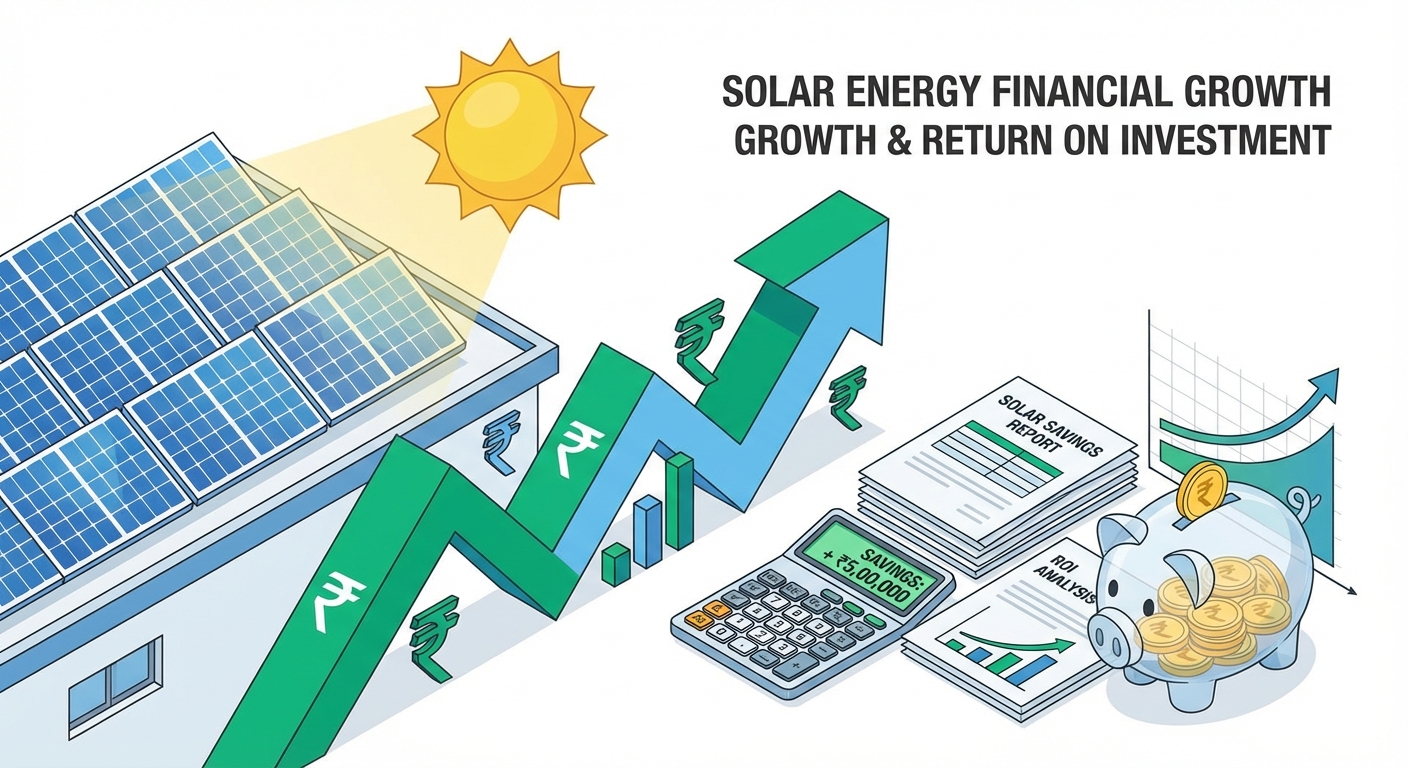
Understanding the financial returns from solar Surat installations helps justify the investment and set realistic expectations. Solar ROI in Surat is among the best in India due to excellent solar irradiation, high electricity tariffs, and available subsidies.
For residential installations, the average solar payback period in Surat ranges from 4 to 6 years after accounting for government subsidies. A typical 5 kW residential system costing ₹2.50 lakhs before subsidy receives approximately ₹58,000 in subsidy, bringing the net investment to ₹1.92 lakhs. This system generates around 20-22 units daily, offsetting approximately 600-660 units monthly worth ₹3,500 to ₹4,000 at current DGVCL rates.
Annual savings of ₹42,000 to ₹48,000 mean the system pays for itself in roughly 4 to 4.5 years. After payback, the system continues generating free electricity for another 20+ years, delivering total lifetime savings of ₹10-12 lakhs over 25 years. This represents an internal rate of return (IRR) of 18-22%, significantly outperforming most traditional investment options.
Commercial solar installations in Surat typically achieve payback periods of 3.5 to 5 years without subsidies. Higher electricity rates for commercial consumers (₹7-9 per unit) and larger system sizes create faster returns. A 25 kW commercial system costing ₹10-12 lakhs generates approximately 100-110 units daily, saving ₹2.5-3.0 lakhs annually and paying for itself in 4 years or less.
Industrial solar Gujarat projects offer even more compelling economics. Large industrial facilities paying ₹8-11 per unit including demand charges can achieve payback periods of 3-4 years for rooftop installations and 4-5 years for ground-mounted systems. When factoring in accelerated depreciation benefits, the effective payback for industrial consumers can drop to 2.5-3.5 years.
Several factors affect solar payback specifically in Surat. Higher-than-average electricity consumption accelerates payback since you offset more expensive units. Properties with optimal south-facing roofs and minimal shading achieve better generation and faster returns. System quality impacts long-term performance, premium components may cost 10-15% more upfront but deliver better reliability and output over 25 years, ultimately improving total ROI.
The impact of subsidies on payback timeline is substantial for residential consumers. Without subsidy, a 5 kW system might take 6-7 years to pay back, but with ₹58,000 subsidy, this drops to 4-4.5 years. This 2-3 year difference makes solar accessible to many more homeowners who might otherwise find the payback period too long.
Rising electricity tariffs further improve solar economics over time. If DGVCL rates increase by 6% annually (conservative based on historical trends), your solar savings grow each year. Electricity you generate at a fixed cost becomes increasingly valuable as grid power gets more expensive, enhancing your long-term returns. For detailed calculations and examples, explore our guide on solar payback periods.
Solar Maintenance in Gujarat: Keeping Systems Optimal
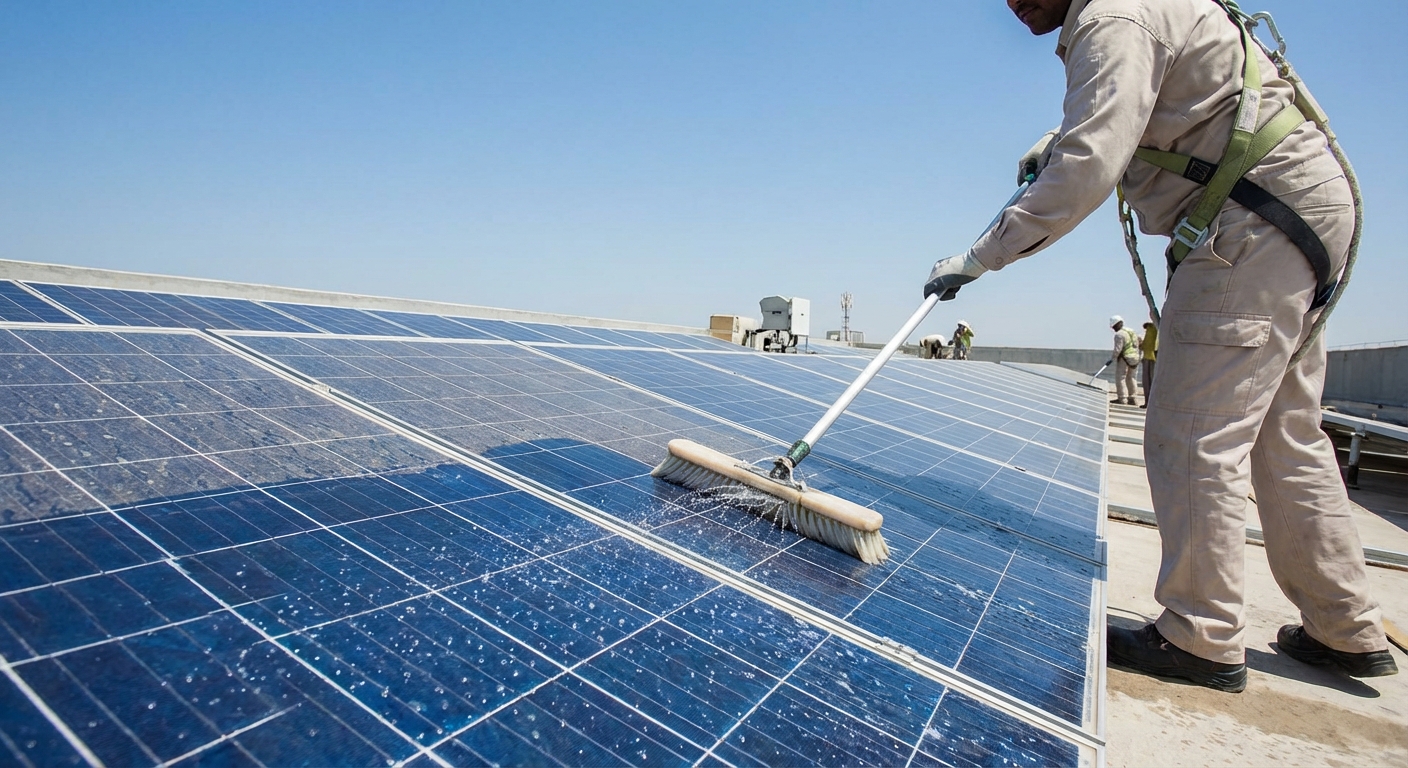
Proper solar maintenance ensures your system delivers optimal performance throughout its 25-year lifespan. Surat’s climate presents specific maintenance considerations that affect cleaning schedules and upkeep requirements.
The primary maintenance task for solar Surat installations is regular panel cleaning. Dust accumulation from Surat’s industrial activities, construction, and traffic can reduce solar output by 15-25% if left unchecked. During dry months (October through May), panels should be cleaned every 3-4 weeks to maintain peak performance. Monsoon rains provide natural cleaning from June to September, reducing the need for manual intervention during these months.
Panel cleaning should use soft brushes or squeegees with plain water or mild soap solution. Avoid abrasive materials, high-pressure washers, or harsh chemicals that can damage the panel surface or anti-reflective coating. Early morning or evening cleaning is preferable to avoid thermal shock from cold water on hot panels and to prevent rapid evaporation that leaves mineral deposits.
For multi-story buildings or large commercial installations where roof access is challenging, consider professional cleaning services. Many solar companies in Surat offer annual maintenance contracts including quarterly or monthly cleaning, typically costing ₹2,000 to ₹5,000 annually for residential systems and ₹10,000 to ₹30,000 for larger commercial installations.
Beyond cleaning, annual maintenance should include visual inspection of all panels for cracks, discoloration, or damage; checking mounting structure bolts and connections for corrosion or loosening; inspecting electrical cables for wear, rodent damage, or exposed wiring; testing inverter performance and checking for error codes; verifying earthing system integrity; and cleaning inverter ventilation to prevent overheating.
Monsoon preparation is particularly important in Surat. Before monsoon season arrives, have your system inspected to ensure all mounting bolts are tight, drainage channels are clear to prevent water pooling, electrical connections are properly sealed, and lightning protection systems are functional. These preventive measures minimize weather-related issues during the heavy rain months.
Performance monitoring helps identify maintenance needs before they become serious problems. Most modern inverters include monitoring capabilities that track daily generation, system efficiency, and component status. Sudden drops in output may indicate soiling, shading from new construction, or technical issues requiring attention. Regular monitoring allows you to maintain optimal performance and catch problems early.
Annual maintenance costs for solar systems in Surat typically range from ₹3,000 to ₹8,000 for residential installations and ₹15,000 to ₹50,000 for commercial systems, depending on size and service level. These costs are minimal compared to the ₹40,000 to ₹3,00,000+ in annual electricity savings, representing less than 2-3% of the financial benefits.
Warranty service and local support availability are crucial considerations when selecting solar companies. Choose providers with established service networks in Surat who can respond quickly to any issues. Reputable companies offer comprehensive warranties covering workmanship for 5-10 years and provide ongoing technical support throughout your system’s lifetime.
Choosing Solar Companies in Surat: What to Look For
Selecting the right solar installation partner significantly impacts your project’s success, system quality, and long-term satisfaction. With numerous solar companies operating in Gujarat, knowing what to evaluate helps you make an informed choice.
Experience with local DGVCL processes is essential. Companies familiar with Surat’s specific requirements, documentation procedures, and approval timelines can navigate the net metering application process efficiently, avoiding delays and complications. Ask potential installers how many DGVCL net metering approvals they’ve secured in Surat and their average timeline from application to approval.
Track record of installations in Surat provides valuable insight into a company’s capabilities and reliability. Request references from recent customers in your area and, if possible, visit completed installations to see the quality of workmanship firsthand. Companies with hundreds or thousands of local installations demonstrate proven expertise and staying power in the market.
Quality of components and solar brands offered directly affects your system’s performance and longevity. Reputable installers work with established manufacturers offering comprehensive warranties and proven reliability. Be wary of companies pushing unknown brands or offering prices significantly below market rates, these often indicate inferior components that may fail prematurely or underperform.
Post-installation support and maintenance services distinguish professional solar EPC companies from fly-by-night operators. Ensure your chosen provider offers comprehensive warranties, responsive customer service, local service technicians, and clear procedures for addressing any issues. Companies that disappear after installation leave you stranded if problems arise.
Transparency in pricing and timelines builds trust and prevents unpleasant surprises. Quality solar companies provide detailed quotations breaking down component costs, installation charges, DGVCL fees, and any additional expenses. They should clearly explain what’s included, what’s not, and provide realistic timelines for each project phase. Avoid companies that are vague about costs or make unrealistic promises about installation speed or performance.
Certifications and credentials indicate professional standards and technical competence. Look for companies with ISO certifications, empanelment with DGVCL for subsidy projects, partnerships with reputable solar brands, and trained, certified installation teams. These credentials demonstrate commitment to quality and adherence to industry standards.
Financial stability matters for long-term warranty support. Established companies with years of operation and substantial project portfolios are more likely to be around to honor warranties and provide ongoing support. Check company registration details, years in business, and financial standing to assess their long-term viability.
Frequently Asked Questions About Solar Surat
How much does solar cost in Surat?
Solar installation costs in Surat range from ₹45,000 to ₹60,000 per kW for residential systems and ₹35,000 to ₹50,000 per kW for commercial and industrial installations. A typical 5 kW residential system costs ₹2.25 to ₹3.00 lakhs before subsidies. After applying the central government subsidy of approximately ₹58,000, the net cost drops to ₹1.67 to ₹2.42 lakhs. Prices vary based on component quality, system size, roof complexity, and the solar EPC services provider you choose.
What subsidies are available for Surat residents?
Residential consumers in Surat can access central government rooftop solar subsidies of up to ₹14,588 per kW for the first 3 kW and ₹7,294 per kW for additional capacity up to 10 kW. A 3 kW system receives approximately ₹43,764 subsidy, while a 5 kW system gets around ₹58,352. Agricultural consumers can benefit from PM-KUSUM scheme subsidies covering up to 60% of solar pump costs. Commercial and industrial consumers don’t receive direct subsidies but can claim accelerated depreciation and access solar-specific financing options.
How long does installation take?
The complete solar installation process in Surat typically takes 6-10 weeks from contract signing to final commissioning. This includes site assessment and design (1 week), DGVCL net metering application and approval (2-4 weeks), physical installation (3-7 days for residential, 2-4 weeks for commercial), system testing and commissioning (2-3 days), and final DGVCL inspection and net meter installation (1-2 weeks). Timeline variations depend on DGVCL approval speed, system complexity, and weather conditions. Experienced solar companies with established DGVCL relationships often achieve faster timelines.
Will solar work during monsoon season?
Yes, solar panels continue generating electricity during Surat’s monsoon season, though at reduced levels compared to sunny months. Modern solar panels capture both direct and diffused sunlight, producing 40-60% of their peak capacity on cloudy days. Monsoon generation typically drops to 50-70% of summer levels, but annual production calculations account for this seasonal variation. The net metering system allows you to build credits during high-generation summer months that offset lower monsoon production, ensuring year-round electricity savings.
What permissions do I need from DGVCL?
For solar Surat installations with net metering, you need to submit an online application through DGVCL’s portal including your electricity connection details, property ownership documents, proposed system specifications, and technical drawings. DGVCL reviews the application and issues a feasibility approval with technical requirements. After installation, DGVCL conducts a site inspection to verify compliance with safety and technical standards before installing the bidirectional net meter. Your solar EPC company should handle this entire process as part of their turnkey service, ensuring all documentation is properly prepared and submitted.
Take the First Step Toward Solar Energy in Surat
Solar energy represents a smart, sustainable investment for Surat homeowners and businesses in 2026. With excellent solar irradiation, rising electricity costs, attractive subsidies, and proven technology, the case for going solar has never been stronger. Whether you’re looking to reduce your monthly electricity bills, protect against future tariff increases, or contribute to environmental sustainability, solar Surat installations deliver measurable benefits that compound over decades.
The key to a successful solar project is partnering with an experienced, reliable solar EPC provider who understands Surat’s specific conditions, DGVCL requirements, and local climate considerations. Heaven Green Energy Limited, established in 2017 and based in Surat, brings extensive local expertise with thousands of successful installations across Gujarat. As one of the top solar companies in Gujarat, they offer comprehensive turnkey solutions covering everything from initial site assessment and system design to DGVCL approvals, professional installation, and ongoing maintenance support.
Don’t let rising electricity costs continue draining your budget. Take control of your energy future with a solar installation tailored to your specific needs and property. Whether you’re a homeowner looking to install a residential rooftop system, a business seeking to reduce operational costs, or an industrial facility planning a large-scale solar project, expert guidance makes all the difference.
Ready to explore how solar energy can benefit your Surat property? Have any questions? Call +91 63904 05060 to speak with solar experts who can assess your specific situation, explain available subsidies, provide accurate cost estimates, and guide you through every step of the solar Surat installation process. Start your journey toward clean, affordable solar energy today and join thousands of satisfied customers across Gujarat who are already enjoying the benefits of renewable power.
This blog post was written using thestacc.com