


When you receive that first solar installation quote, the numbers look promising. The payback period seems reasonable, the monthly savings are attractive, and the investment feels manageable. But here’s what most homeowners and businesses in Gujarat discover too late: the initial quote rarely tells the complete story. Hidden costs can inflate your solar project expenses by 15-30%, turning what seemed like a straightforward investment into a financial surprise.
Understanding the true cost of solar financing means looking beyond the price of panels and inverters. It means accounting for electrical upgrades, roof repairs, permits, maintenance reserves, and a dozen other expenses that contractors don’t always highlight upfront. Whether you’re a homeowner in Surat looking to reduce electricity bills or an industrial facility in Ahmedabad planning a large-scale installation, knowing these hidden costs is essential for accurate budgeting and realistic ROI calculations.
This comprehensive guide reveals the often-overlooked expenses that can catch you off-guard during your solar journey. We’ll break down each hidden cost category, provide realistic cost ranges for Gujarat’s market, and show you how to ask the right questions before signing any contract. By the end, you’ll have a complete picture of what your solar project will truly cost—and how to plan your solar financing accordingly.

The Real Cost of Going Solar: Beyond the Initial Quote
Most solar quotes focus on the glamorous numbers: system size in kilowatts, panel efficiency ratings, and the base installation cost. A typical 5 kW residential system quote in Gujarat might show ₹2,50,000 to ₹3,00,000. That number covers solar panels, inverters, mounting structures, and basic installation labor. It looks clean, simple, and affordable.
But here’s the reality: that quote assumes your home or business is “solar-ready.” It assumes your electrical panel can handle the additional load, your roof is in perfect condition, your property has proper grounding, and you’ve already navigated the permit process. For most properties—especially older buildings across Gujarat—these assumptions don’t hold true.
Industry data from solar EPC companies shows that actual project costs typically exceed initial quotes by 15-30%. A ₹3,00,000 quote can easily become ₹3,60,000 to ₹3,90,000 once you factor in electrical upgrades, roof repairs, permit fees, and post-installation expenses. For commercial and industrial projects, these hidden costs can add lakhs to your budget.
The challenge with solar financing is that banks and NBFCs base their loan approvals on your initial quote. When hidden costs emerge mid-project, you’re left scrambling to cover the gap from your own pocket or seeking additional financing at less favorable terms. This is why understanding the complete cost picture before you start is absolutely critical.
Let’s examine each hidden cost category in detail, so you can budget accurately and avoid the financial surprises that derail so many solar projects.
1. Electrical Infrastructure Upgrades: The Foundation You Can’t Skip
Your home or business electrical system was designed for your current power consumption patterns. Adding a solar system means your electrical infrastructure must now handle bidirectional power flow—electricity coming from the grid and electricity flowing back to the grid when your panels produce excess power.
For many properties in Gujarat, especially those built before 2010, the existing electrical panel simply isn’t equipped for this. Here’s what you might need:
- Main service panel upgrade: Older panels rated for 40-60 amps need upgrading to 100-200 amp panels to safely integrate solar systems. Cost: ₹15,000-₹35,000 depending on capacity.
- Circuit breaker replacements: Solar-compatible breakers with proper ratings for DC and AC disconnect. Cost: ₹3,000-₹8,000.
- Electrical wiring upgrades: Replacing undersized or damaged wiring from the panel to the meter and throughout the property. Cost: ₹8,000-₹25,000 for residential, significantly more for commercial properties.
- Grounding and earthing system: Proper grounding is mandatory for safety and grid connection approval. Many older buildings lack adequate earthing. Cost: ₹5,000-₹15,000.
Total electrical upgrade costs typically range from ₹15,000 to ₹75,000 for residential properties, and can exceed ₹1,50,000 for commercial and industrial installations. These aren’t optional expenses, they’re safety requirements and prerequisites for grid connection approval.
The problem? Most basic solar quotes assume your electrical infrastructure is already compliant. A thorough site assessment by experienced solar EPC companies will identify these needs upfront, but many installers skip this step to keep their initial quotes competitive.
2. Roof Repairs and Structural Reinforcement
Solar panels last 25+ years. Your roof needs to last just as long, or you’ll face the expensive prospect of removing your entire solar system, repairing the roof, and reinstalling everything.
Before any reputable installer mounts panels on your roof, they should conduct a structural assessment. This evaluation checks for:
- Roof condition and remaining lifespan: Leaks, water damage, deteriorating materials, or structural weakness
- Load-bearing capacity: Whether your roof structure can support the additional weight of panels, mounting hardware, and accumulated dust (a significant factor in Gujarat’s climate)
- Waterproofing integrity: Existing or potential leak points that could worsen after mounting hardware installation
If your roof shows any of these issues, you have two choices: repair it now before installation, or face much higher costs later. Removing and reinstalling a solar system costs ₹30,000-₹80,000 in labor alone, far more than addressing roof issues upfront.
Common roof-related expenses include:
- Waterproofing and leak repairs: ₹15,000-₹50,000 depending on roof size and damage extent
- Structural reinforcement: Adding support beams or strengthening existing structure: ₹25,000-₹1,00,000
- Roof replacement: If your roof is near end-of-life, full replacement before solar installation: ₹50,000-₹2,50,000 depending on size and materials
For commercial buildings with flat roofs common in Gujarat’s industrial areas, waterproofing is especially critical. The monsoon season can turn small leaks into major problems, and mounting hardware creates additional penetration points that must be properly sealed.
Smart planning means timing your roof repairs or replacement with your solar installation. This minimizes disruption and often allows you to negotiate better combined pricing with contractors.
3. Permits, Approvals, and Regulatory Compliance Costs
Installing a grid-connected solar system in Gujarat isn’t as simple as mounting panels and flipping a switch. You need multiple approvals from government agencies, utility companies, and local authorities. Each approval comes with fees, documentation requirements, and often, professional liaison services.
Here’s the typical approval journey for a rooftop solar installation in Gujarat:
- GEDA (Gujarat Energy Development Agency) registration: Required for subsidy eligibility and project registration. Fees: ₹2,000-₹5,000
- Municipal corporation building permit: Ensures your installation complies with local building codes. Fees: ₹3,000-₹10,000 depending on city and system size
- Net metering application: Filed with your electricity distribution company (DGVCL, MGVCL, PGVCL, or UGVCL). Connection charges: ₹5,000-₹15,000
- Fire safety certificate: Required for commercial and industrial installations. Inspection and certification: ₹5,000-₹15,000
- Structural stability certificate: From a licensed engineer confirming your roof can support the system. Fees: ₹3,000-₹8,000
Beyond the direct fees, there are indirect costs. Navigating Gujarat’s regulatory landscape requires time, expertise, and often multiple site visits by officials. Many property owners hire professional liaison services or rely on their EPC contractor to handle this process, adding ₹10,000-₹25,000 to project costs.
Total permit and approval costs typically range from ₹10,000 to ₹40,000 for residential systems, and can exceed ₹75,000 for large commercial installations. These costs are rarely itemized in initial quotes, appearing instead as vague “documentation charges” or excluded entirely.
The timeline matters too. Approval processes can take 4-8 weeks in Gujarat, during which your solar financing may be accruing interest even though installation hasn’t begun. Factor this carrying cost into your budget planning.
Understanding Solar Financing Options and Their Hidden Costs
How you finance your solar project significantly impacts your total cost of ownership. While the upfront system cost might be the same, different solar financing options come with their own hidden expenses that can add thousands to your investment.
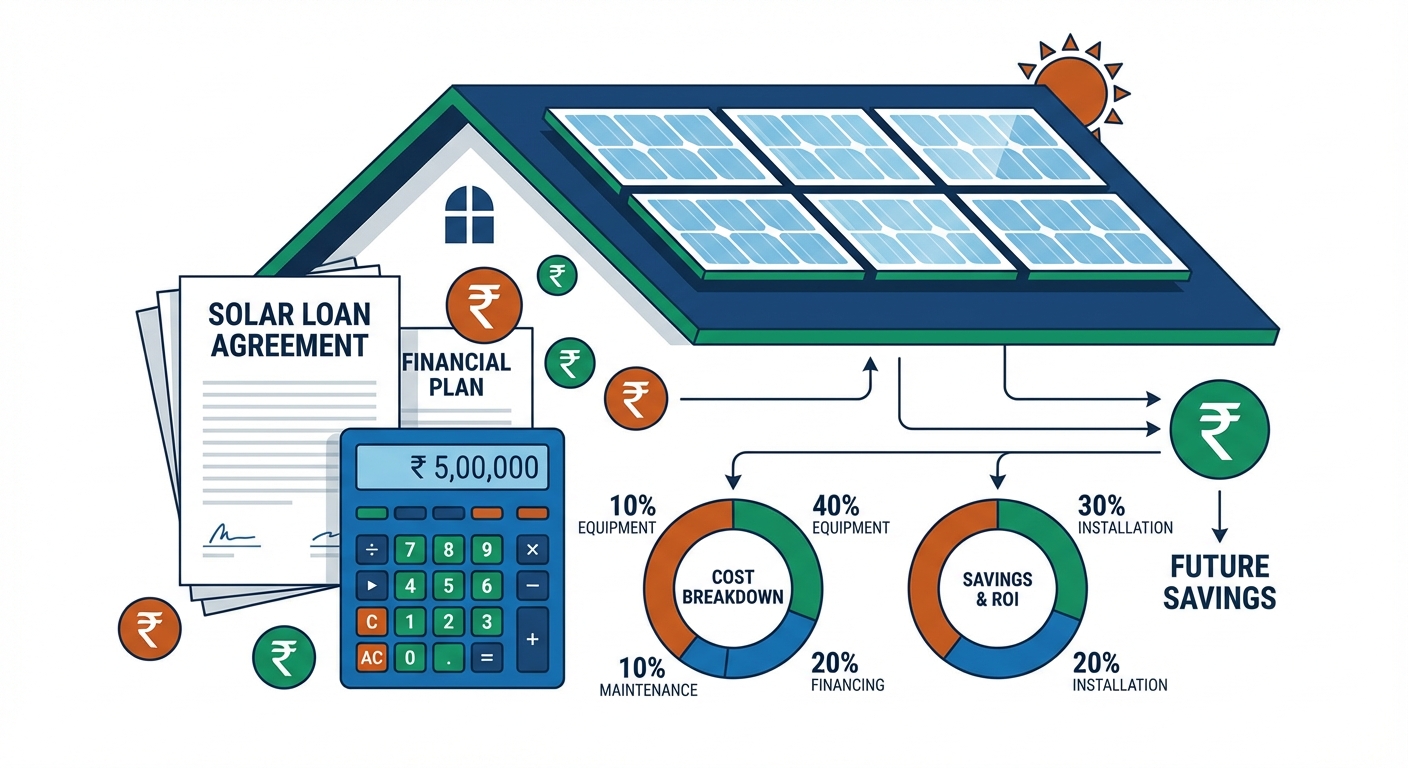
Bank Loans and Processing Fees
Most nationalized and private banks in Gujarat offer dedicated solar loans with interest rates ranging from 9% to 13% annually. The advertised rate looks attractive, but the fine print reveals additional costs:
- Processing fees: Typically 1-2% of loan amount. On a ₹3,00,000 loan, that’s ₹3,000-₹6,000 upfront.
- Documentation charges: ₹2,000-₹5,000 for loan processing paperwork
- Prepayment penalties: If you want to pay off your loan early using subsidy funds or savings, many banks charge 2-4% of the outstanding principal
- Insurance requirements: Some banks mandate life insurance or asset insurance as a loan condition, adding ₹3,000-₹8,000 annually
A ₹3,00,000 solar loan at 11% interest over 5 years means you’ll pay approximately ₹91,000 in interest alone. Add processing fees, insurance, and other charges, and your total financing cost approaches ₹1,05,000, 35% more than the principal amount.
NBFC Solar Financing Programs
Non-banking financial companies often offer faster approval and more flexible terms than traditional banks, but at a cost. NBFC interest rates for solar projects typically range from 12% to 16%, and their fee structures can be more complex:
- Higher processing fees: 2-3% of loan amount
- Foreclosure charges: Up to 5% if you prepay within the first 2-3 years
- Administrative fees: Annual account maintenance charges of ₹1,000-₹3,000
The advantage of NBFCs is speed and approval rates, they’re often more willing to finance solar projects for properties with complex ownership or older buildings. But you pay for that convenience through higher total interest costs.
Subsidy Timing and Cash Flow Impact
Gujarat offers residential solar subsidies through the PM-KUSUM and state schemes, potentially covering 20-40% of your system cost. However, subsidies are disbursed after installation and inspection, typically 3-6 months post-commissioning.
This timing creates a cash flow challenge. You need to arrange full financing upfront, pay interest on the entire amount for months, and only receive subsidy reimbursement later. If you’re using a loan, those extra months of interest on the subsidy portion add ₹3,000-₹8,000 to your costs.
Some experienced EPC providers like Heaven Green Energy help structure your solar financing to minimize this impact, but it’s a hidden cost that catches many first-time solar buyers off-guard.
4. Post-Installation Expenses: Maintenance and Monitoring
Your solar system doesn’t become a “set it and forget it” investment the moment it’s commissioned. Ongoing maintenance is essential for optimal performance and longevity, and it costs money that’s rarely included in initial project quotes.
Annual Maintenance Contracts (AMC)
Professional maintenance ensures your system operates at peak efficiency. In Gujarat’s dusty, high-temperature climate, regular servicing is especially important. Typical AMC costs range from ₹3,000 to ₹8,000 per kW annually, covering:
- Quarterly or bi-annual system inspections
- Inverter performance checks and firmware updates
- Electrical connection tightening and safety checks
- Basic troubleshooting and minor repairs
For a 5 kW residential system, expect to pay ₹15,000-₹40,000 annually for comprehensive maintenance. Over 25 years, that’s ₹3,75,000 to ₹10,00,000 in maintenance costs, a significant expense that dramatically impacts your true ROI calculations.
Panel Cleaning in Gujarat’s Climate
Dust accumulation is a serious performance issue in Gujarat. Studies show that uncleaned panels can lose 20-30% of their efficiency within just 2-3 months during dry seasons. Regular cleaning is non-negotiable.
Professional cleaning services charge ₹500-₹1,500 per cleaning session for residential systems, and you’ll need cleaning every 4-6 weeks during peak dust seasons. That’s ₹6,000-₹18,000 annually just for keeping your panels clean.
Some property owners opt for DIY cleaning, but this carries risks, improper cleaning techniques can scratch panels or damage anti-reflective coatings, reducing efficiency permanently. Professional services include proper equipment, deionized water, and insurance coverage for any accidental damage.
Inverter Replacement Reserves
While solar panels last 25+ years, inverters typically need replacement after 5-10 years depending on quality and usage patterns. This is a major expense that many buyers don’t anticipate:
- String inverters: ₹25,000-₹60,000 replacement cost for residential systems
- Microinverters: ₹8,000-₹15,000 per unit (you may need multiple)
- Commercial inverters: ₹1,00,000-₹5,00,000+ depending on capacity
Smart budgeting means setting aside ₹3,000-₹5,000 annually in an inverter replacement reserve fund. This way, when replacement becomes necessary, you’re financially prepared rather than facing an unexpected major expense.
Monitoring System Subscriptions
Modern solar systems include monitoring platforms that track performance, alert you to issues, and provide generation data. While basic monitoring is often included, advanced features may require subscriptions:
- Cloud-based analytics and reporting: ₹1,000-₹3,000 annually
- Mobile app premium features: ₹500-₹1,500 annually
- Automated alert systems and remote diagnostics: ₹2,000-₹5,000 annually
These costs are small individually but add up over your system’s lifetime. A comprehensive solar payback period calculation must include these ongoing expenses for accuracy.
5. Grid Connection and Metering Equipment
Connecting your solar system to Gujarat’s electricity grid requires specialized equipment and utility company coordination. These costs are often bundled vaguely into quotes or omitted entirely.
Bi-Directional Meter Installation
Standard electricity meters only measure power consumption. For net metering, where you receive credit for excess solar power fed back to the grid, you need a bi-directional meter that tracks both consumption and export.
Meter costs and installation charges vary by utility company and system size:
- Single-phase bi-directional meter: ₹3,000-₹6,000 including installation
- Three-phase meter for commercial systems: ₹8,000-₹15,000
- Smart meters with remote monitoring: ₹10,000-₹20,000
Some utility companies in Gujarat provide meters at subsidized rates or free of charge, but you may wait weeks or months for installation. Opting for faster service or premium meters adds to your costs.
Grid Synchronization Equipment
Your inverter must synchronize perfectly with grid frequency and voltage. This requires additional protection and synchronization equipment:
- Grid protection relay: ₹5,000-₹12,000
- Isolation transformer (if required): ₹8,000-₹25,000
- Surge protection devices: ₹3,000-₹8,000
These components protect both your system and the grid from voltage fluctuations, frequency mismatches, and other electrical issues. They’re mandatory for grid connection approval but often appear as unexpected line items during installation.
Additional Wiring and Conduit
The distance from your solar array to your meter and main panel affects wiring costs. If your meter is far from your roof or on the opposite side of your building, you’ll need additional cabling and protective conduit:
- Solar DC cable: ₹80-₹150 per meter for quality cables
- AC cable from inverter to panel: ₹60-₹120 per meter
- Conduit and cable management: ₹40-₹80 per meter
For a typical residential installation requiring 20-30 meters of additional cabling, expect ₹5,000-₹12,000 in extra wiring costs. Commercial installations with longer cable runs can see this expense multiply significantly.
Total grid connection and metering costs typically range from ₹8,000 to ₹25,000 for residential systems, and ₹25,000 to ₹75,000 for commercial installations.
6. Insurance, Warranties, and Protection Plans
Your solar system represents a significant investment sitting exposed on your roof for 25+ years. Protecting that investment through insurance and extended warranties is wise, and increasingly required by lenders offering solar financing.
Comprehensive Solar System Insurance
Standard home or commercial property insurance often excludes or provides limited coverage for solar installations. Dedicated solar insurance covers:
- Weather damage: Hail, storms, lightning strikes, and cyclones (relevant during Gujarat’s monsoon season)
- Theft and vandalism: Especially important for ground-mounted systems or installations in remote areas
- Fire damage: Both to the solar system and any property damage caused by system-related fires
- Performance guarantees: Some policies cover revenue loss if your system underperforms due to covered damage
Annual insurance premiums typically cost ₹2,000-₹5,000 per 10 kW of installed capacity. For a 5 kW residential system, that’s ₹1,000-₹2,500 annually, or ₹25,000-₹62,500 over 25 years.
Many banks and NBFCs require proof of insurance as a condition for solar financing approval. Even if not required, insurance provides peace of mind and financial protection against Gujarat’s occasionally severe weather events.
Extended Warranty Costs
Standard warranties typically cover:
- Solar panels: 25-year performance warranty (usually 80% efficiency after 25 years), 10-12 year product warranty
- Inverters: 5-10 year manufacturer warranty
- Installation workmanship: 1-5 years depending on contractor
Extended warranties beyond these standard terms cost extra but can provide valuable protection:
- Extended inverter warranty: ₹8,000-₹15,000 to extend from 5 to 10 years
- Enhanced panel warranty: ₹10,000-₹25,000 for upgraded performance guarantees
- Comprehensive workmanship warranty: ₹5,000-₹12,000 for extended installation coverage
Whether extended warranties make financial sense depends on the quality of components you’re installing. Premium brands from reputable solar panel manufacturers often include robust standard warranties that make extensions unnecessary.
Protection Plans and Service Packages
Some EPC companies offer comprehensive protection plans that bundle insurance, extended warranties, and maintenance into a single annual fee. These packages typically cost ₹8,000-₹20,000 annually for residential systems but provide convenience and comprehensive coverage.
When evaluating protection plans, compare the bundled cost against purchasing insurance, warranties, and maintenance separately. Sometimes bundled packages offer savings; other times, you’re paying for convenience rather than value.
How to Budget Accurately for Your Solar Project
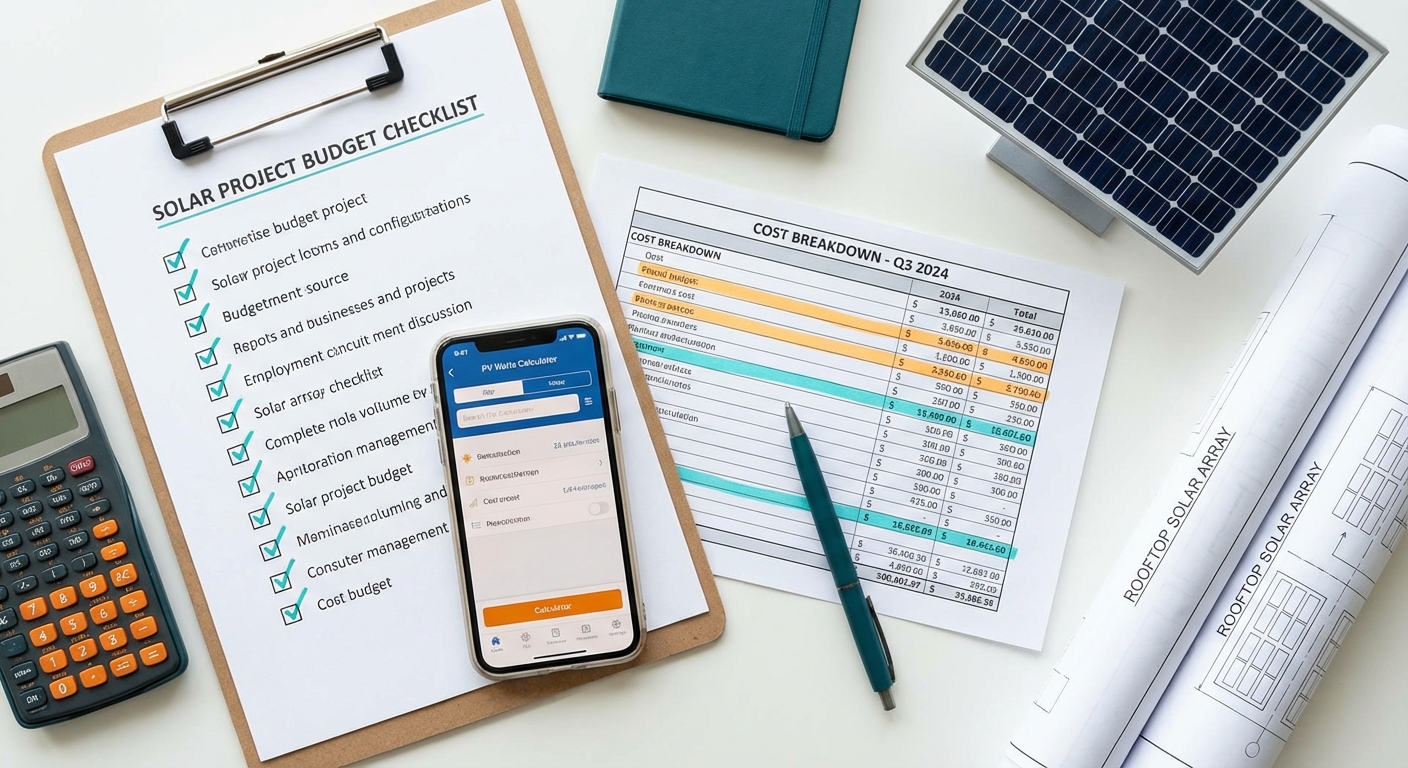
Now that you understand the hidden costs, how do you create a realistic budget that accounts for everything? Here’s a systematic approach to accurate solar financing planning:
Step 1: Get a Comprehensive Site Assessment
Before requesting quotes, invest in a professional site assessment from an experienced solar EPC company. A thorough assessment evaluates:
- Electrical infrastructure condition and upgrade requirements
- Roof structural integrity and remaining lifespan
- Shading analysis and optimal panel placement
- Grid connection requirements and utility coordination needs
- Permit and approval pathway for your specific location
This assessment might cost ₹2,000-₹5,000, but it provides the foundation for accurate budgeting. Many reputable EPC providers offer free assessments if you proceed with installation through them.
Step 2: Request Itemized, All-Inclusive Quotes
When requesting quotes from solar installers, specifically ask for itemized pricing that includes:
- Equipment costs (panels, inverters, mounting structures, cables)
- Installation labor and project management
- Electrical upgrades and infrastructure work
- Permit fees and approval processing
- Grid connection equipment and utility coordination
- First-year maintenance and warranty terms
- Post-installation support and monitoring
Compare quotes on an apples-to-apples basis. A ₹2,80,000 all-inclusive quote is better value than a ₹2,50,000 quote that excludes electrical work, permits, and grid connection costs.
Step 3: Build a 20% Contingency Reserve
Even with thorough planning, unexpected issues arise during solar installations. Building a 20% contingency reserve into your budget protects you from:
- Unforeseen structural issues discovered during installation
- Permit delays requiring additional documentation or fees
- Equipment price fluctuations or supply chain issues
- Additional electrical work identified during installation
If your all-inclusive quote is ₹3,00,000, budget ₹3,60,000 total. If you don’t need the full contingency, you’ll have extra funds for extended warranties or a maintenance reserve. If unexpected costs arise, you’re covered without scrambling for additional financing.
Critical Questions to Ask Your EPC Contractor
Before signing any contract, ask these specific questions to uncover potential hidden costs:
- “Does this quote include all electrical upgrades required for grid connection?” Get specifics on panel upgrades, wiring, and grounding work.
- “What roof repairs or reinforcement might be needed, and are they included?” Request a written roof assessment.
- “Are all permit fees, approval charges, and liaison services included in this price?” Get an itemized list of regulatory costs.
- “What’s included in your warranty, and what costs extra?” Understand exactly what’s covered and for how long.
- “What are the annual maintenance requirements and costs?” Get a written maintenance schedule with pricing.
- “When will I need to replace the inverter, and what will it cost?” Plan for this major future expense.
- “Are there any additional costs for grid connection, metering, or utility coordination?” Clarify who pays for what.
- “What happens if we discover additional work is needed during installation?” Understand the change order process and pricing.
Reputable EPC companies will answer these questions transparently and provide detailed documentation. Evasive answers or vague “we’ll handle it” responses are red flags indicating potential hidden costs ahead.
Red Flags in Solar Quotes
Watch for these warning signs that indicate a quote may be hiding costs:
- Significantly lower than competitors: If one quote is 20-30% below others, they’re likely excluding costs or using inferior components
- Vague line items: “Miscellaneous charges” or “other costs” without itemization
- No mention of permits or approvals: These costs exist for every project, if they’re not listed, they’re hidden
- Pressure to sign quickly: Legitimate offers don’t require immediate decisions; pressure tactics suggest hidden terms
- No written warranty terms: Verbal promises mean nothing; get everything in writing
- Unclear payment schedule: Understand exactly when payments are due and what triggers them
Taking time to evaluate quotes carefully and ask probing questions protects you from the 15-30% cost inflation that catches unprepared buyers.
Real Cost Breakdown: Sample Solar Project in Gujarat
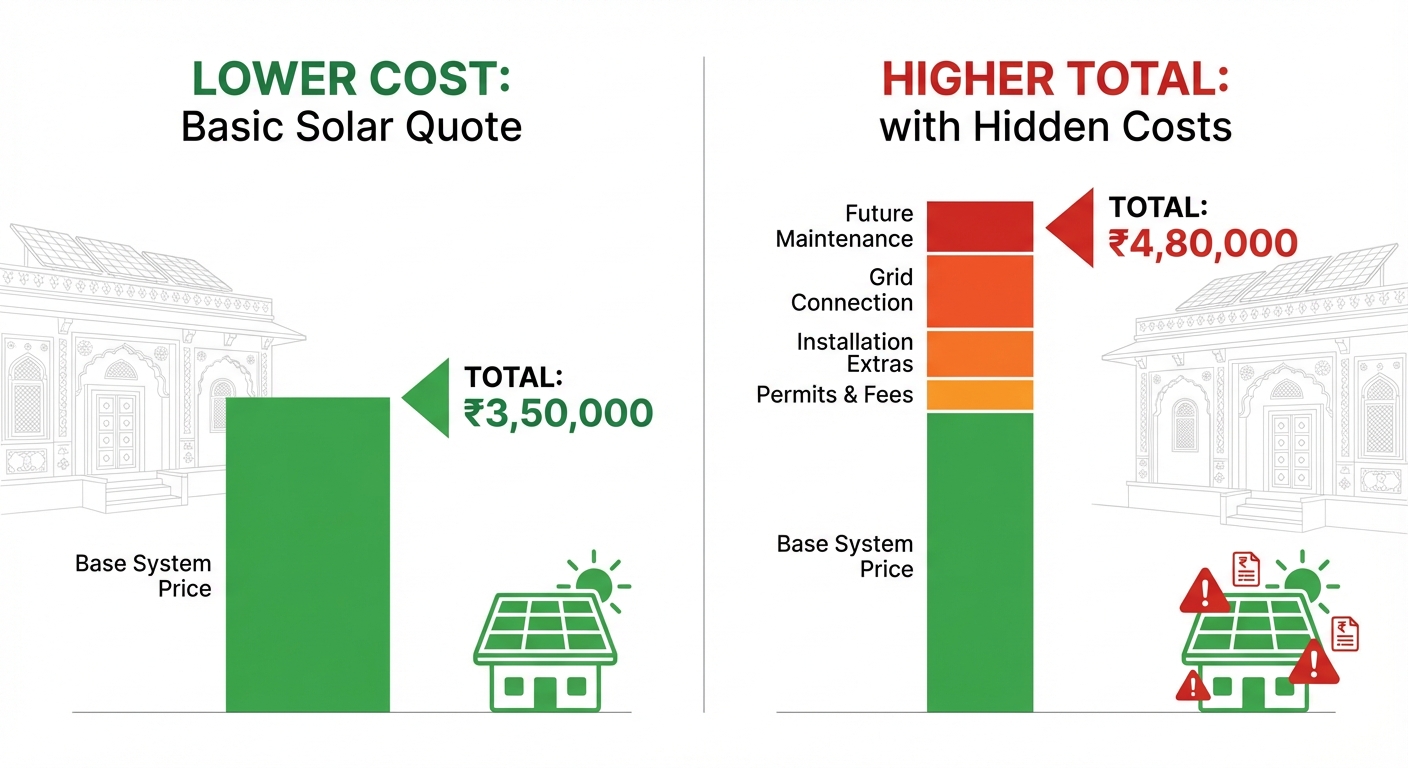
Let’s examine a real-world example: a 5 kW residential rooftop solar installation in Surat, Gujarat. This breakdown shows how hidden costs transform the initial quote into the actual project expense.
Initial Quote: ₹2,75,000
The base quote includes:
- 5 kW solar panels (high-efficiency monocrystalline): ₹1,50,000
- 5 kW string inverter: ₹45,000
- Mounting structures and hardware: ₹25,000
- Installation labor: ₹35,000
- Basic wiring and connections: ₹20,000
Quoted Total: ₹2,75,000
Hidden Costs Revealed During Project
As the project progresses, additional expenses emerge:
- Electrical panel upgrade: The existing 60-amp panel requires upgrading to 100-amp for solar integration: ₹22,000
- Roof waterproofing: Pre-installation inspection reveals minor leaks requiring repair: ₹18,000
- Permits and approvals: GEDA registration, municipal permit, net metering application, and liaison services: ₹15,000
- Bi-directional meter: Utility company charges for meter and installation: ₹4,500
- Additional wiring: Meter location requires 15 meters of extra cabling and conduit: ₹6,000
- Grid protection equipment: Relay and surge protection devices: ₹8,500
- First-year insurance: Comprehensive coverage for the new system: ₹2,000
- Extended inverter warranty: Upgrading from 5 to 10 years: ₹10,000
Hidden Costs Total: ₹86,000
Actual Project Cost: ₹3,61,000
The real investment is 31% higher than the initial quote, a difference of ₹86,000 that the homeowner didn’t budget for. This doesn’t even include ongoing costs like annual maintenance (₹15,000-₹20,000), panel cleaning (₹8,000-₹12,000 annually), or the future inverter replacement (₹40,000-₹50,000 in 7-10 years).
Impact on ROI and Payback Period
Using the initial quote, the homeowner calculated a payback period of 5.5 years based on ₹50,000 annual electricity savings. With the actual cost of ₹3,61,000, the payback period extends to 7.2 years, a 31% longer timeline.
When you factor in ongoing maintenance costs of ₹25,000 annually, the true payback period approaches 8-9 years. This is still a solid investment, but it’s dramatically different from the initial projection.
This example illustrates why transparent pricing and comprehensive budgeting are essential for realistic solar financing decisions. Working with experienced EPC providers who offer all-inclusive quotes prevents these surprises.
Smart Solar Financing Strategies to Minimize Hidden Costs
Understanding hidden costs is the first step. The second step is structuring your project and financing to minimize these expenses and maximize your return on investment.
Work with Experienced, Transparent EPC Companies
The single most effective way to avoid hidden costs is partnering with a reputable solar EPC company that provides comprehensive, itemized quotes upfront. Companies like Heaven Green Energy, with years of experience across Gujarat’s residential, commercial, and industrial sectors, understand the complete cost picture and build it into their proposals.
Experienced EPC providers offer:
- Thorough site assessments that identify all infrastructure requirements
- All-inclusive pricing that covers permits, approvals, and grid connection
- Transparent warranty terms and maintenance packages
- Established relationships with utility companies for faster approvals
- Post-installation support and performance monitoring
While experienced providers may not always offer the lowest initial quote, their comprehensive approach typically results in lower total project costs and fewer surprises.
Leverage Government Subsidies Effectively
Gujarat offers various solar subsidies and incentives through PM-KUSUM, state programs, and utility company schemes. Maximizing these benefits requires understanding eligibility requirements and application processes:
- Residential subsidies: Up to 40% for systems under 3 kW, 20% for systems 3-10 kW
- Agricultural subsidies: PM-KUSUM Component B offers 60% subsidy for farmers
- Commercial incentives: Accelerated depreciation and tax benefits for businesses
Working with an EPC company experienced in subsidy applications ensures you receive maximum benefits and avoid application errors that delay disbursement. Heaven Green Energy specializes in government scheme implementation, helping clients navigate the subsidy process efficiently.
Time Your Installation Strategically
Solar equipment prices and installation costs fluctuate seasonally. Strategic timing can save thousands:
- Avoid monsoon season: June-September installations face weather delays and higher labor costs
- Consider off-peak periods: October-February often sees better pricing as installers seek to fill capacity
- Watch for policy changes: Subsidy programs and net metering policies evolve; timing your project around favorable policies maximizes benefits
- Coordinate with roof work: If you’re planning roof repairs or replacement anyway, combining it with solar installation saves on labor and scaffolding costs
Negotiate Comprehensive Packages
Rather than accepting the base quote and paying for add-ons separately, negotiate a comprehensive package that includes:
- All electrical upgrades identified in the site assessment
- Permit processing and approval coordination
- Grid connection equipment and utility liaison
- First-year maintenance and monitoring
- Extended warranties on key components
- Insurance coverage or assistance with insurance procurement
Bundling these elements often results in better overall pricing than purchasing each separately. It also simplifies your solar financing by creating a single, comprehensive loan amount rather than multiple smaller expenses.
Plan for Long-Term Costs Upfront
Include long-term expenses in your initial financial planning:
- Create a maintenance reserve: Set aside ₹3,000-₹5,000 annually for routine maintenance
- Build an inverter replacement fund: Save ₹4,000-₹6,000 annually so you’re prepared for replacement in 7-10 years
- Budget for insurance: Include annual insurance premiums in your ROI calculations
- Account for cleaning costs: Factor in professional panel cleaning expenses for accurate savings projections
This approach provides a realistic picture of your solar investment’s true cost and return, preventing the disappointment of discovering ongoing expenses you didn’t anticipate.
Making Informed Solar Financing Decisions
The path to solar energy shouldn’t be paved with financial surprises. By understanding the hidden costs that inflate solar projects by 15-30%, you can budget accurately, choose the right solar financing option, and make informed decisions that deliver the returns you expect.
Remember these key takeaways:
- Initial quotes rarely tell the complete story. Electrical upgrades, roof repairs, permits, and post-installation costs add significantly to base quotes.
- Different financing options carry different hidden costs. Processing fees, insurance requirements, and subsidy timing all impact your total investment.
- Ongoing expenses affect your ROI. Maintenance, cleaning, insurance, and eventual inverter replacement must be factored into payback calculations.
- Transparency is worth paying for. Working with experienced EPC companies that provide comprehensive, itemized quotes prevents costly surprises.
- Strategic planning minimizes costs. Proper timing, subsidy optimization, and comprehensive packages reduce your total investment.
Solar energy remains an excellent investment for Gujarat’s homeowners, businesses, and industrial facilities. The key is entering the process with eyes wide open, understanding not just the attractive initial quote but the complete financial picture. When you budget for the real costs upfront, you avoid the stress of mid-project surprises and can focus on the long-term benefits: reduced electricity bills, energy independence, and environmental sustainability.
Whether you’re considering a small residential system or a large commercial installation, taking time to understand solar financing and hidden costs pays dividends throughout your system’s 25+ year lifespan. The few extra hours spent on thorough research and planning can save you tens of thousands of rupees and years of frustration.
Ready to get a transparent, comprehensive quote for your solar project? Heaven Green Energy provides detailed site assessments and all-inclusive pricing that accounts for every aspect of your installation, from electrical upgrades to permits to post-installation support. With over 10,000 installations across Gujarat and expertise in residential, commercial, and industrial projects, we ensure you understand exactly what your solar investment will cost and deliver. Have any questions? Call us at +91 63904 05060 to discuss your project and receive a detailed cost breakdown with no hidden surprises.
This blog post was written using thestacc.com