


If you’ve invested in a solar energy system, you already know the value of clean, affordable power. But do you know exactly how much energy your panels produced today? Are they performing at their peak? Is your solar monitoring system catching faults before they cost you money? For homeowners and businesses across Gujarat, these questions are not just technical curiosities — they directly affect your electricity savings, your solar ROI, and the long-term health of your investment.
This comprehensive guide answers the 22 most critical questions about solar monitoring, covering everything from how monitoring systems work to what metrics matter most, how to troubleshoot alerts, and how to leverage real-time data for maximum performance. Whether you have a rooftop solar system at home or a large industrial solar installation, this guide gives you the knowledge to take full control of your solar investment.
What Is Solar Monitoring and Why Does It Matter?
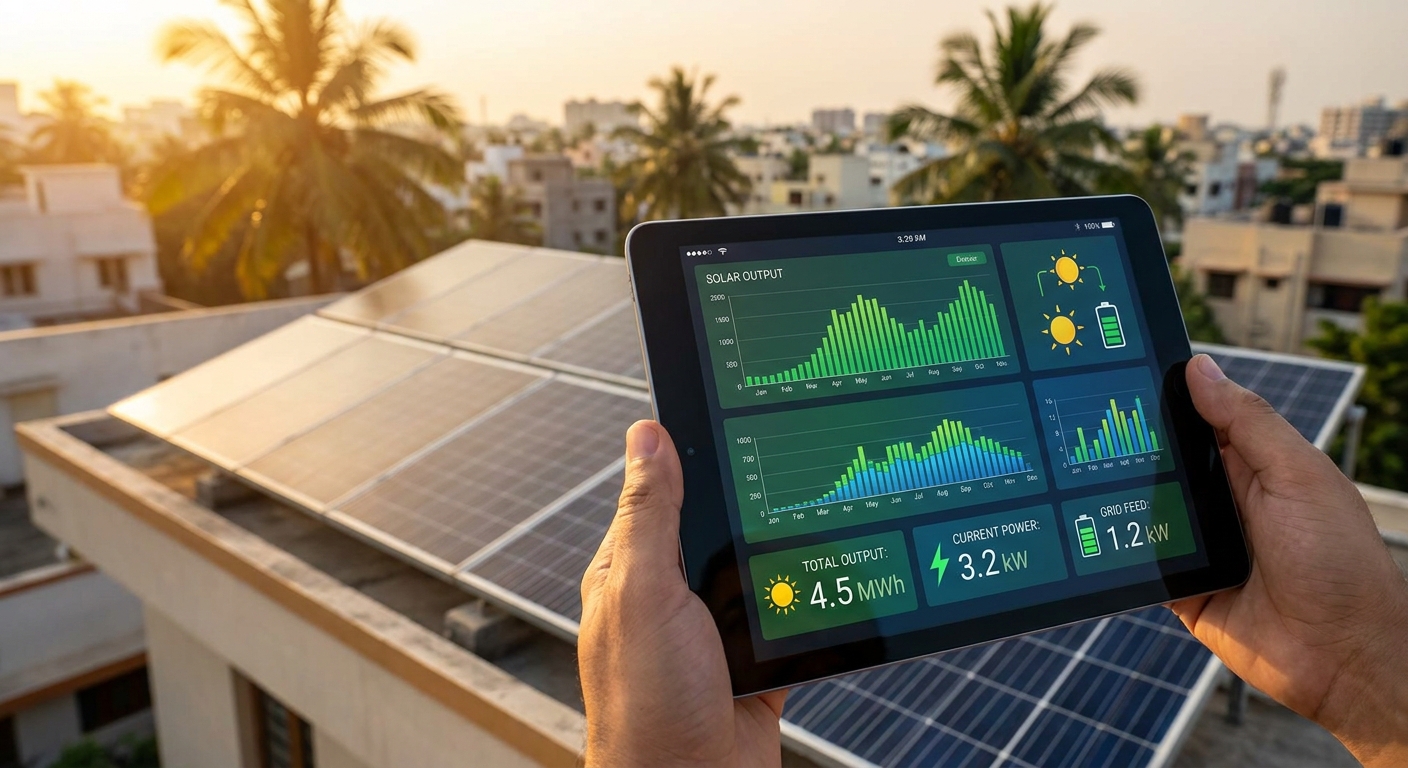
Solar monitoring is the process of continuously tracking, recording, and analyzing the performance of your solar energy system in real time. A solar monitoring system collects data from your solar panels, inverter, and other components, then displays it through an app or web dashboard so you can see exactly how your system is performing at any given moment.
Without solar monitoring, your solar system is essentially a black box. You might notice a higher electricity bill one month and have no idea whether your panels are underperforming, whether an inverter fault occurred, or whether shading from a new structure is reducing your output. Solar monitoring removes that uncertainty entirely.
For homeowners and businesses in Gujarat, where solar irradiation is among the highest in India, even a small drop in system performance can mean significant lost energy and revenue. Real-time solar monitoring ensures you capture every unit of energy your system is capable of producing.
What Does a Solar Monitoring System Measure?
- Energy generated (kWh) in real time, daily, monthly, and annually
- Inverter output power and efficiency
- String-level and panel-level current and voltage
- Grid export and self-consumption data
- System temperature and environmental conditions
- Fault codes and performance alerts
- CO2 savings and environmental impact metrics
How Solar Monitoring Systems Work
A solar monitoring system has three main layers: data collection hardware, a communication network, and a cloud-based software platform. Understanding how these layers work together helps you choose the right solution and troubleshoot issues when they arise.
Data Collection Hardware
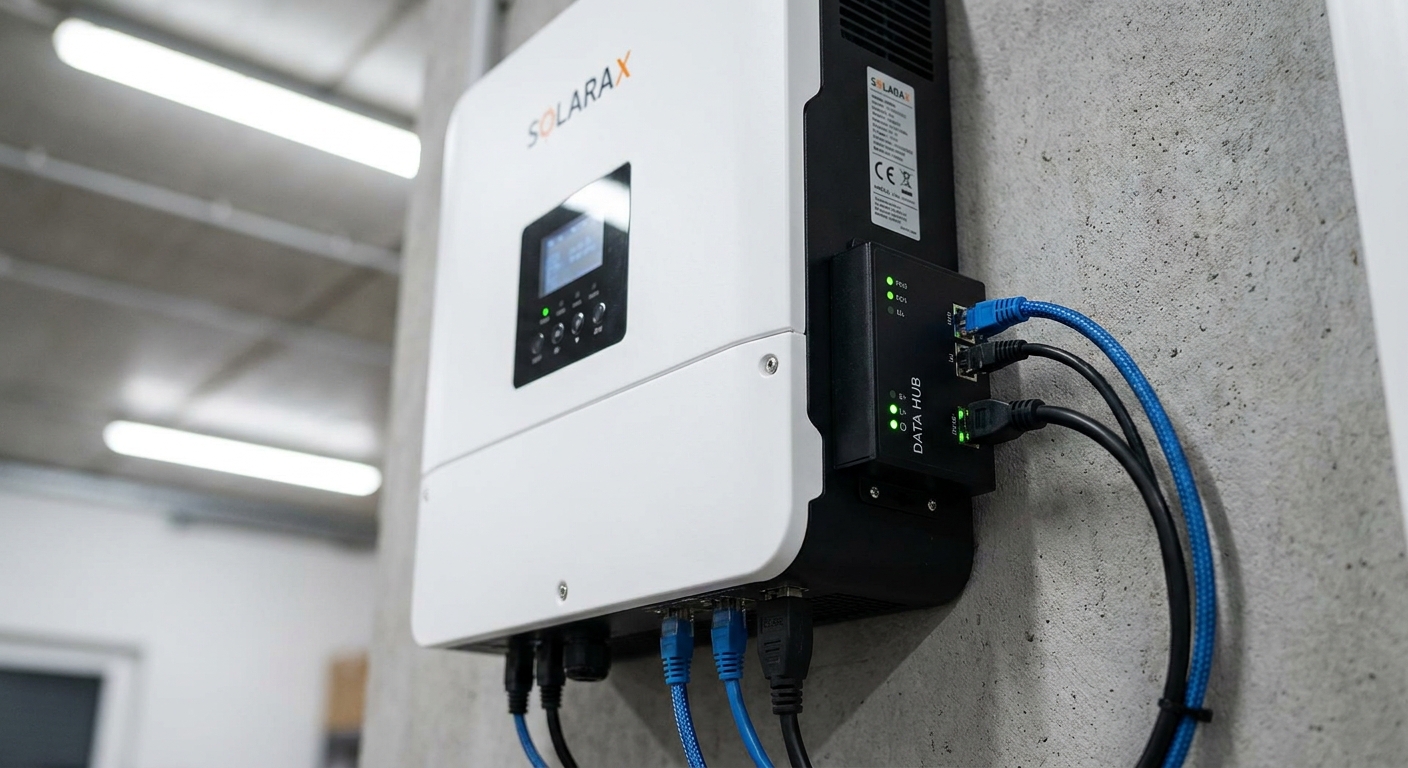
The inverter is the heart of most solar monitoring setups. Modern solar inverters from brands like Huawei, SMA, Fronius, and Growatt have built-in data loggers that record performance metrics every few seconds. For older or simpler inverters, an external data logger or smart meter is added to capture the same information. Current transformers (CTs) and irradiance sensors can also be added for more detailed monitoring.
Communication Protocols
Data from your inverter travels to the cloud through Wi-Fi, Ethernet, GSM/4G, or RS485 communication protocols. For residential rooftop solar systems, Wi-Fi is the most common method. For large industrial solar installations or remote ground-mounted solar parks in Gujarat, GSM or dedicated fiber connections are preferred for reliability.
Cloud Platform and Dashboard
Once data reaches the cloud, it is processed and displayed on a web portal or mobile app. You can view live power output, historical generation graphs, performance comparisons, and fault alerts from anywhere in the world. Most leading inverter brands provide their own monitoring platforms, and third-party solutions like Solar-Log, Locus Energy, and AlsoEnergy offer advanced analytics for larger systems.
The 22 Most Critical Solar Monitoring Questions Answered
Q1: What metrics should I track with solar monitoring?
The most important metrics are daily energy generation (kWh), performance ratio (PR), specific yield (kWh/kWp), inverter efficiency, and string current balance. For grid-tied systems, also track grid export volume and self-consumption ratio. These numbers tell you whether your system is healthy and delivering expected returns.
Q2: How accurate is solar monitoring data?
High-quality solar monitoring systems are accurate to within 1-2% for energy measurements. Accuracy depends on the quality of your inverter’s built-in sensors and any external meters. For billing or subsidy purposes, a calibrated energy meter certified by the relevant authority provides the most reliable data.
Q3: Can I monitor my solar system remotely?
Yes. Remote solar monitoring is one of the biggest advantages of modern systems. Through a smartphone app or web browser, you can check your system’s performance from anywhere, at any time. This is especially valuable for business owners managing multiple sites across Gujarat or for industrial solar installations in remote locations.
Q4: What alerts should I set up in my solar monitoring system?
Set up alerts for: inverter offline or fault, low performance ratio (below 75%), string current imbalance, grid disconnection, communication loss, and high temperature warnings. Prompt alerts allow you to act quickly and minimize energy losses from undetected faults.
Q5: How do I know if my solar panels are underperforming?
Compare your system’s actual daily generation against the expected generation based on local irradiance data. Most solar monitoring platforms show a “performance ratio” or “yield comparison” that flags underperformance automatically. A consistent drop of more than 10-15% below expected output is a clear signal to investigate.
Q6: What is performance ratio and why does it matter?
Performance ratio (PR) is the ratio of actual energy output to the theoretical maximum output based on available sunlight. A healthy solar system in Gujarat typically achieves a PR of 75-85%. A declining PR over time indicates soiling, shading, degradation, or equipment issues that need attention.
Q7: How does solar monitoring help with solar maintenance?
Solar monitoring data reveals exactly when and where performance drops occur, allowing maintenance teams to target specific panels, strings, or inverters rather than inspecting the entire system. This makes solar maintenance faster, cheaper, and more effective. Scheduled cleaning and servicing can also be timed based on soiling loss data from your monitoring system.
Q8: What app features should I look for in a solar monitoring solution?
Look for: real-time and historical data views, customizable alerts and notifications, multi-site management, energy export reports, fault diagnosis tools, weather overlay, and integration with billing or ERP systems. A clean, intuitive mobile interface is essential for daily use.
Q9: How does weather affect solar monitoring data?
Weather directly affects energy generation, so your solar monitoring data will naturally show lower output on cloudy or rainy days. Good monitoring platforms overlay local weather data so you can distinguish between weather-related dips and actual system faults. In Gujarat, dust storms and the monsoon season cause predictable generation drops that monitoring helps you quantify.
Q10: Can solar monitoring detect inverter faults?
Yes. Inverter faults are among the most common issues detected by solar monitoring systems. When an inverter goes offline, produces less power than expected, or throws an error code, your monitoring platform captures this immediately and sends an alert. Early detection prevents days or weeks of lost generation going unnoticed.
Q11: What is string-level vs panel-level solar monitoring?
String-level monitoring tracks the performance of groups of panels (strings) connected to each inverter input. Panel-level monitoring, enabled by microinverters or DC optimizers, tracks each individual panel. Panel-level monitoring provides the most granular data and is ideal for systems with partial shading or complex roof layouts, while string-level monitoring is sufficient for most standard rooftop solar installations.
Q12: How does solar monitoring improve solar ROI?
Solar monitoring improves solar ROI by catching performance losses early, enabling timely maintenance, and ensuring your system operates at peak efficiency throughout its 25-year lifespan. Studies show that unmonitored systems can lose 10-20% of their annual generation to undetected faults and soiling. Over a 25-year period, that represents a significant financial loss. Monitoring pays for itself many times over. Learn more about calculating your returns in our guide on Solar Payback Period Explained: Break-Even Timeline 2026.
Q13: Is solar monitoring mandatory for grid-tied systems in India?
For residential rooftop solar systems under net metering, basic monitoring through the inverter is standard practice. For larger commercial and industrial solar systems, DISCOM regulations in Gujarat (under GETCO and DGVCL guidelines) often require data logging and reporting capabilities. Ground-mounted solar parks and projects under government schemes have mandatory monitoring and reporting requirements.
Q14: How does solar monitoring help with solar subsidy claims?
Government schemes like PM-KUSUM and DREBP require documented proof of system performance and energy generation for subsidy disbursement and compliance reporting. A reliable solar monitoring system generates the timestamped generation reports and performance data needed to satisfy these requirements. This is a critical but often overlooked benefit of proper solar monitoring for Gujarat-based solar project owners.
Q15: What data should I review daily vs monthly?
Daily: Check today’s energy generation, any active alerts, and inverter status. Weekly: Review performance ratio trends and compare against expected output. Monthly: Analyze total generation, grid export, self-consumption, and CO2 savings. Compare against previous months and the same month last year. Annually: Assess system degradation, cumulative savings, and plan maintenance schedules.
Q16: How long is solar monitoring data stored?
Most cloud-based solar monitoring platforms store data for 5-10 years or more. Some platforms offer lifetime data storage. Local data loggers typically store 90 days to 1 year of data on-device. For warranty claims, insurance purposes, and long-term performance analysis, cloud storage with at least 5 years of history is recommended.
Q17: Can I integrate solar monitoring with smart home or ERP systems?
Yes. Many modern solar monitoring platforms offer API integrations with smart home systems (like Google Home or Amazon Alexa), building management systems (BMS), and enterprise ERP platforms. This allows businesses to automate energy management decisions, such as shifting high-consumption processes to peak solar generation hours, maximizing self-consumption and reducing grid dependency.
Q18: What is the cost of a solar monitoring system?
For residential systems, basic monitoring is typically included with the inverter at no extra cost. Advanced monitoring with panel-level data or third-party analytics platforms may add a modest cost to your installation. For commercial and industrial solar systems, comprehensive monitoring solutions are a standard part of a well-designed EPC project. Contact us for specific guidance on monitoring options suited to your system size and budget.
Q19: How does solar monitoring benefit industrial solar systems?
For industrial solar installations, solar monitoring is not optional — it is essential. Large systems with hundreds of panels and multiple inverters require automated fault detection, performance benchmarking across inverter strings, and integration with factory energy management systems. Real-time monitoring ensures maximum uptime, supports preventive maintenance scheduling, and provides the data needed for energy audits and regulatory compliance. Our complete Solar EPC service guide covers how monitoring is integrated into large-scale projects from day one.
Q20: What happens if my solar monitoring system goes offline?
If your monitoring system loses connectivity, your solar panels continue generating power normally — monitoring is a data layer, not a control layer. However, you lose visibility into performance and fault detection during the outage. Most monitoring platforms flag communication loss as an alert and store data locally until connectivity is restored. Regularly check that your monitoring system is online to ensure continuous oversight.
Q21: How do I compare my system’s performance to benchmarks?
Use your monitoring platform’s “expected vs actual” generation comparison, which factors in local irradiance data. You can also compare your system’s specific yield (kWh per kWp installed) against regional benchmarks. In Gujarat, a well-performing rooftop solar system typically generates 1,400-1,600 kWh per kWp per year, thanks to the state’s excellent solar resource. Significant deviation from this range warrants investigation.
Q22: How do I choose the right solar monitoring solution for Gujarat?
Choose a monitoring solution that is compatible with your inverter brand, supports GSM/4G connectivity for areas with unreliable Wi-Fi, offers local language support, and provides the reporting formats required by Gujarat’s DISCOMs and government scheme administrators. Work with an experienced local solar EPC provider who understands both the technical and regulatory requirements of solar monitoring in Gujarat. Explore how leading panel brands approach monitoring integration in our guide to Solar Brands Gujarat: Top Panel Manufacturers Compared 2026.
Key Solar Monitoring Metrics Every Owner Must Track
Effective solar monitoring starts with knowing which numbers actually matter. Here is a breakdown of the most important metrics and what they tell you about your system’s health.
Energy Generation (kWh)
This is the most fundamental metric: how many units of electricity your system produced in a given period. Track this daily, monthly, and annually. Compare against your pre-installation energy yield estimate to verify your system is delivering as promised.
Performance Ratio (PR)
Performance ratio accounts for all real-world losses including temperature, wiring, inverter efficiency, and soiling. It is the single best indicator of overall system health. A PR above 80% is excellent for Gujarat’s climate. A declining PR trend signals a problem that needs investigation.
Specific Yield (kWh/kWp)
Specific yield normalizes generation by system size, making it easy to compare performance across different installations or against regional benchmarks. This metric is especially useful for businesses managing multiple solar sites across Gujarat.
Inverter Efficiency and String Current
Monitor inverter efficiency to detect degradation in the inverter itself. String current data reveals imbalances between panel strings, which can indicate shading, soiling, or a failing panel in a specific string.
Grid Export vs Self-Consumption
For net metering customers, tracking how much energy you export to the grid versus consume on-site helps you optimize your energy usage patterns and maximize the financial benefit of your solar investment.
Solar Monitoring for Gujarat: Local Considerations
Gujarat is one of India’s premier solar states, with average solar irradiance of 5.5-6.0 kWh/m²/day and over 300 sunny days per year. This exceptional solar resource means your monitoring system needs to be calibrated for high-performance expectations, and for the specific challenges of the Gujarat environment.
Dust and Soiling Alerts
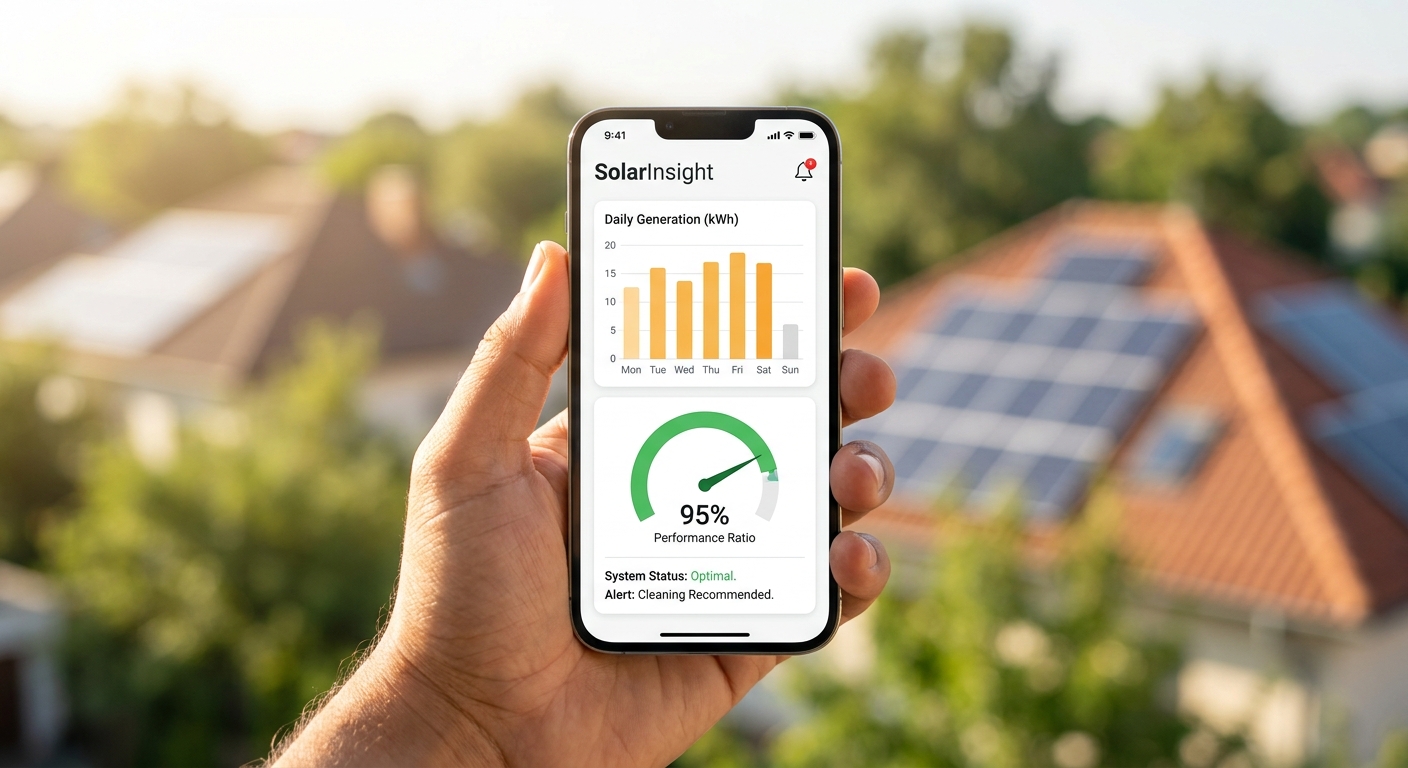
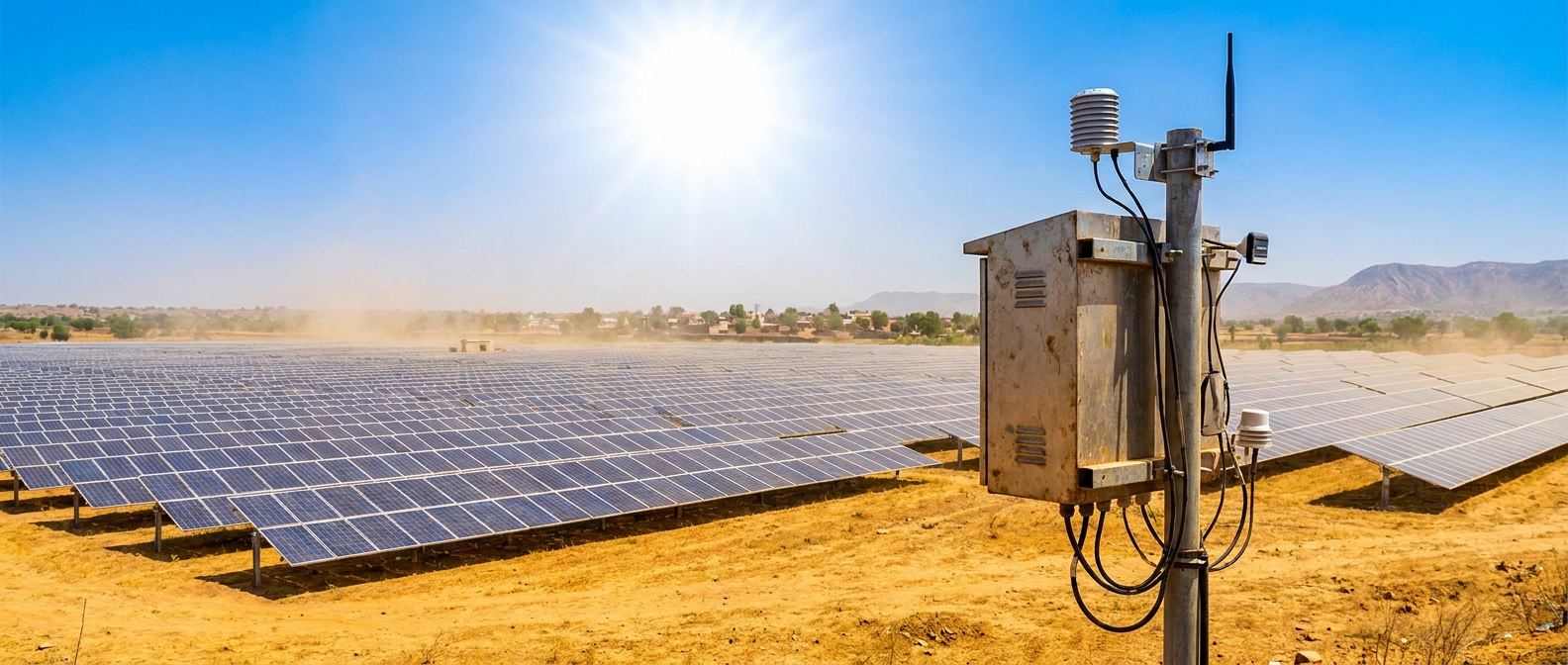
Gujarat’s semi-arid regions, particularly around Kutch, Saurashtra, and parts of North Gujarat, experience significant dust accumulation on solar panels. Solar monitoring systems can detect soiling losses by comparing actual generation against irradiance-adjusted expected output. When soiling losses exceed 3-5%, it is time to schedule a panel cleaning. This data-driven approach to cleaning scheduling reduces water usage and labor costs while maximizing generation.
Monsoon Season Performance Tracking
During the June-September monsoon season, generation naturally drops due to cloud cover. Solar monitoring helps you distinguish between expected weather-related losses and actual system faults during this period. It also helps you document generation data for annual performance reviews and subsidy compliance reporting.
DGVCL and GETCO Grid Compliance
Grid-tied solar systems in Gujarat must comply with DGVCL, UGVCL, MGVCL, and PGVCL net metering regulations. Your solar monitoring system should be capable of generating the generation reports and export data required by your local DISCOM for net metering settlements and annual compliance submissions.
PM-KUSUM and DREBP Scheme Monitoring
Solar projects implemented under PM-KUSUM and DREBP government schemes have specific monitoring and reporting requirements. Heaven Green Energy’s EPC projects include monitoring solutions that are pre-configured to meet these requirements, ensuring smooth subsidy disbursement and scheme compliance for farmers and project developers across Gujarat.
Troubleshooting Solar System Issues Through Monitoring
One of the most powerful benefits of solar monitoring is its ability to identify and diagnose system problems before they cause significant energy losses. Here is how to use monitoring data for effective troubleshooting.
Common Fault Alerts and What They Mean
- Inverter offline: The inverter has stopped communicating. Check power supply, grid connection, and inverter display for error codes.
- Low performance ratio: System is generating significantly less than expected. Investigate soiling, shading, or equipment issues.
- String current imbalance: One or more strings are producing less current than others. Check for shading, soiling, or a faulty panel in the affected string.
- Grid fault: The grid voltage or frequency is outside acceptable limits. The inverter has disconnected for safety. Contact your DISCOM if the issue persists.
- High temperature warning: Inverter or panel temperature is exceeding safe limits. Check ventilation around the inverter and consider shading solutions.
- Communication loss: The monitoring system cannot reach the cloud. Check your Wi-Fi or GSM connection and data logger status.
Identifying Shading, Soiling, and Degradation
Shading typically shows up as a sudden, consistent drop in specific string output at predictable times of day. Soiling causes a gradual, progressive decline in performance ratio over days or weeks. Panel degradation is a slow, long-term decline in output that becomes visible when comparing year-over-year performance data. Solar monitoring makes all three patterns visible and distinguishable.
When to Call Your Solar Maintenance Team
Contact your solar maintenance provider when: your performance ratio drops below 70% without a weather explanation, an inverter fault code persists after a restart, string current imbalance exceeds 10%, or your system has been offline for more than 24 hours. Prompt action minimizes energy losses and prevents minor issues from escalating into costly repairs. Heaven Green Energy provides dedicated solar maintenance services across Gujarat to keep your system performing at its best.
Preventive Maintenance Scheduling
Use your solar monitoring data to schedule preventive maintenance proactively. Schedule panel cleaning when soiling losses exceed 3-5%. Plan inverter inspections annually or when efficiency metrics show a declining trend. Review cable and connection integrity when string current data shows unexplained imbalances. Data-driven maintenance is always more cost-effective than reactive repairs.
How Heaven Green Energy Supports Your Solar Monitoring Needs
At Heaven Green Energy, solar monitoring is not an afterthought, it is a core part of every solar installation we deliver. As one of Gujarat’s leading solar EPC companies with over 10,000 installations across residential, commercial, and industrial segments, we understand that a solar system without monitoring is an investment without visibility.
Monitoring Included in Every EPC Project
Every solar installation by Heaven Green Energy includes a monitoring solution appropriate for the system size and application. For residential rooftop solar systems, this means inverter-integrated monitoring with a mobile app. For commercial and industrial solar projects, we deploy advanced monitoring platforms with multi-string data logging, performance analytics, and DISCOM-compliant reporting.
Remote Monitoring Support
Our technical team can access your system’s monitoring data remotely to diagnose issues, verify performance, and guide you through troubleshooting steps without requiring an on-site visit. This remote support capability is especially valuable for our clients in Surat, Ahmedabad, Junagadh, and across rural Gujarat where on-site response times may be longer.
Integration with Leading Inverter Brands
We work with leading solar inverter brands whose monitoring platforms are proven, reliable, and feature-rich. Our team configures monitoring systems during installation and trains your team on how to use the dashboard and respond to alerts effectively. For more information on the solar equipment brands we work with, see our guide to Solar Brands Gujarat: Top Panel Manufacturers Compared 2026.
Ongoing Solar Maintenance Services
Heaven Green Energy offers comprehensive solar maintenance packages for residential, commercial, and industrial solar systems across Gujarat. Our maintenance services are informed by monitoring data, ensuring that every service visit is targeted, efficient, and effective. From panel cleaning and inverter servicing to cable inspection and performance audits, we keep your system generating at its peak year after year.
Frequently Asked Questions About Solar Monitoring
Is solar monitoring worth the investment?
Absolutely. Solar monitoring pays for itself by catching performance losses that would otherwise go undetected. Even a 5% improvement in annual generation from better maintenance scheduling, enabled by monitoring data, represents significant savings over a 25-year system life. For commercial and industrial solar systems, the ROI on monitoring is even more compelling.
Can I add solar monitoring to an existing solar system?
Yes. If your existing inverter has a communication port (RS485, USB, or Wi-Fi), a data logger can be added to enable monitoring. For older inverters without communication capabilities, a smart meter or third-party monitoring device can be installed at the system’s AC output to track generation. Contact Heaven Green Energy to assess your existing system’s monitoring upgrade options.
What is the best solar monitoring app in India?
The best monitoring app depends on your inverter brand. Huawei FusionSolar, SMA Sunny Portal, Fronius Solar.web, and Growatt ShinePhone are among the most widely used and feature-rich platforms in India. For multi-brand or multi-site monitoring, third-party platforms like Solar-Log or Locus Energy offer unified dashboards. According to the Ministry of New and Renewable Energy (MNRE), digital monitoring and data reporting are increasingly emphasized in India’s solar policy framework.
How does solar monitoring relate to solar panel degradation?
Solar panels degrade at approximately 0.5-0.7% per year under normal conditions, as established by industry standards referenced by organizations like the International Renewable Energy Agency (IRENA). Solar monitoring allows you to track this degradation over time and verify that it stays within the manufacturer’s warranty limits. If degradation exceeds warranted levels, your monitoring data provides the documented evidence needed to make a warranty claim.
Does solar monitoring work during a power outage?
For grid-tied solar systems, the inverter shuts down during a grid outage for safety reasons, so there is no generation to monitor. For hybrid systems with battery storage, monitoring continues to track battery charge/discharge cycles and backup power usage during outages. This is an important consideration for businesses in Gujarat where grid reliability varies by location.
Take Full Control of Your Solar Investment with Monitoring
Solar monitoring is the difference between owning a solar system and truly managing it. From real-time performance tracking and fault detection to subsidy compliance reporting and long-term ROI optimization, a well-configured solar monitoring system is one of the smartest decisions you can make alongside your solar installation. For homeowners and businesses in Gujarat, where solar conditions are excellent but dust, heat, and seasonal weather create real performance challenges, monitoring is not a luxury, it is a necessity.
Whether you are planning a new rooftop solar installation, upgrading an existing system, or managing a large industrial solar project, Heaven Green Energy brings the expertise, technology, and local knowledge to ensure your solar monitoring setup delivers maximum value. Our team has helped thousands of customers across Gujarat track, optimize, and protect their solar investments, and we are ready to help you do the same.
Have questions about solar monitoring for your home or business? Our solar experts are ready to help you choose the right monitoring solution, understand your performance data, and get the most from your solar investment. Call us today at +91 63904 05060 to speak with a solar monitoring specialist and take the first step toward complete visibility and control over your solar system.
This blog post was written using thestacc.com