


When investing in a solar energy system, most property owners focus on panel efficiency and inverter technology. However, the solar structure—the mounting framework that holds your panels in place—is equally critical to your system’s long-term success. A poorly chosen mounting structure can compromise your entire investment, leading to panel damage, reduced efficiency, and costly repairs long before your system reaches its expected 25-year lifespan.
In Gujarat’s challenging climate, where intense heat, monsoon rains, and occasional cyclonic winds test every installation, selecting the right solar structure becomes even more crucial. Whether you’re planning a residential rooftop installation in Surat, a commercial project in Ahmedabad, or an industrial solar park in Junagadh, understanding how to evaluate mounting structures will protect your investment and maximize your solar ROI.
This comprehensive guide walks you through the essential factors for choosing solar mounting structures that deliver durability, safety, and performance for decades. You’ll learn how to compare materials, assess load capacity, verify weather resistance, and identify red flags that could signal future problems.
Understanding Solar Mounting Structures and Their Critical Role
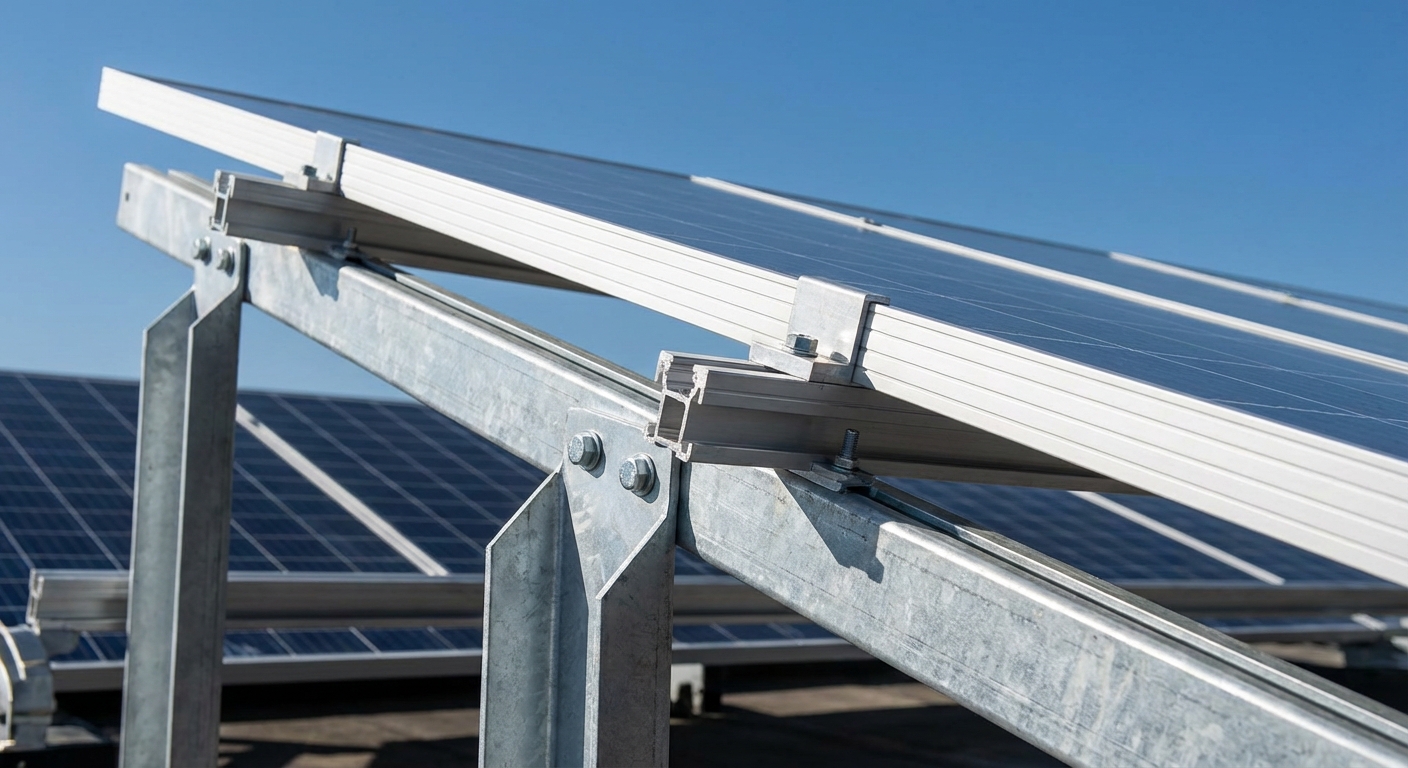
A solar structure, also called a solar mounting system or racking system, is the foundational framework that secures photovoltaic panels to your roof or ground surface. This engineered system consists of rails, clamps, brackets, fasteners, and anchoring components designed to withstand environmental stresses while maintaining optimal panel positioning for maximum energy generation.
The mounting structure serves several critical functions beyond simply holding panels in place. It determines the tilt angle and orientation of your panels, directly impacting energy production efficiency. It distributes the weight of the solar array across your roof or foundation, preventing structural damage. Most importantly, it protects your investment by securing panels against wind uplift, seismic activity, and thermal expansion over 25+ years of continuous outdoor exposure.
In Gujarat’s diverse climate zones, solar structure selection must account for specific regional challenges. Coastal areas like Surat face high humidity and salt-laden air that accelerate corrosion. Industrial zones contend with pollution and chemical exposure. Inland regions experience extreme temperature variations between scorching summers and cooler winters. A structure that performs well in one environment may fail prematurely in another.
The quality of your mounting structure directly impacts your system’s total cost of ownership. While premium structures may cost 10-15% more upfront, they eliminate the need for premature replacement, reduce maintenance expenses, and prevent panel damage that could void warranties. When you consider that solar payback periods typically range from 4-7 years, choosing a structure that lasts the full system lifetime is essential for maximizing returns.
1. Evaluate Material Types: Galvanized Steel vs Aluminum Solar Structure
The material composition of your solar structure fundamentally determines its durability, weight, corrosion resistance, and cost. The two primary materials dominating the Indian solar market are galvanized steel and aluminum, each offering distinct advantages for different applications.
Galvanized Steel Solar Structures
Galvanized steel structures feature a protective zinc coating applied through hot-dip galvanization, creating a barrier against corrosion. This material offers exceptional strength-to-cost ratio, making it the most popular choice for large-scale commercial and industrial installations across Gujarat.
Key advantages of galvanized steel include:
- Superior load-bearing capacity: Steel’s high tensile strength supports heavier panel configurations and withstands greater wind and snow loads
- Cost-effectiveness: Typically 20-30% less expensive than aluminum structures of comparable strength
- Proven longevity: Properly galvanized steel with 80-120 micron coating thickness can last 25+ years in most environments
- Wide availability: Abundant supply chain and local manufacturing reduce lead times and costs
Limitations to consider:
- Weight: Steel structures are significantly heavier, requiring more robust roof support and increasing installation labor
- Corrosion vulnerability: In coastal areas or highly polluted industrial zones, galvanization may degrade faster, requiring thicker coatings or additional protective treatments
- Thermal expansion: Steel expands and contracts more with temperature changes, requiring proper engineering to prevent stress on panels
Aluminum Solar Structure Systems
Aluminum mounting structures offer a lightweight alternative with natural corrosion resistance, making them increasingly popular for residential rooftop installations and projects in challenging environments.
Key advantages of aluminum structures include:
- Exceptional corrosion resistance: Aluminum forms a natural oxide layer that protects against rust, ideal for coastal Gujarat locations
- Lightweight design: Approximately one-third the weight of steel, reducing structural load on roofs and simplifying installation
- Low maintenance: Minimal upkeep required over the system lifetime
- Aesthetic appeal: Clean, modern appearance preferred for visible residential installations
Limitations to consider:
- Higher cost: Premium pricing compared to galvanized steel may impact project economics
- Lower strength-to-weight ratio: Requires more material or thicker profiles for equivalent load capacity
- Thermal conductivity: Higher heat transfer may require careful design to prevent panel hotspots
Making the Material Choice
For most rooftop solar Gujarat projects, galvanized steel offers the best balance of performance and value, particularly for commercial and industrial installations where cost efficiency matters. Choose aluminum structures for residential projects with weight-sensitive roofs, coastal locations with high corrosion risk, or premium installations where aesthetics justify the additional investment.
When working with experienced solar EPC providers, they’ll conduct structural assessments to recommend the optimal material based on your specific roof type, location, and budget constraints.
2. Assess Load-Bearing Capacity and Structural Engineering
A solar structure must safely support multiple load types throughout its operational lifetime. Understanding load-bearing capacity ensures your mounting system won’t compromise your building’s structural integrity or create safety hazards.
Understanding Load Types
Dead load refers to the permanent, static weight of the solar installation itself—panels, mounting structure, wiring, and any attached equipment. A typical residential solar panel weighs 18-22 kg, and when you multiply this across a 5 kW system (approximately 15-17 panels), you’re adding 300-400 kg of permanent load to your roof structure.
Live loads are temporary forces that vary over time, including wind pressure, maintenance personnel walking on the structure, accumulated dust and debris, and in some regions, snow accumulation. In Gujarat, wind loads present the primary live load concern, particularly during monsoon season and cyclonic events.
Dynamic loads include seismic forces from earthquakes and vibrations from nearby machinery or traffic. Gujarat falls in seismic zones II and III, requiring structures to withstand moderate earthquake forces without failure.
Calculating Required Load Capacity
Professional solar structure selection begins with a structural engineering assessment of your roof or foundation. For rooftop installations, engineers evaluate the existing structure’s load-bearing capacity, considering factors like roof age, material type, span distances, and current condition.
Different roof types have varying load capacities:
- RCC (Reinforced Concrete) roofs: Typically support 150-200 kg/m², suitable for most solar installations with proper load distribution
- Metal sheet roofs: Require careful purlin assessment and may need structural reinforcement for larger arrays
- Asbestos or fiber cement roofs: Often have limited load capacity and may require specialized mounting systems that transfer loads to underlying support structures
- Tile roofs: Need penetration-free mounting solutions or careful waterproofing around attachment points
Ground-mounted structures face different engineering requirements, with foundation design based on soil bearing capacity, frost depth, and wind exposure. Proper foundation engineering prevents settling, tilting, or uplift that could damage your solar array.
Engineering Certifications and Documentation
Reputable solar structure manufacturers provide comprehensive engineering documentation, including structural calculations certified by licensed engineers, material test certificates showing tensile strength and coating thickness, and compliance certificates for relevant Indian Standards (IS codes).
Never accept a mounting structure without proper engineering documentation. These documents prove the system is designed to safely support your specific installation and comply with local building codes. They’re also essential for obtaining necessary permits and maintaining insurance coverage.
3. Check Wind and Weather Resistance Ratings
Gujarat’s climate presents significant challenges for solar installations. Understanding how solar structure systems resist wind and weather ensures your investment survives the harshest conditions nature delivers.
Wind Load Ratings and Zone Classifications
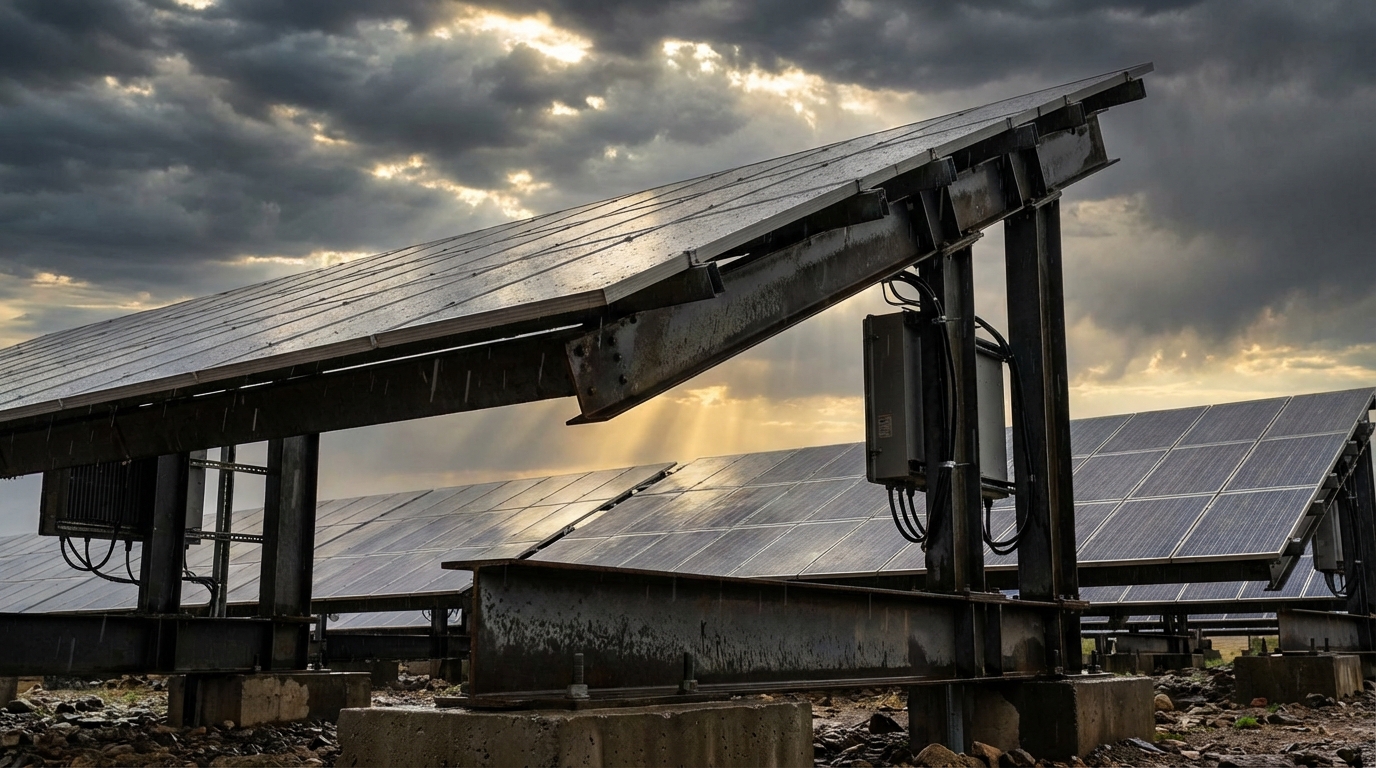
India’s wind zone classification system divides the country into six zones based on maximum expected wind speeds. Most of Gujarat falls in wind zones II and III, with coastal areas experiencing higher wind pressures during cyclonic events. Your solar structure must be rated to withstand the maximum wind speeds for your specific location, typically ranging from 150-180 km/h for most Gujarat installations.
Wind creates two primary forces on solar arrays: uplift pressure that attempts to lift panels off the roof, and lateral pressure that pushes against the panel surface. Proper mounting design accounts for both forces through adequate anchoring and structural bracing.
The tilt angle of your panels significantly impacts wind resistance. Lower tilt angles (10-15 degrees) experience less wind stress than steeper installations (25-30 degrees), though steeper tilts may optimize energy production. Professional solar EPC Gujarat providers balance these competing factors to maximize both performance and safety.
Relevant Indian Standards for Wind Resistance
Your solar structure should comply with IS 875 (Part 3), which specifies wind load calculations for buildings and structures in India. This standard provides the methodology for determining design wind pressure based on location, terrain category, structure height, and panel configuration.
Additionally, structures should meet IS 2062 specifications for structural steel and IS 1161 for steel tubes used in structural applications. These standards ensure material quality and consistency across the supply chain.
Weather Resistance Beyond Wind
Gujarat’s monsoon season brings intense rainfall that tests waterproofing and drainage design. Your solar structure should incorporate proper drainage channels to prevent water accumulation, which adds weight and accelerates corrosion. All roof penetrations require professional waterproofing to prevent leaks that could damage your building.
Extreme heat—with summer temperatures regularly exceeding 40°C, causes thermal expansion in mounting materials. Quality structures include expansion joints and proper fastener spacing to accommodate material movement without creating stress on panels or roof attachments.
UV exposure degrades many materials over time. While metal structures resist UV damage, any plastic components, gaskets, or wire management accessories should be UV-stabilized to prevent brittleness and failure.
Testing Certifications to Verify
Look for structures that have undergone third-party testing for wind resistance, including wind tunnel testing or computer-aided engineering (CAE) analysis validated by physical testing. Reputable manufacturers provide test reports showing their systems’ performance under simulated extreme conditions.
Salt spray testing (per ASTM B117 or equivalent) demonstrates corrosion resistance for coastal installations. Structures intended for use near the Arabian Sea coast should show excellent performance in accelerated corrosion testing.
4. Verify Installation Compatibility with Your Solar System
Even the highest-quality solar structure delivers poor results if it’s incompatible with your specific solar panels, inverter configuration, or installation requirements. Compatibility assessment prevents costly modifications and ensures optimal system performance.
Module Size and Orientation Compatibility
Solar panels come in various sizes, with residential modules typically measuring 1650-2000mm in length and commercial modules sometimes exceeding 2100mm. Your mounting structure’s rail spacing and clamp positions must accommodate your specific panel dimensions without modification.
Modern solar structure systems offer adjustable rail spacing to accommodate different module sizes, providing flexibility if you later upgrade to different panels. However, verify that the structure you’re purchasing is compatible with your chosen panels before installation begins.
Panel orientation, portrait versus landscape mounting, affects structural requirements and aesthetic appearance. Some structures accommodate both orientations, while others are optimized for one configuration. Consider future expansion when making this decision, as maintaining consistent orientation creates a more professional appearance.
Tilt Angle Optimization and Adjustability
For maximum energy production in Gujarat, solar panels should typically be tilted at 15-25 degrees facing south. Your solar structure should provide the optimal tilt angle for your latitude while maintaining adequate clearance for airflow beneath panels, which prevents overheating and efficiency loss.
Some advanced mounting systems offer seasonal tilt adjustment, allowing you to optimize angle for summer versus winter sun positions. While this increases energy production by 5-10%, it requires manual adjustment and may not justify the additional complexity for most installations.
Ground-mounted structures often provide more tilt flexibility than rooftop systems, where roof pitch may constrain your options. Flat roofs offer the most flexibility, allowing you to select the ideal tilt angle for your location.
Inverter Configuration Considerations
Your mounting structure layout affects string configuration and wire routing to inverters. Structures should include integrated wire management channels or clips to secure DC cables safely, preventing damage from wind, UV exposure, or animal interference.
For installations using microinverters or power optimizers, verify that the structure provides adequate space and mounting points for these devices. Some systems include dedicated attachment points for electronics, simplifying installation and maintenance.
Expansion Capability
Many property owners start with a smaller solar installation and expand later as budget allows or energy needs grow. Choose a solar structure system that accommodates future expansion without requiring complete reinstallation. Modular designs with standardized components make expansion straightforward and cost-effective.
When working with professional solar brands in Gujarat, ask about expansion compatibility during initial system design. Planning for growth from the beginning saves money and complexity later.
5. Review Warranty Terms and Manufacturer Reputation
A comprehensive warranty protects your investment and signals manufacturer confidence in their solar structure quality. However, not all warranties offer equal protection, and understanding the fine print prevents unpleasant surprises when you need coverage most.
Standard Warranty Periods and Coverage
Quality solar mounting structures typically carry warranties of 10-25 years, matching or exceeding panel warranties. The warranty should cover structural integrity, corrosion resistance, and material defects, not just manufacturing defects that appear within the first year.
Key warranty elements to verify include:
- Corrosion coverage: Warranty should specifically cover coating degradation and rust formation, particularly for galvanized steel structures
- Structural failure: Coverage for bending, cracking, or failure of structural components under normal operating conditions
- Hardware and fasteners: All bolts, clamps, and connection hardware should be included, as these components often fail first
- Labor coverage: Some premium warranties include labor costs for repairs or replacement, not just parts
Beware of warranties with excessive exclusions. Some manufacturers void coverage for coastal installations, industrial environments, or any installation they deem “improper,” even when following standard industry practices. These limitations significantly reduce warranty value.
Manufacturer Track Record and Market Presence
A warranty is only valuable if the manufacturer remains in business to honor it. Research the solar structure manufacturer’s history, market presence, and financial stability before making your selection.
Established manufacturers with 10+ years of operations and thousands of installations provide greater confidence than new market entrants. Ask for reference projects in your region, particularly installations that have been operating for 5+ years, and contact those customers about their experience with product performance and warranty service.
Local manufacturing or strong local representation in Gujarat ensures faster warranty service and replacement parts availability. International manufacturers without Indian presence may create delays and complications when you need support.
Documentation and Certification Requirements
Maintain complete documentation of your solar structure purchase, including invoices, warranty certificates, installation photos, and engineering reports. Many warranties require professional installation by certified technicians, so keep records of installer credentials and installation dates.
Some manufacturers require periodic inspections or maintenance to maintain warranty coverage. Understand these requirements upfront and factor them into your long-term maintenance planning and costs.
Red Flags in Warranty Terms
Avoid structures with warranties that seem too good to be true, such as lifetime warranties from unknown manufacturers. These often contain so many exclusions and conditions that they provide little practical protection.
Pro-rata warranties that reduce coverage value over time may leave you with minimal compensation when you need it most. A structure that fails after 15 years under a pro-rata warranty might only receive 25% coverage, leaving you to pay most replacement costs.
Warranties requiring you to ship failed components internationally for inspection create impractical barriers to claims. Look for manufacturers with local service centers that can assess and process claims in Gujarat.
6. Identify Red Flags When Choosing Solar Structure Suppliers
The solar structure market includes both reputable manufacturers and suppliers cutting corners to offer unrealistically low prices. Recognizing warning signs protects you from costly mistakes that compromise your entire solar investment.
Lack of Proper Certifications and Test Reports
Any supplier unable or unwilling to provide engineering certifications, material test reports, and compliance documentation should be avoided. These documents prove the structure meets safety and performance standards. Without them, you have no assurance the system will perform as claimed or comply with building codes.
Legitimate manufacturers readily provide Bureau of Indian Standards (BIS) certifications, structural engineering calculations, galvanization thickness reports, and wind load test results. Hesitation or excuses when you request this documentation signals potential quality issues.
Unusually Low Pricing
While competitive pricing is desirable, solar structure costs below market norms often indicate compromised quality. Manufacturers achieve low prices by using thinner materials, inadequate galvanization, substandard fasteners, or poor engineering design.
A structure priced 30-40% below established brands likely cuts critical corners. The savings disappear quickly when the structure corrodes prematurely, fails during storms, or requires early replacement. Quality structures represent 10-15% of total system cost, not the place to compromise for minimal savings.
Poor Coating Quality and Thickness
Galvanization thickness directly determines corrosion resistance and structure lifespan. Quality galvanized steel structures feature 80-120 micron zinc coating, while budget options may apply only 40-60 microns. This difference dramatically affects longevity, particularly in coastal or industrial environments.
Inspect sample components before purchasing. Quality galvanization appears smooth and uniform, without bare spots, rough patches, or flaking. Poor coating shows visible defects, uneven coverage, or areas where base metal shows through.
Request coating thickness test reports using standardized measurement methods. Reputable manufacturers test coating thickness at multiple points and provide certified reports. Suppliers unable to document coating thickness should be avoided.
Inadequate Engineering Documentation
Generic engineering calculations that don’t account for your specific installation conditions indicate poor engineering practices. Your solar structure should include site-specific calculations considering your roof type, local wind zone, panel configuration, and seismic requirements.
Cookie-cutter designs that claim to work everywhere often fail in challenging conditions. Professional suppliers conduct site assessments and provide customized engineering appropriate for your location and building characteristics.
No Track Record or Reference Projects
New suppliers without established track records present higher risk than proven manufacturers. While everyone starts somewhere, your 25-year solar investment isn’t the place to experiment with unproven products.
Ask for reference installations you can visit or contact. Suppliers confident in their products readily provide customer references. Reluctance to share references or claims that all projects are confidential should raise concerns.
Missing or Vague Warranty Terms
Warranties with vague language, excessive exclusions, or unclear claim procedures provide little practical protection. Quality manufacturers offer clear, specific warranty terms with straightforward claim processes.
Verbal warranty promises mean nothing without written documentation. Insist on written warranty certificates that clearly state coverage period, what’s covered, claim procedures, and manufacturer contact information.
Incompatibility with Standard Module Sizes
Proprietary solar structure designs that only work with specific panel brands or unusual configurations limit your flexibility and may create problems during repairs or expansions. Standard mounting systems accommodate all major panel brands and sizes, providing flexibility for future changes.
Structures requiring custom-fabricated components for each installation increase costs and lead times while creating potential supply chain vulnerabilities. Modular systems with standardized components offer better long-term value and reliability.
How Solar Structure Selection Impacts Long-Term Performance
The quality of your solar structure creates ripple effects throughout your system’s operational lifetime, influencing everything from energy production to maintenance costs to overall return on investment.
Connection Between Structure Quality and Solar ROI
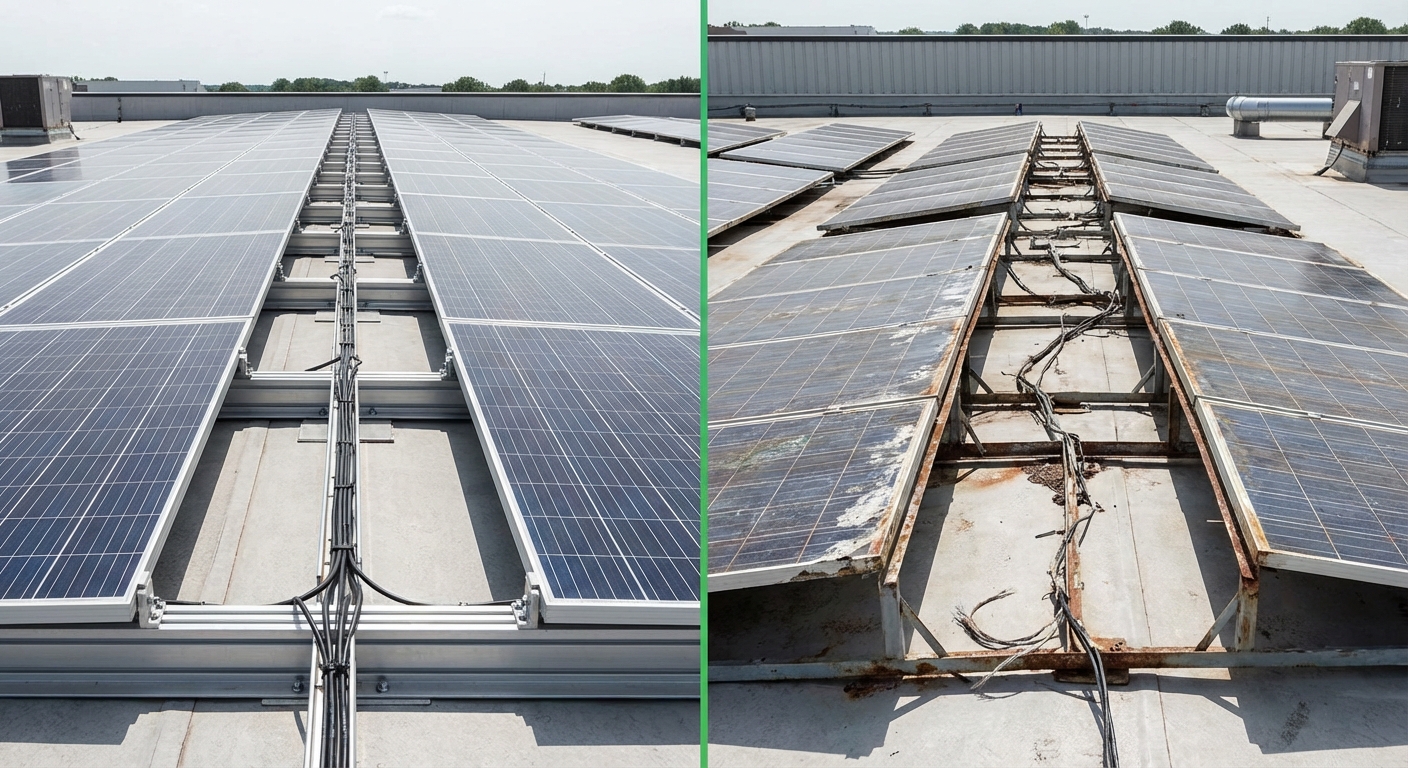
Your solar payback period depends on consistent energy production over many years. A failing structure disrupts this equation in multiple ways. Panels that shift out of optimal alignment produce less energy, directly reducing your returns. Corrosion that spreads to electrical connections creates resistance and power losses. Structural failure requiring emergency repairs adds unexpected costs that extend payback timelines.
Quality structures maintain panel positioning and electrical integrity throughout the system lifetime, ensuring you achieve projected energy production and financial returns. The 10-15% premium for superior mounting systems typically pays for itself within 2-3 years through avoided maintenance and sustained performance.
Maintenance Requirements for Different Structure Types
Well-engineered solar structure systems require minimal maintenance beyond periodic inspections and cleaning. Annual visual inspections check for loose fasteners, corrosion signs, and structural integrity. These inspections take 1-2 hours for residential systems and can be combined with panel cleaning for efficiency.
Poor-quality structures demand frequent attention. Inadequate galvanization requires regular rust treatment and protective coating reapplication. Undersized fasteners loosen repeatedly, requiring constant tightening. Structural deflection from inadequate engineering creates ongoing alignment issues that reduce panel performance.
For industrial solar Gujarat installations spanning thousands of square meters, maintenance cost differences multiply dramatically. A structure requiring quarterly maintenance visits versus annual inspections adds tens of thousands of rupees to lifetime operating costs.
How Poor Structures Lead to Panel Damage
Solar panels are engineered to withstand environmental stresses when properly supported. However, mounting structure failures transfer abnormal stresses to panels, causing damage that voids manufacturer warranties.
Excessive structural deflection creates stress concentrations at panel mounting points, leading to microcracks in solar cells. These cracks may not be immediately visible but progressively reduce power output and can eventually cause complete cell failure.
Corrosion products from failing structures can contaminate panel surfaces and electrical connections, creating hot spots that accelerate degradation. Rust stains on panels are difficult to remove and may permanently reduce light transmission.
Structural collapse during storms obviously destroys panels, but even partial failures that allow panels to shift or collide cause damage that requires costly replacement. Panel warranties typically exclude damage from mounting system failures, leaving you to bear the full replacement cost.
Safety Implications of Substandard Mounting Systems
Beyond financial considerations, solar structure failures create serious safety hazards. Panels dislodged during storms become dangerous projectiles that can injure people and damage property. Structural collapse on occupied buildings risks injury to occupants below.
Electrical hazards increase when corroded structures compromise grounding systems or allow water infiltration into electrical connections. These conditions create shock and fire risks that endanger lives and property.
Professional liability and insurance implications also matter. Structures installed without proper engineering certification may void building insurance or create liability exposure if failures cause injury or damage. This risk is particularly significant for commercial and industrial installations where public safety is paramount.
Real-World Performance Over 25+ Years
Quality solar structure installations in Gujarat have demonstrated excellent performance over decades. Properly engineered systems installed in the early 2000s continue operating with minimal maintenance, supporting panels that still produce 80-85% of original capacity.
Conversely, budget structures often show significant degradation within 5-10 years. Coastal installations with inadequate corrosion protection may require complete structure replacement before panels reach half their expected lifespan. This premature replacement effectively doubles the structure cost while creating installation disruption and disposal challenges.
The total cost of ownership calculation clearly favors quality structures. When you factor in avoided maintenance, prevented panel damage, sustained energy production, and eliminated premature replacement, premium structures deliver superior value despite higher initial costs.
Making the Right Solar Structure Choice for Your Project
Selecting the optimal solar structure for your installation requires balancing multiple factors specific to your location, building characteristics, budget, and long-term goals. This final section provides a practical framework for making an informed decision that protects your investment.
Solar Structure Selection Checklist
Use this comprehensive checklist when evaluating mounting structure options:
Material and Construction:
- Material type appropriate for your environment (galvanized steel vs aluminum)
- Galvanization thickness of 80-120 microns for steel structures
- Corrosion-resistant fasteners (stainless steel or galvanized)
- Quality of welds and connections on sample components
- UV-stabilized components for any plastic parts
Engineering and Compliance:
- Site-specific structural engineering calculations
- Wind load rating appropriate for your location
- Compliance with IS 875 (Part 3) and other relevant standards
- Licensed engineer certification of structural design
- Building code compliance for your municipality
Compatibility and Performance:
- Compatibility with your specific panel dimensions and weight
- Appropriate tilt angle for Gujarat latitude (15-25 degrees)
- Adequate clearance for airflow and cooling
- Wire management provisions for safe cable routing
- Expansion capability for future system growth
Warranty and Support:
- Minimum 10-year warranty covering corrosion and structural integrity
- Clear warranty terms without excessive exclusions
- Manufacturer with established track record and local presence
- Reference projects you can verify
- Responsive customer support and service network
Installation and Maintenance:
- Professional installation by certified technicians
- Complete installation documentation and photos
- Clear maintenance requirements and schedule
- Availability of replacement parts and components
- Reasonable total cost of ownership over 25 years
When to Consult Professional Solar EPC Providers
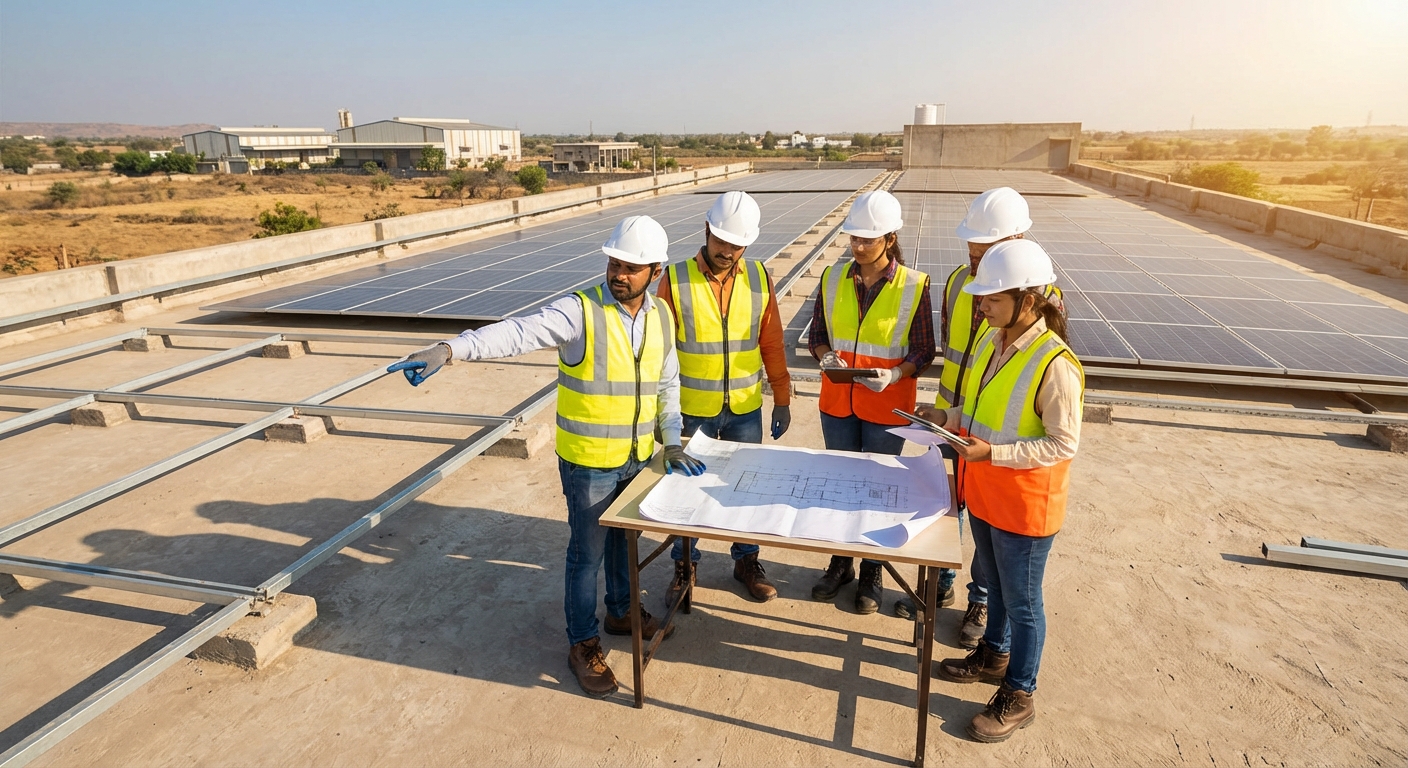
While this guide provides comprehensive information for evaluating solar structure options, most property owners benefit from professional guidance during the selection and installation process. Experienced solar EPC Gujarat providers bring valuable expertise that prevents costly mistakes and optimizes system performance.
Professional EPC companies conduct thorough site assessments, evaluating your roof structure, local environmental conditions, and specific requirements. They have relationships with reputable structure manufacturers and can source quality components at competitive prices. Their engineering teams ensure proper design, permitting, and installation that complies with all applicable codes and standards.
For commercial and industrial projects, professional EPC services are essential. These complex installations require sophisticated engineering, coordination with multiple stakeholders, and expertise in navigating regulatory requirements. The risk of errors that compromise safety or performance is too high for amateur approaches.
Integrated System Design Approach
The most successful solar installations treat the solar structure as an integral component of a complete system, not an afterthought or commodity purchase. This integrated approach considers how structure selection affects panel performance, inverter configuration, electrical design, and long-term maintenance.
When panels, inverters, and mounting structures are selected as a coordinated system, compatibility issues disappear and performance optimization becomes straightforward. This holistic design approach typically delivers 5-10% better energy production than installations where components are selected independently without considering system interactions.
Heaven Green Energy’s Approach to Solar Structure Selection
At Heaven Green Energy, we understand that the solar structure foundation determines your system’s long-term success. Our engineering team conducts comprehensive site assessments for every project, evaluating structural capacity, environmental conditions, and specific requirements to recommend optimal mounting solutions.
We partner with established structure manufacturers who meet our stringent quality standards for materials, engineering, and warranty coverage. Our procurement relationships ensure you receive quality components at competitive prices, while our experienced installation teams guarantee proper mounting that protects your investment for decades.
Whether you’re planning a residential rooftop installation, a commercial project, or a large-scale industrial solar park, our turnkey EPC approach handles every aspect of structure selection, engineering, permitting, and installation. We take responsibility for the complete system, ensuring all components work together seamlessly to deliver maximum performance and reliability.
Our track record of 10,000+ successful installations across Gujarat demonstrates our commitment to quality and customer satisfaction. We don’t cut corners on critical components like mounting structures, because we know that foundation determines whether your solar investment delivers promised returns over its full 25+ year lifespan.
Take the Next Step Toward a Reliable Solar Installation
Choosing the right solar structure protects your solar investment and ensures decades of reliable, efficient energy production. Don’t compromise on this critical foundation by selecting structures based solely on price or availability. The modest additional investment in quality mounting systems pays dividends through avoided maintenance, prevented damage, and sustained performance that maximizes your solar ROI.
If you’re planning a solar installation in Gujarat and want expert guidance on structure selection and complete system design, Heaven Green Energy’s experienced team is ready to help. We’ll assess your specific requirements, recommend optimal solutions, and deliver a turnkey installation that performs reliably for decades.
Have questions about solar structure selection for your project? Contact our team at +91 63904 05060 for a professional consultation and site assessment. Let us help you build a solar installation on a foundation of quality and reliability that delivers maximum returns for 25+ years.
This blog post was written using thestacc.com