


Planning a solar installation is one of the smartest investments you can make in 2026, but without proper financial preparation, even the best solar project can become a source of stress rather than savings. Whether you’re a homeowner in Gujarat looking to reduce electricity bills or a business owner seeking to cut operational costs, understanding how to create and manage your solar budget is the foundation of a successful solar energy project.
The solar industry has matured significantly, and with it, the financial landscape has become more accessible and transparent. However, many customers still struggle with unexpected costs, unclear payment structures, and confusion about financing options. This comprehensive guide will walk you through every aspect of solar budget planning, from understanding core costs to identifying hidden expenses, choosing the right payment structure, and leveraging financing options that work for your situation.
At Heaven Green Energy, we’ve completed over 10,000 installations across Gujarat, and we’ve seen firsthand how proper budget planning makes the difference between a smooth, satisfying solar journey and a challenging one. Let’s dive into how you can plan your solar budget effectively and finance your solar project without breaking the bank.

Understanding Solar Budget Planning in 2026
Solar budget planning has evolved considerably in 2026. The cost of solar technology has decreased by approximately 15-20% over the past three years, making solar energy more accessible than ever before. However, this doesn’t mean you should approach your solar investment casually. A well-planned solar budget accounts for not just the equipment and installation, but also the long-term financial benefits and potential challenges.
In Gujarat, where solar irradiation levels are among the highest in India, the return on investment for solar projects is particularly attractive. The state’s progressive solar policies, combined with central government schemes like PM-KUSUM, create a favorable environment for solar adoption. However, to maximize these benefits, you need a realistic financial plan that considers your specific energy needs, property characteristics, and financial capacity.
Proper solar budget planning serves multiple purposes. First, it helps you avoid financial strain by spreading costs appropriately and identifying all expenses upfront. Second, it enables you to make informed decisions about system size, component quality, and financing options. Third, it provides a clear framework for evaluating quotes from different solar EPC companies, ensuring you’re comparing apples to apples rather than being swayed by misleadingly low initial quotes that hide costs elsewhere.
The typical solar budget for residential installations in Gujarat ranges from ₹45,000 to ₹60,000 per kilowatt installed capacity, while commercial and industrial projects benefit from economies of scale, bringing costs down to ₹40,000 to ₹50,000 per kilowatt for larger systems. These figures include all major components and installation, but as we’ll explore, several additional factors can influence your final investment.
1. Breaking Down Your Solar Budget: Core Cost Components
Understanding where your money goes is the first step in effective solar budget planning. A typical solar installation comprises several distinct cost categories, each representing a specific portion of your total investment. Let’s break down these core components so you can evaluate quotes intelligently and identify where you might have flexibility in your solar budget.
Solar Panels and Modules (40-45% of total budget): This is typically your largest single expense. Solar panels are the heart of your system, converting sunlight into electricity. In 2026, you’ll find options ranging from polycrystalline panels (more budget-friendly) to monocrystalline panels (higher efficiency, premium pricing) and advanced technologies like bifacial or half-cut cell modules. The brand you choose significantly impacts both upfront costs and long-term performance. Quality panels from established manufacturers may cost 10-15% more initially but often deliver better warranties and degradation rates.
Inverters (10-15% of total budget): Inverters convert the direct current (DC) electricity generated by your panels into alternating current (AC) electricity used by your appliances. You’ll choose between string inverters (cost-effective for most installations), microinverters (higher cost but better for shaded or complex roof layouts), or hybrid inverters (premium option that enables battery integration). Your solar EPC provider can help you select the right inverter technology based on your specific requirements and budget constraints.
Mounting Structures and Installation Hardware (10-12% of budget): These are the aluminum or galvanized steel frameworks that secure your panels to your roof or ground. The structure must withstand Gujarat’s monsoon winds and weather conditions for 25+ years, so quality matters. Ground-mounted systems typically require more substantial structures than rooftop installations, affecting this portion of your budget.
Labor and Installation Costs (15-20% of budget): Professional installation is not an area to cut corners. This includes site survey, system design, physical installation, electrical work, and commissioning. Experienced installers ensure your system is optimized for maximum generation and complies with all safety standards. In Gujarat’s competitive market, labor costs are relatively standardized, but they can vary based on installation complexity, roof accessibility, and project location.
Electrical Components, Wiring, and Accessories (5-8% of budget): This category includes DC and AC cables, junction boxes, earthing materials, lightning arrestors, circuit breakers, and monitoring systems. While these seem like minor items, using substandard electrical components can compromise system safety and performance. Quality wiring appropriate for outdoor solar applications is essential for long-term reliability.
Permits, Inspections, and Documentation (2-5% of budget): Depending on your location and system size, you’ll need various approvals from local authorities and your electricity distribution company. This includes net metering applications, structural safety certificates for rooftop installations, and electrical safety inspections. Your solar EPC company typically handles this paperwork, but the associated fees should be included in your solar budget.
2. Identifying Hidden Costs in Your Solar Budget
One of the biggest challenges in solar budget planning is accounting for costs that aren’t immediately obvious in standard quotations. These hidden expenses can add 10-20% to your initial budget estimate if not properly anticipated. Being aware of these potential costs helps you create a more accurate solar budget and avoid unpleasant surprises mid-project.
Roof Reinforcement or Structural Modifications: Not all roofs are immediately ready for solar installation. Older buildings, roofs with asbestos sheets, or structures not designed to bear additional load may require reinforcement. A structural engineer’s assessment, which should be part of your initial site survey, will identify if your roof needs strengthening. This can add ₹15,000 to ₹50,000 or more to your project cost, depending on the extent of work required.
Electrical Panel Upgrades and Grid Connection Fees: Your existing electrical panel may need upgrading to accommodate the solar system, especially for larger installations. Additionally, utility companies often charge fees for net metering setup and grid interconnection. In Gujarat, these fees vary by distribution company (DGVCL, MGVCL, PGVCL, etc.) but typically range from ₹5,000 to ₹20,000 depending on system capacity.
Site Preparation and Civil Work: Ground-mounted systems may require land leveling, foundation work, or fencing. Even rooftop installations sometimes need walkway creation for maintenance access or waterproofing repairs before installation. Budget an additional 5-10% for site preparation if your property requires significant civil work.
Transportation and Logistics Costs: If your installation site is in a remote area or has difficult access, transportation costs for equipment and materials can increase. Multi-story buildings without elevator access or sites requiring special equipment for material handling can add to labor and logistics expenses.
Insurance and Extended Warranties: While most solar panels come with 25-year performance warranties and inverters with 5-10 year warranties, you might want additional coverage. Comprehensive insurance protecting against theft, natural disasters, and accidental damage typically costs 0.5-1% of system value annually. Extended warranties for inverters or other components are optional but worth considering in your solar budget.
Post-Installation Monitoring Systems: Advanced monitoring systems that provide real-time performance data, alerts, and analytics may not be included in basic packages. While basic monitoring is usually standard, sophisticated systems with mobile apps and detailed analytics might cost an additional ₹5,000 to ₹15,000 but provide valuable insights into your system’s performance.
3. Choosing Your Payment Structure: Upfront vs. Phased Payments
How you structure your payments can significantly impact your cash flow and project experience. Most solar EPC companies in Gujarat offer flexible payment terms, and understanding the advantages of each approach helps you align your solar budget with your financial situation.
Full Upfront Payment: Paying the entire amount before or at project commencement often earns you a discount of 3-5% from solar installers. This approach works well if you have readily available capital and want to minimize total project cost. It also simplifies the transaction and may speed up project completion since the installer has full payment security. However, it does require significant liquid capital and provides less leverage if project milestones aren’t met as expected.
Phased Payment Schedules: Most solar projects in India follow a milestone-based payment structure that protects both customer and installer. This is the most common approach and offers a balanced risk profile. A typical phased payment structure for solar installations includes:
- Advance Payment (20-30%): Paid upon signing the contract to secure equipment and initiate project planning
- Pre-Installation Payment (30-40%): Paid when equipment arrives at site and installation is ready to begin
- Post-Installation Payment (20-30%): Paid after physical installation is complete and system is operational
- Final Payment (10-20%): Paid after successful commissioning, testing, and net metering approval
This structure ensures that you only pay as the project progresses, providing natural checkpoints to verify quality and progress. It’s particularly recommended for larger commercial and industrial projects where the investment is substantial. When planning your solar budget, ensure you have funds available for each milestone to avoid project delays.
How Payment Structure Affects Project Timeline: Your payment schedule directly influences project speed. Delayed payments can halt progress, especially at the equipment procurement stage. Conversely, having funds ready at each milestone encourages timely completion. Discuss realistic timelines with your solar EPC provider and align your payment schedule with achievable milestones.
Negotiating Favorable Payment Terms: Don’t hesitate to discuss payment terms that work for your financial situation. Reputable companies like Heaven Green Energy understand that different customers have different cash flow patterns and can often accommodate reasonable requests. The key is transparent communication about your needs and constraints during the quotation stage.
4. Solar Financing Options to Fit Your Solar Budget
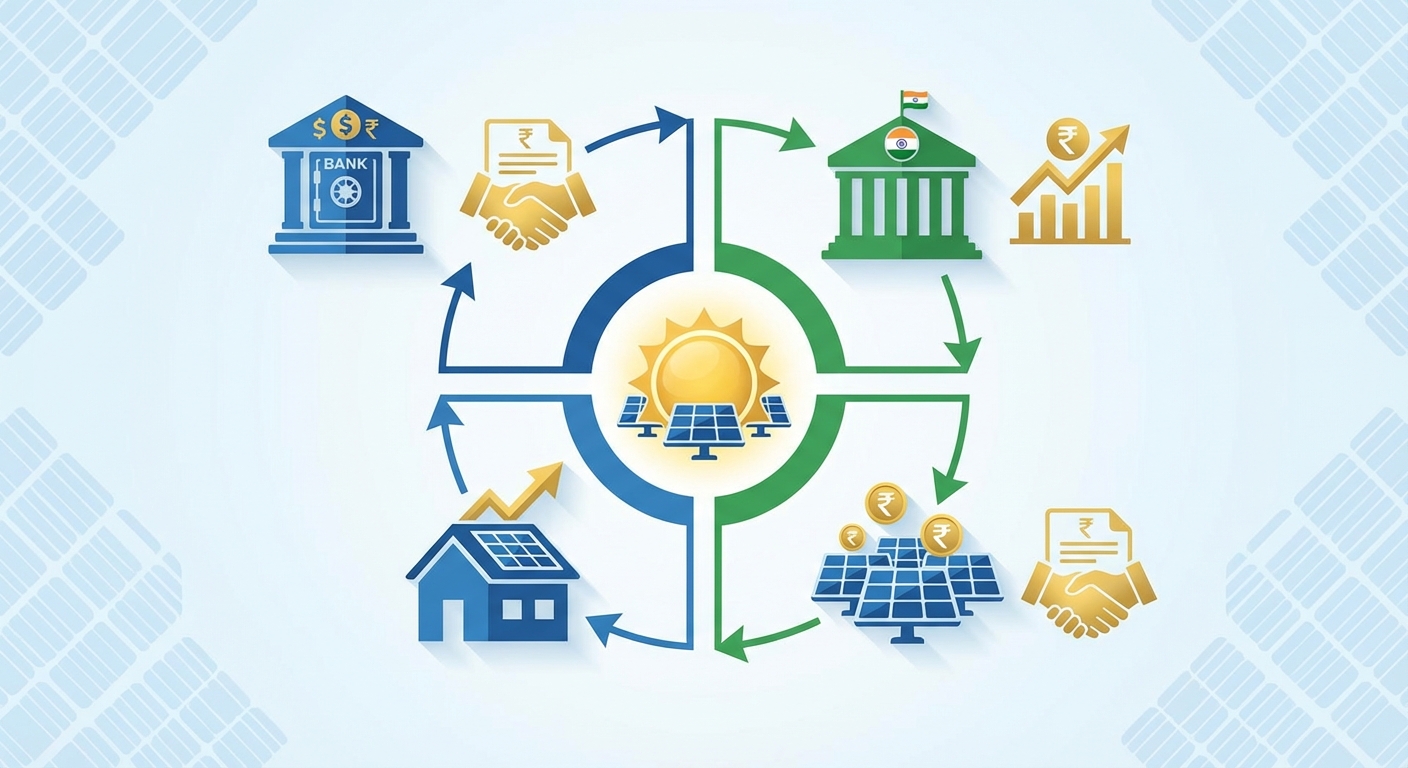
One of the most significant developments in solar adoption has been the expansion of financing options. You no longer need the full amount in hand to go solar. Multiple financing pathways exist to make solar energy accessible regardless of your immediate capital availability, allowing you to structure your solar budget around your financial capacity.
Bank Loans and Green Energy Financing Programs: Most major banks in India now offer dedicated solar loans with attractive interest rates, typically ranging from 9-12% annually. These loans often come with tenures of 5-10 years, allowing you to spread the cost while immediately benefiting from reduced electricity bills. Banks like SBI, HDFC, ICICI, and regional banks in Gujarat offer specialized green energy loans with minimal documentation for creditworthy borrowers. The key advantage is that your monthly loan payment is often less than your electricity bill savings, making solar cash-flow positive from day one.
Government Subsidies and PM-KUSUM Scheme Benefits: The central government continues to support solar adoption through various subsidy programs. For residential rooftop solar installations up to 3 kW, you can receive a 40% subsidy on the benchmark cost, and for systems between 3-10 kW, you get 40% subsidy on the first 3 kW and 20% on the remaining capacity. This can reduce your effective solar budget by ₹15,000 to ₹50,000 or more. The PM-KUSUM scheme offers additional benefits for farmers and agricultural applications. Your solar installer should help you navigate the subsidy application process and factor these savings into your budget planning.
Solar Leasing and Power Purchase Agreements (PPAs): For commercial and industrial customers, leasing arrangements or PPAs offer a zero-upfront-cost option. Under these models, a third-party investor installs and owns the solar system on your property, and you simply purchase the electricity generated at a predetermined rate (typically 10-20% below grid rates). While you don’t own the system, you immediately reduce energy costs without capital investment. This approach works particularly well for businesses that prefer to preserve capital for core operations.
Working Capital Allocation for Commercial Projects: Businesses often fund solar installations through working capital allocation, treating it as an operational efficiency investment. Given that solar systems typically deliver 15-20% annual returns through electricity savings, this often represents one of the best uses of working capital. When planning your commercial solar budget, consider the opportunity cost of capital and compare it against the guaranteed returns from solar energy generation.
Tax Benefits and Depreciation Advantages: Commercial and industrial solar installations qualify for accelerated depreciation benefits under Indian tax law. Businesses can claim up to 40% depreciation in the first year, providing significant tax savings that improve the effective ROI of your solar investment. Additionally, the income generated from solar power is often exempt from certain taxes. Consult with your tax advisor to understand how these benefits apply to your specific situation and factor them into your solar budget calculations.
Calculating True Cost After Subsidies and Incentives: Your effective solar budget is not just the quoted price minus subsidies. It should account for tax benefits, financing costs, and the time value of money. A ₹3 lakh system with 40% subsidy, 40% first-year depreciation, and financed at 10% interest has a very different effective cost than the sticker price suggests. Work with your solar EPC company to understand your true net investment after all financial benefits.
5. Creating a Realistic Solar Budget: Step-by-Step Process
Now that you understand the cost components, hidden expenses, payment structures, and financing options, let’s walk through the practical process of creating your solar budget. This systematic approach ensures you don’t miss critical elements and helps you make informed decisions at every stage.
Step 1: Assess Your Energy Needs and System Size Requirements: Start by analyzing your electricity consumption patterns. Review your electricity bills for the past 12 months to understand your average monthly consumption in kilowatt-hours (kWh). For residential installations, a 1 kW system typically generates 4-5 units per day in Gujarat’s excellent solar conditions. For commercial installations, consider your daytime consumption pattern since solar generates during daylight hours. Your system size directly determines your budget, so accurate sizing is crucial. A 3 kW residential system might cost ₹1.5-1.8 lakhs, while a 100 kW commercial system could range from ₹40-50 lakhs.
Step 2: Get Multiple Quotes from Reputable Solar EPC Companies: Never rely on a single quote. Obtain detailed proposals from at least three established solar installers in Gujarat. Ensure each quote breaks down costs by component (panels, inverters, structure, installation, etc.) so you can compare meaningfully. Look beyond just the bottom-line price and evaluate the quality of components, warranty terms, company track record, and post-installation support. Companies like Heaven Green Energy provide transparent, itemized quotations that help you understand exactly what you’re paying for.
Step 3: Factor in Location-Specific Costs: Gujarat’s diverse geography means installation costs can vary. Urban areas like Ahmedabad and Surat typically have more competitive pricing due to higher installer density and easier logistics. Rural or remote locations might incur additional transportation and accommodation costs for installation teams. Coastal areas may require corrosion-resistant materials that cost slightly more. Factor these location-specific considerations into your solar budget planning.
Step 4: Include Contingency Buffer (10-15%): Even with thorough planning, unexpected expenses can arise. A roof might need minor repairs, additional electrical work might be necessary, or you might decide to upgrade a component after seeing the initial installation. Including a 10-15% contingency buffer in your budget provides flexibility to handle these situations without financial stress. This buffer doesn’t mean you’ll spend it, but having it available prevents project delays or compromises on quality if unexpected needs arise.
Step 5: Map Out Cash Flow and Payment Timeline: Create a month-by-month cash flow projection showing when payments are due. If you’re financing, include loan disbursement schedules. If you’re using working capital, ensure the funds won’t be needed for other business operations during the installation period. For phased payments, align your payment schedule with realistic project milestones. A typical residential installation takes 2-4 weeks from start to commissioning, while commercial projects might take 1-3 months depending on size and complexity.
Step 6: Account for Maintenance and Operational Costs: While solar systems require minimal maintenance, you should budget for periodic cleaning, annual inspections, and eventual inverter replacement (typically after 10-12 years). Annual maintenance costs are usually 0.5-1% of system value. Factor these ongoing costs into your long-term financial planning to get a complete picture of your solar investment. Understanding the full lifecycle cost helps you calculate accurate solar payback periods and return on investment.
Solar Budget Planning by Project Type
Different types of solar installations have distinct budget considerations. Understanding the financial dynamics of your specific project type helps you create a more accurate and realistic solar budget.
Residential Solar Budget Planning
Homeowners typically install systems ranging from 1 kW to 10 kW, with 3-5 kW being the most common size for average households. The cost per kilowatt for residential systems in Gujarat currently ranges from ₹45,000 to ₹60,000 fully installed. A typical 3 kW system would therefore cost ₹1.35 to ₹1.8 lakhs before subsidies. After applying the 40% central government subsidy, your effective cost drops to approximately ₹80,000 to ₹1.1 lakhs.
Residential solar budgets should prioritize quality over absolute lowest cost. Your home solar system will operate for 25+ years, and choosing reliable solar brands ensures consistent performance and hassle-free operation. Most homeowners finance residential solar through a combination of savings and solar loans, with monthly loan payments typically lower than the electricity bill savings, making it immediately cash-flow positive.
Key residential budget considerations include roof condition (may need repairs before installation), aesthetic preferences (some homeowners prefer premium all-black panels that cost 5-10% more), and whether to include battery backup (adds ₹80,000-1.5 lakhs depending on capacity). Plan your residential solar budget with a 5-7 year payback period in mind, after which you enjoy essentially free electricity for the remaining system life.
Commercial and Industrial Solar Budget Planning
Commercial and industrial installations benefit significantly from economies of scale. Systems ranging from 10 kW to several megawatts see per-kilowatt costs drop to ₹40,000-50,000 for turnkey installations. A 100 kW commercial rooftop system might cost ₹40-50 lakhs, while a 1 MW ground-mounted solar park could range from ₹4-5 crores.
For businesses, solar budget planning should focus on return on investment and payback period. Industrial consumers paying ₹7-10 per unit for electricity can achieve payback periods of 3-5 years, making solar one of the most attractive capital investments available. Commercial solar budgets should account for potential production losses during installation (though most rooftop installations don’t disrupt operations), ongoing monitoring systems for performance tracking, and the opportunity cost of capital.
Many businesses structure their solar budget to be cash-flow neutral or positive from day one by using solar loans or PPAs. The electricity bill savings immediately offset the financing costs, and once the loan is repaid, the savings flow directly to the bottom line. For industrial facilities with high daytime power consumption, solar can reduce operational costs by 30-50%, providing a substantial competitive advantage.
6. Cost-Saving Strategies for Your Solar Budget

While solar is already a cost-effective investment, several strategies can help you optimize your solar budget without compromising on quality or performance. These approaches help you get the best value for your investment.
Choosing the Right System Size: Bigger isn’t always better. Oversizing your system means higher upfront costs and potentially wasted generation capacity if you can’t use or sell the excess power. Right-sizing your system based on actual consumption patterns ensures you invest appropriately. For net metering installations, sizing your system to match your annual consumption (not peak consumption) typically provides the best financial return.
Selecting Cost-Effective Yet Reliable Solar Brands: You don’t necessarily need the most expensive premium brands to get excellent performance. Tier-1 manufacturers offer proven reliability at reasonable prices. The key is avoiding unknown or unproven brands that might save 10-15% upfront but risk poor performance or warranty issues. Your solar EPC provider can recommend brands that offer the best value proposition for your budget. Heaven Green Energy works with established manufacturers that balance cost-effectiveness with proven track records.
Timing Your Installation for Optimal Pricing: Solar equipment prices fluctuate based on global supply and demand. Additionally, installers may offer better rates during slower seasons (typically monsoon months) when their installation teams have more availability. However, don’t delay a good solar investment just to time the market perfectly. The cost of waiting (continued high electricity bills) often exceeds any minor price advantages from timing.
Bundling Services with Turnkey EPC Providers: Working with a comprehensive solar EPC company that handles everything from design to commissioning often costs less than coordinating multiple vendors yourself. Turnkey providers leverage their supply chain relationships, have established installation processes, and take single-point responsibility for the entire project. This integrated approach typically delivers better value than trying to source components and services separately.
Leveraging Government Schemes and Subsidies: Ensure you’re taking full advantage of available subsidies and incentives. The residential rooftop solar subsidy can reduce your effective cost by 20-40%. The PM-KUSUM scheme offers benefits for agricultural applications. State-level incentives in Gujarat may provide additional advantages. Your solar installer should proactively help you access these programs and factor them into your solar budget planning.
Group Buying or Community Solar Options: If you’re part of a housing society or business park, consider coordinating installations with neighbors. Group purchases can sometimes secure volume discounts on equipment and installation. Community solar projects can also share certain fixed costs like grid connection fees and engineering expenses, reducing per-unit costs for all participants.
Avoiding Common Budget Mistakes: Don’t fall for unrealistically low quotes that hide costs or use substandard components. Don’t skip proper site assessment to save on engineering costs. Don’t choose the cheapest inverter when a slightly better model would significantly improve system reliability. Don’t ignore maintenance costs in your long-term planning. These common mistakes often cost more in the long run than the initial savings they provide.
Solar Budget Template and Financial Planning Worksheet

To help you organize your solar budget planning, here’s a comprehensive framework covering all essential categories. Use this template to track costs, compare quotes, and ensure you’ve accounted for all expenses in your solar budget.
Essential Budget Categories to Track:
- Solar panels/modules (brand, wattage, quantity, cost per watt)
- Inverter (type, capacity, brand, warranty period)
- Mounting structure (material, design, wind load rating)
- Electrical components (cables, connectors, junction boxes, earthing)
- Installation labor (site survey, installation, commissioning)
- Permits and approvals (net metering, structural, electrical)
- Grid connection fees (utility charges, meter costs)
- Monitoring system (basic or advanced, mobile app access)
- Contingency buffer (10-15% of total)
- Financing costs (interest, processing fees if applicable)
- Insurance (optional but recommended)
- Annual maintenance (cleaning, inspections)
Sample Budget Breakdown for Different System Sizes:
For a 3 kW Residential System (typical home installation):
- Total Cost: ₹1.5-1.8 lakhs
- Solar Panels: ₹60,000-75,000 (40-42%)
- Inverter: ₹18,000-25,000 (12-14%)
- Structure & Hardware: ₹15,000-20,000 (10-11%)
- Installation Labor: ₹25,000-35,000 (17-19%)
- Electrical Components: ₹10,000-15,000 (7-8%)
- Permits & Documentation: ₹5,000-8,000 (3-4%)
- Monitoring System: ₹5,000-8,000 (3-4%)
- Contingency: ₹12,000-18,000 (8-10%)
- Less: Government Subsidy: -₹54,000-72,000 (40% on benchmark cost)
- Net Investment: ₹96,000-1.08 lakhs
For a 50 kW Commercial System (small business/factory):
- Total Cost: ₹20-25 lakhs
- Cost per kW: ₹40,000-50,000
- Annual electricity savings: ₹4-6 lakhs (assuming ₹7-8 per unit)
- Payback period: 3.5-5 years
- 25-year savings: ₹1-1.5 crores (after accounting for all costs)
Cash Flow Projection Template: Create a month-by-month projection showing when payments are due, when subsidies will be received, when financing disbursements occur, and when electricity savings begin. This helps you manage working capital and ensures you have funds available when needed.
ROI Calculation Framework: Calculate your return on investment by comparing total lifetime electricity savings against total investment (including financing costs and maintenance). Factor in electricity rate escalation (typically 5-7% annually) to get realistic long-term projections. Most solar installations in Gujarat deliver 15-20% annual returns, significantly outperforming most traditional investments.
Budget Planning Checklist:
- ✓ Analyzed 12 months of electricity bills to determine system size
- ✓ Obtained at least 3 detailed quotes from reputable installers
- ✓ Verified component brands and warranty terms
- ✓ Confirmed subsidy eligibility and application process
- ✓ Explored financing options and compared interest rates
- ✓ Accounted for hidden costs (roof work, electrical upgrades, etc.)
- ✓ Included 10-15% contingency buffer
- ✓ Mapped payment schedule to project milestones
- ✓ Calculated payback period and long-term ROI
- ✓ Budgeted for annual maintenance and eventual inverter replacement
- ✓ Reviewed contract terms and warranty coverage
- ✓ Confirmed installer credentials and past project references
Working with Solar EPC Companies: Budget Transparency
The relationship with your solar EPC provider significantly impacts your budget experience. Transparent, detailed quotations and clear communication about costs are hallmarks of reputable solar companies. Understanding what to expect and what questions to ask helps you evaluate providers and ensure your solar budget is based on accurate, complete information.
What to Expect in a Detailed Solar Quotation: A comprehensive quote should itemize every cost component, not just provide a lump-sum figure. Look for separate line items for panels (with brand, model, and wattage specified), inverters (with type and capacity), structure, installation labor, electrical materials, permits, and any additional services. The quote should clearly state what’s included and what’s not, specify warranty terms for each component, outline the payment schedule, and provide a realistic timeline from contract signing to commissioning.
Red Flags in Solar Pricing and Proposals: Be cautious of quotes that are significantly lower than others without clear explanation. Extremely low prices often indicate inferior components, hidden costs that will emerge later, or inexperienced installers who’ve underestimated the work required. Other warning signs include vague component specifications (“premium panels” without naming the brand), no mention of warranties, unclear payment terms, or pressure tactics to sign immediately without time for due diligence.
Questions to Ask Your Solar EPC Provider About Costs: Don’t hesitate to ask detailed questions about your solar budget. Important questions include: What specific brands and models are included? What warranties come with each component? Are permits and approvals included in the quoted price? What happens if my roof needs repairs or reinforcement? Is net metering application included? What post-installation support do you provide? Are there any potential additional costs I should be aware of? Can you provide references from similar projects? How do you handle warranty claims if components fail?
Understanding Warranty and Maintenance Costs: Clarify what’s covered under warranty and what isn’t. Solar panels typically come with 25-year performance warranties (guaranteeing at least 80% output after 25 years) and 10-12 year product warranties. Inverters usually have 5-10 year warranties, with extended warranties available for purchase. Understand whether installation workmanship is warranted and for how long. Ask about maintenance requirements and costs. Some companies offer annual maintenance contracts that include cleaning, inspections, and performance monitoring.
How Heaven Green Energy Ensures Transparent Pricing: At Heaven Green Energy, we believe transparent pricing builds trust and leads to better customer relationships. Our quotations provide complete breakdowns of all costs, specify exact component brands and models, clearly outline what’s included in our turnkey service, and explain available financing and subsidy options. We help customers understand their complete solar budget picture, including long-term maintenance considerations and realistic ROI projections. With over 10,000 installations across Gujarat, we’ve refined our processes to eliminate surprises and deliver projects on budget and on schedule.
Frequently Asked Questions About Solar Budget Planning
What is the average solar budget for a home in Gujarat?
The average residential solar installation in Gujarat ranges from ₹1.35 lakhs to ₹3 lakhs for typical 3-5 kW systems before subsidies. After applying the 40% central government subsidy available for residential rooftop solar, the effective cost drops to approximately ₹80,000 to ₹1.8 lakhs. The exact cost depends on system size, component quality, roof type, and installation complexity. Most homeowners find that their monthly solar loan payment is less than their previous electricity bill, making solar immediately cash-flow positive.
How much should I budget for solar panel maintenance?
Solar systems require minimal maintenance, but you should budget approximately 0.5-1% of the system value annually for upkeep. For a ₹2 lakh system, this means ₹1,000-2,000 per year. This covers periodic cleaning (2-4 times annually depending on dust and pollution levels), annual inspections, and minor repairs if needed. Additionally, plan for inverter replacement after 10-12 years, which typically costs ₹15,000-30,000 for residential systems. These modest maintenance costs are far outweighed by the electricity savings your system generates.
Can I get solar financing with no upfront cost?
Yes, several financing options require minimal or no upfront payment. Solar loans from banks often cover 80-90% of the project cost, requiring only 10-20% down payment. For commercial and industrial customers, Power Purchase Agreements (PPAs) and solar leasing arrangements require zero upfront investment. Under these models, a third-party investor installs and owns the system, and you simply purchase the generated electricity at rates below your current utility costs. While you don’t own the system under PPA arrangements, you immediately reduce energy costs without capital investment.
What percentage of my solar budget should be contingency?
Financial experts recommend including a 10-15% contingency buffer in your solar budget. This buffer handles unexpected expenses like roof repairs, additional electrical work, or upgrades you decide to make during installation. For a ₹2 lakh project, this means setting aside ₹20,000-30,000 as contingency. You may not need to spend this entire amount, but having it available prevents project delays or quality compromises if unexpected needs arise. It’s better to have contingency funds you don’t use than to face mid-project financial constraints.
How do subsidies affect my solar budget planning?
Government subsidies significantly reduce your effective solar investment. For residential rooftop installations up to 3 kW, you receive a 40% subsidy on the benchmark cost (approximately ₹18,000 per kW), which translates to ₹54,000 for a 3 kW system. For systems between 3-10 kW, you get 40% subsidy on the first 3 kW and 20% on the remaining capacity. These subsidies are typically disbursed after installation and commissioning, so you’ll need to arrange full financing initially and receive the subsidy as a reimbursement. Factor this timing into your cash flow planning. Your solar EPC provider should assist with the subsidy application process and help you understand the exact benefits you’re eligible for.
Take the First Step Toward Smart Solar Budget Planning
Planning your solar budget effectively is the foundation of a successful solar journey. By understanding all cost components, anticipating hidden expenses, choosing the right payment structure, and leveraging available financing options, you can make solar energy accessible and financially rewarding regardless of your current capital situation.
The solar investment you make in 2026 will deliver benefits for 25+ years, reducing your electricity costs, increasing your property value, and contributing to a cleaner environment. With Gujarat’s excellent solar resources and supportive policies, combined with decreasing technology costs and expanding financing options, there’s never been a better time to go solar.
At Heaven Green Energy, we’ve helped thousands of customers across Gujarat navigate their solar budget planning and achieve their renewable energy goals. Our transparent pricing, quality components, and comprehensive turnkey EPC services ensure your solar project stays on budget and delivers the performance you expect. Whether you’re planning a residential rooftop installation, a commercial solar project, or a large-scale industrial system, our team provides the expertise and support you need to make informed financial decisions.
Ready to create your personalized solar budget and explore financing options for your property? Our solar experts are here to help you understand your options, provide detailed quotations, and guide you through every step of the process. Have any questions? Call us at +91 63904 05060 to discuss your solar project and receive a comprehensive budget proposal tailored to your specific needs and financial situation. Let’s work together to make your solar investment a financial success that delivers value for decades to come.
This blog post was written using thestacc.com