


If you’re planning a solar installation in Gujarat, understanding solar regulations Gujarat is just as important as choosing the right panels or inverter. The state has one of India’s most active solar ecosystems, but it also has a well-defined regulatory framework that every property owner, business, and developer must follow. Getting compliance wrong can delay your project, void your subsidy eligibility, or even result in disconnection from the grid.
This complete guide breaks down every layer of Gujarat’s solar regulatory landscape in 2026, from GEDA empanelment rules and GERC net metering norms to building codes, equipment standards, and subsidy compliance. Whether you’re a homeowner installing a 3 kW rooftop system or an industrial facility planning a 1 MW captive solar plant, this guide gives you the clarity you need to move forward with confidence.

Understanding Solar Regulations in Gujarat: An Overview
Gujarat has been a pioneer in solar energy since the launch of the Gujarat Solar Power Policy in 2009. Today, the state’s solar regulations are governed by a multi-layered framework involving central and state-level bodies. Understanding who regulates what is the first step toward a compliant solar installation in Gujarat.
Key Regulatory Bodies You Need to Know
- GEDA (Gujarat Energy Development Agency): The nodal state agency for renewable energy. GEDA manages empanelment of solar installers, oversees subsidy disbursement, and implements state solar schemes.
- GERC (Gujarat Electricity Regulatory Commission): Sets the rules for grid connectivity, net metering, and tariff structures for solar power in Gujarat.
- GETCO (Gujarat Energy Transmission Corporation): Manages the high-voltage transmission network and is relevant for large-scale solar projects connecting at the 33 kV level or above.
- DISCOMs (Distribution Companies): DGVCL, MGVCL, PGVCL, and UGVCL are the four distribution companies that handle grid connection applications, net metering approvals, and billing for rooftop solar Gujarat customers.
- MNRE (Ministry of New and Renewable Energy): The central government body that sets national standards, approves subsidy schemes, and maintains the list of approved solar equipment.
Solar regulations Gujarat apply differently depending on your installation type and capacity. A 5 kW residential rooftop system follows a different approval path than a 500 kW commercial plant or a 2 MW ground-mounted solar park. Knowing which rules apply to your project saves time and prevents costly rework.
How the Regulatory Framework Has Evolved in 2026
The regulatory environment for solar installation Gujarat has become more streamlined in 2026. The PM Surya Ghar Muft Bijli Yojana, launched in 2024, brought significant changes to subsidy processing and installer empanelment. GERC has also updated its net metering regulations to accommodate higher rooftop solar capacities. These updates make it more important than ever to work with an EPC partner who stays current with the latest solar regulations Gujarat requires.
GEDA Guidelines and State Solar Policy 2026
The Gujarat Energy Development Agency is the backbone of solar regulation in the state. For any installation that involves a government subsidy or scheme participation, GEDA’s guidelines are non-negotiable. Here’s what you need to know about GEDA’s role in solar regulations Gujarat.
GEDA Empanelment for Solar Installers
GEDA maintains a list of empanelled solar installers and EPC companies authorized to carry out subsidized solar installations in Gujarat. If you want to claim a central or state subsidy, your installer must be on this list. The empanelment process requires companies to demonstrate technical capacity, financial stability, and compliance with quality standards. Working with a GEDA-empanelled solar EPC Gujarat company is not just a best practice — it’s a requirement for subsidy eligibility.
For a deeper understanding of what EPC services involve and why choosing the right partner matters, read our guide on What is Solar EPC? Complete Service Guide 2026.
Gujarat Solar Power Policy: Key Provisions
Gujarat’s Solar Power Policy provides the overarching framework for solar development in the state. Key provisions relevant to solar regulations Gujarat in 2026 include:
- Rooftop solar systems up to the sanctioned load capacity are permitted for all consumer categories.
- Net metering is available for systems up to 1 MW for commercial and industrial consumers.
- Ground-mounted solar parks require land use conversion approvals and environmental clearances for projects above a certain capacity threshold.
- Solar power plants developed under government schemes must use MNRE-approved components from the Approved Makes List (AML).
Documentation Required Under GEDA
When registering a solar project under GEDA, you typically need to submit: proof of property ownership or lease, electricity connection details, technical drawings of the proposed system, installer empanelment certificate, and equipment specifications. GEDA has moved most of this process online through its portal, making it faster to track application status and receive approvals for solar installation Gujarat projects.
Grid Connection and Net Metering Regulations
One of the most critical aspects of solar regulations Gujarat is the grid connection and net metering framework. This determines how your solar system interacts with the grid, how excess power is credited, and what technical standards your system must meet.
GERC Net Metering Regulations
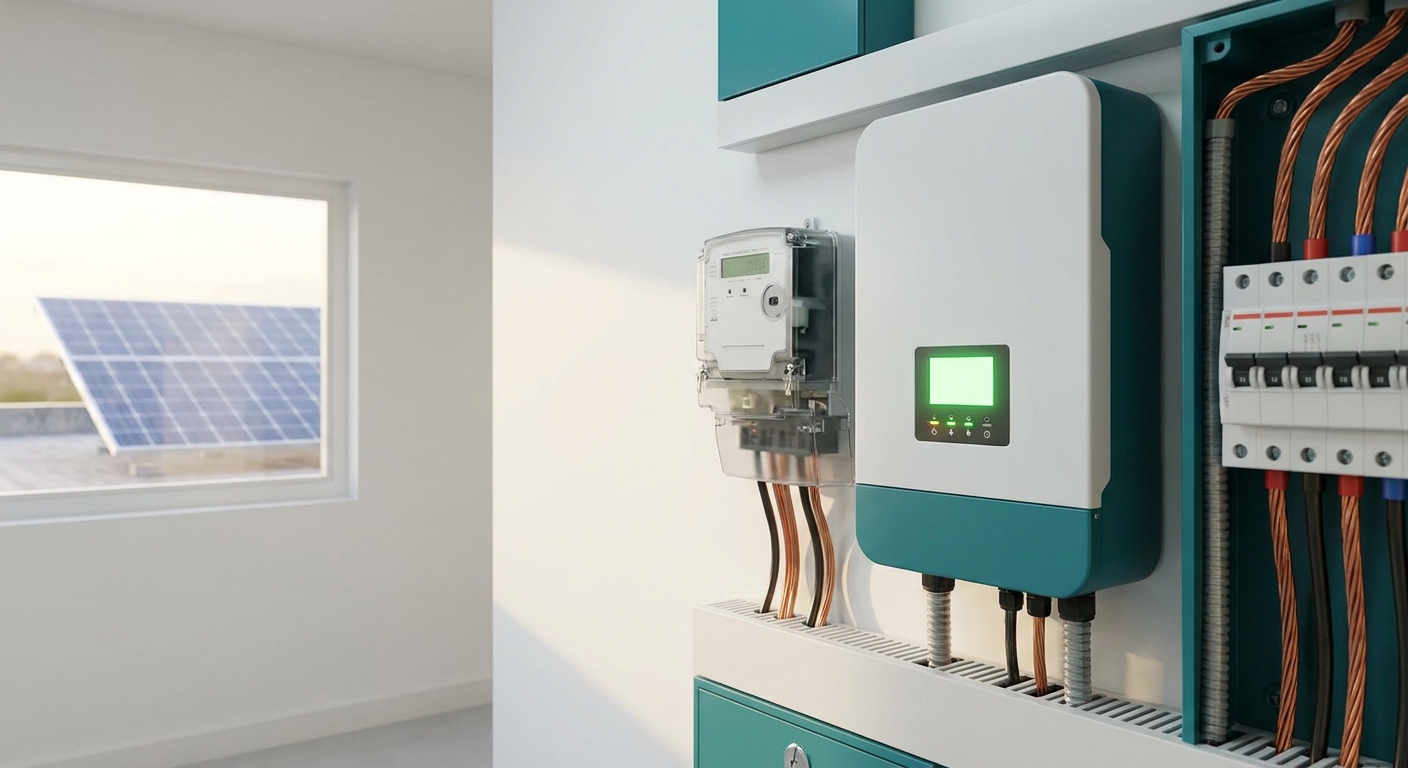
The Gujarat Electricity Regulatory Commission governs net metering through its Rooftop Solar PV Grid Interactive Systems Regulations. Under the current framework:
- Residential consumers can install rooftop solar Gujarat systems up to their sanctioned load capacity.
- Commercial and industrial consumers can install systems up to 1 MW under net metering.
- Excess energy exported to the grid is credited at a rate determined by GERC, which is adjusted periodically.
- Net metering settlement is done on a monthly basis, with annual true-up for any remaining credits.
Grid Interconnection Technical Standards
Your solar system must meet specific technical standards to connect to the grid. These include anti-islanding protection (to prevent the system from energizing the grid during a power outage), power factor requirements, voltage and frequency ride-through capabilities, and harmonic distortion limits. These standards are set by the Central Electricity Authority (CEA) and adopted by GERC for all grid-connected solar installations in Gujarat.
Applying for Net Metering with Your DISCOM
The net metering application process involves your local distribution company. The four DISCOMs serving Gujarat are DGVCL (Dakshin Gujarat), MGVCL (Madhya Gujarat), PGVCL (Paschim Gujarat), and UGVCL (Uttar Gujarat). The general process is:
- Submit a net metering application to your DISCOM with system details and installer credentials.
- DISCOM conducts a technical feasibility assessment of the grid connection point.
- Upon approval, install the system with a GEDA-empanelled installer.
- DISCOM installs a bidirectional meter at your premises.
- System is commissioned and net metering billing begins.
Processing times vary by DISCOM and location, but most straightforward residential applications are resolved within 30 to 60 days. Working with an experienced solar EPC Gujarat company significantly speeds up this process because they handle the paperwork and follow-ups on your behalf.
Building Codes and Structural Safety Standards
Solar regulations Gujarat extend beyond electricity rules. Building codes and structural safety standards are equally important, especially for rooftop solar installations. Ignoring these can create safety hazards and legal liability.
Structural Load and Roof Assessment
Before installing solar panels, a structural assessment of the roof is required. Solar panels add a dead load of approximately 10 to 15 kg per square meter. The roof must be certified to bear this additional load. For older buildings or those with non-standard construction, a structural engineer’s certificate may be required by the DISCOM or municipal authority before approving the installation.
Municipal Approvals and Building Bye-Laws
Most municipalities in Gujarat, including Surat, Ahmedabad, Vadodara, and Rajkot, have incorporated solar installation provisions into their building bye-laws. For residential systems below a certain capacity (typically 10 kW), no separate building permission is required. However, larger commercial and industrial installations may need a building plan amendment or NOC from the local municipal corporation or gram panchayat.
Electrical Safety Standards
All solar installations must comply with the Indian Electricity Rules and relevant IS (Indian Standard) codes. Key requirements include:
- Earthing: All metallic parts of the solar structure and equipment must be properly earthed as per IS 3043.
- Lightning Protection: Systems above a certain height or in lightning-prone areas require surge protection devices.
- DC Wiring: DC cables must be UV-resistant, double-insulated, and rated for the system voltage.
- AC Wiring: AC connections from the inverter to the main distribution board must comply with IS 732.
- Fire Safety: Adequate spacing between panel rows and proper cable management reduce fire risk and are required under fire safety norms.
Solar Subsidy and Incentive Compliance Requirements
Subsidies are a major driver of solar adoption in Gujarat, but claiming them requires strict compliance with solar regulations Gujarat authorities have set. Here’s what you need to know about the major schemes in 2026.
PM Surya Ghar Muft Bijli Yojana
This flagship central government scheme provides subsidies for residential rooftop solar installations. To be eligible, you must:
- Install the system through a registered vendor on the National Portal for Rooftop Solar.
- Use MNRE-approved solar modules and inverters from the Approved Makes List.
- Have the system inspected and commissioned by the DISCOM before subsidy disbursement.
- Ensure the system capacity does not exceed the sanctioned load of your electricity connection.
The subsidy is disbursed directly to the beneficiary’s bank account after DISCOM inspection and net meter installation. Any deviation from approved specifications can result in subsidy rejection.
PM-KUSUM Scheme for Agricultural Solar
The PM-KUSUM scheme supports solar pumps and grid-connected solar plants for farmers. In Gujarat, GEDA implements this scheme. Compliance requirements include using approved pump manufacturers, adhering to capacity limits per beneficiary, and completing installation within the stipulated timeline. The solar regulations Gujarat framework for PM-KUSUM also requires that the land used for solar panels remains primarily agricultural.
DREBP Scheme in Gujarat
The Deen Dayal Upadhyaya Gram Jyoti Yojana Rural Energy Benefit Program (DREBP) and related state schemes have specific compliance requirements for rural solar installations. Heaven Green Energy has extensive experience implementing DREBP projects across Gujarat, ensuring full regulatory compliance from design to commissioning.
Tax Benefits and Accelerated Depreciation
Commercial and industrial solar installations in India are eligible for accelerated depreciation of 40% under the Income Tax Act. This is a significant financial benefit, but claiming it requires proper documentation of the installation, commissioning certificate, and compliance with all applicable solar regulations Gujarat mandates. Businesses should consult a tax advisor to maximize this benefit.
Compliance Requirements by Installation Type
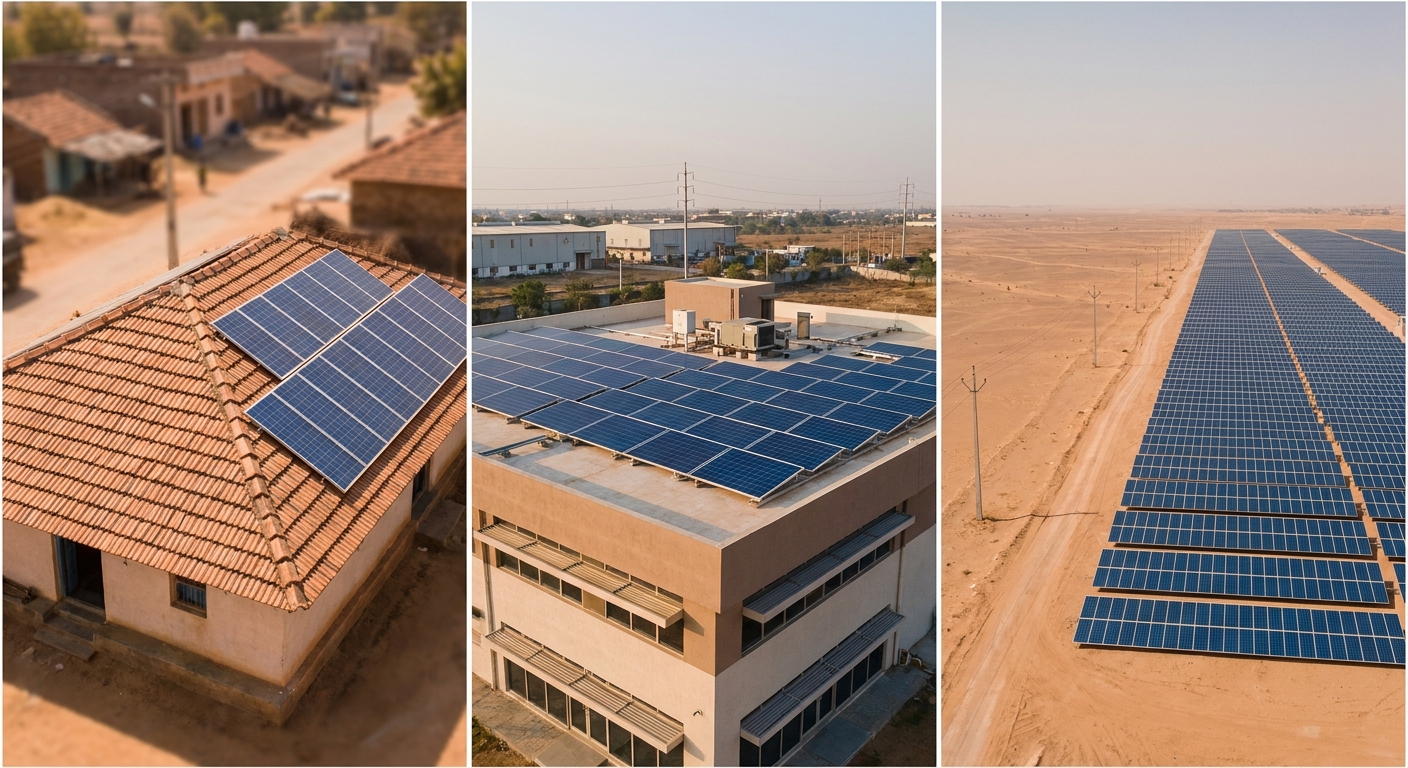
Solar regulations Gujarat apply differently based on the type and scale of your installation. Here’s a breakdown of what each category requires.
Residential Rooftop Solar: Compliance Checklist
For homeowners installing rooftop solar Gujarat systems, the key compliance steps are:
- Choose a GEDA-empanelled installer registered on the national solar portal.
- Ensure the system capacity is within your sanctioned load limit.
- Use MNRE-approved modules and inverters if claiming a subsidy.
- Submit a net metering application to your DISCOM before installation.
- Obtain structural clearance if required by your building type or age.
- Complete installation and request DISCOM inspection for commissioning.
- Receive bidirectional meter installation and begin net metering billing.
Commercial and Industrial Solar: Additional Requirements
Commercial and industrial solar installations face additional regulatory requirements under solar regulations Gujarat. These include:
- High-Tension (HT) connections: Industrial consumers with HT connections must follow GERC’s specific regulations for captive solar generation and open access.
- Open Access: Consumers above 1 MW can use open access to wheel solar power from a remote plant to their facility, subject to GERC open access regulations and applicable charges.
- Environmental Compliance: Large industrial solar projects may require environmental impact assessments depending on the project size and location.
- Factory Act Compliance: Solar installations on factory premises must comply with the Factories Act provisions related to electrical safety.
For industrial solar Gujarat projects, understanding the full cost and return picture is essential. Our article on Solar Payback Period Explained: Break-Even Timeline 2026 provides a detailed analysis of how to calculate your solar ROI after accounting for all compliance costs.
Ground-Mounted Solar Parks: Regulatory Requirements
Ground-mounted solar parks face the most complex regulatory requirements under solar regulations Gujarat. Key requirements include:
- Land use conversion from agricultural to non-agricultural use (NA permission) from the Revenue Department.
- Environmental clearance from the Gujarat Pollution Control Board (GPCB) for projects above the threshold capacity.
- Grid connectivity approval from GETCO for projects connecting at 33 kV or above.
- Power Purchase Agreement (PPA) with GUVNL or a third-party buyer.
- Compliance with CEA’s Technical Standards for Connectivity of the Distributed Generation Resources.
Electrical and Equipment Standards for Solar Installations
Equipment quality is a core part of solar regulations Gujarat compliance. Using substandard or uncertified equipment not only risks your subsidy eligibility but also creates safety hazards and reduces system performance.
Solar Module Standards
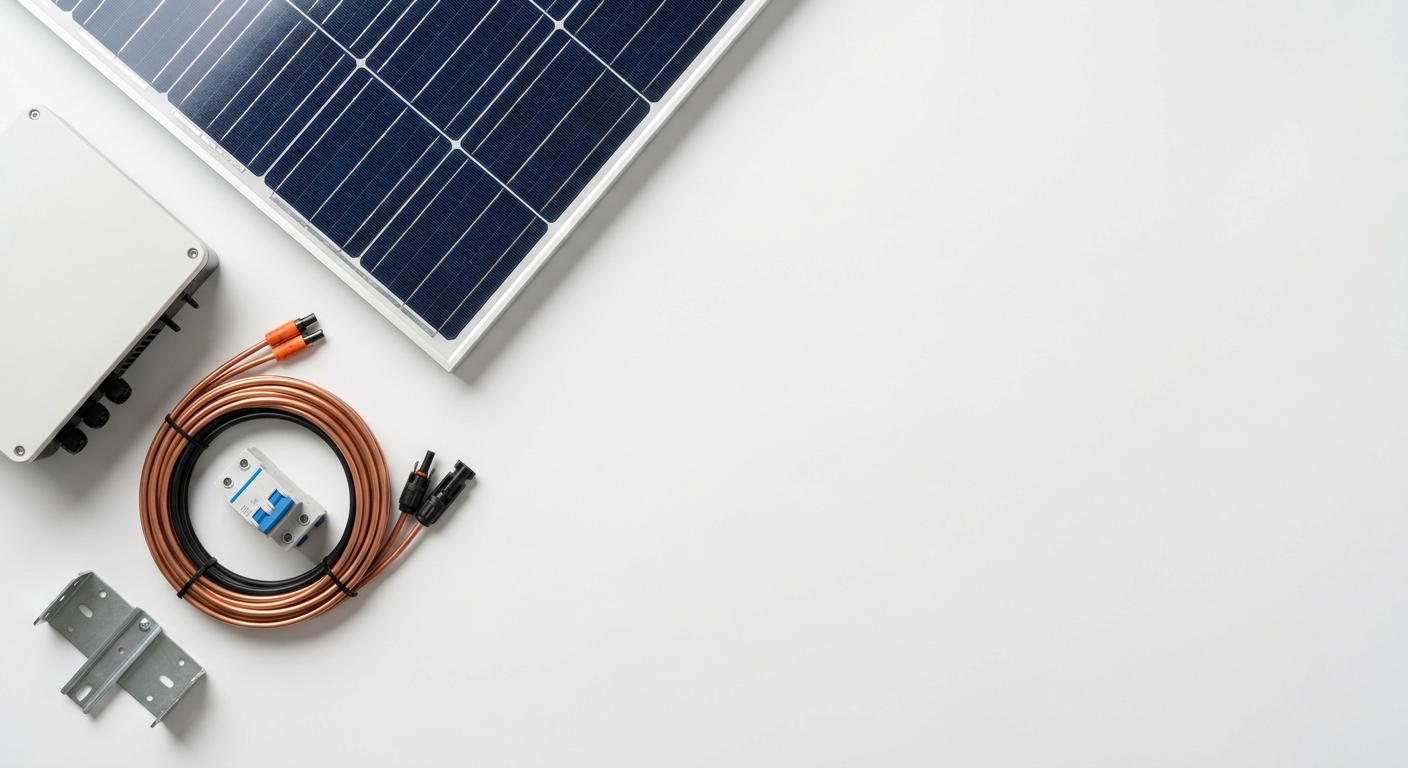
All solar modules used in subsidized installations must be on the MNRE’s Approved List of Models and Manufacturers (ALMM). Modules must also carry BIS certification under IS 14286 (for crystalline silicon modules) or IS 61730 (for general PV module safety). In 2026, the ALMM list has been expanded to include more domestic manufacturers, supporting India’s Atmanirbhar Bharat initiative.
Choosing the right solar module brand is critical for both compliance and long-term performance. Our comparison of Solar Brands Gujarat: Top Panel Manufacturers Compared 2026 helps you evaluate your options against both quality and compliance criteria.
Inverter Standards and Grid Compliance
Solar inverters must meet BIS certification requirements and comply with CEA’s grid connectivity standards. Key requirements include:
- Anti-islanding protection as per IEC 62116 or equivalent.
- DC injection limits to protect distribution transformers.
- Voltage and frequency ride-through capability.
- Remote monitoring capability for systems above a certain capacity.
For government scheme projects, inverters must also appear on the MNRE’s approved list. Using a non-approved inverter, even a high-quality one, can disqualify your installation from subsidy benefits under solar regulations Gujarat.
Wiring, Cables, and Protection Devices
The Balance of System (BOS) components are often overlooked in compliance planning. However, solar regulations Gujarat require that all cables, connectors, and protection devices meet relevant IS standards. DC cables must be rated for the system’s open-circuit voltage with a safety margin. AC cables must be sized for the inverter’s output current. Surge protection devices (SPDs) are mandatory for grid-connected systems to protect against voltage spikes.
Navigating Solar Regulations Gujarat: Common Pitfalls and How to Avoid Them
Even well-intentioned property owners and businesses make compliance mistakes. Here are the most common pitfalls in navigating solar regulations Gujarat and how to avoid them.
Top Compliance Mistakes
- Installing before DISCOM approval: Some installers begin work before the net metering application is approved. This can result in the DISCOM refusing to connect the system or install the bidirectional meter.
- Using non-ALMM modules for subsidized projects: Purchasing cheaper modules not on the MNRE’s approved list to save on solar panel cost is a common mistake that leads to subsidy rejection.
- Exceeding sanctioned load capacity: Installing a system larger than your sanctioned load without upgrading your connection first violates GERC regulations.
- Skipping structural assessment: Ignoring roof load capacity can create safety risks and may result in the DISCOM refusing to commission the system.
- Choosing a non-empanelled installer: Working with an installer not registered on the national portal or GEDA’s empanelled list disqualifies you from central subsidies.
Consequences of Non-Compliance
Non-compliant solar installations in Gujarat face serious consequences. These include rejection of subsidy claims, disconnection from the grid, penalties under the Indian Electricity Act, and potential liability for accidents caused by substandard installations. In some cases, the entire system may need to be reinstalled at the owner’s cost to meet solar regulations Gujarat standards.
How to Choose a Compliant EPC Partner in Gujarat
The single most effective way to ensure compliance is to work with an experienced, GEDA-empanelled solar EPC Gujarat company. A good EPC partner will handle all regulatory paperwork, ensure only compliant equipment is used, manage DISCOM interactions, and provide proper commissioning documentation. Heaven Green Energy Limited, based in Surat with offices in Ahmedabad and Junagadh, has been delivering fully compliant solar installations across Gujarat since 2017. With over 10,000 installations completed, the team understands every layer of solar regulations Gujarat inside out.
“Regulatory compliance is not a checkbox — it’s the foundation of a solar investment that performs reliably for 25 years. Every installation we do at Heaven Green Energy is designed to meet current regulations and anticipate future requirements.”
Frequently Asked Questions About Solar Regulations in Gujarat
Do I need permission to install solar panels in Gujarat?
Yes. You need to apply for net metering approval from your DISCOM before installing a grid-connected solar system. For subsidized installations, you also need to register on the national solar portal and use a GEDA-empanelled installer. Standalone off-grid systems below a certain capacity may not require DISCOM approval, but grid-connected systems always do under solar regulations Gujarat.
What is the maximum capacity allowed under net metering in Gujarat?
For residential consumers, the maximum system capacity under net metering is equal to your sanctioned load. For commercial and industrial consumers, GERC allows net metering for systems up to 1 MW. Larger systems can use gross metering or open access arrangements.
How long does the solar approval process take in Gujarat?
For residential rooftop solar Gujarat installations, the DISCOM approval and net meter installation typically takes 30 to 60 days from application submission. Commercial and industrial projects may take longer due to additional technical assessments. Working with an experienced solar EPC Gujarat company that manages the process end-to-end can significantly reduce delays.
Can I install solar without a GEDA-empanelled installer?
You can install solar without a GEDA-empanelled installer, but you will not be eligible for central or state subsidies. For non-subsidized installations, you still need to comply with GERC net metering regulations and use certified equipment. However, given the significant financial benefit of subsidies, most property owners choose to work with empanelled installers.
What happens if my solar installation is non-compliant?
Non-compliant installations can be disconnected from the grid by the DISCOM. Subsidy claims will be rejected. In cases of electrical safety violations, penalties under the Indian Electricity Act may apply. The property owner bears responsibility for ensuring compliance, which is why choosing a reputable solar EPC Gujarat company is so important.
Are there specific solar regulations for industrial solar Gujarat projects?
Yes. Industrial solar Gujarat projects face additional requirements including compliance with the Factories Act for electrical safety, potential environmental clearances, and specific GERC regulations for captive generation and open access. HT consumers have different net metering and open access rules compared to LT consumers. An experienced EPC partner familiar with industrial solar Gujarat regulations is essential for these projects.
Take the Next Step Toward a Compliant Solar Installation in Gujarat
Navigating solar regulations Gujarat can feel overwhelming, but it doesn’t have to be. With the right EPC partner, every compliance requirement becomes a managed step in a smooth installation process rather than an obstacle. From GEDA empanelment and DISCOM approvals to equipment certification and subsidy processing, a full-service solar EPC Gujarat company handles it all on your behalf.
Heaven Green Energy Limited has been helping homeowners, businesses, and industrial facilities across Gujarat achieve fully compliant, high-performance solar installations since 2017. Our team stays current with every update to solar regulations Gujarat authorities issue, so your project is always built to the latest standards. Whether you’re exploring a 3 kW residential system, a 500 kW commercial plant, or a multi-MW ground-mounted solar park, we bring the expertise to make it compliant, efficient, and financially rewarding.
Ready to start your compliant solar journey? Call us today at +91 63904 05060 to speak with a solar regulations Gujarat expert who can assess your property, explain your compliance requirements, and guide you through every step of the approval and installation process. Don’t let regulatory complexity delay your solar investment — let Heaven Green Energy make it simple.
This blog post was written using thestacc.com