


Understanding the true cost of solar panels is essential for making an informed investment decision in 2026. Whether you’re a homeowner in Gujarat looking to reduce electricity bills or a business owner seeking sustainable energy solutions, this comprehensive guide breaks down every aspect of solar panel cost—from equipment and installation to hidden expenses and long-term returns.
The solar energy landscape has evolved significantly, with technology improvements and increased adoption driving more competitive pricing. However, navigating the various cost components, understanding what influences pricing, and calculating your actual return on investment requires detailed knowledge. This guide provides you with the complete pricing breakdown you need to budget effectively for your solar project.
Understanding Solar Panel Cost in 2026: What You Need to Know
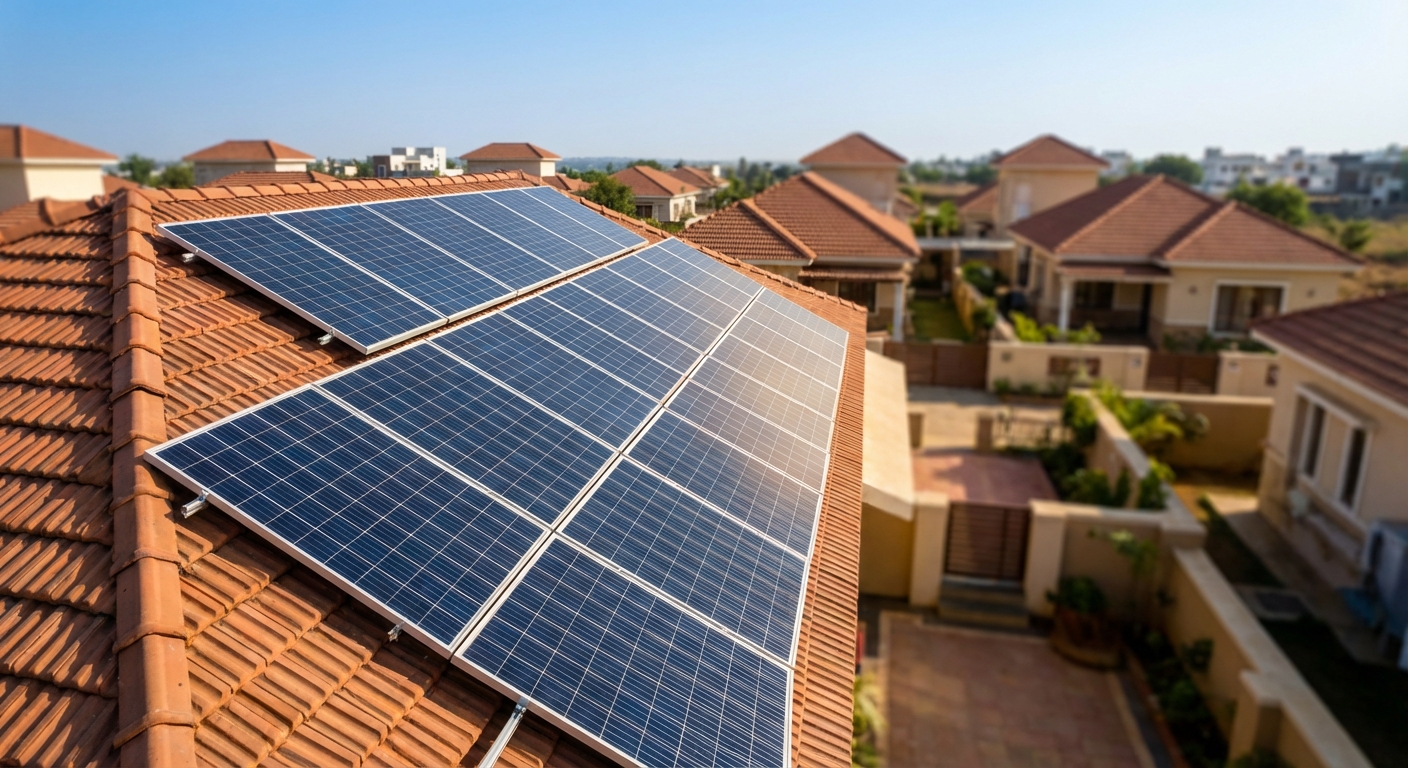
The solar panel cost in 2026 reflects a mature market with diverse options for every budget and requirement. In Gujarat, where solar irradiance is excellent and government support is strong, solar installations have become increasingly accessible for both residential and commercial applications.
Current market trends show that solar panel costs have stabilized after years of decline, with prices now reflecting quality improvements and enhanced efficiency. The average cost for residential solar installations in Gujarat ranges from ₹50,000 to ₹70,000 per kilowatt (kW) for complete turnkey systems, while commercial and industrial projects benefit from economies of scale, with costs ranging from ₹40,000 to ₹60,000 per kW for larger installations.
Several factors have contributed to the current pricing landscape:
- Technology advancement: Higher efficiency modules deliver more power in less space, improving value despite slightly higher upfront costs
- Manufacturing scale: Increased global production capacity has stabilized component pricing
- Government incentives: Subsidies and financing programs reduce effective costs for eligible customers
- Market competition: Growing number of solar EPC companies in Gujarat has created competitive pricing
- Supply chain maturity: Better logistics and local availability of components have reduced procurement costs
Understanding solar panel cost requires looking beyond the sticker price. A complete solar investment includes equipment costs, installation charges, ongoing maintenance, and potential hidden expenses. However, it also delivers substantial long-term savings through reduced electricity bills, government incentives, and increased property value.
This guide breaks down each cost component systematically, helping you understand exactly where your investment goes and how to maximize value from your solar project.
1. Solar Equipment Costs: Breaking Down the Hardware
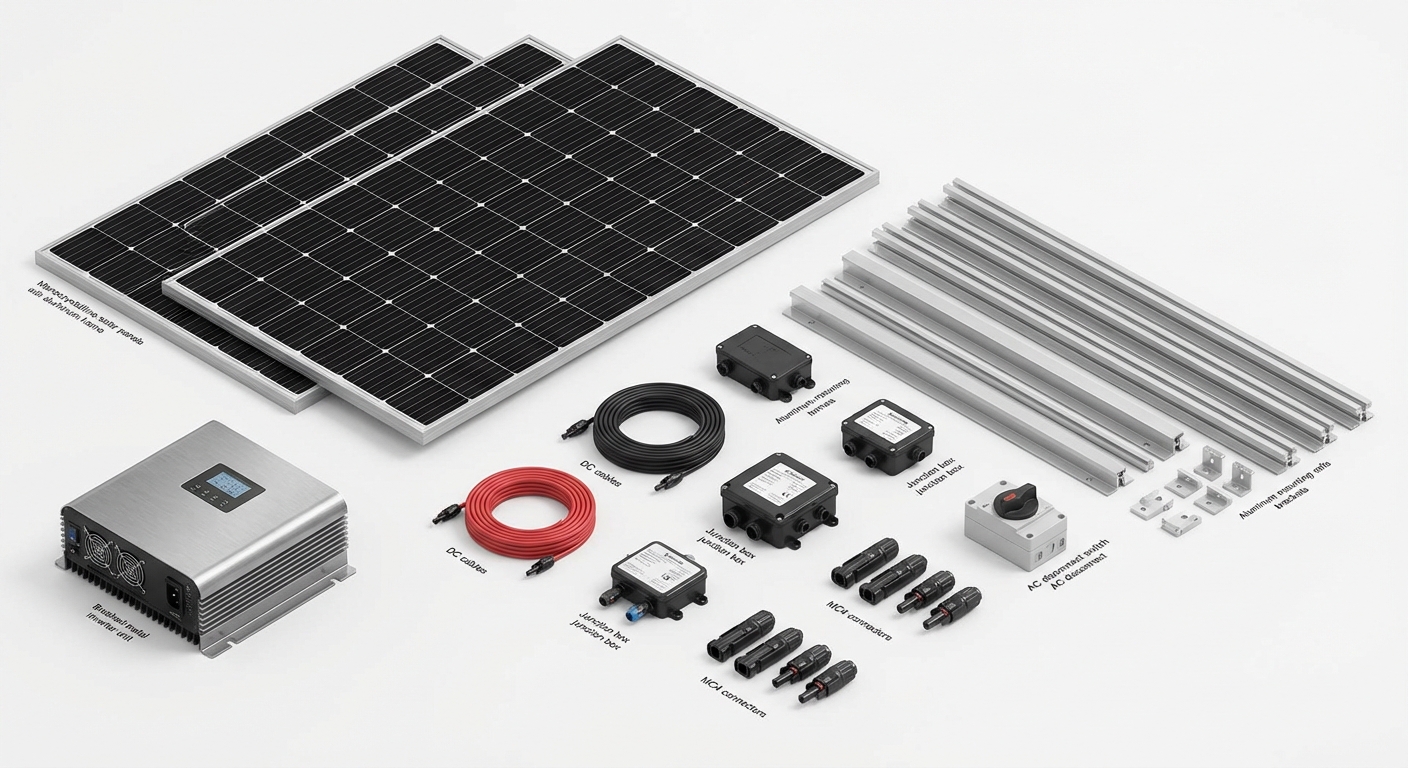
Equipment represents the largest portion of your total solar panel cost, typically accounting for 60-70% of the project budget. Understanding the various components and their pricing helps you make informed decisions about quality, performance, and long-term value.
Solar Modules (Panels)
Solar panels are the most visible component and vary significantly in cost based on technology and brand:
- Monocrystalline panels: ₹25-35 per watt—highest efficiency (18-22%), best for limited roof space, premium aesthetics with uniform black appearance
- Polycrystalline panels: ₹20-28 per watt—good efficiency (15-17%), cost-effective option, blue-tinted appearance
- Bifacial panels: ₹30-40 per watt—capture sunlight from both sides, 10-20% additional energy generation, ideal for ground-mounted installations
- Half-cut cell technology: ₹28-38 per watt—reduced resistive losses, better performance in partial shade, increasingly popular for residential installations
Premium international brands command higher prices but often deliver better warranties and proven long-term performance. Indian manufacturers offer competitive quality at more accessible price points, making solar more affordable for the Gujarat market.
Solar Inverters
The inverter converts DC power from panels to AC power for your home or business. Inverter costs typically represent 10-15% of total system cost:
- String inverters: ₹8,000-15,000 per kW—most common for residential and commercial installations, centralized conversion, cost-effective
- Microinverters: ₹12,000-20,000 per kW—individual panel-level conversion, better performance in shaded conditions, higher reliability
- Hybrid inverters: ₹15,000-25,000 per kW—battery-ready systems, enable energy storage, provide backup power capability
- Grid-tie inverters: ₹7,000-12,000 per kW—basic grid connection, no battery support, most economical option
Inverter selection significantly impacts system performance and longevity. Quality inverters from established brands typically last 10-15 years, while premium models may offer 20-25 year warranties matching panel lifespans.
Mounting Structures and Racking Systems
Mounting structures secure panels to your roof or ground and must withstand Gujarat’s weather conditions including monsoons and high winds:
- Rooftop mounting structures: ₹6,000-10,000 per kW—galvanized iron or aluminum, customized for roof type
- Ground-mounted structures: ₹8,000-12,000 per kW—includes foundation work, suitable for solar parks
- Elevated structures: ₹10,000-15,000 per kW—raised installations for agricultural land or parking areas
Quality mounting structures use corrosion-resistant materials and proper engineering to ensure 25+ year lifespan matching your solar panels.
Balance of System (BOS) Components
Additional components complete your solar installation:
- DC and AC cables: ₹2,000-4,000 per kW—weather-resistant, properly sized for current capacity
- Junction boxes and combiners: ₹1,500-3,000 per kW—protect connections, enable system monitoring
- Earthing and lightning protection: ₹2,000-5,000 per system—essential safety components
- Monitoring systems: ₹3,000-8,000—track performance, identify issues, optimize generation
- Meters and switchgear: ₹5,000-12,000—net metering equipment, safety disconnects
While BOS components represent a smaller cost percentage, they’re critical for system safety, performance, and longevity. Quality components from reputable suppliers ensure reliable operation throughout your system’s lifetime.
2. Installation and Labor Charges
Professional installation ensures your solar system performs optimally and safely for decades. Installation costs typically represent 20-30% of total project cost and vary based on project complexity and system size.
EPC Service Costs
Turnkey solar EPC services provide comprehensive project management from design through commissioning. Heaven Green Energy and other established EPC companies in Gujarat offer complete solutions that include:
- Site assessment and feasibility study: ₹2,000-5,000—evaluates roof condition, shading, structural capacity
- System design and engineering: ₹3,000-8,000—optimizes layout, electrical design, performance modeling
- Procurement and logistics: Included in EPC pricing—sourcing quality components, managing delivery
- Installation and commissioning: ₹8,000-15,000 per kW—professional installation, testing, grid connection
- Documentation and approvals: ₹5,000-12,000—handles permits, utility approvals, subsidy applications
Residential Rooftop Installation Pricing
For typical residential installations in Gujarat (1-10 kW systems), labor charges include:
- 1-3 kW systems: ₹12,000-18,000 per kW—smaller systems have higher per-kW labor costs
- 3-5 kW systems: ₹10,000-15,000 per kW—most common residential size, balanced pricing
- 5-10 kW systems: ₹8,000-12,000 per kW—economies of scale reduce per-kW costs
Installation complexity affects pricing. Simple installations on accessible, structurally sound roofs cost less than complex projects requiring scaffolding, structural reinforcement, or working around obstacles.
Commercial and Industrial Installation Costs
Larger commercial and industrial projects benefit from economies of scale:
- 10-50 kW systems: ₹7,000-12,000 per kW—small commercial installations
- 50-100 kW systems: ₹6,000-10,000 per kW—medium commercial projects
- 100 kW+ systems: ₹5,000-8,000 per kW—large industrial installations with significant scale advantages
Ground-Mounted Solar Park Installation
Ground-mounted installations for solar parks or agricultural applications involve additional considerations:
- Land preparation and leveling: ₹50,000-2,00,000 depending on site conditions
- Foundation work: ₹3,000-6,000 per kW—concrete foundations for structure stability
- Fencing and security: ₹100-200 per running meter—protects investment
- Access roads: Variable based on site requirements
Professional solar installation in Gujarat ensures compliance with local regulations, proper electrical work, and optimal system performance. Experienced installers complete projects efficiently while maintaining safety standards and quality workmanship.
3. Hidden Costs and Additional Expenses
Beyond equipment and installation, several additional costs can impact your total solar investment. Understanding these potential expenses helps you budget accurately and avoid surprises.
Permits, Approvals, and Regulatory Compliance
Legal and regulatory requirements add to project costs:
- Building permits: ₹2,000-8,000—required by local municipal authorities
- Electrical inspection fees: ₹1,500-5,000—ensures code compliance
- Fire department approval: ₹1,000-3,000—required for commercial buildings
- Utility interconnection fees: ₹3,000-10,000—grid connection approval and net metering setup
Reputable EPC companies typically handle these approvals as part of their service, but understanding the costs helps you evaluate proposals accurately.
Grid Connection and Net Metering Charges
Connecting your solar system to the grid involves several costs:
- Bi-directional meter: ₹5,000-12,000—tracks energy exported to and imported from grid
- Net metering application: ₹2,000-5,000—administrative fees for utility processing
- Grid synchronization equipment: ₹3,000-8,000—ensures safe grid connection
- Utility connection charges: Variable by distribution company and system size
Structural Reinforcement
Older buildings or those with weak roof structures may require reinforcement:
- Roof structural assessment: ₹3,000-8,000—engineering evaluation of load capacity
- Reinforcement work: ₹15,000-50,000+—depends on extent of strengthening needed
- Waterproofing repairs: ₹5,000-20,000—addressing existing roof issues before installation
Professional site assessment identifies these requirements early, preventing costly surprises during installation.
Electrical Upgrades and Panel Modifications
Your existing electrical system may need upgrades:
- Main panel upgrade: ₹8,000-25,000—if existing panel lacks capacity for solar interconnection
- Wiring upgrades: ₹5,000-15,000—ensuring adequate current capacity
- Grounding system enhancement: ₹3,000-10,000—proper earthing for safety
- Surge protection: ₹4,000-12,000—protects investment from lightning and voltage spikes
Insurance and Extended Warranties
Protecting your investment adds to costs but provides peace of mind:
- Solar system insurance: ₹2,000-5,000 annually—covers damage, theft, natural disasters
- Extended warranties: ₹5,000-15,000—beyond standard manufacturer warranties
- Performance guarantees: Often included with quality installations
Monitoring and Smart Technology
Advanced monitoring capabilities enhance system management:
- Advanced monitoring systems: ₹5,000-15,000—real-time performance tracking, alerts
- Mobile app integration: Often included with modern inverters
- Weather stations: ₹8,000-20,000—correlates performance with environmental conditions
- Automated cleaning systems: ₹30,000-1,00,000—for large installations in dusty areas
While these additional costs increase initial investment, many provide long-term value through better performance, protection, and peace of mind.
4. Residential vs Commercial Solar Panel Costs
System size significantly impacts per-watt pricing, with larger installations benefiting from economies of scale. Understanding cost differences between residential and commercial projects helps set realistic budget expectations.
Residential Solar System Costs
Homeowners in Gujarat typically install systems ranging from 1 kW to 10 kW based on electricity consumption and available roof space:
1-2 kW systems (Small homes, basic needs):
- Total cost: ₹60,000-1,40,000
- Cost per watt: ₹60-70
- Monthly generation: 120-240 units
- Suitable for: Small households with 100-200 units monthly consumption
3-5 kW systems (Average homes):
- Total cost: ₹1,65,000-3,50,000
- Cost per watt: ₹55-70
- Monthly generation: 360-600 units
- Suitable for: Medium households with 300-500 units monthly consumption
- Most popular residential size in Gujarat
5-10 kW systems (Large homes, villas):
- Total cost: ₹2,75,000-6,00,000
- Cost per watt: ₹50-60
- Monthly generation: 600-1,200 units
- Suitable for: Large households, villas with high consumption
Residential installations include solar subsidy eligibility, which can reduce effective costs by ₹14,588 per kW for systems up to 3 kW and ₹7,294 per kW for additional capacity up to 10 kW under central government schemes.
Commercial Solar Installation Pricing
Commercial establishments benefit from larger system sizes and reduced per-watt costs:
10-25 kW systems (Small businesses, shops):
- Total cost: ₹5,00,000-13,75,000
- Cost per watt: ₹50-55
- Monthly generation: 1,200-3,000 units
- Suitable for: Retail stores, small offices, restaurants
25-100 kW systems (Medium commercial):
- Total cost: ₹12,50,000-50,00,000
- Cost per watt: ₹45-50
- Monthly generation: 3,000-12,000 units
- Suitable for: Office buildings, hotels, hospitals, educational institutions
100-500 kW systems (Large commercial):
- Total cost: ₹45,00,000-2,25,00,000
- Cost per watt: ₹42-48
- Monthly generation: 12,000-60,000 units
- Suitable for: Shopping malls, large office complexes, warehouses
Industrial Solar Project Costs
Industrial solar installations in Gujarat achieve the lowest per-watt costs through massive scale:
500 kW – 1 MW systems:
- Total cost: ₹2,10,00,000-4,50,00,000
- Cost per watt: ₹40-45
- Monthly generation: 60,000-1,20,000 units
- Suitable for: Manufacturing facilities, large factories
1 MW+ systems (Mega projects):
- Cost per watt: ₹38-42
- Significant economies of scale
- Often structured as power purchase agreements (PPAs)
- May include ground-mounted solar parks
Why Larger Systems Cost Less Per Watt
Several factors contribute to lower per-watt costs for larger installations:
- Bulk equipment pricing: Volume discounts on panels, inverters, and components
- Installation efficiency: Labor costs spread across more capacity
- Simplified logistics: Single delivery and installation mobilization
- Reduced overhead: Fixed costs (permits, design) distributed across larger system
- Standardized design: Less customization needed for large uniform installations
Understanding these cost dynamics helps you right-size your solar investment for optimal value.
5. Solar Subsidy and Financing Options in Gujarat
Government incentives and financing programs significantly reduce the effective solar panel cost, making solar energy more accessible for homes and businesses across Gujarat.
Central Government Solar Subsidy
The Ministry of New and Renewable Energy (MNRE) provides subsidies for residential rooftop solar installations:
- Systems up to 3 kW: 40% subsidy (₹14,588 per kW)
- Systems above 3 kW up to 10 kW: 40% for first 3 kW + 20% for additional capacity (₹7,294 per kW for capacity above 3 kW)
- Example: A 5 kW system receives ₹58,352 subsidy (₹43,764 for first 3 kW + ₹14,588 for additional 2 kW)
Subsidy eligibility requires installation through empaneled vendors and compliance with technical specifications. The subsidy amount is typically adjusted in the final invoice, reducing your upfront payment.
PM-KUSUM Scheme Benefits
The Pradhan Mantri Kisan Urja Suraksha evam Utthaan Mahabhiyan (PM-KUSUM) scheme supports farmers and rural businesses:
- Component A: 10,000 MW ground-mounted solar power plants on barren land—30% subsidy + 30% loan support
- Component B: Solar pumps for irrigation—60% subsidy (30% central + 30% state)
- Component C: Grid-connected solar pumps and solarization of existing pumps—60% subsidy
Heaven Green Energy specializes in implementing PM-KUSUM projects, helping farmers and agricultural businesses access these substantial benefits.
Gujarat State-Level Incentives
Gujarat offers additional support for solar adoption:
- Accelerated depreciation: Businesses can claim 40% depreciation in first year
- Net metering benefits: Favorable policies for selling excess solar power to grid
- Exemption from electricity duty: Solar power exempt from duty charges
- Simplified approvals: Streamlined processes for rooftop solar installations
Solar Financing Options
Multiple financing pathways make solar accessible without large upfront investment:
Bank loans for solar:
- Interest rates: 9-12% per annum
- Loan tenure: 5-10 years
- Loan amount: Up to 80-90% of project cost
- Collateral: May be required for larger loans
NBFC solar financing:
- Faster approval processes
- Flexible terms for commercial projects
- Interest rates: 10-14% per annum
Power Purchase Agreements (PPAs):
- Zero upfront investment for commercial/industrial customers
- Pay only for solar power generated
- Rates typically 10-20% below grid electricity
- Developer owns and maintains system
Lease models:
- Monthly lease payments instead of purchase
- Maintenance included in lease
- Option to purchase after lease period
How Subsidies Reduce Effective Solar Panel Cost
Consider a 5 kW residential system example:
- Total system cost: ₹3,00,000
- Central government subsidy: ₹58,352
- Effective cost after subsidy: ₹2,41,648
- With bank loan at 10% for 7 years: EMI approximately ₹4,000/month
- Monthly electricity savings: ₹5,000-6,000
- Net monthly benefit: ₹1,000-2,000 from day one
This demonstrates how solar financing combined with subsidies makes solar immediately cash-flow positive for many customers.
6. Maintenance Costs and Long-Term Expenses
While solar panels require minimal maintenance, understanding long-term costs helps you budget accurately for the complete 25-year system lifecycle.
Annual Maintenance Costs
Regular maintenance ensures optimal performance and longevity:
- Residential systems (1-10 kW): ₹2,000-5,000 annually
- Commercial systems (10-100 kW): ₹8,000-20,000 annually
- Industrial systems (100 kW+): ₹25,000-1,00,000+ annually depending on size
Annual maintenance typically includes:
- Panel cleaning (2-4 times per year)
- Visual inspection of all components
- Electrical connection checks
- Inverter performance verification
- Monitoring system calibration
- Performance report generation
Cleaning and Inspection in Gujarat Climate
Gujarat’s climate presents specific maintenance considerations:
Dust and pollution: Industrial areas and urban locations require more frequent cleaning—every 1-2 months during dry season. Dust accumulation can reduce output by 15-25% if not addressed.
Monsoon season: Natural rain cleaning reduces maintenance needs during monsoon months (June-September), but post-monsoon inspection is essential.
Cleaning costs:
- DIY cleaning: ₹0 (water and soft brush only)
- Professional cleaning: ₹500-1,500 per cleaning for residential systems
- Commercial cleaning services: ₹2-5 per panel per cleaning
- Automated cleaning systems: ₹30,000-1,00,000 initial investment, minimal ongoing costs
Professional solar maintenance in Gujarat ensures your system operates at peak efficiency throughout its lifetime.
Inverter Replacement Costs
Inverters typically require replacement during the system’s 25-year life:
- String inverter lifespan: 10-15 years
- Replacement cost: ₹8,000-15,000 per kW
- Microinverter lifespan: 15-25 years (often matching panel warranty)
- Hybrid inverter replacement: ₹15,000-25,000 per kW
Budget for one inverter replacement around year 12-15 when calculating lifecycle costs. Some premium inverters offer 20-25 year warranties, eliminating this expense.
Panel Degradation and Performance
Solar panels gradually lose efficiency over time:
- Typical degradation rate: 0.5-0.8% annually
- After 25 years: Panels still produce 80-85% of original capacity
- Premium panels: Lower degradation rates (0.3-0.5% annually)
This gradual decline is factored into ROI calculations and doesn’t require additional expenditure—it’s simply reduced generation over time.
Warranty Coverage
Understanding warranty coverage helps you anticipate potential costs:
Solar panel warranties:
- Product warranty: 10-12 years (covers manufacturing defects)
- Performance warranty: 25 years (guarantees minimum output levels)
- Typical guarantee: 90% output after 10 years, 80% after 25 years
Inverter warranties:
- Standard warranty: 5-10 years
- Extended warranty options: Up to 20-25 years (additional cost)
Installation workmanship warranty:
- Reputable EPC companies: 5-10 years
- Covers installation defects, mounting issues, electrical work
Preventive Maintenance vs Reactive Repairs
Preventive maintenance costs less than reactive repairs:
Preventive approach:
- Regular inspections catch issues early
- Scheduled cleaning maintains optimal performance
- Annual cost: ₹2,000-5,000 for residential systems
- Prevents major failures and extends component life
Reactive approach risks:
- Undetected issues reduce generation and revenue
- Component failures may cause system downtime
- Emergency repairs cost more: ₹5,000-25,000+ per incident
- Potential warranty voidance if maintenance requirements not met
Annual maintenance contracts from your solar EPC provider offer peace of mind and predictable costs.
7. Calculating Solar ROI and Payback Period
Understanding your return on investment helps justify the initial solar panel cost and demonstrates the long-term financial benefits of solar energy.
How to Calculate Return on Investment
Solar ROI calculation considers multiple financial factors:
Step 1: Calculate total investment
- System cost: ₹3,00,000 (5 kW example)
- Minus subsidy: -₹58,352
- Net investment: ₹2,41,648
Step 2: Calculate annual savings
- Annual generation: 7,500 units (5 kW × 4.5 hours × 365 days × 0.91 performance ratio)
- Electricity rate: ₹8 per unit (average Gujarat residential rate)
- Annual savings: ₹60,000
- Minus annual maintenance: -₹3,000
- Net annual benefit: ₹57,000
Step 3: Calculate simple payback period
- Payback period = Net investment ÷ Net annual benefit
- Payback period = ₹2,41,648 ÷ ₹57,000 = 4.2 years
Step 4: Calculate 25-year ROI
- Total savings over 25 years: ₹14,25,000 (accounting for 0.6% annual degradation and 5% electricity rate escalation)
- Total costs: ₹2,41,648 (initial) + ₹75,000 (maintenance) + ₹50,000 (inverter replacement) = ₹3,66,648
- Net profit: ₹10,58,352
- ROI: 289% over 25 years
Typical Payback Periods for Gujarat Installations
Payback periods vary based on system size, electricity rates, and usage patterns:
- Residential systems (with subsidy): 3.5-5 years
- Commercial systems (no subsidy): 4-6 years
- Industrial systems: 3.5-5 years (high consumption, favorable rates)
- Agricultural systems (with PM-KUSUM subsidy): 2-4 years
Gujarat’s excellent solar irradiance (4.5-5.5 peak sun hours daily) and relatively high electricity rates create favorable conditions for quick payback.
Electricity Bill Savings Calculation
Accurate savings calculation requires understanding your consumption pattern:
Net metering benefits:
- Daytime generation offsets consumption
- Excess generation credited at same rate
- Credits used to offset evening/night consumption
- Annual net settlement in Gujarat
Example calculation for 5 kW system:
- Monthly generation: 625 units
- Monthly consumption: 500 units
- Excess generation: 125 units (credited)
- Monthly bill before solar: ₹4,000
- Monthly bill after solar: ₹0 (fully offset)
- Monthly savings: ₹4,000
- Annual savings: ₹48,000
25-Year Lifecycle Cost Analysis
Comprehensive lifecycle analysis reveals true solar value:
Revenue streams:
- Electricity bill savings: ₹12,00,000-15,00,000 (with rate escalation)
- Subsidy/incentives: ₹58,352 (residential example)
- Accelerated depreciation: ₹40,000-80,000 (commercial/industrial)
- Increased property value: 3-4% appreciation
- Carbon credits: Potential additional revenue for large installations
Total costs:
- Initial investment: ₹2,41,648 (after subsidy)
- Maintenance: ₹75,000 over 25 years
- Inverter replacement: ₹50,000 (year 12-15)
- Insurance: ₹50,000 over 25 years (optional)
- Total: ₹4,16,648
Net benefit: ₹8,00,000-11,00,000 over 25 years
Factors Affecting ROI
Several variables influence your actual returns:
- Electricity rates: Higher rates improve ROI; Gujarat’s commercial/industrial rates (₹7-10/unit) accelerate payback
- System performance: Quality equipment and proper maintenance maximize generation
- Consumption pattern: High daytime consumption improves self-consumption and savings
- Net metering policy: Favorable policies enhance value of excess generation
- Financing costs: Loan interest reduces net savings during payback period
- Electricity rate escalation: Historical 5-7% annual increases improve long-term returns
- System degradation: Lower degradation rates maintain higher generation
Understanding solar ROI helps you make informed investment decisions and set realistic expectations for your solar project returns.
8. Factors That Influence Solar Panel Cost
Multiple variables affect the final price of your solar installation. Understanding these factors helps you optimize your investment and compare quotes effectively.
System Size and Capacity Requirements
System sizing directly impacts total cost and per-watt pricing:
- Undersized systems: Lower initial cost but may not meet energy needs, limiting savings potential
- Properly sized systems: Balance investment with consumption for optimal ROI
- Oversized systems: Higher cost but maximize roof utilization and future-proof for increased consumption
Professional load analysis ensures right-sizing based on your consumption patterns, available space, and budget.
Roof Type, Orientation, and Installation Complexity
Physical site characteristics significantly affect installation costs:
Roof type impact:
- RCC flat roofs: Easiest installation, standard mounting costs
- Sloped tile roofs: Require tile removal/replacement, waterproofing attention—add 10-15% to installation cost
- Metal sheet roofs: Need specialized mounting, structural assessment—add 5-10%
- Asbestos roofs: May require replacement before solar installation—significant additional cost
Roof orientation:
- South-facing: Optimal for Gujarat, maximum generation
- East/West-facing: 10-15% lower generation, may require larger system
- North-facing: Not recommended, significantly reduced output
Installation complexity factors:
- Building height and accessibility
- Shading from nearby structures or trees
- Roof obstacles (chimneys, vents, water tanks)
- Distance from electrical panel
- Need for scaffolding or specialized equipment
Geographic Location and Solar Irradiance
Gujarat offers excellent solar potential, but regional variations exist:
- Kutch region: Highest irradiance (5.5+ peak sun hours), maximum generation potential
- Saurashtra: Excellent conditions (5.0-5.5 peak sun hours)
- Central Gujarat (Ahmedabad, Vadodara): Very good (4.8-5.2 peak sun hours)
- South Gujarat (Surat, Valsad): Good conditions (4.5-5.0 peak sun hours), slightly higher monsoon cloud cover
Higher irradiance locations generate more electricity from the same system size, improving ROI despite similar installation costs.
Brand Selection and Equipment Quality
Equipment quality significantly impacts both initial cost and long-term value:
Premium international brands:
- Higher upfront cost (15-25% premium)
- Better efficiency and performance
- Longer warranties and proven reliability
- Better degradation rates
- Stronger brand support and service
Quality Indian brands:
- Competitive pricing
- Good performance and reliability
- Local service and support advantages
- Suitable warranties
- Best value for most installations
Budget brands:
- Lowest initial cost
- May have lower efficiency
- Shorter warranties
- Higher long-term risk
- Potentially higher maintenance costs
Choosing established solar brands in Gujarat balances cost with quality and reliability.
Installation Company Expertise and Service Quality
Your choice of solar EPC company affects both cost and value:
Established EPC companies like Heaven Green Energy:
- Competitive pricing through volume procurement
- Professional design and engineering
- Quality installation workmanship
- Comprehensive warranties and support
- Proven track record (10,000+ installations)
- Proper licensing and insurance
Newer or smaller installers:
- May offer lower prices to gain market share
- Variable quality and experience
- Limited warranty backing
- Potential service continuity concerns
Choosing experienced solar companies in Gujarat ensures quality installation and long-term support, protecting your investment.
Seasonal Pricing Variations and Market Conditions
Market dynamics create pricing fluctuations:
- Peak season (October-March): Higher demand, potentially higher prices, longer lead times
- Monsoon season (June-September): Lower demand, possible promotional pricing, installation challenges
- Financial year-end: Companies may offer incentives to meet targets
- Government policy changes: Subsidy announcements or changes affect demand and pricing
- Global supply chain: International component prices affect local costs
While timing can provide modest savings, the long-term benefits of solar make installation worthwhile regardless of minor seasonal variations.
9. How to Budget for Your Solar Investment

Effective budgeting ensures your solar project proceeds smoothly without financial surprises. Follow this systematic approach to plan your solar investment.
Step-by-Step Budgeting Process
Step 1: Assess your energy needs
- Review 12 months of electricity bills
- Calculate average monthly consumption
- Identify consumption patterns (seasonal variations, peak usage times)
- Project future consumption changes (new equipment, business expansion)
Step 2: Determine optimal system size
- Calculate required capacity based on consumption
- Assess available roof/ground space
- Consider budget constraints
- Decide on full offset vs partial offset approach
Step 3: Research cost ranges
- Understand typical costs for your system size
- Factor in your specific site conditions
- Include all cost components (equipment, installation, additional expenses)
- Account for subsidy eligibility
Step 4: Explore financing options
- Evaluate upfront payment vs financing
- Compare loan terms from multiple lenders
- Calculate EMI affordability
- Consider PPA or lease options for commercial projects
Step 5: Plan for contingencies
- Add 10-15% buffer for unexpected costs
- Account for potential structural work
- Include optional upgrades (monitoring, extended warranties)
Getting Accurate Quotes from Solar EPC Companies
Quality quotes provide detailed breakdowns and enable effective comparison:
Information to provide:
- Recent electricity bills (6-12 months)
- Roof photographs and dimensions
- Building age and structure type
- Electrical panel details
- Budget range and timeline
What comprehensive quotes should include:
- Detailed system design with layout drawings
- Complete equipment specifications (brands, models, quantities)
- Itemized cost breakdown (equipment, installation, additional charges)
- Expected generation estimates
- Warranty details for all components
- Timeline for completion
- Payment terms and schedule
- Post-installation support and maintenance options
What to Look for in Solar Proposals
Evaluate proposals beyond just the bottom-line price:
Technical quality indicators:
- Proper system sizing based on your consumption
- Quality equipment from reputable brands
- Professional design optimizing roof space
- Appropriate inverter sizing and technology
- Adequate safety and monitoring systems
Service quality indicators:
- Clear warranty terms and coverage
- Maintenance and support offerings
- Company credentials and experience
- Customer references and past projects
- Transparent pricing without hidden charges
Financial considerations:
- Realistic ROI and payback calculations
- Subsidy application assistance
- Financing options and support
- Payment milestone structure
Comparing Quotes Effectively
Create a comparison framework to evaluate multiple proposals:
Normalize for system size: Calculate cost per watt for accurate comparison across different system sizes.
Compare equipment quality: Ensure quotes specify exact brands and models, not just generic descriptions.
Evaluate warranties: Longer, more comprehensive warranties add value despite potentially higher upfront cost.
Consider company reputation: Established companies with proven track records provide better long-term value.
Assess included services: Some quotes include monitoring, maintenance, or extended support that others charge extra for.
Review payment terms: Milestone-based payments protect you better than large upfront payments.
Planning for Contingencies
Budget for potential additional expenses:
- Structural issues: Set aside ₹15,000-50,000 for potential roof repairs or reinforcement
- Electrical upgrades: Budget ₹10,000-25,000 for panel or wiring upgrades
- Permit delays: Have contingency for extended timeline affecting financing or other plans
- Scope changes: Allow flexibility for system size adjustments based on final site assessment
Financing vs Upfront Payment Considerations
Upfront payment advantages:
- No interest costs, maximizing ROI
- Immediate full ownership
- Simpler transaction
- Best long-term financial outcome
Financing advantages:
- Preserves capital for other investments
- Immediate cash flow positive (savings exceed EMI)
- Makes solar accessible without large upfront investment
- Tax benefits on loan interest (for businesses)
Decision factors:
- Available capital and liquidity needs
- Alternative investment opportunities
- Monthly cash flow considerations
- Tax situation and deduction benefits
For personalized budgeting assistance and accurate quotes for your specific requirements, contact Heaven Green Energy at +91 63904 05060. Our team provides detailed proposals with transparent pricing and helps you navigate financing and subsidy options.
Frequently Asked Questions About Solar Panel Costs
What is the average cost per watt for solar in Gujarat in 2026?
The average solar panel cost in Gujarat ranges from ₹40-70 per watt depending on system size and type. Residential systems (1-10 kW) typically cost ₹50-70 per watt, while commercial installations (10-100 kW) range from ₹45-55 per watt. Large industrial systems (100 kW+) achieve the lowest costs at ₹38-45 per watt due to economies of scale. These prices include complete turnkey installation with quality equipment, professional installation, and warranties.
Are solar panels worth the investment in 2026?
Yes, solar panels remain an excellent investment in 2026. With typical payback periods of 3.5-5 years in Gujarat and 25+ year system lifespans, solar delivers strong returns. A residential 5 kW system generates approximately ₹10-11 lakhs in net savings over 25 years after accounting for all costs. Commercial and industrial installations often see even better returns due to higher electricity rates and larger system sizes. Government subsidies, favorable net metering policies, and Gujarat’s excellent solar irradiance make solar particularly attractive.
How much can I save on electricity bills with solar panels?
Savings depend on your system size and consumption patterns. A typical 5 kW residential system in Gujarat generates approximately 7,500 units annually, saving ₹48,000-60,000 per year at current electricity rates. Commercial installations see proportionally higher savings. With net metering, you can offset 80-100% of your electricity bills. Over 25 years, accounting for electricity rate escalation (historically 5-7% annually), total savings typically reach ₹12-15 lakhs for residential systems and much more for commercial installations.
What warranties come with solar installations?
Comprehensive solar installations include multiple warranties: Solar panels come with 10-12 year product warranties covering manufacturing defects and 25-year performance warranties guaranteeing 80-85% output after 25 years. Inverters typically have 5-10 year warranties, with extended warranties available. Installation workmanship is covered for 5-10 years by reputable EPC companies like Heaven Green Energy. Mounting structures are warranted for 10-25 years. Always verify specific warranty terms in your contract and ensure the installing company has the stability to honor long-term commitments.
Can I install solar panels in phases to spread costs?
Yes, phased installation is possible and can help manage cash flow, though it may not be the most cost-effective approach. You can start with a smaller system and expand later as budget allows. However, consider these factors: (1) Per-watt costs are higher for smaller initial installations, (2) You’ll pay installation mobilization costs twice, (3) Subsidy eligibility is calculated per installation, potentially reducing total benefits, (4) Design complexity increases when adding to existing systems. If budget is a constraint, consider financing the full optimal system size rather than phasing, as the complete system generates more savings to offset loan payments.
Make Your Solar Investment with Confidence
Understanding the complete solar panel cost breakdown empowers you to make informed decisions about your solar investment. From equipment and installation to long-term maintenance and impressive returns, solar energy delivers both environmental and financial benefits for Gujarat homeowners and businesses.
The key to maximizing your solar investment is working with experienced professionals who provide transparent pricing, quality equipment, and comprehensive support. Heaven Green Energy has completed over 10,000 installations across Gujarat, helping residential, commercial, and industrial customers achieve energy independence and substantial cost savings.
Whether you’re considering a small residential rooftop system or a large industrial solar park, proper planning and budgeting ensure your project succeeds. Take advantage of available subsidies, explore financing options, and choose quality equipment that delivers reliable performance for 25+ years.
Ready to start your solar journey? Call Heaven Green Energy at +91 63904 05060 for a free consultation and detailed quote tailored to your specific needs. Our team of solar experts will assess your requirements, design an optimal system, and guide you through every step—from initial planning through installation and beyond.
The sun is Gujarat’s most abundant resource. Convert it into savings and sustainability with a professionally designed solar energy system that pays for itself many times over.