


Ground mount solar installations are transforming how businesses, industries, and agricultural landowners in Gujarat harness renewable energy. Unlike rooftop systems constrained by building size and structural limitations, ground-mounted solar parks offer the flexibility to scale from small commercial installations to multi-megawatt solar farms. With Gujarat’s exceptional solar irradiation levels, supportive government policies, and growing demand for clean energy, ground mount solar projects represent a strategic investment for those with available land and ambitious energy goals.
This comprehensive guide walks you through everything you need to know about ground mount solar installation in Gujarat for 2026—from understanding the complete EPC (Engineering, Procurement, and Construction) process to navigating government schemes like PM-KUSUM, calculating land requirements, and planning your project timeline. Whether you’re an industrial facility looking to offset energy costs, a developer planning a solar park, or a farmer exploring solar opportunities on agricultural land, this guide provides the technical and practical insights you need to make informed decisions.
What is Ground Mount Solar and Why Gujarat is Ideal
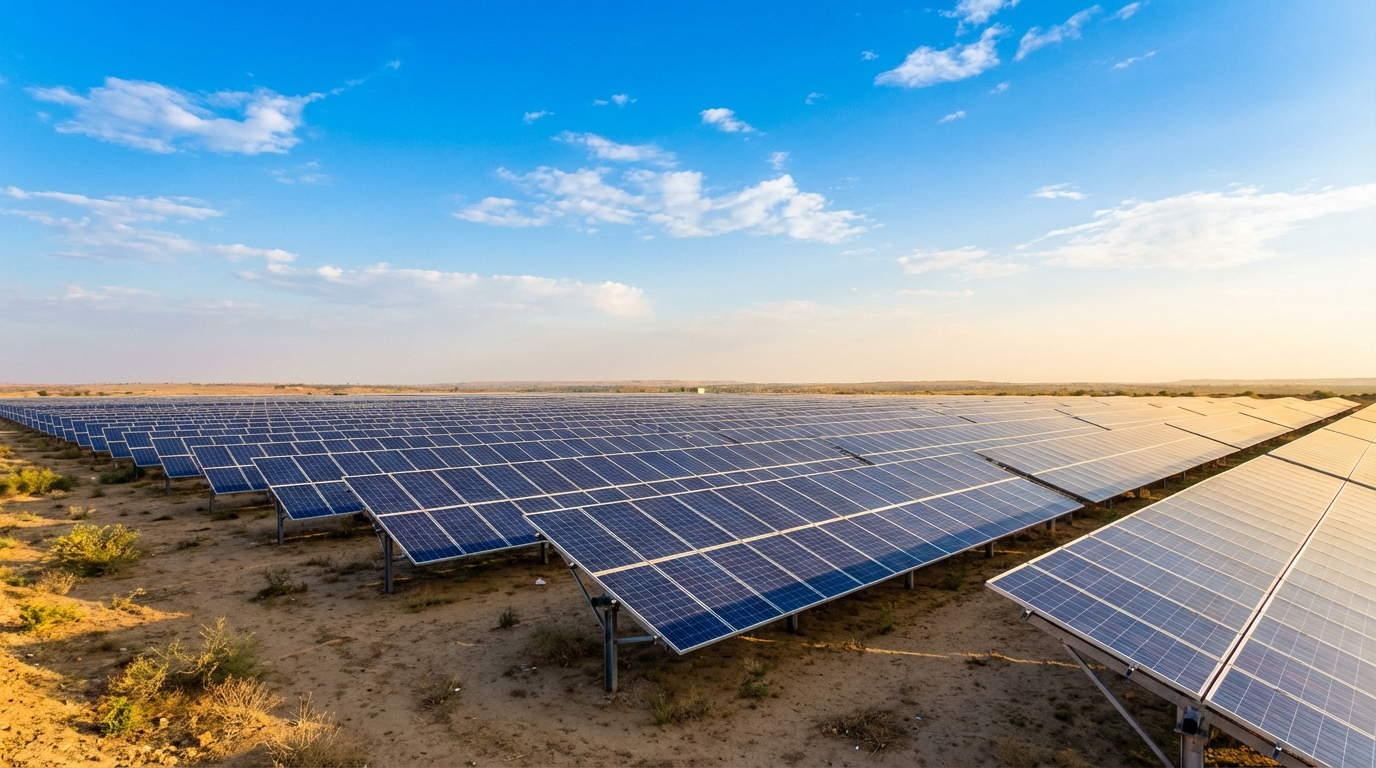
Ground mount solar systems are photovoltaic installations mounted on the ground using specialized racking and foundation systems, rather than being attached to building rooftops. These systems can range from small 10 kW installations for commercial properties to massive solar parks generating hundreds of megawatts. Ground mount solar arrays typically use one of three configurations: fixed-tilt systems that remain stationary at an optimal angle, single-axis tracking systems that follow the sun’s east-west movement throughout the day, or dual-axis tracking systems that adjust both horizontally and vertically for maximum sun exposure.
Gujarat stands out as one of India’s most favorable locations for ground mount solar development. The state receives an average solar irradiation of 5.5 to 6.0 kWh per square meter per day, ranking among the highest in the country. This abundant sunshine translates directly into higher energy generation and faster return on investment for solar projects. Beyond natural advantages, Gujarat has demonstrated strong policy support for renewable energy, with streamlined approval processes, dedicated solar parks with pre-developed infrastructure, and proactive implementation of central government schemes.
The state’s diverse landscape offers ample land availability for ground mount solar projects. From the arid regions of Kutch to the agricultural plains of central Gujarat, developers and businesses can find suitable land at competitive rates. The Gujarat government has also established clear guidelines for land conversion and solar project development, reducing regulatory uncertainty that often delays projects in other states.
Who benefits most from ground mount solar in Gujarat? Industrial facilities with high daytime energy consumption find ground mount solar particularly attractive, as they can install large-capacity systems on adjacent land without compromising factory rooftop space. Agricultural landowners can leverage schemes like PM-KUSUM to generate additional income while continuing farming activities. Solar project developers and investors are increasingly focusing on Gujarat for utility-scale solar parks due to the favorable solar resource, grid infrastructure, and power purchase agreement opportunities.
Ground Mount Solar vs Rooftop Solar: Key Differences
Understanding when to choose ground mount solar over rooftop installations is crucial for project planning. While both technologies use similar solar panels and inverters, the installation approach and suitability differ significantly.
Space and capacity considerations: Rooftop solar is limited by available roof area and structural load-bearing capacity. A typical commercial rooftop might accommodate 100-500 kW, while ground mount solar can scale to any size based on land availability. If your energy needs exceed what your rooftop can support, or if you have access to unused land, ground mount solar becomes the practical choice.
Installation complexity: Rooftop installations require careful structural assessment to ensure the building can support panel weight, wind loads, and mounting equipment. Older buildings may need reinforcement, adding cost and complexity. Ground mount solar systems, by contrast, use independent foundation systems—typically concrete piers or driven piles—that don’t depend on existing structures. This often simplifies engineering and reduces structural risk.
Cost per watt comparison: Ground mount solar panel cost in Gujarat typically ranges higher per watt than rooftop systems due to additional civil works, land preparation, and more extensive mounting structures. However, this cost difference narrows for larger installations where economies of scale apply. For projects above 500 kW, ground mount systems often achieve comparable or better cost efficiency, especially when factoring in easier installation and maintenance access.
Maintenance accessibility: One of ground mount solar’s most significant advantages is maintenance convenience. Technicians can easily walk between panel rows for cleaning, inspection, and repairs without safety concerns associated with rooftop work. This accessibility translates to lower long-term maintenance costs and better system performance, as regular cleaning is more practical and affordable.
Energy generation efficiency: Ground mount solar systems can be optimized for ideal tilt angles and orientations without compromise. Rooftop systems must work with existing roof pitch and direction, which may not be optimal for solar generation. Additionally, ground mount systems benefit from better air circulation around panels, reducing heat buildup that decreases efficiency. In Gujarat’s hot climate, this cooling advantage can improve annual energy yield by 3-5% compared to rooftop installations.
Choose ground mount solar when you have available land, need capacity beyond rooftop limitations, want easier maintenance access, or are developing a project specifically for energy generation rather than utilizing existing building space. For comprehensive guidance on solar project implementation, explore our detailed resource on what solar EPC services include.
Land Requirements for Ground Mount Solar Projects in Gujarat
Accurate land planning is fundamental to successful ground mount solar development. The general rule of thumb is that 1 MW of ground mount solar capacity requires approximately 4-5 acres of land for fixed-tilt systems. This accounts for panel placement, spacing between rows to prevent shading, access roads, inverter and transformer placement, and perimeter security fencing.
For tracking systems that follow the sun’s movement, land requirements increase to approximately 6-7 acres per MW due to wider row spacing needed to accommodate panel movement without creating shadows. While tracking systems use more land, they generate 15-25% more energy than fixed-tilt systems, often justifying the additional land cost through higher revenue.
Soil and terrain considerations: Ideal land for ground mount solar in Gujarat features relatively flat terrain with minimal slope (less than 5 degrees), firm soil capable of supporting foundation systems, and good drainage to prevent water accumulation during monsoon season. Rocky terrain increases foundation costs, while extremely sandy soil may require specialized pile foundations. A geotechnical survey should be conducted before finalizing land acquisition to identify any soil challenges that could impact project costs.
Land ownership and leasing options: You can develop ground mount solar on owned land or through long-term lease agreements. Lease arrangements typically span 25-30 years to match the solar system’s operational life, with annual lease payments ranging from ₹15,000 to ₹40,000 per acre depending on location and land quality. For businesses with excess land, developing solar on owned property eliminates lease costs and can significantly improve project economics.
Proximity to grid connectivity: Distance to the nearest electrical substation or grid connection point critically impacts project costs. Each kilometer of transmission line can add ₹15-25 lakhs to project expenses. Ideally, select land within 2-3 kilometers of existing grid infrastructure. Gujarat’s solar parks offer pre-developed grid connectivity, making them attractive for developers who want to avoid transmission infrastructure costs.
Environmental and regulatory clearances: Ground mount solar projects above certain capacity thresholds require environmental clearances and approvals from the Gujarat Energy Development Agency (GEDA) and local authorities. Projects on non-agricultural land generally face fewer regulatory hurdles. However, Gujarat has established clear procedures for solar development, and experienced EPC providers can navigate the approval process efficiently.
Agricultural land conversion for PM-KUSUM projects: The PM-KUSUM scheme specifically enables farmers to install solar projects on agricultural land while continuing farming activities between panel rows. This dual-use approach, called agrivoltaics, allows land to generate both crop income and solar revenue. Gujarat has simplified the land conversion process for PM-KUSUM projects, though specific regulations vary by district. Farmers should consult with local revenue departments and experienced solar EPC companies to understand requirements for their specific location.
Complete Ground Mount Solar EPC Process Explained
The ground mount solar EPC process encompasses every aspect of project development from initial concept to operational handover. Understanding each phase helps you set realistic timelines and budget expectations.
Phase 1: Site Assessment and Feasibility Study
Every successful ground mount solar project begins with thorough site evaluation. The EPC provider conducts a detailed assessment including solar resource analysis using satellite data and on-site measurements, topographical survey to map terrain and identify optimal panel placement, soil testing to determine appropriate foundation design, and shadow analysis to ensure no obstructions will reduce energy generation. This phase also includes grid connectivity assessment, identifying the nearest substation and evaluating interconnection capacity.
The feasibility study produces a preliminary project design, energy generation estimates, cost projections, and financial modeling showing expected solar ROI and payback period. This documentation is essential for securing financing and making informed investment decisions. For established EPC companies in Gujarat, this phase typically takes 2-4 weeks depending on project size and site complexity.
Phase 2: Engineering and Design
Once feasibility is confirmed, detailed engineering begins. The design team creates comprehensive plans including electrical single-line diagrams showing how panels connect to inverters and the grid, civil engineering drawings for foundations and access roads, structural calculations for mounting systems to withstand Gujarat’s wind loads and weather conditions, and equipment specifications for all system components.
For ground mount solar installations in Gujarat, design must account for monsoon rainfall, high summer temperatures that affect panel efficiency, and occasional dust storms that impact panel cleanliness. Proper drainage design prevents water accumulation, while optimized tilt angles balance year-round energy generation with ease of cleaning. This engineering phase typically requires 3-6 weeks for projects up to 5 MW, longer for larger solar parks.
Phase 3: Procurement
The procurement phase involves sourcing and acquiring all project components. Major equipment includes solar modules (panels), inverters to convert DC power to AC, mounting structures made from galvanized steel or aluminum, cables and connectors for electrical connections, transformers for voltage step-up, and monitoring systems for performance tracking.
Quality procurement is critical to long-term project success. Reputable EPC providers source equipment from established manufacturers with proven track records and comprehensive warranties. In Gujarat’s competitive solar market, equipment quality varies significantly, and choosing inferior components to reduce upfront costs often leads to higher maintenance expenses and lower energy generation over the system’s 25-year life. Learn more about selecting quality equipment in our guide to top solar panel brands available in Gujarat.
Procurement timelines depend on equipment availability and project scale. Standard components for projects under 1 MW can typically be procured within 4-6 weeks, while larger projects or those requiring specialized equipment like tracking systems may need 8-12 weeks.
Phase 4: Construction and Installation
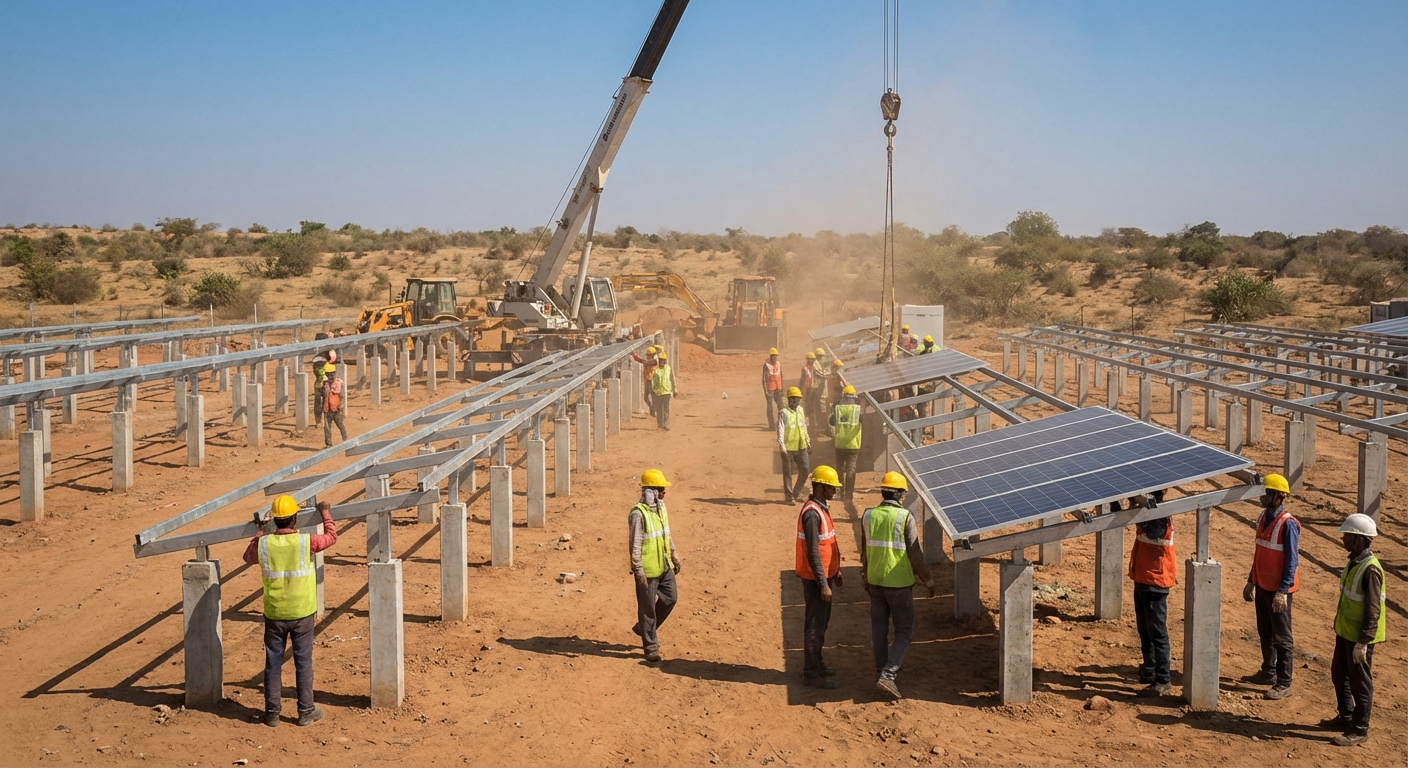
The construction phase brings the project to life through systematic execution. Work begins with site preparation including land leveling, access road construction, and perimeter fencing. Next comes foundation installation—drilling or excavating for concrete piers or driven piles that will support mounting structures. Foundation design varies based on soil conditions identified during site assessment.
Once foundations cure, mounting structure installation begins. Workers assemble and secure the metal racking systems that will hold solar panels. This is followed by panel installation, where modules are carefully mounted and secured to the racking. Electrical work proceeds in parallel, with technicians running cables, installing inverters and transformers, and making all electrical connections according to engineering specifications.
Construction timelines for ground mount solar vary by project size. A 500 kW installation typically requires 6-8 weeks of construction, while a 5 MW project may take 4-6 months. Weather conditions, particularly monsoon season, can impact construction schedules, so project planning should account for Gujarat’s seasonal patterns.
Phase 5: Commissioning and Grid Connectivity
Before the system can generate power, it must be commissioned and connected to the electrical grid. Commissioning involves systematic testing of all components, verifying that panels generate expected voltage and current, confirming inverters function properly, testing safety systems including grounding and surge protection, and validating monitoring systems accurately track performance.
Grid connectivity requires coordination with the local electricity distribution company (DISCOM). In Gujarat, this involves submitting interconnection applications, installing net metering or gross metering equipment as applicable, and obtaining final approvals for grid synchronization. The DISCOM conducts inspections to ensure the installation meets safety and technical standards before authorizing grid connection.
For projects under government schemes like PM-KUSUM, additional inspections and approvals from GEDA may be required before subsidy disbursement. Experienced EPC providers manage these regulatory processes, ensuring all documentation is complete and approvals are obtained efficiently.
Phase 6: Testing and Handover
The final EPC phase involves comprehensive performance testing and project handover. The system operates under observation for several days to verify it meets guaranteed performance parameters. The EPC provider delivers complete documentation including as-built drawings, equipment warranties, operation and maintenance manuals, and performance guarantees.
Training is provided to the client’s team on system operation, basic troubleshooting, and monitoring platform usage. Most EPC contracts include a warranty period (typically 1-2 years) during which the provider addresses any performance issues or equipment defects at no additional cost.
Typical project timeline summary: A 1 MW ground mount solar project in Gujarat typically requires 5-7 months from contract signing to grid connection, including all phases. Smaller projects (under 500 kW) can be completed in 3-4 months, while large solar parks above 10 MW may require 12-18 months depending on complexity and regulatory approvals.
PM-KUSUM Scheme Integration for Ground Solar Projects
The Pradhan Mantri Kisan Urja Suraksha evam Utthaan Mahabhiyan (PM-KUSUM) scheme represents a transformative opportunity for farmers and agricultural landowners in Gujarat to develop ground mount solar projects with substantial government support. Understanding how to leverage this scheme can dramatically improve project economics.
PM-KUSUM has three main components: Component A supports installation of grid-connected renewable power plants of 500 kW to 2 MW capacity on barren or cultivable land. Component B provides subsidies for standalone solar-powered agriculture pumps. Component C offers support for solarization of existing grid-connected agriculture pumps. For ground mount solar development, Component A is most relevant.
Subsidy structure and financial benefits: Under PM-KUSUM Component A, the central government provides 30% of the project cost as subsidy, the state government may provide an additional 30% (varies by state and year), and the farmer or developer contributes the remaining 40%, which can be financed through bank loans. This subsidy structure significantly reduces the capital requirement for farmers and improves solar ROI substantially.
For example, a 1 MW ground mount solar project costing approximately ₹4.5 crores would receive ₹1.35 crores central subsidy and potentially ₹1.35 crores state subsidy, reducing the farmer’s investment to ₹1.8 crores. With proper financing, the actual upfront cash requirement can be minimal, while the project generates revenue through power sale to DISCOMs or through open access arrangements.
Eligibility criteria for Gujarat farmers and developers: Individual farmers, groups of farmers, cooperatives, panchayats, and farmer producer organizations can apply for PM-KUSUM Component A. The land must be agricultural or barren land owned by the applicant. Projects can range from 500 kW to 2 MW capacity, with the total capacity in a district allocated through a selection process managed by GEDA.
Application process and documentation: Interested farmers must submit applications to GEDA during announced application windows. Required documentation typically includes land ownership documents, identity proof, bank account details, and a project proposal. GEDA evaluates applications and allocates capacity based on criteria including land suitability, grid connectivity feasibility, and applicant credentials.
Once capacity is allocated, the farmer must engage an empaneled EPC provider to develop the project. The EPC company handles detailed project design, equipment procurement, installation, and commissioning. Subsidy disbursement occurs in stages tied to project milestones, with final payment released after successful commissioning and inspection.
How Heaven Green Energy facilitates PM-KUSUM projects: As an experienced solar EPC provider in Gujarat, Heaven Green Energy guides farmers through the entire PM-KUSUM process. This includes assistance with GEDA applications and documentation, complete turnkey EPC services from design through commissioning, coordination with DISCOMs for grid connectivity and power purchase agreements, and post-installation support to ensure optimal system performance. With local offices in Surat, Ahmedabad, and Junagadh, Heaven Green Energy provides accessible support throughout Gujarat for farmers and developers pursuing PM-KUSUM opportunities.
Success stories and ROI with government schemes: Farmers who have successfully implemented PM-KUSUM projects in Gujarat report payback periods of 4-6 years with subsidy support, compared to 7-10 years for unsubsidized projects. The combination of reduced capital investment through subsidies and steady revenue from power sales creates an attractive investment proposition. Additionally, agrivoltaic approaches allow continued farming between panel rows, maintaining agricultural income alongside solar revenue.
Ground Mount Solar System Components and Technology
Understanding the key components of ground mount solar systems helps you make informed decisions about equipment selection and quality standards.
Solar modules: Ground mount solar installations in Gujarat predominantly use monocrystalline solar panels due to their higher efficiency (18-22%) and better performance in high-temperature conditions. While polycrystalline panels cost slightly less, their lower efficiency means more panels and more land are required for the same capacity. For large ground mount solar projects where land costs are significant, the higher efficiency of monocrystalline technology often provides better overall economics.
Premium solar modules come with 25-year performance warranties guaranteeing at least 80-85% of original capacity after 25 years. This long-term performance assurance is critical for project financial modeling. Modules should meet IEC certification standards and be tested for Gujarat’s specific climate conditions including high temperatures, humidity, and dust exposure.
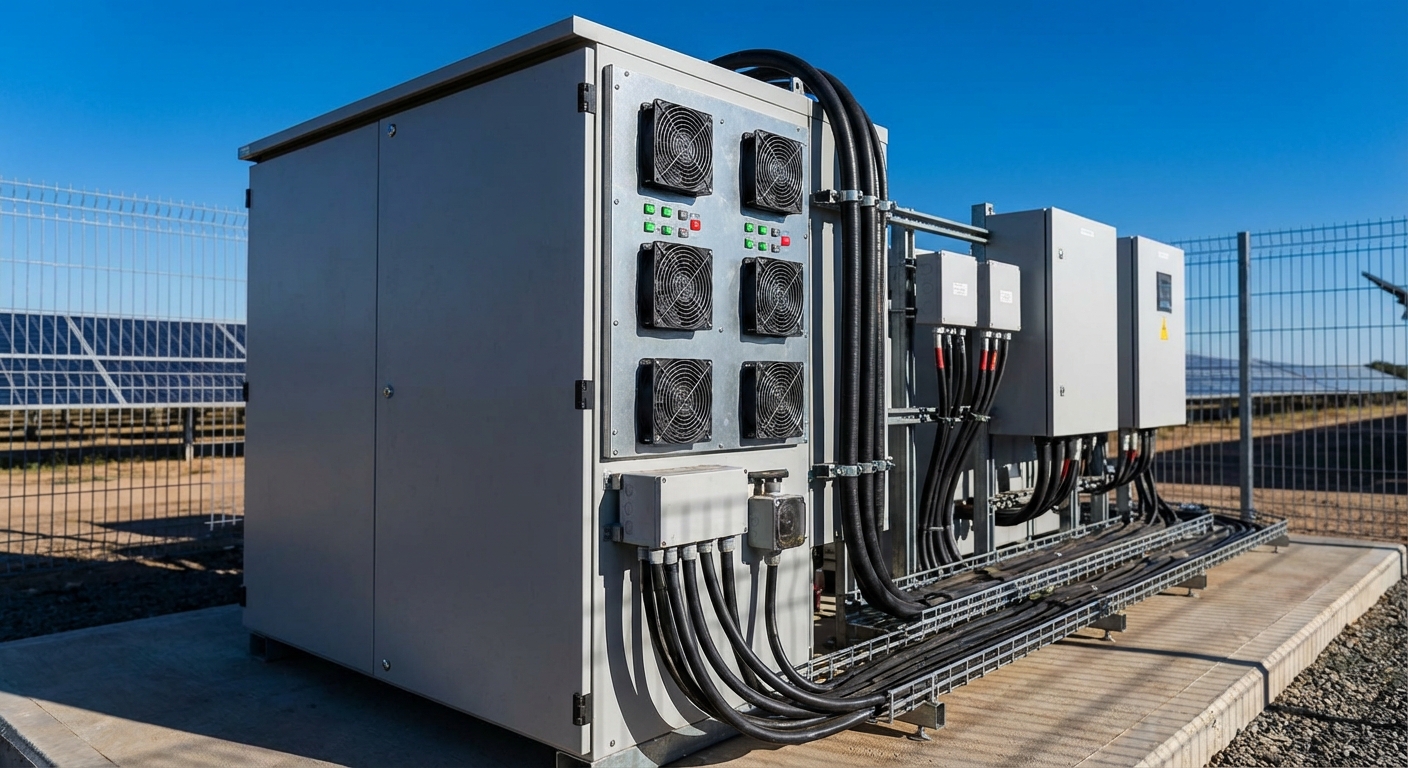
Inverter selection: Ground mount solar systems use either string inverters or central inverters depending on project size and design. String inverters (typically 50-100 kW capacity) are common for projects under 1 MW, offering flexibility and redundancy—if one inverter fails, only a portion of the system is affected. Central inverters (500 kW to 2 MW capacity) are more cost-effective for large solar parks but create single points of failure.
Modern solar inverters include maximum power point tracking (MPPT) technology that optimizes energy harvest, built-in monitoring and communication capabilities, and safety features including anti-islanding protection. Leading inverter brands offer 5-10 year warranties with extended warranty options. Given Gujarat’s hot climate, inverters should be rated for high ambient temperatures and include adequate cooling systems.
Mounting structures: The mounting system must withstand Gujarat’s environmental conditions for 25+ years. Most ground mount solar installations use galvanized steel structures due to their strength, durability, and cost-effectiveness. Aluminum structures offer corrosion resistance advantages in coastal areas but at higher cost.
Foundation types vary based on soil conditions. Concrete pier foundations work well in firm soil, driven pile foundations suit sandy or loose soil, and ballasted foundations (using concrete blocks without ground penetration) are used where ground penetration is restricted. Proper foundation design prevents settling or movement that could misalign panels and reduce energy generation.
Fixed-tilt mounting systems are simplest and most cost-effective, with panels set at an optimal angle (typically 15-20 degrees in Gujarat) for year-round generation. Single-axis tracking systems that follow the sun east to west throughout the day increase energy generation by 15-25% but add 15-20% to system cost and require more maintenance. The decision between fixed and tracking systems depends on project economics, available land, and long-term performance goals.
Balance of system components: Beyond panels and inverters, ground mount solar systems require extensive balance of system (BOS) components. DC cables connect panels to inverters, sized to minimize voltage drop and power loss. AC cables carry power from inverters to transformers and grid connection points. Junction boxes and combiner boxes consolidate connections from multiple panel strings. Earthing systems protect against lightning strikes and electrical faults. Circuit breakers and disconnect switches enable safe maintenance and emergency shutdown.
Quality BOS components are essential for system safety and longevity. Cables must be rated for outdoor UV exposure and temperature extremes. All electrical connections should be weatherproof and corrosion-resistant. Skimping on BOS component quality to reduce costs often leads to failures, safety hazards, and expensive repairs.
Monitoring systems: Modern ground mount solar installations include comprehensive monitoring systems that track real-time and historical performance. Monitoring platforms display energy generation, system efficiency, inverter status, and alert operators to any faults or underperformance. For large solar parks, monitoring systems may include weather stations that measure irradiation, temperature, and wind speed to correlate with energy production.
Remote monitoring enables proactive maintenance—identifying and addressing issues before they significantly impact generation. For investors and project owners, monitoring data provides transparency and verification that the system performs according to guarantees.
Quality standards and certifications: All major components should meet relevant Indian and international standards. Solar modules should have IEC 61215 and IEC 61730 certifications. Inverters should meet IEC 62109 safety standards. The complete installation should comply with Central Electricity Authority (CEA) regulations and Gujarat state electrical codes. Reputable EPC providers ensure all equipment and installation practices meet these standards, protecting your investment and ensuring safe, reliable operation.
Project Costs, Financing, and ROI for Ground Mount Solar
Understanding the complete financial picture is essential for ground mount solar project planning. Costs vary based on project size, equipment quality, site conditions, and whether government subsidies apply.
Cost breakdown per MW: As of 2026, ground mount solar projects in Gujarat typically cost ₹4.0-4.8 crores per MW for fixed-tilt systems using quality components. This breaks down approximately as follows: solar modules account for 40-45% of total cost, inverters and electrical equipment represent 15-20%, mounting structures and foundations comprise 15-18%, civil works including land preparation and roads make up 8-12%, grid connectivity and transformers add 5-8%, and EPC margins, engineering, and project management account for the remaining 10-15%.
These costs assume relatively flat land with good soil conditions and grid connectivity within 2-3 kilometers. Challenging site conditions, remote locations, or tracking systems can increase costs by 15-30%. Conversely, very large projects (above 10 MW) benefit from economies of scale and may achieve costs toward the lower end of the range.
Factors affecting ground mount solar panel cost in Gujarat: Several variables influence final project costs. Equipment selection has major impact, premium Tier 1 solar modules and inverters cost more but offer better performance and warranties. Site preparation costs vary dramatically based on terrain and soil conditions. Grid connectivity distance directly affects transmission infrastructure expenses. Project timing matters, as equipment prices fluctuate based on global supply and demand. Larger projects achieve better pricing through bulk procurement and installation efficiency.
Labor costs in Gujarat are generally competitive compared to other states, providing a cost advantage for solar development. However, projects in remote areas may face higher labor costs due to accommodation and transportation requirements.
Financing options: Most ground mount solar projects are financed rather than paid entirely upfront. Several financing models are available in Gujarat. Bank loans from institutions like State Bank of India, Bank of Baroda, and others offer solar project financing with 10-15 year terms at interest rates of 9-11% (rates vary based on borrower profile and market conditions). Non-banking financial companies (NBFCs) specializing in renewable energy provide alternative financing, sometimes with more flexible terms.
For businesses installing solar for captive consumption, the solar system can be treated as a capital expenditure with depreciation benefits. The Income Tax Act allows accelerated depreciation on solar assets, providing tax advantages that improve effective ROI.
Developer models offer an alternative where a third-party developer finances, builds, and owns the solar system, selling power to the land owner or nearby consumer through a power purchase agreement (PPA). This eliminates upfront capital requirements but results in lower long-term returns compared to ownership.
Revenue models: Ground mount solar projects generate revenue through several mechanisms. Captive consumption is where businesses install solar to offset their own electricity purchases, saving on utility bills. The savings equal the avoided cost of grid electricity, currently ₹6-10 per unit for commercial and industrial consumers in Gujarat. Open access allows solar generators to sell power to third-party consumers through Gujarat’s open access framework, earning revenue from power sales while the consumer benefits from lower electricity costs. Third-party sale involves selling power directly to DISCOMs under power purchase agreements, with rates determined through competitive bidding or feed-in tariff mechanisms.
The optimal revenue model depends on your situation. Businesses with high daytime electricity consumption benefit most from captive consumption. Farmers and landowners without significant self-consumption typically sell power through PPAs or open access arrangements.
Solar ROI calculation for ground mount projects: Return on investment depends on project costs, revenue or savings, and financing structure. For a typical 1 MW ground mount solar project in Gujarat costing ₹4.5 crores with 70% debt financing, annual energy generation of approximately 1.6 million units, and revenue of ₹8-9 per unit through open access or captive consumption savings, the project generates annual revenue of ₹1.28-1.44 crores. After accounting for loan payments, operation and maintenance costs, and land lease (if applicable), the project typically achieves positive cash flow within 2-3 years and full payback in 7-9 years.
With PM-KUSUM subsidies reducing capital costs by 60%, payback periods shorten to 4-6 years, significantly improving ROI. Over the system’s 25-year life, well-designed ground mount solar projects in Gujarat typically generate internal rates of return (IRR) of 12-16% for unsubsidized projects and 18-25% for subsidized projects. For detailed analysis of solar investment returns, see our comprehensive guide on solar payback periods and break-even timelines.
Payback period expectations: Project payback varies based on multiple factors. Unsubsidized commercial/industrial captive projects typically achieve payback in 6-8 years. PM-KUSUM subsidized projects reach payback in 4-6 years. Large solar parks selling power through PPAs may have longer payback periods of 8-10 years but offer stable long-term returns. Projects with tracking systems have higher upfront costs but shorter payback due to increased generation.
These timelines assume quality equipment with expected performance, proper maintenance, and stable electricity rates or PPA terms. Underperforming systems due to poor equipment or installation quality can significantly extend payback periods, emphasizing the importance of choosing experienced EPC providers and quality components.
Operation, Maintenance, and Performance Optimization
Long-term performance of ground mount solar systems depends heavily on proper operation and maintenance practices. Unlike rooftop systems where maintenance access is challenging, ground mount installations offer significant advantages for ongoing care.
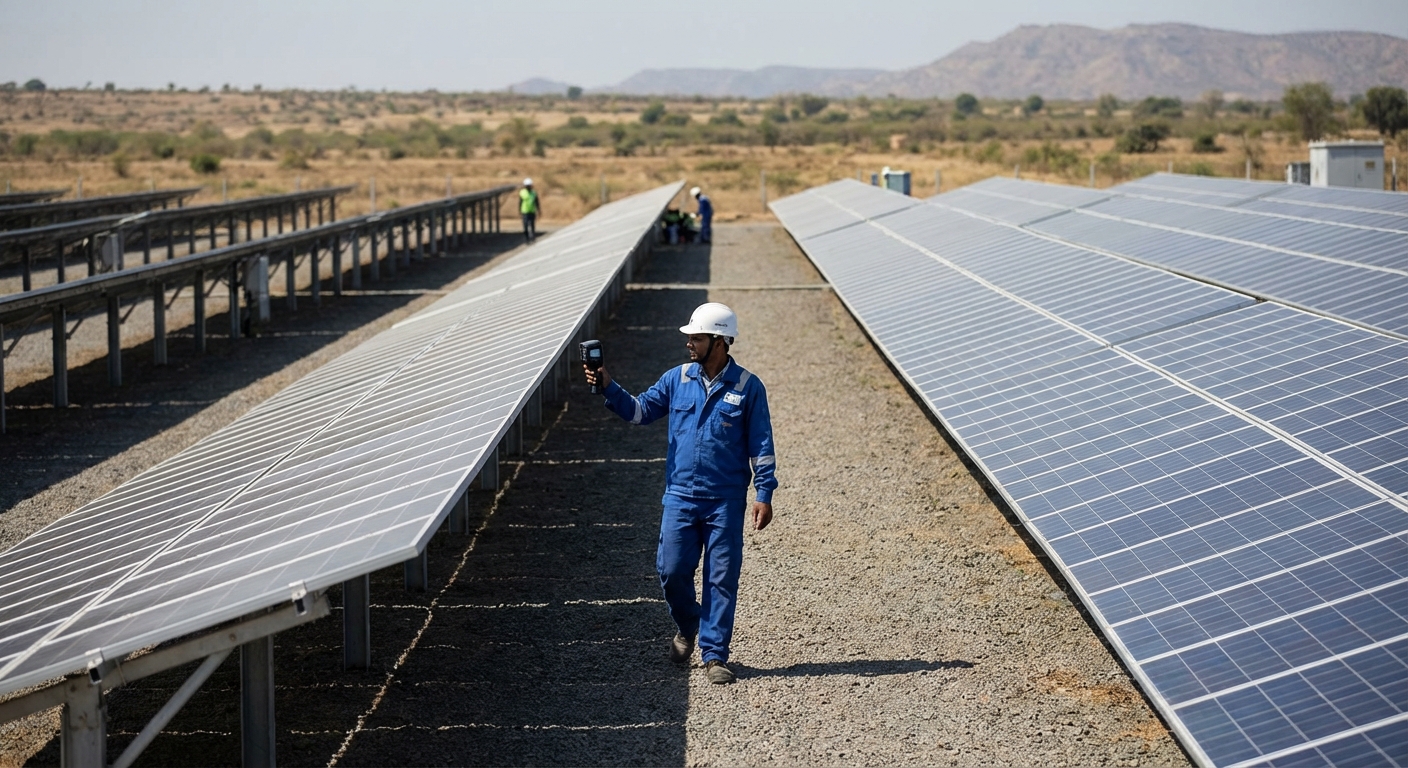
Regular maintenance requirements: Ground mount solar systems require periodic maintenance to ensure optimal performance. Monthly visual inspections check for physical damage, loose connections, vegetation growth, and any obvious issues. Quarterly electrical testing verifies system performance, checks inverter operation, and identifies any underperforming strings or modules. Annual comprehensive maintenance includes detailed electrical testing, thermal imaging to identify hot spots indicating failing components, and structural inspection of mounting systems and foundations.
Most EPC providers offer annual maintenance contracts (AMCs) that include scheduled inspections, cleaning, and repairs. AMC costs typically range from ₹15,000-25,000 per MW annually, a small investment that protects the much larger capital investment in the solar system.
Cleaning schedules and techniques for Gujarat’s climate: Dust accumulation significantly impacts solar panel performance in Gujarat’s arid climate. Studies show that uncleaned panels can lose 15-25% of generation capacity within 2-3 months during dry seasons. Regular cleaning is essential for maintaining performance.

Cleaning frequency depends on location and season. In dusty areas or during dry months, monthly cleaning may be necessary. During monsoon season, natural rainfall often provides adequate cleaning. Ground mount solar systems can be cleaned using manual methods with soft brushes and water, automated cleaning systems for large installations, or robotic cleaners that traverse panel rows. Water quality matters, hard water can leave mineral deposits, so filtered or treated water is preferable.
The accessibility of ground mount systems makes cleaning more practical and affordable than rooftop installations. Workers can easily move between panel rows with cleaning equipment, completing the job efficiently without safety risks associated with rooftop work.
Performance monitoring and troubleshooting: Continuous monitoring enables quick identification and resolution of issues. Modern monitoring systems alert operators to inverter faults, underperforming strings, grid disconnections, and generation below expected levels. Rapid response to alerts minimizes energy loss and revenue impact.
Common issues in ground mount solar systems include inverter faults (usually resolved through reset or component replacement), module failures (individual panels can be replaced without affecting the entire system), cable damage from rodents or environmental factors, and tracker system malfunctions in installations using tracking technology. Experienced maintenance teams can diagnose and resolve most issues within 24-48 hours, minimizing downtime.
Vegetation management: One unique aspect of ground mount solar maintenance is vegetation control. Grass and weeds growing around and under panels can create shading, harbor pests, and increase fire risk during dry seasons. Regular vegetation management through manual cutting, mechanical mowing, or controlled grazing (some solar farms use sheep to manage vegetation) keeps the site clear and safe.
Some ground mount solar installations in Gujarat incorporate agrivoltaic practices, growing shade-tolerant crops between panel rows. This requires careful planning to ensure crops don’t shade panels while maximizing land productivity. When properly designed, agrivoltaic systems can generate both solar revenue and agricultural income from the same land.
Inverter and module health checks: Inverters are the most likely component to require replacement during the system’s 25-year life. Most inverters carry 5-10 year warranties, and replacement may be needed after 10-15 years. Regular monitoring of inverter performance, efficiency, and operating temperature helps predict when replacement will be necessary, allowing for planned maintenance rather than unexpected failures.
Solar modules are highly reliable, but occasional failures occur. Thermal imaging during annual maintenance identifies modules with hot spots indicating cell damage or connection issues. Failed modules should be replaced promptly to maintain system performance. Most quality modules carry 10-12 year product warranties and 25-year performance warranties, providing protection against premature failures.
Long-term performance guarantees and warranties: Reputable EPC providers offer performance guarantees ensuring the system generates expected energy levels. Typical guarantees promise that the system will produce at least 90-95% of projected energy in the first year, with degradation not exceeding 0.5-0.7% annually thereafter. If the system underperforms, the EPC provider must identify and correct the issue at no cost to the owner.
Component warranties provide additional protection. Solar modules typically include 10-12 year product warranties against manufacturing defects and 25-year performance warranties guaranteeing minimum output levels. Inverters carry 5-10 year warranties with extended warranty options. Mounting structures should be warranted for 10+ years against structural failure and corrosion.
These warranties and guarantees are only valuable if the provider remains in business to honor them. Choosing established EPC companies with proven track records and financial stability ensures you can actually benefit from warranty coverage throughout the system’s life.
Why Choose Heaven Green Energy for Ground Solar EPC in Gujarat
Selecting the right EPC partner is one of the most important decisions in your ground mount solar project. The EPC provider’s expertise, quality standards, and long-term support directly impact project success, performance, and returns.
Turnkey EPC expertise with proven track record: Heaven Green Energy Limited brings extensive experience in ground mount solar development across Gujarat. Since establishment in 2017, the company has completed over 10,000 solar installations ranging from small commercial systems to large ground-mounted solar parks. This experience translates into efficient project execution, realistic timelines, and solutions to the challenges that inevitably arise during solar development.
As one of the top three EPC companies in Gujarat, Heaven Green Energy has demonstrated capability across all project phases, from initial feasibility studies through long-term maintenance. The company’s turnkey approach means you work with a single point of contact for all aspects of your ground mount solar project, simplifying coordination and accountability.
Local presence across Gujarat: With headquarters in Surat and branch offices in Ahmedabad and Junagadh, Heaven Green Energy provides accessible service throughout Gujarat. This local presence enables quick site visits during project planning, responsive support during construction, and readily available maintenance services after commissioning. For ground mount solar projects in remote areas, having an EPC provider with regional presence ensures issues can be addressed promptly without delays waiting for teams to travel from distant locations.
Government scheme facilitation expertise: Navigating government schemes like PM-KUSUM requires understanding of application processes, documentation requirements, and coordination with multiple agencies including GEDA, DISCOMs, and local authorities. Heaven Green Energy’s experience with government-supported projects streamlines this process, helping farmers and developers access available subsidies and incentives efficiently.
The company assists with GEDA applications, prepares required documentation, coordinates inspections and approvals, and ensures projects meet all technical and regulatory requirements for subsidy disbursement. This expertise can make the difference between a smooth project experience and frustrating delays due to documentation issues or regulatory misunderstandings.
End-to-end project management: Ground mount solar projects involve coordination of multiple activities, civil works, electrical installation, equipment procurement, regulatory approvals, and grid connectivity. Heaven Green Energy’s project management approach ensures all these elements proceed in proper sequence with clear communication and accountability. Clients receive regular progress updates, transparent reporting on timelines and budgets, and proactive problem-solving when challenges arise.
Quality equipment sourcing and installation: Heaven Green Energy sources solar modules, inverters, and other components from established manufacturers with proven performance in Gujarat’s climate. The company’s procurement relationships enable competitive pricing while maintaining quality standards. All installations follow industry best practices and comply with relevant safety and technical standards.
Quality installation is as important as quality equipment. Proper foundation design and installation, correct electrical connections, appropriate cable sizing, and thorough testing all contribute to long-term system performance. Heaven Green Energy’s installation teams bring experience and training to ensure your ground mount solar system is built to perform reliably for 25+ years.
Post-installation support and maintenance services: The relationship with your EPC provider doesn’t end at commissioning. Heaven Green Energy offers comprehensive maintenance services including annual maintenance contracts, emergency repair services, performance monitoring support, and system upgrades or expansions as your needs evolve. This long-term partnership approach ensures your ground mount solar investment continues delivering expected returns throughout its operational life.
For businesses, industries, developers, and farmers in Gujarat considering ground mount solar projects, partnering with an experienced local EPC provider like Heaven Green Energy reduces risk, streamlines execution, and maximizes the likelihood of achieving your energy and financial goals.
Frequently Asked Questions About Ground Mount Solar in Gujarat
How much land is needed for 1 MW ground mount solar?
A 1 MW ground mount solar installation typically requires 4-5 acres of land for fixed-tilt systems. This includes space for panel arrays, spacing between rows to prevent shading, access roads, inverter and transformer placement, and perimeter fencing. Tracking systems that follow the sun require more space, approximately 6-7 acres per MW, due to wider row spacing needed to accommodate panel movement. The exact land requirement varies based on panel efficiency, mounting system design, and site-specific factors like terrain and required setbacks.
What is the typical project timeline?
Project timelines vary by size and complexity. A 1 MW ground mount solar project in Gujarat typically requires 5-7 months from contract signing to grid connection, including site assessment, engineering, procurement, construction, and commissioning. Smaller projects under 500 kW can often be completed in 3-4 months, while large solar parks above 10 MW may require 12-18 months. Factors affecting timeline include equipment availability, weather conditions (monsoon season can delay construction), regulatory approval processes, and grid connectivity coordination with DISCOMs.
Can agricultural land be used for solar projects?
Yes, agricultural land can be used for ground mount solar projects in Gujarat, particularly under the PM-KUSUM scheme which specifically enables farmers to install solar on agricultural land. The scheme supports agrivoltaic approaches where farming continues between panel rows, allowing dual use of land for both agriculture and solar generation. Land conversion requirements vary by district and project type. For PM-KUSUM projects, Gujarat has streamlined the conversion process, though farmers should consult with local revenue departments and experienced EPC providers to understand specific requirements for their location. Non-agricultural and barren land generally face fewer regulatory hurdles for solar development.
What are the grid connectivity requirements?
Ground mount solar projects must connect to the electrical grid through the local DISCOM (distribution company). Requirements include submitting an interconnection application to the DISCOM, installing appropriate metering equipment (net metering for systems under 1 MW, gross metering for larger projects), meeting technical standards for voltage, frequency, and power quality, installing safety equipment including anti-islanding protection, and obtaining DISCOM approval after inspection before grid synchronization. Proximity to existing grid infrastructure is important, each kilometer of distance adds ₹15-25 lakhs in transmission line costs. Gujarat’s solar parks offer pre-developed grid connectivity, simplifying this process for developers. The DISCOM coordination process typically takes 2-4 months depending on project size and location.
How does ground mount solar perform in monsoon season?
Ground mount solar systems continue generating electricity during monsoon season, though output is reduced on cloudy and rainy days compared to clear sunny days. Gujarat’s monsoon typically runs from June through September. During this period, daily generation may drop to 40-60% of peak summer levels on heavily overcast days, but systems still produce valuable energy. Annual energy projections account for seasonal variation, so monsoon performance is factored into financial modeling and ROI calculations. One benefit of monsoon season is natural panel cleaning, rainfall washes away dust accumulation, improving performance when sunny weather returns. Proper drainage design during project engineering ensures water doesn’t accumulate around foundations or equipment, preventing any weather-related damage.
What permissions are required from Gujarat government?
Required permissions vary based on project size and location. Common requirements include land use permissions from local authorities if converting agricultural land, electrical safety approvals from the Chief Electrical Inspector, environmental clearances for projects above certain capacity thresholds, and GEDA registration and approvals for projects seeking subsidies or government scheme benefits. For PM-KUSUM projects, specific approvals from GEDA and coordination with DISCOMs are required. Grid connectivity requires DISCOM approval and inspection. Experienced EPC providers manage the approval process, ensuring all necessary permissions are obtained efficiently. Gujarat has worked to streamline solar project approvals, and the process is generally more straightforward than in many other states, particularly for projects in designated solar parks or under government schemes.
Take the Next Step Toward Ground Mount Solar in Gujarat
Ground mount solar represents a powerful opportunity for businesses, industries, developers, and farmers across Gujarat to harness abundant solar resources, reduce energy costs, and generate sustainable revenue. Whether you’re planning a small commercial installation or a multi-megawatt solar park, understanding the complete EPC process, land requirements, government schemes, and financial considerations positions you for success.
The key to realizing the full potential of ground mount solar lies in partnering with an experienced EPC provider who brings technical expertise, quality standards, local knowledge, and long-term support. From initial feasibility assessment through decades of operation, the right partner makes the difference between a solar project that meets expectations and one that exceeds them.
Heaven Green Energy Limited offers the turnkey ground mount solar EPC expertise Gujarat businesses and developers need. With proven experience across residential, commercial, industrial, and large-scale ground solar projects, local presence throughout Gujarat, and comprehensive support from planning through long-term maintenance, Heaven Green Energy delivers solar solutions that perform reliably and generate expected returns.
Ready to explore ground mount solar opportunities for your business, land, or development project? Have any questions? Call +91 63904 05060 to discuss your ground mount solar project with Heaven Green Energy’s expert team. Whether you’re evaluating feasibility, seeking guidance on PM-KUSUM applications, or ready to begin your solar journey, experienced professionals are available to provide the insights and support you need to make informed decisions about ground mount solar in Gujarat.
This blog post was written using thestacc.com