


The transition to solar energy in India has never been more accessible, thanks to comprehensive government subsidy schemes designed to make renewable energy affordable for every household and business. If you’re considering solar installation in Gujarat or anywhere across India, understanding solar subsidy programs is crucial to maximizing your investment and reducing upfront costs significantly.
This comprehensive FAQ guide answers all your questions about solar subsidies in 2026, from eligibility criteria and application processes to subsidy amounts and documentation requirements. Whether you’re a homeowner looking to cut electricity bills or a business seeking sustainable energy solutions, this guide will help you navigate government schemes like PM-KUSUM and rooftop solar programs with confidence.
Understanding Solar Subsidies in India: Why They Matter in 2026
India’s commitment to renewable energy has reached unprecedented levels in 2026, with the government targeting 500 GW of renewable energy capacity by 2030. Solar subsidies play a pivotal role in achieving this ambitious goal by making solar installations financially viable for millions of Indians who would otherwise find the initial investment prohibitive.
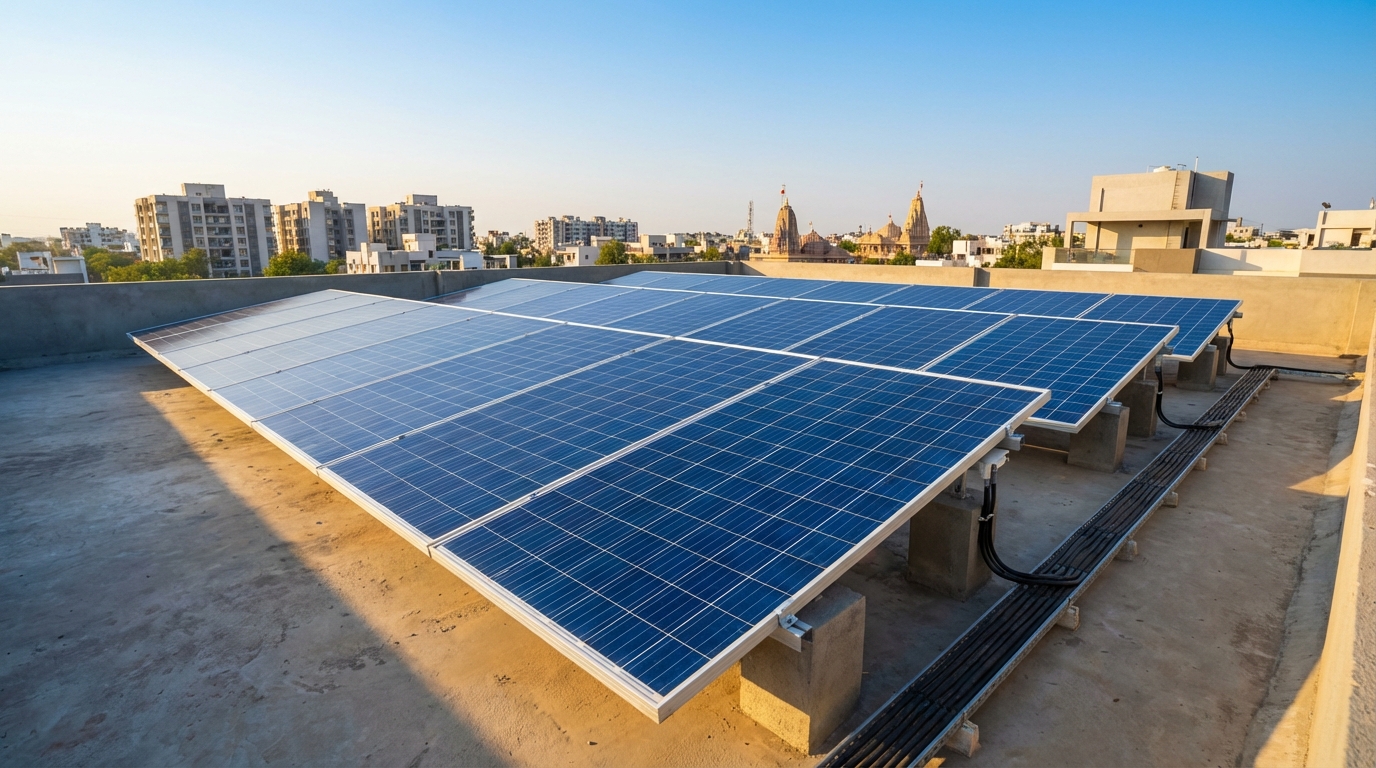
In Gujarat, one of India’s leading states in solar adoption, the combination of excellent solar irradiation, progressive state policies, and central government subsidies creates an ideal environment for solar investment. The state receives abundant sunlight throughout the year, making it particularly suitable for both residential and commercial solar projects.
Solar subsidies matter for several compelling reasons:
- Reduced Initial Investment: Subsidies can cover 30-40% of your solar installation cost, making the technology accessible to middle-class homeowners and small businesses
- Faster Return on Investment: With subsidies reducing upfront costs, your solar ROI improves dramatically, often achieving payback within 3-5 years instead of 7-8 years
- Environmental Impact: Every subsidized solar installation contributes to India’s carbon reduction goals and helps combat climate change
- Energy Independence: Solar subsidies enable more Indians to generate their own electricity, reducing dependence on grid power and protecting against rising electricity tariffs
- Economic Growth: Government schemes stimulate the solar industry, creating jobs and supporting local solar companies in Gujarat and across India
For homeowners and businesses in Gujarat, these subsidies represent a unique opportunity to adopt clean energy while enjoying substantial financial benefits. The question isn’t whether to go solar, but how to maximize available subsidies to make your investment even more rewarding.
What is Solar Subsidy and How Does It Work?
A solar subsidy is financial assistance provided by the central or state government to reduce the cost of installing solar energy systems. The subsidy is designed to encourage widespread adoption of renewable energy by making solar installations more affordable for residential, commercial, and agricultural consumers.
The subsidy mechanism in India operates through a Direct Benefit Transfer (DBT) system in most cases. Here’s how it typically works:
- Installation by Empaneled Vendor: You must work with a government-approved or empaneled solar EPC company like Heaven Green Energy to qualify for subsidies
- Application Submission: Your installer helps you register on the national or state portal and submit required documentation
- System Installation and Inspection: The solar system is installed and inspected by DISCOM (Distribution Company) officials to verify compliance with technical standards
- Subsidy Disbursement: Once approved, the subsidy amount is transferred directly to your bank account or adjusted in the final payment to the installer
The subsidy amount varies based on several factors including system capacity, location, consumer category (residential, commercial, or agricultural), and the specific scheme under which you’re applying. Central government subsidies are uniform across India, while state-level incentives may vary by region.
It’s important to understand that subsidies are typically available only for grid-connected solar systems installed through approved channels. Off-grid systems and installations done through non-empaneled vendors generally don’t qualify for government subsidies, though there are specific schemes for certain off-grid applications in remote areas.
Major Government Solar Subsidy Schemes in 2026
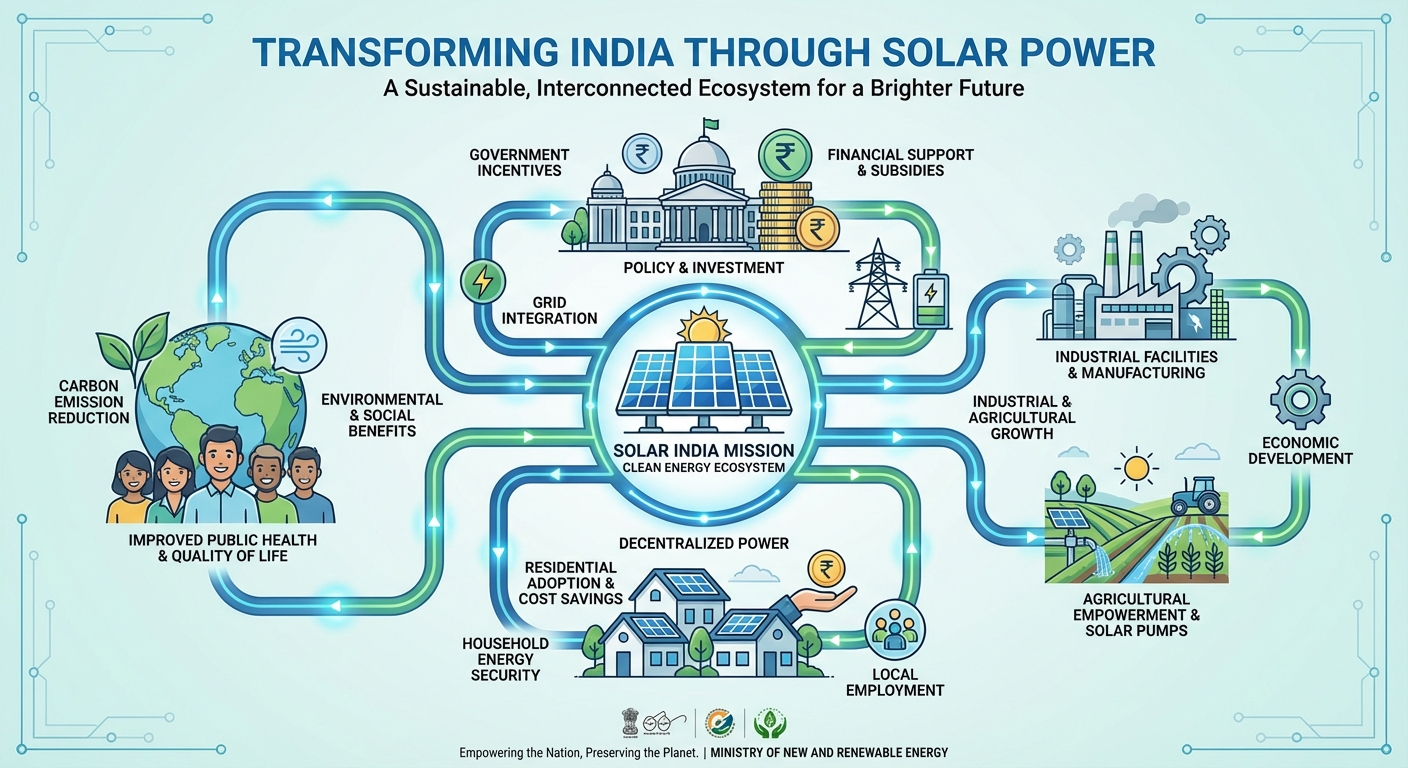
The Indian government operates several flagship solar subsidy programs in 2026, each designed to serve different consumer segments and objectives. Understanding which scheme applies to your situation is the first step toward accessing financial benefits.
Rooftop Solar Programme (Phase III)
The Rooftop Solar Programme is the primary scheme for residential consumers looking to install solar panels on their homes. Launched by the Ministry of New and Renewable Energy (MNRE), this program aims to achieve 40 GW of rooftop solar capacity across India.
Key features of the Rooftop Solar Programme:
- Available for residential consumers with individual houses or apartments
- Subsidies provided for systems up to 10 kW capacity
- Higher subsidy percentage for smaller systems to benefit middle-class households
- Simplified online application process through the National Portal for Rooftop Solar
- Net metering facility to sell excess electricity back to the grid
PM-KUSUM (Pradhan Mantri Kisan Urja Suraksha evam Utthaan Mahabhiyaan)
The PM-KUSUM scheme focuses on the agricultural sector, helping farmers reduce irrigation costs and generate additional income through solar energy. This scheme has three main components:
Component A: Installation of grid-connected renewable power plants of capacity 500 kW to 2 MW on barren or fallow land
Component B: Installation of standalone solar-powered agriculture pumps for irrigation in off-grid areas
Component C: Solarization of existing grid-connected agriculture pumps, allowing farmers to use solar power during the day and sell surplus to the grid
Heaven Green Energy has extensive experience implementing PM-KUSUM projects across Gujarat, helping farmers navigate the application process and ensuring quality installations that maximize both subsidy benefits and long-term energy savings.
Gujarat State Solar Initiatives
Gujarat offers additional state-level incentives that complement central government schemes. These include expedited approvals for solar installations, simplified net metering processes, and support for large-scale commercial and industrial solar projects. The Gujarat Energy Development Agency (GEDA) coordinates these initiatives and provides technical support to consumers.
For businesses and industries in Gujarat, the state’s progressive policies make it one of the most attractive locations for solar investment in India. The combination of excellent solar resources, supportive infrastructure, and experienced local EPC providers creates an ecosystem conducive to successful solar adoption.
Who is Eligible for Solar Subsidy in India?
Eligibility for solar subsidy depends on the specific scheme you’re applying under, your consumer category, and the type of property where you plan to install solar panels. Here’s a comprehensive breakdown of eligibility criteria:
Residential Rooftop Solar Subsidy Eligibility
You are eligible if you:
- Own an individual house, residential apartment, or housing society
- Have an active electricity connection in your name
- Have adequate rooftop space with minimal shading for solar panel installation
- Are installing a grid-connected solar system through an empaneled vendor
- Have not previously availed subsidy for solar installation at the same premises
Both homeowners and housing societies can apply for subsidies. In the case of group housing or apartment complexes, the society can apply for a larger capacity system and distribute benefits among members.
PM-KUSUM Eligibility for Farmers
For the PM-KUSUM scheme, eligibility varies by component:
Component A (Solar Power Plants): Individual farmers, groups of farmers, cooperatives, panchayats, and farmer producer organizations with suitable land
Component B (Standalone Solar Pumps): Individual farmers in off-grid or grid-connected areas who need irrigation pumps
Component C (Grid-Connected Pump Solarization): Farmers with existing grid-connected agricultural pumps
Commercial and Industrial Eligibility
While most subsidy schemes focus on residential and agricultural consumers, commercial and industrial establishments can benefit from:
- Accelerated depreciation benefits under income tax provisions
- State-specific incentives for large-scale installations
- Concessional financing through government-backed programs
- Net metering and open access policies for selling surplus power
Even without direct subsidies, businesses in Gujarat find solar installations highly attractive due to the excellent solar ROI, reduced operational costs, and corporate sustainability goals. Heaven Green Energy specializes in designing commercial and industrial solar solutions that maximize financial returns through optimal system design and quality components.
How Much Solar Subsidy Can You Get?
The subsidy amount you receive depends on your system capacity, consumer category, and the applicable scheme. Here’s a detailed breakdown of subsidy amounts available in 2026:
Residential Rooftop Solar Subsidy Amounts
Under the central government’s Rooftop Solar Programme, residential consumers receive subsidies based on a tiered structure:
For systems up to 3 kW: 40% of the benchmark cost or actual cost, whichever is lower
For systems above 3 kW and up to 10 kW: ₹18,000 per kW for the first 3 kW, plus 20% of the benchmark cost for additional capacity beyond 3 kW
For systems above 10 kW: No central subsidy available for residential consumers (though state incentives may apply)
Example calculation for a 5 kW residential system:
- First 3 kW: ₹18,000 × 3 = ₹54,000
- Remaining 2 kW: 20% of benchmark cost (approximately ₹10,000 per kW) = ₹4,000
- Total subsidy: ₹58,000
If the total solar panel cost for a 5 kW system is approximately ₹2,50,000, the subsidy of ₹58,000 reduces your effective cost to ₹1,92,000—a significant saving that improves your solar payback period considerably.
PM-KUSUM Subsidy Structure
The PM-KUSUM scheme offers substantial subsidies for agricultural applications:
Component B (Standalone Solar Pumps): 30% subsidy from central government, 30% from state government, with farmers contributing 10% upfront and the remaining 30% available through concessional bank loans
Component C (Pump Solarization): Similar 60% subsidy structure (30% central + 30% state), making solar-powered irrigation highly affordable for farmers
For a solar pump system costing ₹3,00,000, the farmer’s actual contribution would be only ₹30,000 upfront (10%), with ₹1,80,000 covered by subsidies and ₹90,000 available through easy financing.
State-Level Gujarat Incentives
Gujarat offers additional benefits that complement central subsidies, including:
- Expedited net metering approvals with minimal processing fees
- Banking facility for surplus solar generation
- Exemption from electricity duty for solar power
- Simplified procedures for commercial and industrial installations
These state-level benefits, while not direct cash subsidies, significantly improve the economics of solar installations in Gujarat and contribute to faster solar ROI.
Step-by-Step: How to Apply for Solar Subsidy
Applying for solar subsidy requires following a structured process to ensure your application is approved without delays. Here’s a comprehensive step-by-step guide:
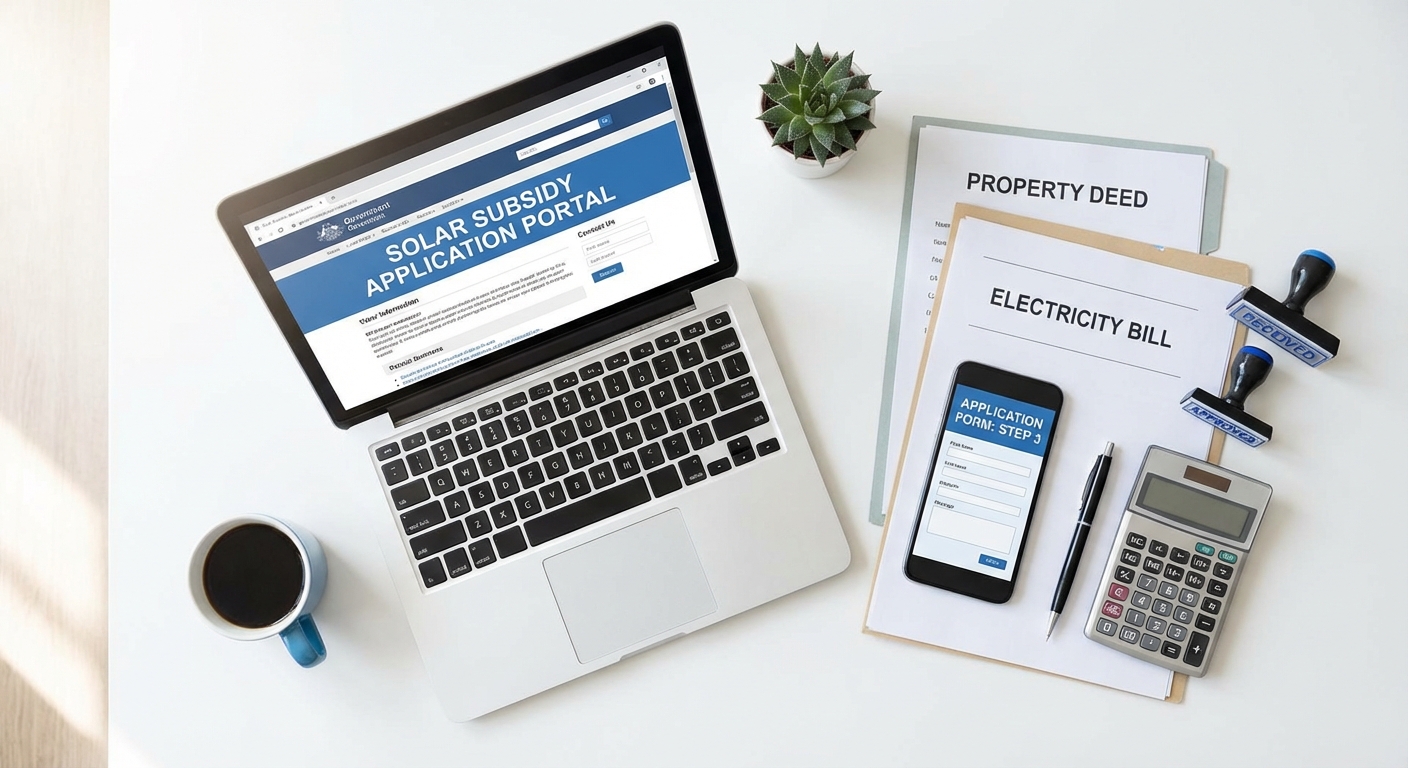
Step 1: Register on the National Portal for Rooftop Solar
Visit the official National Portal for Rooftop Solar (solarrooftop.gov.in) and create an account using your mobile number and email address. You’ll need to verify your contact information through OTP authentication.
Step 2: Submit Consumer Details and Application
Log in to the portal and fill out the application form with accurate information including:
- Your electricity consumer number
- Sanctioned load details from your electricity bill
- Desired solar system capacity
- Property ownership details
- Bank account information for subsidy transfer
The portal will validate your consumer number with your DISCOM and display your eligibility status.
Step 3: Choose an Empaneled Solar Vendor
Select a government-approved solar EPC company from the list of empaneled vendors. This is a critical step—only installations by empaneled vendors qualify for subsidies. Heaven Green Energy is an empaneled vendor with extensive experience in subsidy-based installations across Gujarat, ensuring smooth processing and compliance with all technical requirements.
Your chosen vendor will provide a detailed quotation and technical proposal for your solar installation.
Step 4: Site Assessment and System Design
The solar company will conduct a site survey to assess your rooftop’s suitability, shading analysis, structural capacity, and optimal system design. They’ll finalize the solar inverter specifications, solar modules brand, mounting structure, and electrical layout.
Step 5: DISCOM Approval and Net Metering Application
Your installer will submit a net metering application to your local DISCOM on your behalf. The DISCOM will review the technical specifications and issue a feasibility approval, typically within 7-15 days.
Step 6: Solar System Installation
Once approvals are in place, the installation begins. A professional solar EPC team will install solar panels, inverters, mounting structures, and all electrical components according to approved designs and safety standards. Quality installation is crucial for long-term performance and solar warranty validity.
Step 7: DISCOM Inspection and Commissioning
After installation, DISCOM officials will inspect the system to verify compliance with technical standards and safety norms. Upon successful inspection, they’ll install a bi-directional meter for net metering and issue a commissioning certificate.
Step 8: Subsidy Claim Submission
Your installer will upload commissioning documents, inspection reports, and payment receipts to the national portal. The subsidy claim is then processed by the nodal agency.
Step 9: Subsidy Disbursement
Once your claim is verified and approved, the subsidy amount is transferred directly to your bank account through DBT. This typically takes 30-90 days from the date of commissioning, though timelines can vary by state and current processing volumes.
Common mistakes to avoid:
- Installing solar systems before obtaining DISCOM approval
- Working with non-empaneled vendors to save costs (this disqualifies you from subsidies)
- Providing incorrect or incomplete documentation
- Installing capacity higher than sanctioned load without proper approvals
- Not maintaining proper records of payments and installation milestones
Working with an experienced solar company in Gujarat like Heaven Green Energy ensures you avoid these pitfalls and navigate the subsidy process smoothly from start to finish.
Documentation Requirements for Solar Subsidy Applications
Proper documentation is essential for subsidy approval. Missing or incorrect documents are the most common reason for application delays or rejections. Here’s a comprehensive checklist of required documents:
Identity and Address Proof
- Aadhaar card (mandatory for DBT)
- PAN card
- Voter ID or Passport (alternative identity proof)
- Current address proof matching the installation location
Property Ownership Documents
- Property tax receipt or municipal records
- Sale deed or property ownership certificate
- For rented properties: No Objection Certificate (NOC) from the property owner
- For housing societies: Society registration documents and resolution approving solar installation
Electricity Connection Details
- Recent electricity bill (not older than 3 months)
- Consumer number and sanctioned load details
- Copy of electricity connection agreement
- Load enhancement approval (if increasing sanctioned load)
Bank Account Information
- Cancelled cheque or bank passbook first page
- Bank account number and IFSC code
- Account must be linked to Aadhaar for DBT
Technical Documents from Installer
Your solar EPC company will provide these documents:
- Detailed technical proposal with system specifications
- Solar module and solar inverter datasheets and certifications
- Installation photographs (before, during, and after)
- Single line diagram and electrical layout
- Structural stability certificate for rooftop
- Commissioning report and test certificates
- DISCOM inspection report and net metering approval
- Solar warranty documents for panels and inverters
- Payment receipts and invoices
Heaven Green Energy provides comprehensive documentation support, ensuring all technical and compliance documents are prepared accurately and submitted on time. This attention to detail is part of our commitment to hassle-free solar installations with full subsidy benefits.
Common Questions About Solar Subsidy Processing
How long does subsidy approval take?
The subsidy approval and disbursement timeline typically ranges from 30 to 90 days after system commissioning and claim submission. The process involves multiple verification stages including document review, technical inspection validation, and financial processing. In some states with high application volumes, processing may take longer. Working with experienced installers who submit complete and accurate documentation helps expedite the process.
When do you receive the subsidy amount?
The subsidy is disbursed after your solar system is installed, inspected by DISCOM, commissioned, and all documentation is submitted and verified. You’ll need to pay the full installation cost upfront to your solar EPC provider, and the subsidy amount is reimbursed to your bank account through Direct Benefit Transfer. Some installers may offer to adjust the subsidy amount in your final payment, but you should verify this arrangement and ensure it doesn’t affect your subsidy eligibility.
What if your application is rejected?
If your subsidy application is rejected, you’ll receive a notification stating the reason for rejection. Common reasons include incomplete documentation, technical non-compliance, installation by non-empaneled vendors, or exceeding eligible capacity limits. In most cases, you can rectify the issues and resubmit your application. If rejection is due to technical non-compliance, you may need to modify your installation to meet standards. Your solar installer should assist with the resubmission process.
Can you transfer subsidy to a new property?
No, solar subsidies are property-specific and cannot be transferred if you move to a new location. The subsidy is tied to the electricity consumer number and installation address. If you sell your property, the solar system typically transfers to the new owner, but the subsidy benefit remains with the original applicant who received it. This is why solar installations are considered value additions to properties.
How does subsidy impact solar ROI and payback period?
Subsidies dramatically improve your solar ROI by reducing the initial investment. For a typical 5 kW residential system in Gujarat:
Without subsidy: Total cost ₹2,50,000, annual savings ₹40,000, payback period approximately 6.25 years
With subsidy: Effective cost ₹1,92,000 (after ₹58,000 subsidy), annual savings ₹40,000, payback period approximately 4.8 years
The subsidy reduces your payback period by nearly 1.5 years, meaning you start enjoying free electricity sooner and maximize lifetime savings. Over a 25-year solar panel lifespan, this translates to significantly higher returns on your investment.
Navigating Solar Subsidy Schemes in Gujarat
Gujarat’s position as a solar leader in India makes it an ideal location for both residential and commercial solar installations. The state’s supportive policies, combined with central government subsidies, create a favorable ecosystem for solar adoption.
Gujarat-Specific Advantages
Gujarat offers several unique advantages for solar installations:
- Excellent Solar Irradiation: Gujarat receives 5.5-6.5 kWh/m²/day of solar radiation, among the highest in India, ensuring optimal solar energy generation
- Progressive DISCOM Policies: Gujarat’s distribution companies have streamlined net metering processes and offer favorable banking facilities for surplus generation
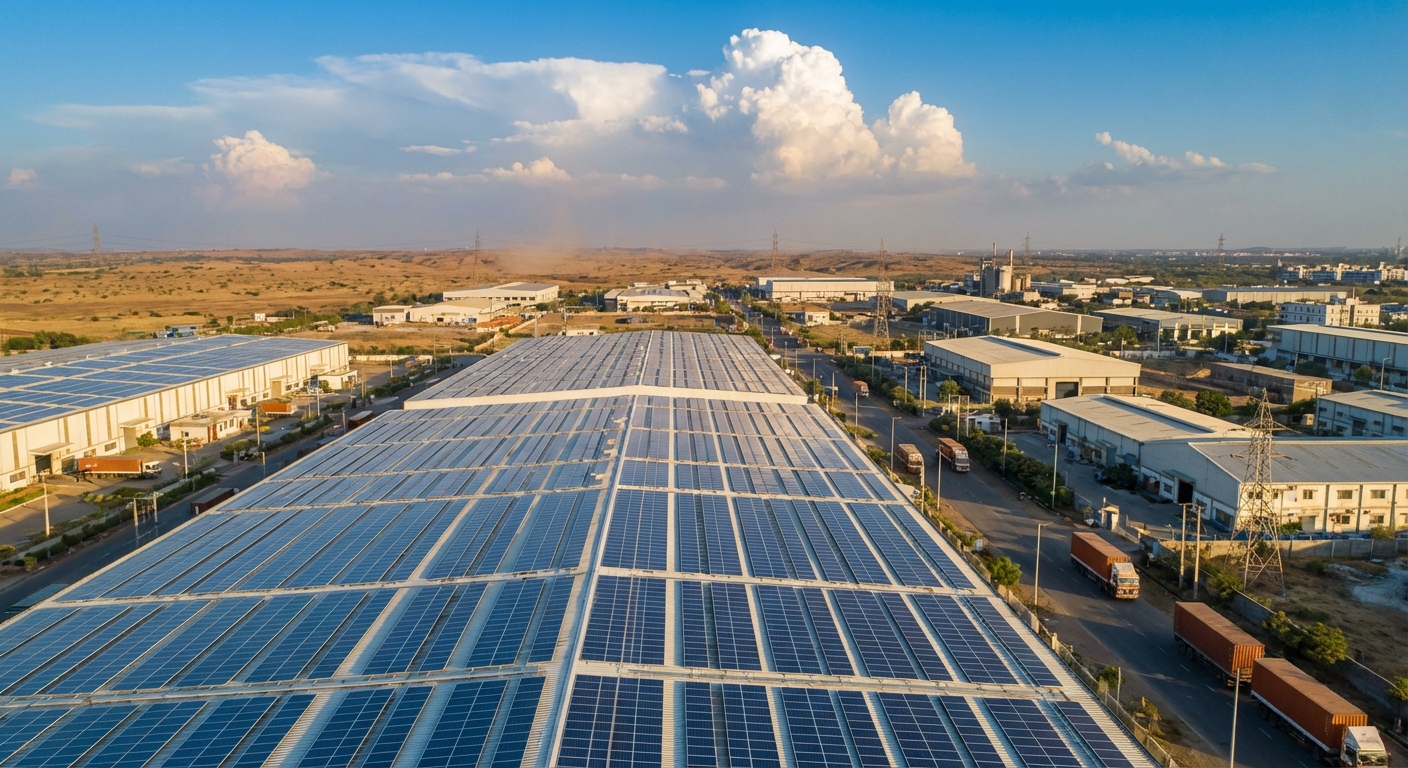
- Industrial Solar Incentives: The state actively promotes industrial solar installations through simplified approvals and open access policies
- Local Expertise: Gujarat has a mature solar ecosystem with experienced EPC companies, quality solar maintenance services, and reliable supply chains
Working with Local DISCOM for Approvals
In Gujarat, you’ll work with one of the following DISCOMs depending on your location:
- Dakshin Gujarat Vij Company Limited (DGVCL) – South Gujarat including Surat
- Madhya Gujarat Vij Company Limited (MGVCL) – Central Gujarat
- Paschim Gujarat Vij Company Limited (PGVCL) – West Gujarat
- Uttar Gujarat Vij Company Limited (UGVCL) – North Gujarat
Each DISCOM has specific procedures for net metering applications and inspections. Heaven Green Energy has established relationships with all Gujarat DISCOMs and understands their specific requirements, ensuring smooth approvals and faster commissioning for our clients across Surat, Ahmedabad, Junagadh, and other Gujarat locations.
Heaven Green Energy’s Expertise with Government Schemes
As one of the top solar EPC companies in Gujarat, Heaven Green Energy brings extensive experience in implementing government subsidy schemes. Since our establishment in 2017, we’ve successfully completed over 10,000 solar installations, many of which have benefited from PM-KUSUM and rooftop solar subsidies.
Our comprehensive support includes:
- Complete subsidy application assistance from registration to disbursement
- Documentation preparation and submission
- DISCOM coordination and net metering approvals
- Quality installations using certified solar modules and inverters
- Post-installation support and solar maintenance services
- Transparent pricing with clear subsidy calculations
We understand that navigating government schemes can be complex, especially for first-time solar adopters. Our team guides you through every step, ensuring you receive maximum subsidy benefits while enjoying a high-quality solar installation that delivers reliable performance for decades.
Success Stories: Subsidy-Enabled Solar Installations
Across Gujarat, thousands of homeowners and businesses have successfully adopted solar energy with government subsidy support. From residential rooftop installations in Surat to large-scale industrial solar projects in Ahmedabad, and PM-KUSUM implementations for farmers in rural Gujarat, these success stories demonstrate the transformative impact of well-designed subsidy schemes.
The combination of financial incentives, quality installations by experienced providers, and Gujarat’s excellent solar resources creates a win-win situation where consumers save money, reduce environmental impact, and contribute to India’s renewable energy goals.
Maximizing Your Solar Investment Beyond Subsidies
While subsidies significantly reduce your initial investment, maximizing the long-term value of your solar installation requires attention to several other factors:
Choosing Quality Solar Components
The quality of solar modules, inverters, and mounting structures directly impacts your system’s performance and lifespan. Premium solar brands may cost slightly more upfront but deliver better efficiency, durability, and longer solar warranty periods. Over 25 years, the difference in energy generation between quality and substandard components can be substantial.
Heaven Green Energy partners with leading solar brands and offers a range of options to suit different budgets while maintaining quality standards. We help you understand the trade-offs between different solar panel costs and long-term value.
Importance of Experienced EPC Providers
Solar installation quality matters as much as component quality. Proper system design, professional installation, correct electrical wiring, and structural safety are critical for optimal performance and safety. Experienced solar EPC services providers bring:
- Accurate site assessment and system sizing
- Compliance with technical standards and safety codes
- Efficient project execution with minimal disruption
- Proper commissioning and testing
- Reliable after-sales support and maintenance
Choosing the cheapest installer to maximize subsidy benefits can be counterproductive if installation quality is compromised. Work with established companies with proven track records in your region.
Solar Financing Options
Even with subsidies, the upfront cost of solar installation may be significant for some consumers. Several solar financing options can help:
- Bank loans specifically for solar installations with attractive interest rates
- NBFC financing programs for renewable energy
- Manufacturer or installer financing schemes
- Government-backed concessional loans under schemes like PM-KUSUM
When evaluating financing, calculate the total cost including interest and compare it with your electricity savings to ensure positive cash flow from day one.
Maintenance and Warranty Considerations
Solar systems require minimal maintenance but regular cleaning and periodic inspections ensure optimal performance. Quality solar maintenance services in Gujarat help you:
- Maintain peak energy generation through regular panel cleaning
- Identify and resolve technical issues promptly
- Ensure warranty compliance through proper maintenance records
- Maximize system lifespan and return on investment
Verify that your installer offers comprehensive solar warranty coverage including panel performance warranty (typically 25 years), inverter warranty (5-10 years), and installation workmanship warranty. Heaven Green Energy provides complete warranty support and maintenance services across our service areas in Gujarat.
Net Metering and Electricity Bill Savings
Net metering allows you to export surplus solar generation to the grid and receive credits on your electricity bill. In Gujarat, net metering policies are favorable, with banking facilities that let you carry forward credits for several months. This maximizes your savings, especially during high-generation summer months when you can build credits for lower-generation monsoon periods.
Understanding your consumption patterns and optimizing solar system capacity for net metering benefits is crucial for maximizing solar payback and long-term savings.
Take Action: Start Your Solar Journey with Government Support
Solar subsidy schemes in India have made renewable energy accessible to millions of homeowners, businesses, and farmers. With subsidies covering 30-40% of installation costs, combined with long-term electricity savings and environmental benefits, there has never been a better time to invest in solar energy.
Key takeaways from this guide:
- Government subsidies can reduce your solar installation cost by ₹50,000-₹60,000 or more for residential systems
- PM-KUSUM offers up to 60% subsidy for agricultural solar applications
- Eligibility is straightforward for homeowners with electricity connections and adequate rooftop space
- The application process requires proper documentation and working with empaneled vendors
- Gujarat offers excellent solar resources and supportive policies that enhance subsidy benefits
- Quality installation and components are crucial for maximizing long-term returns
Next Steps for Homeowners and Businesses
If you’re ready to explore solar energy with government subsidy support:
- Assess Your Eligibility: Review your electricity bills, rooftop space, and property ownership to confirm you meet basic eligibility criteria
- Get a Professional Evaluation: Contact an experienced solar EPC company for a site assessment and customized proposal
- Understand Total Costs: Request detailed quotations showing system cost, applicable subsidies, and net investment required
- Review Financing Options: Explore solar financing if needed to make the investment more manageable
- Choose Quality Over Price: Select installers based on experience, quality standards, and comprehensive support, not just the lowest price
How Heaven Green Energy Can Help
Heaven Green Energy Limited has been at the forefront of solar adoption in Gujarat since 2017. As one of the top 3 EPC companies in Gujarat with over 10,000 successful installations, we bring unmatched expertise in government subsidy schemes, quality solar installations, and customer support.
Our comprehensive services include:
- Free site assessment and customized solar system design
- Complete subsidy application support and DISCOM coordination
- Turnkey solar EPC services from design to commissioning
- Quality solar products including modules, inverters, and accessories
- Professional installation by trained technicians
- Comprehensive warranties and after-sales support
- Ongoing solar maintenance services across Gujarat
Whether you’re a homeowner in Surat looking to reduce electricity bills, a business in Ahmedabad seeking sustainable energy solutions, or a farmer interested in PM-KUSUM benefits, we have the expertise and experience to make your solar journey smooth and rewarding.
Don’t let the complexity of subsidy schemes hold you back from enjoying the benefits of solar energy. Our team handles all the paperwork, approvals, and technical requirements while you focus on the exciting prospect of generating your own clean electricity and saving money for decades to come.
Ready to start your solar journey with full subsidy benefits? Have Any Questions? +91 63904 05060. Our solar experts are ready to answer all your questions, provide detailed proposals, and guide you through every step of the subsidy application and installation process.
The sun is shining on Gujarat, and with government support making solar more affordable than ever, now is the perfect time to invest in renewable energy. Let Heaven Green Energy help you harness that power while maximizing every rupee of available subsidies.