


You spent lakhs installing a rooftop or industrial solar system. The panels are up, the inverter is humming, and the electricity bills are finally dropping. But here is the question most Gujarat solar owners never ask until it is too late: what happens when something goes wrong? Who fixes it, how fast, and at whose cost? The answer lies entirely in your solar maintenance contract — and most contracts in the market today are written to protect the provider, not you.
This guide is specifically for residential, commercial, and industrial solar owners in Gujarat who want to take control of their solar maintenance agreements. We will walk you through the AMC terms, SLAs, performance guarantees, and contract red flags you must know before signing anything. Whether you are negotiating a new contract or reviewing an existing one, this is your checklist.

Why Solar Maintenance Contracts Matter More Than You Think
A solar system is a 25-year investment. The panels may carry a 25-year performance warranty, and the inverter may be covered for 5 to 10 years. But warranties only protect you if the equipment is properly maintained and the fault is documented correctly. Without a structured solar maintenance plan, you risk voiding warranties, missing performance issues for months, and paying out-of-pocket for repairs that should have been covered.
In Gujarat’s solar market, the gap between a well-written AMC and a poorly written one can easily translate to a loss of 10 to 15% in annual energy generation — and hundreds of thousands of rupees over the system’s lifetime. Dust accumulation alone, which is a serious issue in Gujarat’s arid and semi-arid regions, can reduce panel output by 20 to 30% if cleaning schedules are not contractually enforced.
A strong solar maintenance contract does three things: it defines what your EPC or service provider is responsible for, it sets measurable standards for service quality, and it gives you legal recourse when those standards are not met. Without all three, you are essentially trusting a handshake agreement for a multi-lakh investment.
Key Insight: The best time to negotiate your solar maintenance contract is before installation, not after. Once the system is commissioned, your bargaining power drops significantly.
Understanding AMC (Annual Maintenance Contract) Basics for Solar Systems
An Annual Maintenance Contract (AMC) is a formal agreement between a solar system owner and a service provider that defines the scope, frequency, and cost of maintenance activities over a 12-month period. In the context of solar maintenance Gujarat, AMCs typically cover two broad categories of work.
Preventive Maintenance
This includes scheduled activities designed to keep the system running at peak efficiency. Common preventive tasks include panel cleaning, electrical connection checks, inverter health checks, earthing and lightning protection verification, and structural inspection of mounting systems. A good AMC should specify the exact frequency of each activity — not just say “periodic maintenance.”
Corrective Maintenance
This covers repairs and replacements when something breaks or underperforms. The scope of corrective maintenance is where most contract disputes arise. Always check whether corrective maintenance includes parts and labour, or just labour. Many low-cost AMCs cover only the technician’s visit, you still pay for every component replaced.
There are two main AMC types in the Gujarat solar market:
- Comprehensive AMC: Covers both preventive and corrective maintenance, including most spare parts. Higher annual cost but far better protection.
- Partial or Limited AMC: Covers only preventive maintenance and labour for corrective work. Parts are billed separately. Lower upfront cost but unpredictable expenses.
For commercial and industrial solar Gujarat installations, a comprehensive AMC is almost always the smarter financial choice. For residential systems, evaluate the system size and component quality before deciding.
To understand the full scope of what a quality EPC provider should deliver from installation through maintenance, read our guide on What is Solar EPC? Complete Service Guide 2026.
1. Insist on Clear SLA (Service Level Agreement) Terms
An SLA is the backbone of any credible solar maintenance contract. It converts vague promises like “we will respond quickly” into legally binding commitments with measurable timelines. Here is what your SLA must specify.
Response Time vs. Resolution Time
These are two very different things. Response time is how quickly the provider acknowledges your complaint and dispatches a technician. Resolution time is how long it takes to fully fix the problem. Many contracts only guarantee response time, leaving resolution time completely open-ended. Demand both.
For Gujarat solar systems, reasonable SLA benchmarks are:
- Critical faults (system completely down): Response within 4 to 8 hours, resolution within 24 to 48 hours
- Major faults (significant generation loss): Response within 24 hours, resolution within 72 hours
- Minor faults (monitoring alerts, minor performance dips): Response within 48 hours, resolution within 7 days
Penalty Clauses for SLA Breaches
An SLA without a penalty clause is just a suggestion. Your contract must specify what compensation you receive if the provider misses their committed timelines. This could be a credit toward your next AMC payment, a free additional service visit, or a proportional refund. Without penalties, providers have no financial incentive to meet their commitments.
Escalation Matrix
Your contract should name specific escalation contacts, not just a generic helpline number. If the field technician cannot resolve an issue, who is the next point of contact? Who is the senior technical lead? What is the escalation path to management? This is especially important for industrial solar Gujarat clients where downtime has direct revenue implications.
2. Demand Performance Guarantees and Generation Benchmarks
Performance guarantees are the most financially significant part of any solar maintenance contract. They define the minimum output your system must deliver and what happens if it falls short.
Performance Ratio (PR) Guarantees
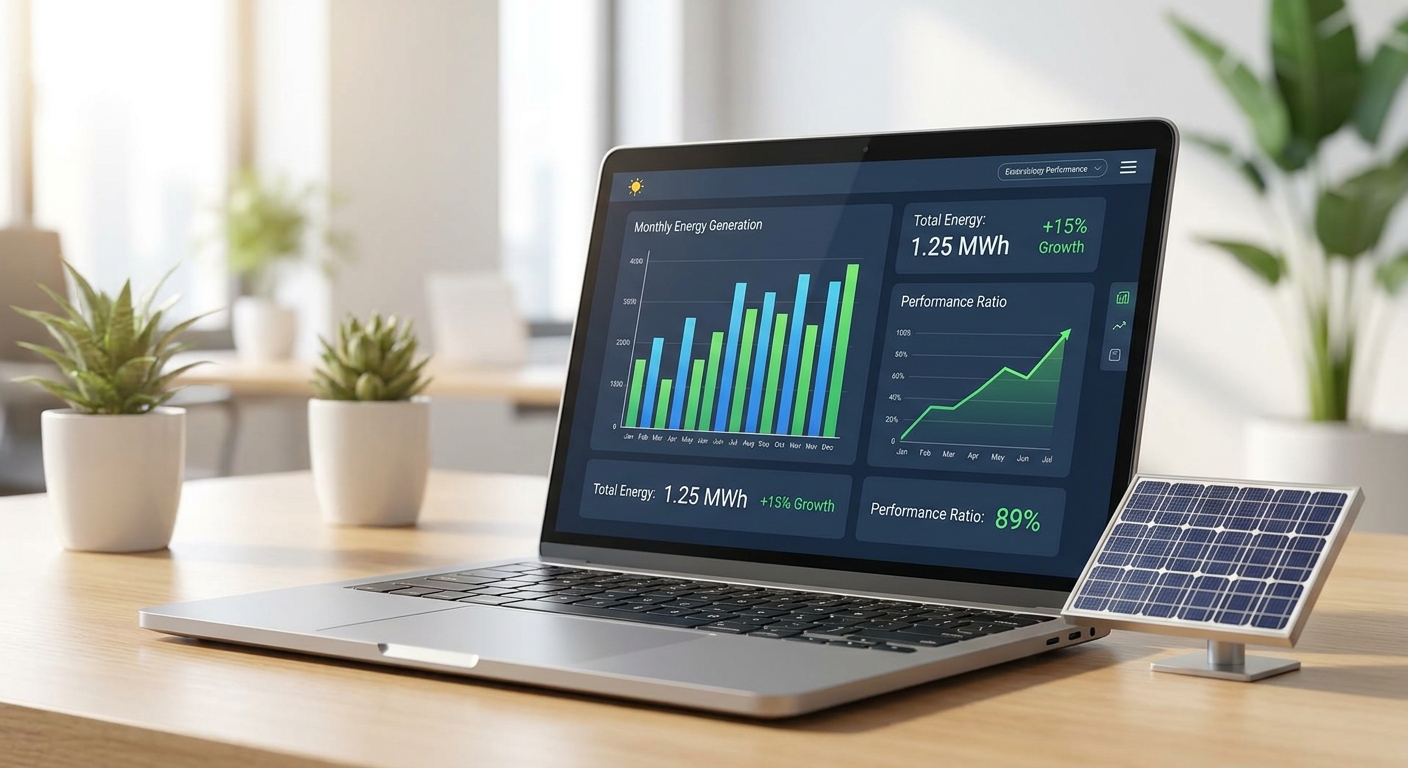
The Performance Ratio (PR) is the most widely used metric for measuring solar system efficiency. It compares actual energy output to the theoretical maximum output based on available sunlight. A well-maintained system in Gujarat should maintain a PR of 75 to 80% or higher. Your contract should specify a minimum guaranteed PR and define how it is measured and verified.
Minimum Generation Guarantees
Beyond PR, insist on a minimum annual generation guarantee expressed in kilowatt-hours (kWh) per kWp of installed capacity. For Gujarat’s solar irradiation levels, a well-maintained system should generate approximately 1,400 to 1,600 kWh per kWp per year. If your system consistently falls below the guaranteed threshold, the contract must specify the compensation mechanism.
You can benchmark these figures against data published by the Ministry of New and Renewable Energy (MNRE) and your local DISCOM’s solar performance reports for Gujarat.
Panel Degradation Clauses
Solar panels degrade over time. Most quality solar modules carry a guarantee of no more than 0.5 to 0.7% annual degradation. Your maintenance contract should reference the panel manufacturer’s degradation warranty and specify that the provider is responsible for flagging panels that degrade faster than the guaranteed rate. This protects your long-term solar ROI significantly.
To understand how performance guarantees connect to your overall financial returns, see our detailed breakdown in Solar Payback Period Explained: Break-Even Timeline 2026.
3. Watch Out for These Common Contract Loopholes and Exclusions
This is where most solar owners get caught off guard. Contract exclusions are written in fine print and often use technical or legal language designed to minimize the provider’s liability. Here are the most common loopholes to watch for in solar maintenance Gujarat contracts.
Overly Broad Force Majeure Clauses
Force majeure clauses excuse the provider from obligations during extraordinary events. But some contracts in Gujarat list dust storms, heavy monsoon rain, and extreme heat as force majeure events, conditions that are entirely normal in Gujarat and happen every single year. Push back on any force majeure clause that excludes routine Gujarat weather conditions. These events are foreseeable and your maintenance plan should account for them.
Inverter Replacement Exclusions
The solar inverter is one of the most expensive components in your system and one of the most likely to need replacement within a 10-year period. Many AMCs explicitly exclude inverter replacement costs, covering only the labour for installation. Always clarify: if the inverter fails outside its manufacturer warranty period, who pays for the replacement unit?
Consumables Exclusions
Fuses, connectors, MC4 clips, cleaning materials, and cable ties are often listed as “consumables” and excluded from AMC coverage. While this is somewhat standard, the contract should clearly define what qualifies as a consumable and cap the annual cost of consumables billed to you.
Non-OEM Spare Parts
Some providers substitute original equipment manufacturer (OEM) parts with cheaper third-party alternatives during repairs. This can void your panel or inverter manufacturer’s warranty. Your contract must explicitly state that all replacement parts will be OEM-approved and compatible with your specific equipment. This is especially important given the variety of solar brands Gujarat owners use, each with different compatibility requirements.
Ambiguous “Normal Wear and Tear” Language
Contracts that exclude “normal wear and tear” without defining it give providers enormous room to deny claims. Insist on a clear definition: what specific conditions or component failures are considered normal wear and tear, and what falls under covered corrective maintenance?
Warranty Transfer Restrictions
If you sell your property, can the AMC and equipment warranties be transferred to the new owner? Many contracts are silent on this point. For residential solar owners in Gujarat, this is an important consideration that affects your property’s resale value.
4. Require Transparent Reporting and Monitoring Access
You cannot manage what you cannot measure. A credible solar maintenance contract must include provisions for transparent, real-time reporting and system monitoring access.
Real-Time Monitoring Dashboard
Your contract should guarantee you direct access to the system’s monitoring platform, not just reports sent by the provider. Real-time access lets you independently verify generation data, spot anomalies, and hold your provider accountable. Most modern solar inverter brands include cloud-based monitoring portals. Ensure your contract specifies that you receive login credentials and that access is maintained throughout the AMC period.
Monthly and Annual Performance Reports
Monthly reports should include: actual generation vs. guaranteed generation, Performance Ratio for the period, any faults logged and their resolution status, and maintenance activities completed. Annual reports should include a full system health assessment and recommendations for the coming year. Vague reports that only show total units generated are not acceptable.
Data Ownership
This is a point many solar owners overlook entirely. Your system’s performance data belongs to you. The contract must explicitly state that you own all monitoring data and that the provider cannot restrict your access to it, even if the AMC is terminated. This protects you if you ever need to switch service providers or dispute a performance claim.
5. Verify Spare Parts Availability and Replacement Commitments
A solar maintenance contract is only as good as the provider’s ability to actually deliver on it. One of the most common failure points is spare parts availability, especially for older systems or less common equipment brands.
Your contract should address the following:
- OEM parts commitment: Written confirmation that all replacement parts will be sourced from original manufacturers or authorized distributors
- Critical spares inventory: The provider should maintain a local stock of high-failure-rate components like fuses, string combiner components, and inverter boards
- Inverter replacement timeline: If a solar inverter needs replacement, what is the maximum time the system can remain offline? This should be specified in the SLA
- Discontinued product protocol: What happens if your panel model or inverter model is discontinued by the manufacturer? The contract should specify the process for sourcing compatible replacements
Choosing a provider with strong relationships with leading solar brands Gujarat owners trust is essential for parts availability. To understand which panel manufacturers have the strongest support networks in Gujarat, read our comparison: Solar Brands Gujarat: Top Panel Manufacturers Compared 2026.
6. Benchmark Your EPC Provider’s Service Quality
Before signing any solar maintenance contract, you need to evaluate the provider’s actual capacity to deliver. A well-written contract means nothing if the company lacks the team, tools, or track record to back it up.

Questions to Ask Before Signing
When evaluating a solar EPC Gujarat provider’s maintenance capabilities, ask these specific questions:
- How many dedicated service technicians do you have in Gujarat, and where are they based?
- What certifications do your technicians hold (e.g., MNRE-recognized training, electrical safety certifications)?
- What monitoring and diagnostic tools do you use for fault detection?
- How many active AMC clients do you currently service in Gujarat?
- Can you provide references from commercial or industrial clients with systems similar in size to mine?
- What is your average SLA compliance rate over the past 12 months?
Red Flags to Watch For
Be cautious of any solar EPC services provider who:
- Cannot provide a dedicated service team separate from their installation crew
- Offers no remote monitoring capability or relies entirely on owner-reported faults
- Uses vague contract language like “maintenance as required” without defined schedules
- Cannot provide references from clients who have been with them for more than two years
- Offers AMC pricing that seems too low to be sustainable, this often signals corners will be cut
Benchmarking AMC Pricing in Gujarat
As a general reference, solar maintenance AMC costs in Gujarat typically range from 0.5 to 1.5% of the total system installation cost per year for comprehensive coverage. For a residential system installed at ₹3 to 4 lakh, this translates to roughly ₹1,500 to ₹6,000 per year. For commercial and industrial systems, the percentage may be lower due to economies of scale, but the absolute cost is higher. Be wary of providers offering comprehensive AMCs at significantly below these benchmarks.
Solar Maintenance in Gujarat: Local Factors to Account For
Gujarat’s geography and climate create specific solar maintenance challenges that your contract must address. A generic AMC template designed for other states may not adequately cover the conditions your system faces.
Dust and Soiling
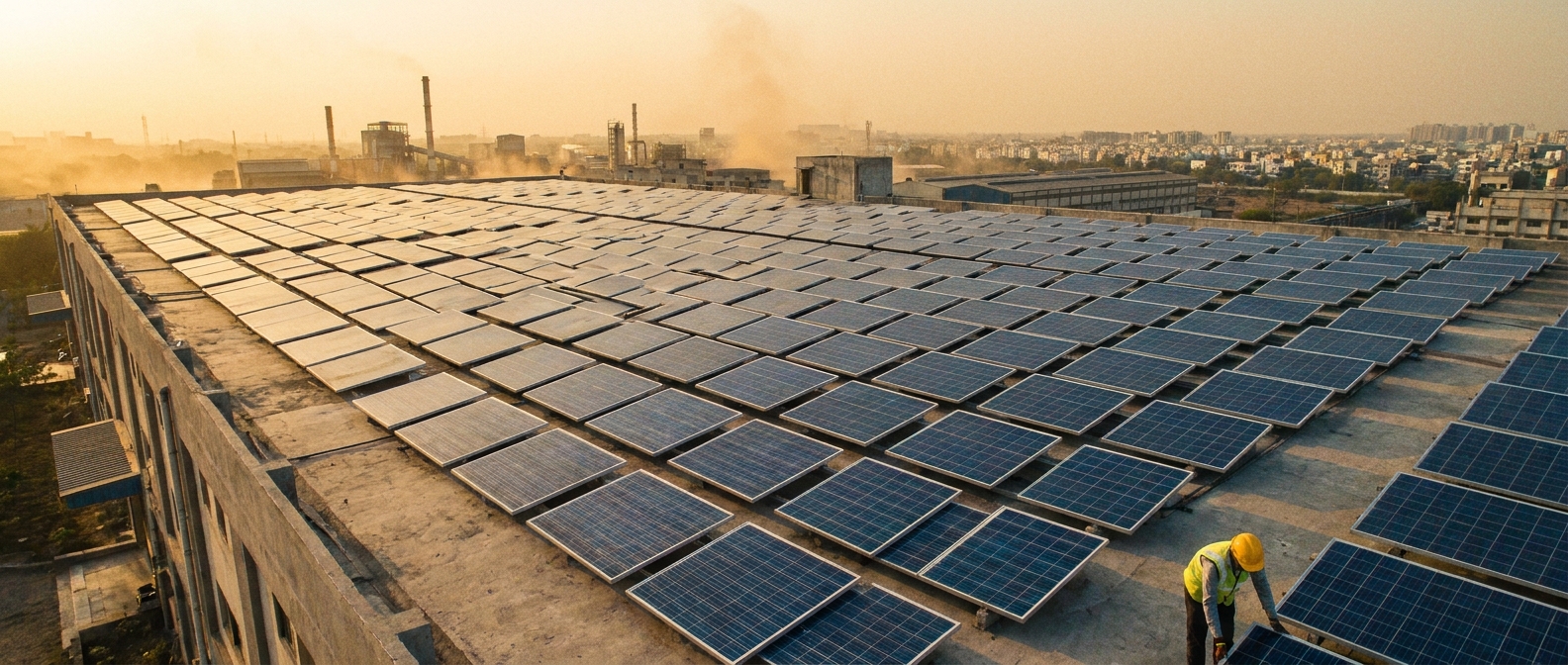
Gujarat’s coastal and semi-arid regions experience significant dust accumulation, especially during the dry months from October to May. Studies by the International Energy Agency (IEA) indicate that soiling losses in high-dust environments can reduce solar output by 15 to 25% without regular cleaning. Your AMC must specify a minimum cleaning frequency, at least once a month during dry season and after every major dust event.
Monsoon Preparedness
Gujarat’s monsoon season brings heavy rainfall, high humidity, and occasional cyclonic activity. Your solar maintenance contract should include a pre-monsoon inspection (checking earthing, waterproofing of junction boxes, and structural integrity) and a post-monsoon inspection (checking for water ingress, corrosion, and any storm damage). These should be explicitly listed as scheduled maintenance activities, not optional add-ons.
Extreme Summer Heat
Temperatures in Gujarat regularly exceed 40°C in summer, which accelerates inverter wear and can cause thermal stress on panel connections. Your AMC should include thermal imaging inspections at least once a year to identify hot spots on panels and loose connections before they cause failures.
GUVNL and DISCOM Compliance
For grid-connected rooftop solar Gujarat systems, your maintenance provider must be familiar with GUVNL (Gujarat Urja Vikas Nigam Limited) and local DISCOM requirements. This includes maintaining proper net metering documentation, ensuring the system meets grid safety standards, and handling any compliance inspections. Failure to maintain DISCOM compliance can result in disconnection from the grid, a risk no solar owner should take.
Government Scheme Obligations
If your system was installed under PM-KUSUM, DREBP, or another government solar scheme, there may be specific maintenance obligations tied to your subsidy agreement. Your AMC provider must be aware of these obligations and ensure the maintenance schedule meets any scheme-specific requirements. Non-compliance can affect your solar subsidy benefits and create legal complications.
Frequently Asked Questions About Solar Maintenance Contracts
How much does a solar AMC cost in Gujarat?
For residential systems, comprehensive solar maintenance AMCs typically cost between ₹1,500 and ₹8,000 per year depending on system size. For commercial and industrial solar Gujarat systems, costs scale with system size and complexity. Always compare what is included before comparing prices.
Is AMC mandatory for solar subsidy schemes in Gujarat?
While AMC is not always legally mandatory, many government scheme agreements require the EPC provider to offer a minimum maintenance period (often 5 years) as part of the installation contract. Check your specific scheme agreement for maintenance obligations. Regardless of scheme requirements, an AMC is strongly recommended to protect your investment and maintain your solar ROI.
What happens if my EPC company shuts down?
This is a real risk in any market. Your contract should include a clause specifying what happens to your AMC obligations if the provider ceases operations, including whether equipment warranties can be transferred to another authorized service provider. Choosing an established solar EPC Gujarat company with a proven track record significantly reduces this risk.
Can I switch solar maintenance providers mid-contract?
Most AMCs include a lock-in period and exit clauses. Review these carefully before signing. You should have the right to terminate the contract with reasonable notice (typically 30 to 60 days) if the provider consistently fails to meet SLA commitments. Make sure this right is explicitly written into the agreement.
Does AMC cover panel cleaning and washing?
It depends on the contract type. Comprehensive AMCs typically include scheduled cleaning. Partial AMCs may charge separately for cleaning visits. Given Gujarat’s dust levels, cleaning is one of the most impactful solar maintenance activities, ensure it is explicitly covered and the frequency is specified.
How often should a solar system be inspected?
For most Gujarat solar systems, a minimum of two comprehensive on-site inspections per year (pre-monsoon and post-monsoon) plus monthly remote monitoring reviews is recommended. Larger commercial and industrial systems may require quarterly on-site inspections. Your AMC should specify inspection frequency in writing.
What is a reasonable panel degradation rate to accept?
Quality solar modules from reputable manufacturers should degrade no more than 0.5 to 0.7% per year. After 25 years, the panel should still produce at least 80% of its original rated output. Any degradation guarantee worse than this should be questioned, and you should verify the panel brand’s actual warranty terms independently.
Protect Your Solar Investment with the Right Maintenance Partner
A solar system without a strong solar maintenance contract is like a car without insurance, you hope nothing goes wrong, but when it does, the costs can be devastating. The good news is that Gujarat’s solar market has matured significantly, and there are providers who take maintenance as seriously as installation.
The key is knowing what to demand. Insist on clear SLAs with penalty clauses, performance guarantees tied to measurable benchmarks, transparent reporting with real-time monitoring access, OEM spare parts commitments, and contract language that accounts for Gujarat’s specific climate and regulatory environment. Read every exclusion clause carefully, and do not sign anything that leaves critical terms undefined.
At Heaven Green Energy, we have been delivering solar EPC services across Gujarat since 2017, with installations spanning residential rooftops, commercial facilities, and large-scale industrial solar projects. Our maintenance commitments are built into every project we deliver, because we believe that a solar system’s value is only realized when it performs reliably for its full 25-year lifespan.
If you have questions about your existing solar maintenance contract, want to understand what a proper AMC should include for your system size, or are evaluating a new solar installation in Gujarat, our team is ready to help. Call us at +91 63904 05060 to speak directly with a solar maintenance expert who understands Gujarat’s solar landscape, and can help you protect the investment you have worked hard to make.
This blog post was written using thestacc.com