


For facility managers and business owners across Gujarat, the question of solar vs diesel power is no longer just an environmental debate. It is a hard financial decision with real consequences for your bottom line over the next decade. Diesel generators have long served as the backbone of backup and primary power for Gujarat’s industrial and commercial facilities. But in 2026, with diesel prices continuing their upward march and solar technology becoming more affordable than ever, the economics have shifted dramatically. This guide delivers a rigorous, 10-year total cost of ownership (TCO) comparison of solar vs diesel for Gujarat’s industrial and commercial sector, so you can make a confident, data-driven decision.
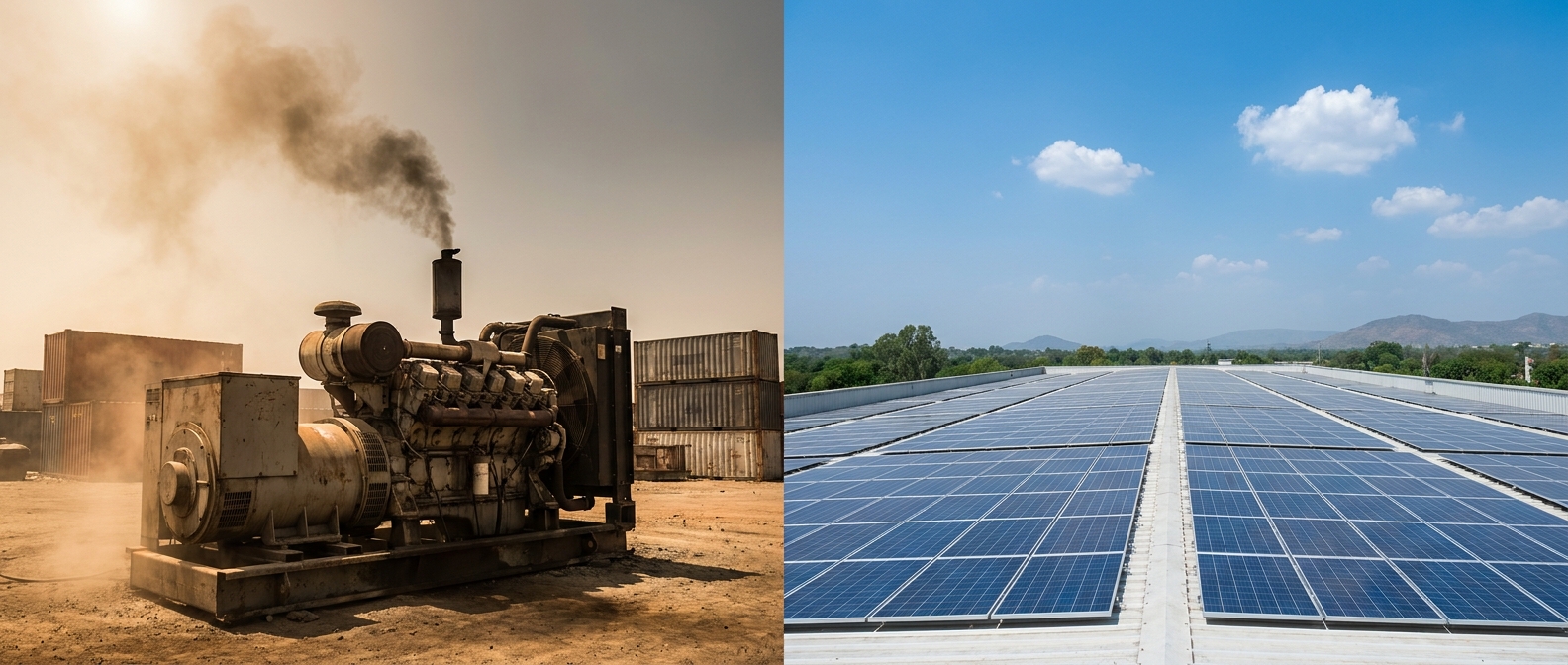
Why Gujarat Facilities Are Rethinking Diesel Power in 2026
Gujarat has long been one of India’s most industrially active states, home to thousands of factories, warehouses, textile units, chemical plants, and commercial complexes. Reliable power is not optional here. It is a production requirement. For decades, diesel generators filled the gap when the grid fell short. But the landscape in 2026 looks very different from what it did even five years ago.
Diesel prices in India have risen by an average of 6 to 8 percent annually over the past decade, driven by global crude oil volatility, rupee depreciation, and central excise duties. At the same time, India’s regulatory environment is tightening around carbon emissions. The Bureau of Energy Efficiency (BEE) has expanded its Perform, Achieve and Trade (PAT) scheme, and carbon pricing mechanisms are increasingly on the policy agenda. For large energy consumers in Gujarat, the cost of doing nothing is rising fast.
Meanwhile, rooftop solar Gujarat installations have surged. Gujarat’s average solar irradiation of 5.5 to 6.0 kWh per square meter per day makes it one of the best states in India for solar generation. Government schemes like PM-KUSUM and GEDA incentives have further reduced the entry cost for industrial and commercial solar. The result: solar vs diesel is now a comparison that clearly favors solar in most scenarios, but the details matter enormously. Let us walk through them.
Understanding Total Cost of Ownership (TCO): Solar vs Diesel
Most facility managers compare solar and diesel on upfront cost alone. This is a mistake. A diesel generator may cost significantly less to purchase than a solar system of equivalent capacity, but that comparison ignores the ongoing fuel, maintenance, and compliance costs that accumulate over years. Total cost of ownership captures every rupee spent over the life of the asset, giving you a true apples-to-apples comparison.
For a diesel generator, TCO includes: initial purchase and installation, fuel costs (the largest and most volatile component), scheduled maintenance and annual maintenance contracts (AMC), unscheduled repairs and overhauls, operator labor, depreciation, and emerging carbon compliance costs. For a solar system, TCO includes: capital expenditure (capex) on panels, inverters, mounting structures, and wiring, installation and commissioning, financing costs if the system is debt-funded, annual operations and maintenance (O&M), panel degradation over time, inverter replacement (typically at year 10 to 12), and insurance. The critical difference is that solar’s largest cost is upfront and fixed, while diesel’s largest cost (fuel) is recurring and unpredictable.
Diesel Power Costs: A 10-Year Financial Reality Check
Let us build a realistic diesel cost model for a mid-sized Gujarat industrial facility running a 100 kVA diesel generator for approximately 8 hours per day, 300 days per year. This is a common scenario for factories using diesel as primary or heavy backup power.
Fuel Costs
A 100 kVA diesel generator consumes roughly 20 to 25 liters of diesel per hour at 75 percent load. At an average diesel price of approximately ₹95 per liter in Gujarat in 2026, daily fuel cost runs to ₹15,200 to ₹19,000. Annualized, that is ₹45.6 lakh to ₹57 lakh per year in fuel alone. Applying a conservative 7 percent annual escalation (in line with the historical trend), cumulative 10-year fuel expenditure for this facility reaches ₹6.3 crore to ₹7.9 crore.
Maintenance and Overhaul Costs
Diesel generators require oil changes every 250 to 500 hours, filter replacements, coolant checks, and annual servicing. A standard AMC for a 100 kVA DG set costs ₹1.5 lakh to ₹2.5 lakh per year. Major overhauls (engine rebuild or alternator replacement) typically occur at the 5-year and 10-year marks, costing ₹3 lakh to ₹8 lakh each. Over 10 years, maintenance and overhaul costs add ₹25 lakh to ₹40 lakh to your total.
Depreciation and Resale Value
A 100 kVA DG set costs ₹8 lakh to ₹12 lakh to purchase and install. Diesel generators depreciate rapidly, retaining perhaps 20 to 30 percent of their value after 10 years of heavy use. This means your net asset loss on the generator itself is ₹5.6 lakh to ₹8.4 lakh over the period.
Carbon and Regulatory Risk
India’s carbon market is evolving. The Energy Conservation (Amendment) Act 2022 established a framework for a domestic carbon credit trading scheme. Facilities that rely heavily on diesel face increasing compliance costs and reporting obligations. While exact carbon tax rates for small and mid-sized facilities are still being finalized, the directional risk is clear: diesel-heavy operations will face rising regulatory costs through the 2020s and beyond.
Total 10-year diesel TCO (100 kVA, 8 hrs/day, 300 days/year): ₹6.6 crore to ₹8.4 crore, excluding carbon compliance costs which could add further to this figure.
Solar Power Costs: What a 10-Year Model Really Looks Like
Now let us model the solar alternative. A 100 kVA diesel generator running at 75 percent load produces approximately 75 kW of usable power. To replace this with solar, a facility in Gujarat would typically need a 100 kWp to 150 kWp rooftop solar system, accounting for solar intermittency and the need to cover peak daytime loads. For this comparison, we will use a 120 kWp system as a representative size.
Capital Expenditure
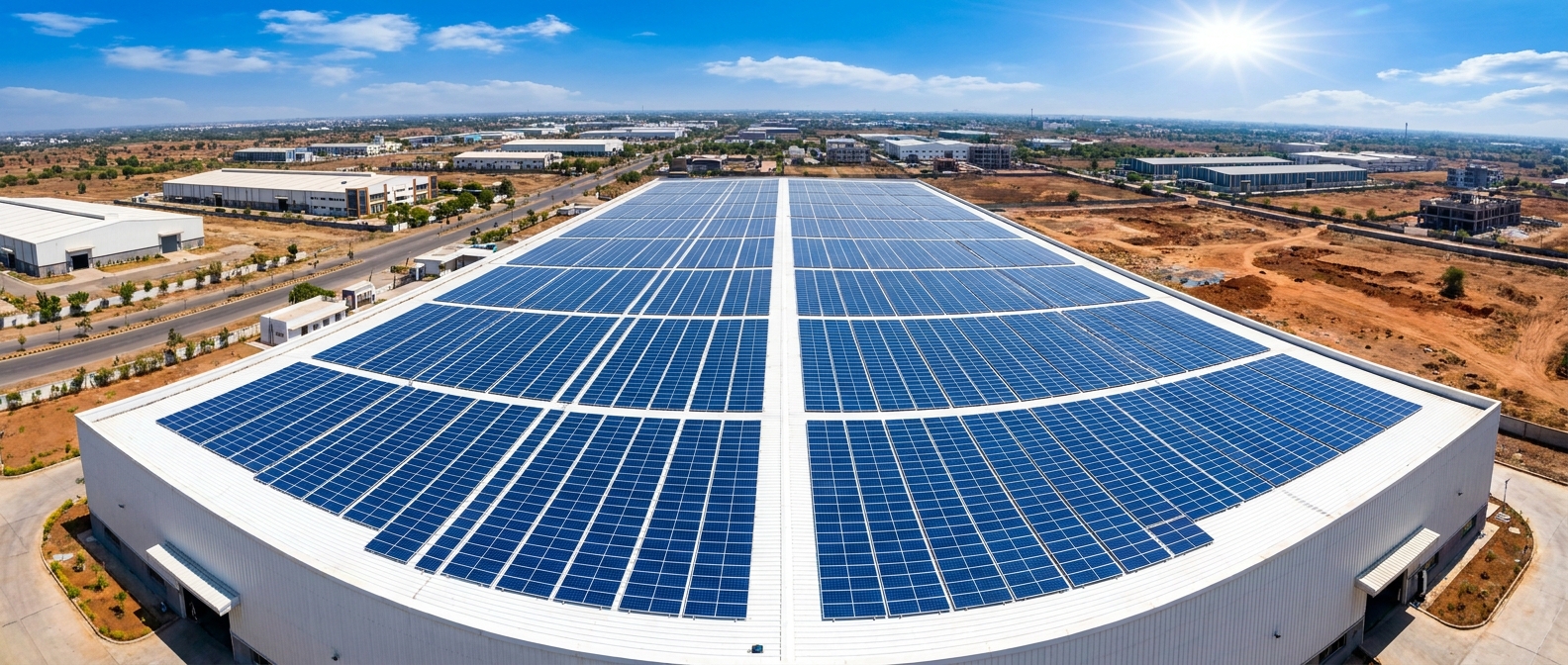
In 2026, the installed cost of a commercial or industrial rooftop solar system in Gujarat ranges from ₹45 to ₹55 per Wp for a quality turnkey solar EPC Gujarat installation, including Tier-1 solar modules, a reliable solar inverter, mounting structures, wiring, and commissioning. For a 120 kWp system, total capex is approximately ₹54 lakh to ₹66 lakh. This is the largest single cost in the solar TCO model, and it is paid upfront rather than spread over years like diesel fuel.
Government Subsidies and Incentives
This is where solar installation Gujarat becomes significantly more attractive. For commercial and industrial consumers, the central government’s PM-KUSUM component C and GEDA’s net metering policy allow facilities to offset their solar investment through grid export credits. While direct capital subsidies for large commercial/industrial systems above 10 kW are limited under current policy (the PM Surya Ghar subsidy primarily targets residential consumers up to 10 kW), industrial facilities benefit from accelerated depreciation of 40 percent under the Income Tax Act, which can reduce the effective capex by ₹8 lakh to ₹12 lakh depending on the facility’s tax position. Net metering further allows excess solar generation to be credited against grid bills, improving the overall economics. Always verify current subsidy eligibility with a qualified solar EPC services provider, as policy details evolve.
Financing Options
Many Gujarat businesses choose to finance their solar system rather than pay cash upfront. Solar-specific loans from nationalized banks and NBFCs are available at 8 to 11 percent interest for tenors of 5 to 7 years. Alternatively, RESCO (Renewable Energy Service Company) or PPA (Power Purchase Agreement) models allow facilities to install solar with zero upfront cost, paying only for the units generated at a pre-agreed rate. These solar financing options make the solar vs diesel comparison even more favorable on a cash-flow basis, since monthly solar loan EMIs or PPA payments are often lower than equivalent monthly diesel fuel bills from day one.
Operations, Maintenance, and Degradation
Solar systems are remarkably low-maintenance compared to diesel generators. Annual O&M for a 120 kWp rooftop system in Gujarat costs ₹60,000 to ₹1.2 lakh per year, covering panel cleaning, inverter checks, and monitoring. Quality solar panels degrade at 0.5 to 0.7 percent per year, meaning your 120 kWp system will produce about 93 to 95 percent of its original output at year 10. Inverters typically need replacement at the 10 to 12 year mark, costing ₹3 lakh to ₹5 lakh for a system of this size. Over 10 years, total O&M and replacement provisions amount to ₹9 lakh to ₹17 lakh.
Total 10-year solar TCO (120 kWp system, after accelerated depreciation benefit): ₹55 lakh to ₹75 lakh, inclusive of capex, financing costs (if applicable), O&M, and inverter replacement provision. This is the all-in cost of solar power over a decade. To understand your specific break-even timeline, read our detailed guide on Solar Payback Period Explained: Break-Even Timeline 2026.
Solar vs Diesel: Side-by-Side 10-Year TCO Comparison for Gujarat
With both models built, the comparison becomes stark. The table below summarizes the key assumptions and outcomes for a representative Gujarat industrial facility.
Key Assumptions
- Facility type: Mid-sized industrial or commercial unit in Gujarat
- Diesel system: 100 kVA DG set, 75% load, 8 hours/day, 300 days/year
- Solar system: 120 kWp rooftop, Gujarat irradiation 5.5 kWh/m²/day
- Diesel price (2026): ₹95/liter, escalating at 7% per year
- Solar capex: ₹60 lakh (mid-range), with accelerated depreciation benefit applied
- Solar O&M: ₹90,000/year, escalating at 3% per year
- Panel degradation: 0.6% per year
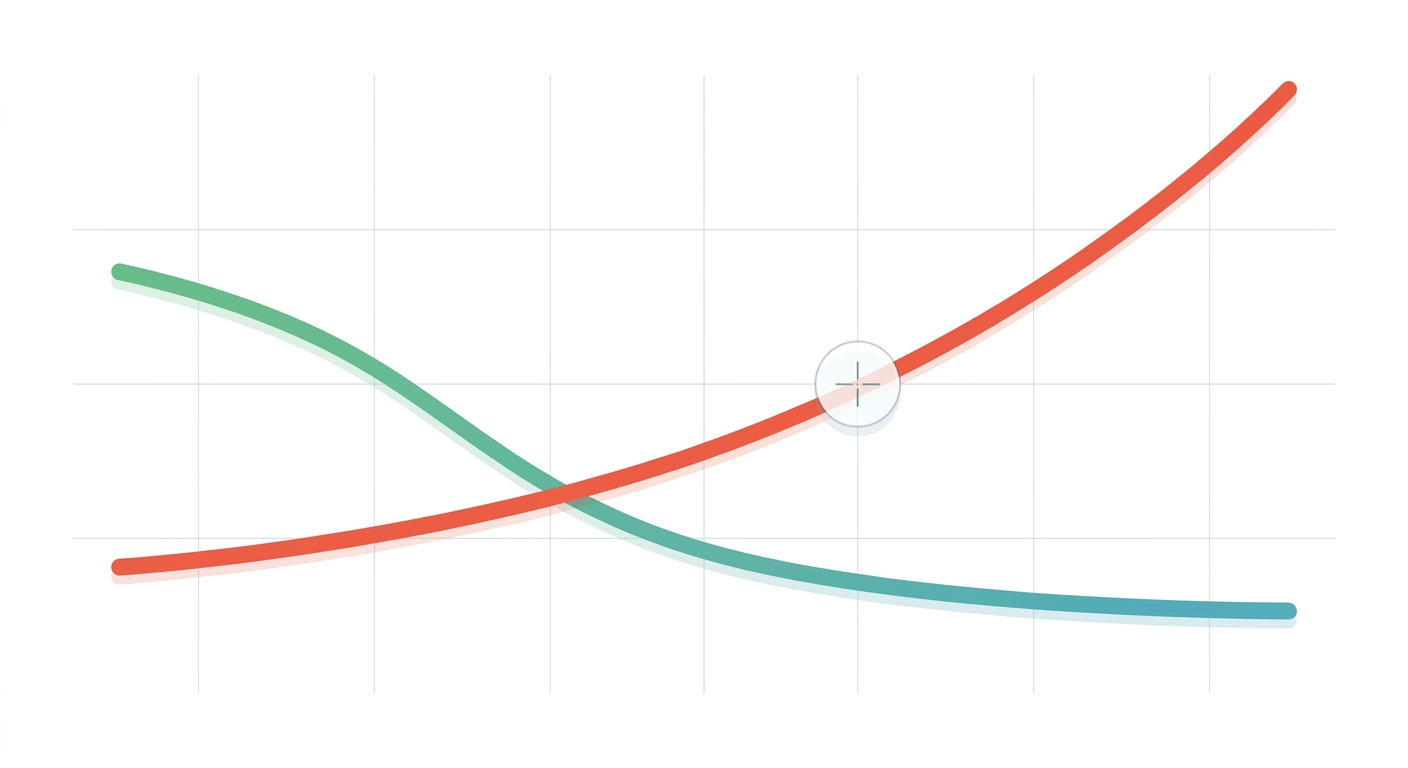
10-Year Cumulative Cost Comparison
- Year 1 cumulative cost — Diesel: ₹72 lakh | Solar: ₹63 lakh
- Year 3 cumulative cost — Diesel: ₹2.3 crore | Solar: ₹65.7 lakh
- Year 5 cumulative cost — Diesel: ₹4.1 crore | Solar: ₹68.5 lakh
- Year 7 cumulative cost, Diesel: ₹6.2 crore | Solar: ₹71.5 lakh
- Year 10 cumulative cost, Diesel: ₹7.5 crore | Solar: ₹75 lakh
The break-even point in this model occurs between Year 1 and Year 2, because the solar system’s effective cost per kWh is already lower than diesel from the first year of operation when you account for the full diesel running cost. Over 10 years, the facility choosing solar saves approximately ₹6.75 crore compared to continuing with diesel. Even in a pessimistic scenario where diesel prices escalate at only 4 percent per year and solar degradation runs at 0.8 percent per year, the 10-year solar savings remain above ₹5 crore.
Sensitivity Analysis
What if diesel prices spike sharply, as they did in 2022? A 10 percent annual diesel escalation scenario pushes 10-year diesel TCO above ₹9 crore, widening the solar advantage further. What if solar capex is higher than expected? Even at ₹80 lakh all-in capex, the 10-year solar TCO remains below ₹90 lakh, still a fraction of the diesel alternative. The solar vs diesel comparison is robust across a wide range of assumptions. For a deeper look at how solar panel cost and system sizing affect your returns, explore our guide on Solar Payback Period Explained: Break-Even Timeline 2026.
Hidden Factors That Tip the Scale Further Toward Solar
The TCO numbers alone make a compelling case for solar. But several additional factors strengthen the argument for Gujarat facilities making the switch.
ESG Reporting and Carbon Compliance
India’s top 1,000 listed companies are now required to file Business Responsibility and Sustainability Reports (BRSR). Even unlisted suppliers to large corporates face increasing pressure to demonstrate low-carbon operations. Switching from diesel to industrial solar Gujarat directly reduces your Scope 1 and Scope 2 emissions, improving your ESG profile and making you a more attractive supply chain partner. As carbon pricing mechanisms mature in India, this advantage will translate into direct financial savings.
Energy Independence and Grid Reliability
Solar generation is immune to diesel price shocks, fuel supply disruptions, and transportation bottlenecks. Gujarat’s industrial corridors, particularly around Surat, Ahmedabad, Rajkot, and Vadodara, have seen significant grid improvement, but outages and voltage fluctuations remain a reality for many facilities. A solar system with battery storage or a hybrid solar-diesel configuration gives you a reliable, predictable power source that is not subject to global oil market volatility.
Property Value and Brand Perception
Commercial and industrial properties with solar installations command higher valuations and attract quality tenants. For businesses, visible solar installations signal environmental responsibility and operational efficiency, which resonates with customers, investors, and employees alike. This is a soft benefit that does not appear in a TCO spreadsheet but has real business value.
Scalability
As your business grows, your solar system can grow with it. Adding capacity to a rooftop solar system is straightforward, provided roof space is available. Scaling up diesel capacity means purchasing additional generators, increasing fuel storage, and managing more complex maintenance schedules. Solar scales more cleanly and cost-effectively.
When Does Diesel Still Make Sense? An Honest Assessment
A rigorous solar vs diesel comparison requires intellectual honesty. There are scenarios where diesel remains the more practical choice, at least in the short term.
- Temporary or mobile power needs: Construction sites, temporary events, or short-duration projects where a solar system cannot be amortized over its useful life.
- Heavily shaded or structurally unsuitable rooftops: If your facility’s roof cannot support solar panels due to shading, structural limitations, or lease restrictions, solar may not be feasible without significant additional investment.
- Short-term facility leases: If you occupy a facility on a lease of less than 3 to 4 years, recovering the solar capex before lease expiry may be difficult, though RESCO/PPA models can address this.
- Hybrid solar-diesel systems: For facilities that need 24/7 power reliability and cannot yet afford battery storage, a hybrid system that uses solar as the primary source and diesel as backup is often the optimal middle ground. This approach dramatically reduces diesel consumption (and cost) while maintaining full reliability.
Even in these cases, the trajectory is clear. As battery storage costs continue to fall and solar financing becomes more accessible, the window where diesel makes economic sense is narrowing every year.
How to Build Your Own Solar vs Diesel TCO Model
The numbers above are illustrative. Your facility’s actual TCO comparison will depend on your specific energy consumption, roof area, local grid tariff, diesel usage pattern, and financing options. Here is a practical framework for building your own model.

Step 1: Audit Your Current Diesel Consumption and Costs
Gather 12 months of diesel purchase records. Calculate your average monthly fuel cost, maintenance spend, and any downtime costs attributable to generator failures. This gives you a reliable baseline for the diesel side of your TCO model. Do not forget to include the cost of diesel storage infrastructure and any regulatory compliance costs for fuel storage.
Step 2: Get a Solar Feasibility Assessment
Commission a professional solar feasibility study for your Gujarat facility. A qualified solar EPC Gujarat provider will assess your roof area, structural capacity, shading analysis, grid connection options, and potential system size. This assessment should be free or low-cost and will give you the capex estimate you need for your model. Understanding what goes into a full solar project is easier with our guide on What is Solar EPC? Complete Service Guide 2026.
Step 3: Factor In Applicable Subsidies and Financing
Work with your EPC provider and a tax advisor to quantify the accelerated depreciation benefit, net metering credits, and any applicable state-level incentives from GEDA. If you are considering a RESCO or PPA model, get at least two competing quotes to benchmark the per-unit rate. Understanding the full solar subsidy landscape can significantly change your TCO calculation.
Step 4: Model 10-Year Cash Flows
Build a simple spreadsheet with two columns: diesel costs (escalating at your chosen rate) and solar costs (capex in year 0, then O&M only). Apply your accelerated depreciation benefit as a year-1 or year-2 cash inflow. Calculate cumulative costs for each year and identify the break-even point. Run at least three scenarios: base case, optimistic (lower diesel escalation), and pessimistic (higher solar capex, faster degradation).
Step 5: Evaluate Break-Even and Risk Scenarios
Your break-even analysis will show you the year in which cumulative solar costs fall below cumulative diesel costs. For most Gujarat industrial facilities in 2026, this occurs within 2 to 4 years. Beyond break-even, every year of solar operation is pure savings. Factor in the risk profile: solar costs are largely fixed and predictable, while diesel costs carry significant upside risk from fuel price volatility. For a detailed look at how solar ROI and payback periods work across different system sizes, see our resource on Solar Payback Period Explained: Break-Even Timeline 2026.
Choosing the right solar modules and equipment also matters for long-term performance. Our comparison of Solar Brands Gujarat: Top Panel Manufacturers Compared 2026 can help you evaluate quality options available in the Gujarat market.
Frequently Asked Questions: Solar vs Diesel for Gujarat Businesses
Is solar cheaper than diesel in Gujarat right now?
Yes, in most scenarios. The effective cost of solar-generated electricity for a commercial or industrial facility in Gujarat in 2026 is approximately ₹3.5 to ₹5 per kWh (all-in, over the system life). Diesel-generated electricity costs ₹18 to ₹25 per kWh when you account for fuel, maintenance, and depreciation. Solar is 4 to 6 times cheaper per unit on a lifecycle basis for most Gujarat facilities.
What subsidies are available for industrial solar in Gujarat?
Large commercial and industrial consumers (above 10 kW) primarily benefit from the accelerated depreciation benefit of 40 percent under the Income Tax Act, net metering credits under GEDA’s policy, and in some cases, concessional financing from IREDA and nationalized banks. The PM Surya Ghar Muft Bijli Yojana subsidy is targeted at residential consumers. Always consult a qualified solar EPC services provider for the latest applicable incentives for your facility type and size.
How long does a solar system last compared to a diesel generator?
Quality solar panels carry performance warranties of 25 to 30 years and can last even longer with proper maintenance. Inverters typically need replacement at 10 to 12 years. A diesel generator, under heavy industrial use, typically requires a major overhaul at 5 years and has an effective economic life of 10 to 15 years before replacement becomes more cost-effective than continued repair. Solar wins decisively on asset longevity.
Can solar completely replace a diesel generator?
For daytime operations, yes. A properly sized rooftop solar system can meet 80 to 100 percent of a facility’s daytime power needs in Gujarat’s high-irradiation environment. For 24/7 operations or nighttime power, solar needs to be paired with battery storage or a grid connection. A hybrid solar-diesel system, where solar handles daytime load and diesel covers nighttime or peak demand gaps, is a practical and cost-effective transition strategy for many Gujarat facilities.
What is the typical payback period for industrial solar in Gujarat?
For facilities currently running diesel as primary or heavy backup power, the effective payback period is often 2 to 4 years, because the savings against diesel are so large. For facilities replacing grid power with solar, payback periods of 4 to 6 years are typical, depending on system size, local grid tariff, and applicable incentives. After payback, the system generates essentially free electricity for the remaining 20-plus years of its life. The solar payback timeline is one of the most compelling arguments for making the switch in 2026.
Which solar companies in Gujarat can help with this analysis?
Look for established solar companies Gujarat with a proven track record in commercial and industrial installations, strong references, and the ability to provide a detailed financial model alongside their technical proposal. Verify their experience with net metering applications, GEDA processes, and government scheme implementation. A reputable solar EPC Gujarat provider will offer a transparent, site-specific TCO analysis as part of their proposal process.
Make the Switch from Diesel to Solar: Your Next Step
The solar vs diesel comparison in 2026 is not a close call for most Gujarat industrial and commercial facilities. With 10-year diesel TCO running 8 to 10 times higher than solar TCO for equivalent power output, the financial case for solar installation Gujarat is overwhelming. Add in the ESG benefits, energy independence, and the long-term trajectory of rising diesel costs and tightening carbon regulations, and the decision becomes even clearer. The question is no longer whether to switch from diesel to solar. It is how quickly you can make it happen.
Heaven Green Energy Limited has been helping Gujarat businesses make this transition since 2017, with over 10,000 installations across residential, commercial, and industrial facilities in Surat, Ahmedabad, Junagadh, and across the state. Our team of solar engineers will conduct a detailed site assessment, build a transparent TCO model for your specific facility, and deliver a turnkey solar EPC Gujarat solution that maximizes your return on investment. If you are ready to stop paying for diesel and start generating your own clean, low-cost power, we are ready to help you get there.
Have questions about solar vs diesel for your Gujarat facility? Speak directly with our solar energy experts at +91 63904 05060 for a no-obligation consultation and site assessment. Take the first step toward energy independence today.
This blog post was written using thestacc.com