


Planning a solar transition for your industrial facility is one of the most impactful energy decisions you will make. But the solar installation process for a large manufacturing plant or factory is nothing like putting a few panels on a home rooftop. It involves structural engineering, regulatory approvals, high-voltage electrical work, and coordination across multiple teams — all while keeping your plant operations running. This guide walks Gujarat-based plant managers and energy heads through every phase of the industrial solar installation process, from the first energy audit to the moment your system synchronizes with the grid.
Why Industrial Solar Is Different from Residential Installations
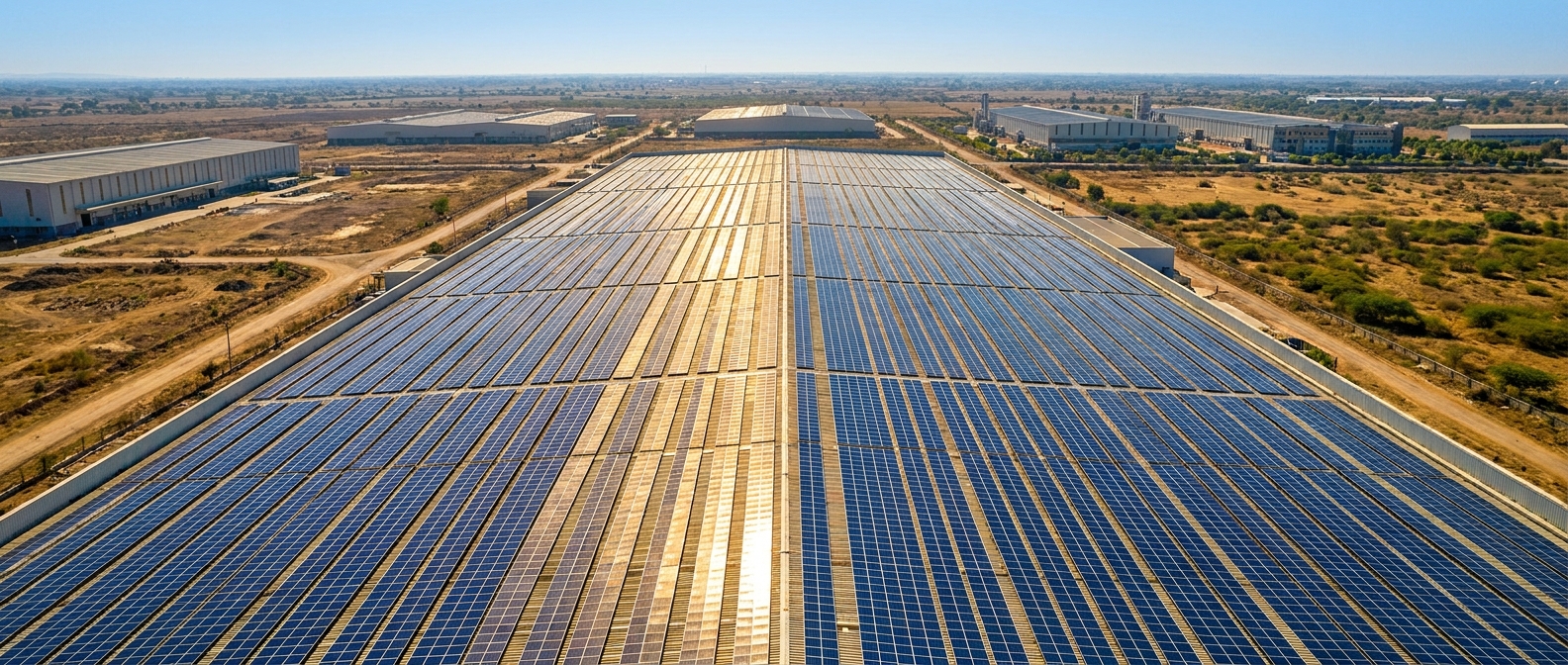
The solar installation process for an industrial plant operates on a completely different scale and complexity compared to a residential setup. A home system might be 3–10 kW. An industrial plant typically needs anywhere from 200 kW to several megawatts. That difference changes everything — from the structural engineering required to the regulatory approvals needed.
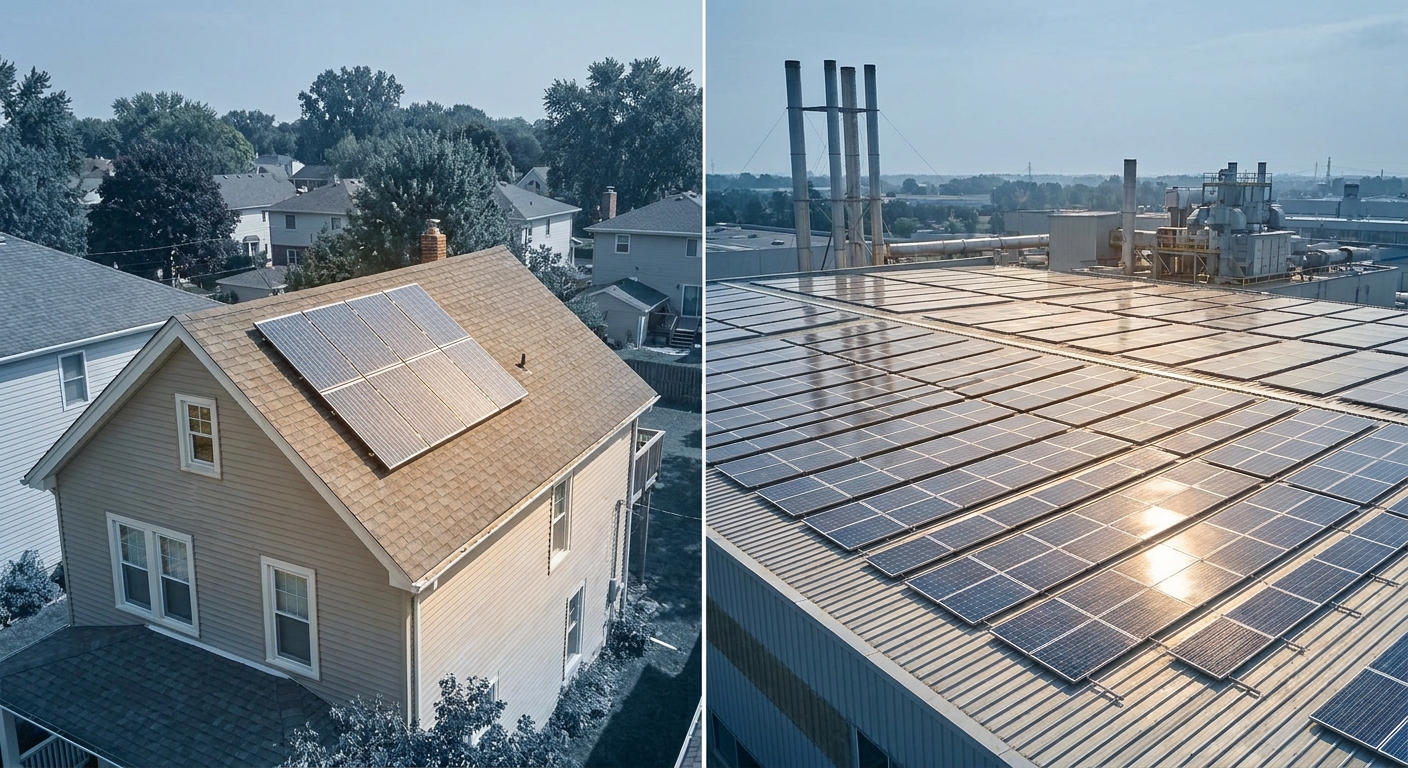
Here is what makes industrial solar installations uniquely demanding:
- Structural complexity: Factory rooftops carry heavy machinery, HVAC systems, and water tanks. A structural engineer must verify that the roof can bear the additional load of solar panels and mounting structures before any work begins.
- High-voltage electrical systems: Industrial plants operate on LT (Low Tension) or HT (High Tension) connections. Integrating a solar system into these requires specialized switchgear, protection relays, and compliance with Central Electricity Authority (CEA) regulations.
- Grid compliance and net metering: Gujarat’s DISCOMs (DGVCL, MGVCL, PGVCL, UGVCL) have specific technical and documentation requirements for industrial net metering connections that differ from residential applications.
- Multiple stakeholders: The process involves plant managers, energy heads, civil engineers, electrical contractors, the solar EPC company, and DISCOM officials, all of whom must coordinate effectively.
- Business continuity: Unlike a home, a factory cannot afford extended downtime. The installation must be planned in phases that do not disrupt production schedules.
Understanding these distinctions helps you plan realistically and choose the right solar EPC Gujarat partner who has genuine industrial experience. For a deeper look at what EPC services cover, see our guide on What is Solar EPC? Complete Service Guide 2026.
1. Industrial Load Assessment and Energy Audit
Every successful solar installation process begins with a thorough understanding of your energy consumption. Before any panel is placed or any structure is designed, your EPC partner needs to know exactly how much power your plant uses, when it uses it, and what your future energy needs look like.
What the Energy Audit Covers
- Sanctioned load vs. connected load vs. actual demand: These three numbers are often very different. Your sanctioned load is what the DISCOM has approved. Your connected load is the total capacity of all equipment. Your actual demand is what you genuinely consume, and this is what drives your solar system size.
- Peak demand analysis: Industrial tariffs in Gujarat include demand charges. Identifying your peak demand hours helps size the solar system to offset the most expensive portion of your electricity bill.
- Load pattern mapping: Shift-based operations, seasonal variations, and DG (diesel generator) usage patterns all influence the optimal solar capacity.
- Electricity bill analysis: Your last 12 months of electricity bills reveal consumption trends, power factor penalties, and the true cost per unit you are paying.
Output and Timeline
The energy audit produces a recommended system capacity in kW or MW, a projected annual generation figure, and an initial solar ROI estimate. For most industrial plants in Gujarat, this phase takes 3 to 7 working days. The data collected here directly shapes every subsequent phase of the solar installation process.
2. Site Survey and Structural Engineering Assessment
Once the energy audit confirms the target system size, the next phase of the solar installation process is a detailed physical inspection of your facility. This is where engineering reality meets your energy ambitions.

What the Site Survey Examines
- Available rooftop area: Engineers measure the usable shadow-free area, accounting for setbacks, skylights, ventilation shafts, and existing rooftop equipment.
- Shading analysis: Using tools like PVsyst or Helioscope, the team models shadow patterns from chimneys, water tanks, and adjacent structures across different times of day and seasons.
- Structural load-bearing capacity: A licensed structural engineer assesses whether the existing roof structure, whether RCC, pre-engineered building (PEB), or shed, can support the dead load of panels and mounting structures, plus wind and seismic loads as per IS codes.
- Tilt angle and orientation optimization: In Gujarat, a south-facing tilt of approximately 22, 24 degrees typically maximizes annual generation. The survey confirms the best configuration for your specific roof geometry.
- Ground-mount feasibility: For large industrial campuses with open land, ground-mounted systems may be more practical. The survey evaluates soil conditions, drainage, and land availability.
Structural Engineering Report
The structural assessment results in a formal engineering report that either clears the roof for installation or recommends reinforcement work. This report is also required for DISCOM approvals and insurance purposes. Timeline: 5 to 10 working days.
3. System Design and Engineering
With survey data in hand, the engineering team designs the complete solar system. This is the most technically intensive phase of the solar installation process and determines the long-term performance of your plant.
Key Design Deliverables
- Single-Line Diagram (SLD): The electrical blueprint showing how solar arrays connect to inverters, switchgear, and your main LT/HT panel. This document is mandatory for DISCOM approval.
- Module and inverter selection: Engineers select solar modules and solar inverter models based on your roof type, shading conditions, and budget. For industrial plants, string inverters or central inverters are common choices, while microinverters are rarely used at this scale.
- String sizing and DC/AC ratio: Proper string configuration ensures inverters operate within their optimal voltage window throughout the year, maximizing energy yield.
- Mounting structure design: Whether ballasted, fastened, or hybrid, the mounting system is engineered to meet wind load requirements specific to Gujarat’s coastal and inland zones.
- SCADA and monitoring system: Industrial installations require real-time monitoring of generation, consumption, and grid export. The design includes data loggers, communication protocols, and remote monitoring dashboards.
- CEA and DISCOM compliance: The design must conform to CEA (Installation and Operation of Meters) Regulations and Gujarat DISCOM technical standards for grid-connected systems.
Choosing the right solar brands Gujarat has to offer is a critical part of this phase. For a detailed comparison of panel manufacturers available in the Gujarat market, refer to our article on Solar Brands Gujarat: Top Panel Manufacturers Compared 2026. Timeline: 7 to 14 working days.
4. Equipment Procurement and Quality Checks
The solar installation process moves into procurement once the design is approved. For industrial-scale systems, procurement is a significant logistical exercise that directly affects project timelines and long-term performance.
What Gets Procured
- Solar modules: Tier-1 panels with IEC 61215 and IEC 61730 certifications. For industrial plants in Gujarat, monocrystalline PERC or TOPCon modules are the current standard for high efficiency in high-temperature conditions.
- Solar inverters: String or central inverters with grid protection features compliant with CEA norms. Factory Acceptance Testing (FAT) is conducted before dispatch for large central inverters.
- Mounting structures: Hot-dip galvanized steel or aluminum structures fabricated to the approved design. Galvanization thickness is critical for Gujarat’s coastal and humid environments.
- DC and AC cables: UV-resistant, double-insulated DC cables rated for outdoor use. AC cables sized for the system’s full output current.
- Switchgear and protection devices: DC isolators, AC circuit breakers, surge protection devices (SPDs), and anti-islanding protection relays.
- Earthing and lightning protection materials: Copper earth strips, earth electrodes, and lightning arrestors as per IS 3043 and IS 2309.
A reputable solar EPC services provider manages vendor relationships, quality inspections, and logistics, ensuring materials arrive on site in the right sequence. Timeline: 15 to 30 working days, depending on system size and equipment availability.
5. Civil Work, Mounting, and Panel Installation
This is the most visible phase of the solar installation process, the point where your rooftop begins to transform. It is also the phase that requires the most careful site management to protect your facility and workforce.
Civil and Preparatory Work
- Rooftop preparation: Any damaged roofing sheets are replaced. Waterproofing treatment is applied at all penetration points to prevent leaks. Cable trays and conduit routes are planned and installed.
- Earthing pits: Earth electrodes are installed and tested for resistance values as per IS 3043 before any electrical work begins.
- Safety infrastructure: Safety nets, fall-arrest systems, and access ladders are installed for the duration of the project.
Mounting Structure Erection
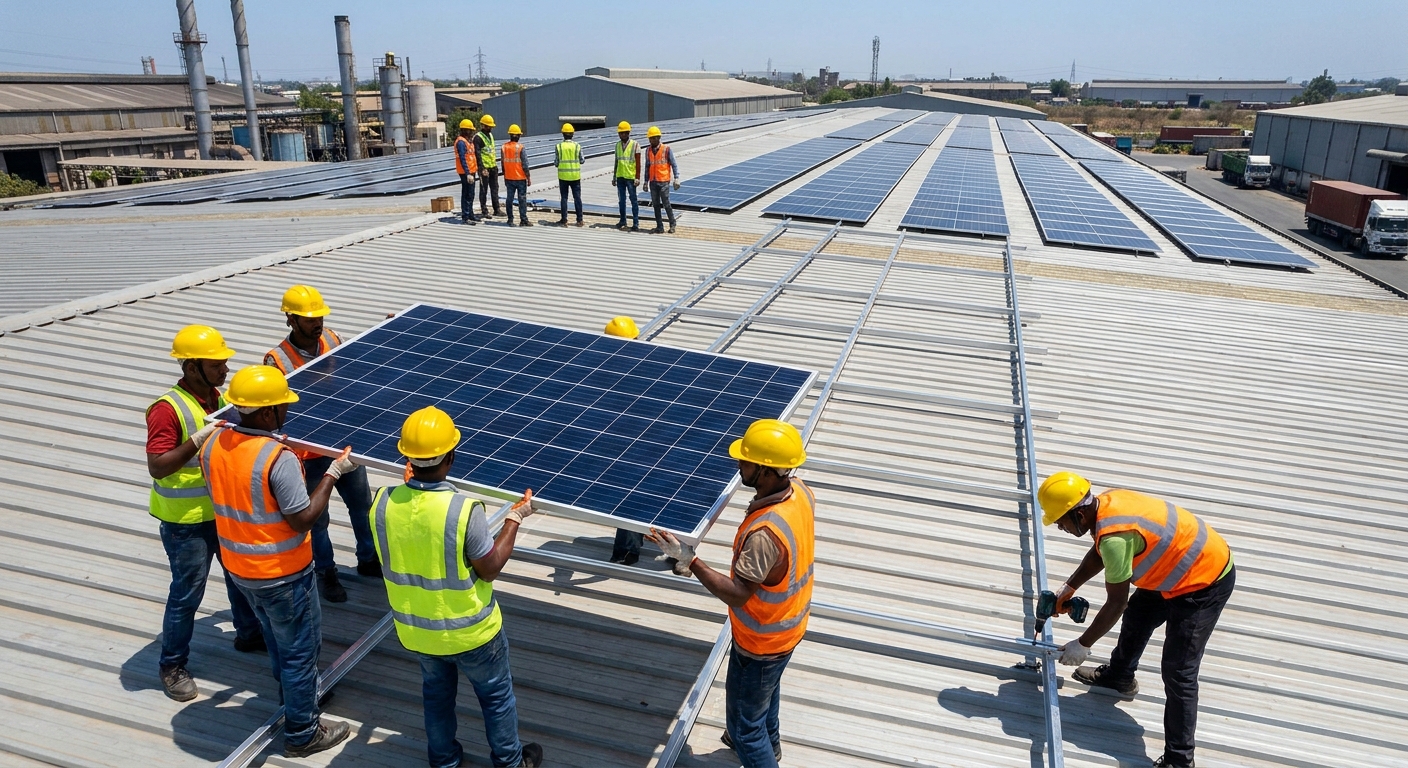
Mounting structures are assembled and aligned according to the approved layout drawing. For PEB (Pre-Engineered Building) roofs, clamp-based systems avoid roof penetrations. For RCC roofs, anchor bolts are chemically fixed into the slab. Alignment is verified using laser levels and theodolites to ensure uniform tilt angles across the entire array.
Solar Panel Placement and DC Wiring
Panels are lifted to the rooftop using material hoists and placed in their designated positions. Each panel is secured to the mounting structure and electrically connected in strings. DC cables are routed through cable trays to string combiner boxes (SCBs), which consolidate multiple strings before feeding the inverter. All connections are torqued to manufacturer specifications and tested for continuity. Timeline: 20 to 45 working days, depending on system capacity and available workforce.
6. Electrical Installation: Inverters, Switchgear, and AC Wiring
With the DC side complete, the solar installation process moves to the AC electrical work, the phase that connects your solar array to your plant’s power system.
Inverter Installation
Inverters are mounted in a dedicated, ventilated inverter room or outdoor enclosure. String inverters are typically wall-mounted near the array. Central inverters require a dedicated room with proper ventilation, cable management, and fire suppression provisions. All inverter DC inputs are connected from the SCBs, and AC outputs are wired to the AC distribution board.
AC Distribution and Main Panel Integration
- AC distribution board (ACDB): Consolidates AC output from multiple inverters and feeds the main LT panel.
- Main LT panel integration: The solar system is connected to your existing main LT panel through a dedicated solar incomer with appropriate protection devices.
- Protection relays: Over-voltage, under-voltage, over-frequency, and anti-islanding relays are installed and set to DISCOM-specified parameters.
- Surge protection devices (SPDs): Installed on both DC and AC sides to protect equipment from lightning-induced surges, particularly important in Gujarat’s monsoon-prone regions.
Timeline: 7 to 15 working days.
7. Testing, Commissioning, and Grid Synchronization
The final technical phase of the solar installation process is also the most critical. No system should be energized without a thorough pre-commissioning test sequence.
Pre-Commissioning Tests
- Insulation resistance (IR) testing: Verifies that DC cables and modules are free from insulation faults before energization.
- Open-circuit voltage (Voc) testing: Confirms that each string’s open-circuit voltage matches the design specification.
- Short-circuit current (Isc) testing: Validates module performance and string wiring integrity.
- Polarity checks: Ensures correct positive and negative polarity at all connection points.
- Earth continuity testing: Verifies that all metallic structures and equipment enclosures are properly bonded to earth.
Inverter Startup and Performance Testing
Inverters are started up sequentially. Initial performance data, including DC input voltage, AC output voltage, frequency, and power factor, is recorded and compared against design values. The system’s Performance Ratio (PR) is calculated to confirm it meets the guaranteed generation benchmark.
Net Metering Application and DISCOM Inspection
For rooftop solar Gujarat installations connected to the grid, a net metering application is submitted to the relevant DISCOM. This includes the SLD, structural certificate, electrical safety certificate, and test reports. A DISCOM inspector visits the site to verify the installation before approving the bi-directional meter installation. This step is often the most time-consuming part of the entire process due to administrative queues.
Grid Synchronization and Handover
Once the DISCOM approves and installs the net meter, the system is officially synchronized with the grid. Export of surplus power begins, and your plant starts earning energy credits. The EPC contractor provides a final commissioning report, as-built drawings, equipment warranties, and O&M manuals. Timeline: 7 to 15 working days for testing and commissioning, plus 15 to 30 days for DISCOM approvals.
Solar Installation Timeline: Phase-by-Phase Summary
Here is a consolidated view of the complete solar installation process timeline for a typical industrial plant in Gujarat with a system capacity between 500 kW and 2 MW:
| Phase | Activity | Typical Duration |
|---|---|---|
| Phase 1 | Load Assessment & Energy Audit | 3, 7 days |
| Phase 2 | Site Survey & Structural Assessment | 5, 10 days |
| Phase 3 | System Design & Engineering | 7, 14 days |
| Phase 4 | Equipment Procurement | 15, 30 days |
| Phase 5 | Civil Work, Mounting & Panel Installation | 20, 45 days |
| Phase 6 | Electrical Installation | 7, 15 days |
| Phase 7 | Testing, Commissioning & Grid Sync | 7, 15 days |
| Parallel | Permits, Approvals & Net Metering | 15, 30 days |
| Total | End-to-End Solar Installation Process | 3 to 5 months |
A well-organized solar EPC Gujarat partner runs several of these phases in parallel, for example, initiating DISCOM approvals during procurement, which can compress the overall timeline significantly. The biggest variable is typically DISCOM approval speed, which varies by zone and application volume.
Permits, Approvals, and Solar Subsidies in Gujarat
Navigating the regulatory side of the solar installation process is where many industrial projects stall. Understanding what approvals are needed, and who handles them, saves significant time.
Key Approvals Required
- DISCOM net metering approval: Required for any grid-connected system. The application includes the SLD, structural certificate, and electrical safety certificate. Gujarat’s four DISCOMs each have their own application portals and timelines.
- CEA electrical safety certificate: For systems above 10 kW, a licensed electrical inspector must certify the installation before grid connection. This is a legal requirement under the Electricity Act, 2003.
- GEDA registration: The Gujarat Energy Development Agency (GEDA) oversees renewable energy projects in the state. Registration with GEDA may be required for certain incentive schemes.
- Factory/municipal NOC: Some industrial zones require a no-objection certificate from the local industrial development authority before rooftop modifications.
Solar Subsidies and Incentives for Industrial Units
Industrial units in Gujarat should be aware that solar subsidy structures differ from residential schemes. The PM Surya Ghar Muft Bijli Yojana subsidy is primarily for residential consumers. However, industrial and commercial units can benefit from:
- Accelerated depreciation: Under the Income Tax Act, industrial units can claim 40% accelerated depreciation on solar assets in the first year, significantly improving the financial case.
- Net metering benefits: Surplus solar power exported to the grid earns credits against future bills, effectively reducing your per-unit electricity cost.
- DREBP scheme: The Deen Dayal Upadhyaya Gram Jyoti Yojana and related rural electrification programs may apply to industrial units in semi-urban or rural Gujarat locations.
- PM-KUSUM Component C: Relevant for agro-industrial units seeking to solarize agricultural pump connections.
Understanding your solar payback timeline is essential before committing to a system size. For a detailed financial analysis framework, read our guide on Solar Payback Period Explained: Break-Even Timeline 2026. Most industrial plants in Gujarat achieve payback in 4 to 6 years, with systems generating returns for 20+ years thereafter.
Frequently Asked Questions About the Solar Installation Process
How long does the full solar installation process take for an industrial plant?
For a typical industrial plant in Gujarat with a system capacity between 500 kW and 2 MW, the complete solar installation process, from energy audit to grid synchronization, takes approximately 3 to 5 months. The largest variable is DISCOM approval timelines, which can range from 2 weeks to 2 months depending on the zone and application backlog.
What is the role of an EPC contractor in the solar installation process?
A solar EPC services provider manages the entire project under a single contract, Engineering (system design and approvals), Procurement (equipment sourcing and quality control), and Construction (installation, testing, and commissioning). For industrial plants, this turnkey approach is strongly recommended because it places accountability for performance and timelines with a single responsible party rather than multiple vendors.
Can industrial plants in Gujarat get solar subsidies?
Direct capital subsidies for industrial units are limited compared to residential schemes. However, industrial plants benefit significantly from accelerated depreciation (40% in Year 1), net metering credits, and favorable solar financing options including solar-specific loans and lease structures. Your EPC partner should provide a detailed financial model that accounts for all applicable incentives.
What happens after installation, who handles solar maintenance?
Post-installation solar maintenance Gujarat is typically covered under an Annual Maintenance Contract (AMC) with your EPC provider. Industrial systems require quarterly cleaning, bi-annual electrical inspections, inverter firmware updates, and performance ratio monitoring. Proactive maintenance is critical to sustaining the energy yields that underpin your solar ROI projections.
How does net metering work for industrial units in Gujarat?
Under Gujarat’s net metering policy, industrial consumers with rooftop solar systems export surplus generation to the grid. The DISCOM installs a bi-directional meter that records both import (grid consumption) and export (solar surplus). At the end of each billing cycle, the exported units are credited against imported units. If exports exceed imports, the surplus is carried forward to the next billing period. The specific tariff rates and banking periods are governed by the Gujarat Electricity Regulatory Commission (GERC) and are subject to periodic revision.
Plan Your Industrial Solar Installation with Heaven Green Energy
The solar installation process for an industrial plant is a multi-phase engineering project that demands technical expertise, regulatory knowledge, and disciplined project management. Every phase, from the initial load assessment to the final grid synchronization, must be executed with precision to deliver the energy savings and solar ROI your facility deserves.
Heaven Green Energy Limited has been executing industrial solar Gujarat projects since 2017, with a proven track record across manufacturing, textile, chemical, and food processing facilities throughout the state. Our turnkey solar EPC Gujarat approach means you have a single accountable partner from the first site visit to the final commissioning handover, and beyond, through our dedicated solar maintenance Gujarat team.
Ready to start your industrial solar journey? Our engineering team will conduct a no-obligation energy audit and site assessment for your facility. Call us today at +91 63904 05060 to speak with an industrial solar specialist who understands Gujarat’s grid, regulations, and industrial energy landscape.
Whether you are evaluating your first solar project or looking to expand an existing installation, the solar installation process becomes far more manageable with an experienced EPC partner by your side. Take the first step today, your plant’s energy independence starts with a single conversation.